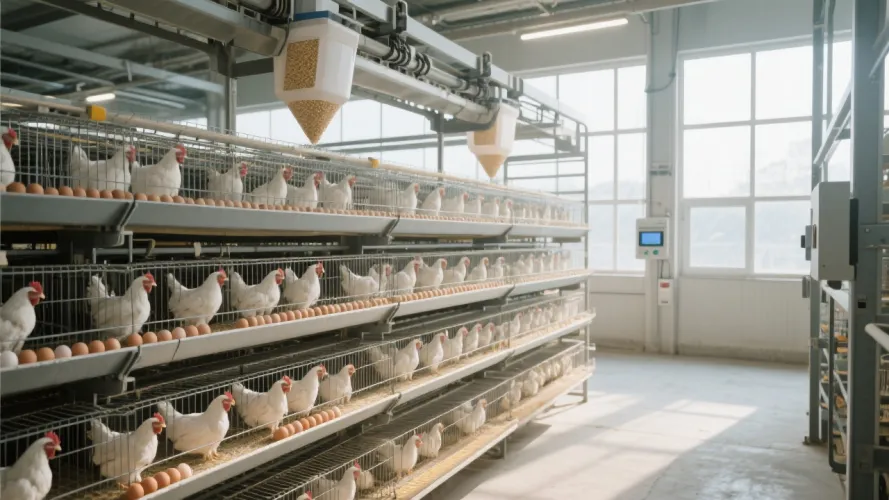
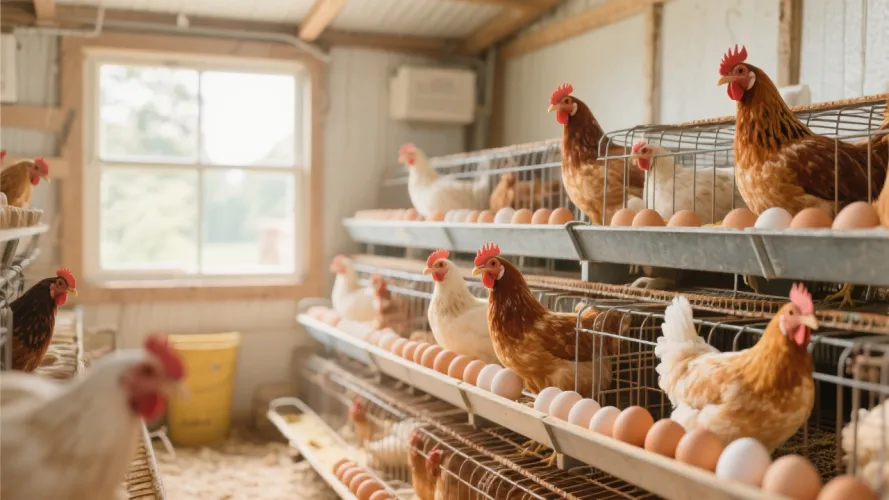
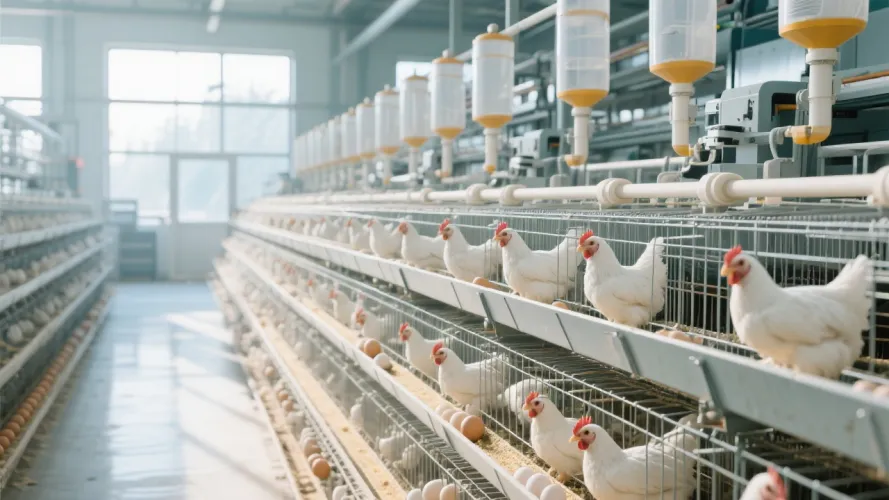
This article delves into how the high - efficiency H - type layer hen cages launched by Zhengzhou Livi Machinery maximize the use of farming space through an innovative double - layer vertical structure design, achieving a stocking density increase of over 30%. It elaborately explains the technical advantages of this structure in ventilation, lighting, and disease prevention and control. By incorporating real - world application cases from farms of different scales, it demonstrates the cage's remarkable effects in improving the egg - laying efficiency per unit area and reducing operating costs. The aim is to offer scientific space - planning solutions for commercial laying hen farmers and promote the efficient development of large - scale farming.
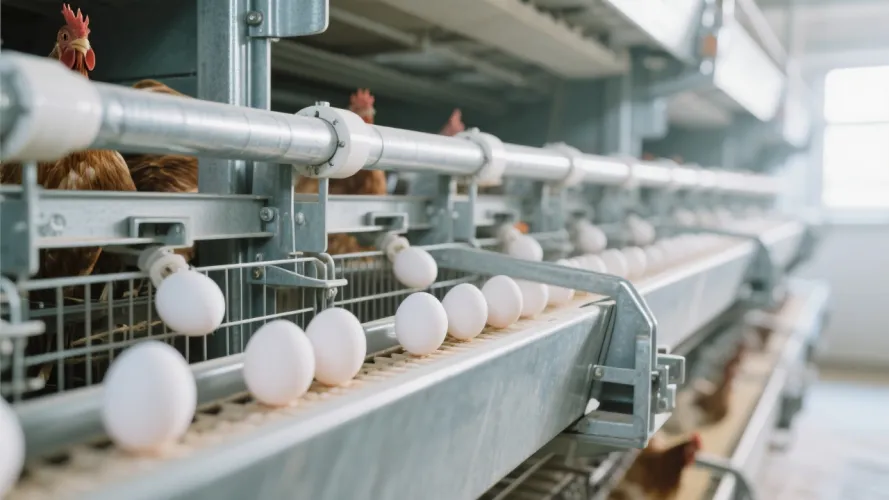
This article addresses the prevalent ventilation and temperature control challenges in large - scale layer chicken farming in India. It introduces the high - efficiency H - type layer cage launched by Zhengzhou Livi Machinery Co., Ltd. Crafted from high - quality international Q235 steel and advanced coating technology, with a scientifically sound structural design, this layer cage integrates an automated egg collection and manure cleaning system, effectively reducing labor costs. Its outstanding ventilation and temperature control capabilities create a healthy growth environment for layer chickens, significantly enhancing farming efficiency and economic benefits. Meeting international standards such as ISO9001, ISO14001, and CE, it ensures quality assurance for large - scale farms. Through real - world cases, the article details how this product helps farms tackle large - scale management difficulties and boost market competitiveness.
This technical brief explains how Al-Zn alloy coated stackable layer chicken cages optimize housing capacity while reducing long-term maintenance in modern egg production. Compared with conventional single-tier or standard galvanized/iron cages, the stackable multi-tier structure increases birds per square meter by building vertically, typically cutting floor footprint by 30–50% under the same flock size while keeping access lanes and workflow organized. Reinforced frames and engineered load paths improve overall bearing performance, supporting stable stacking and lowering deformation risk during long-term use. The Al-Zn alloy coating adds a protective barrier that resists moisture, manure gases, and routine wash-down, helping extend service life by roughly 3–5 years versus ordinary galvanized cages in comparable conditions. Cleaner surfaces and better drainage design also simplify sanitation, reducing residue buildup and improving hygiene management efficiency. For decision-stage farms planning equipment upgrades, this article recommends using a structural cross-section diagram (tier layout, manure belt/collection path, ventilation corridor) and a side-by-side comparison table (footprint, capacity density, corrosion resistance, cleaning time, expected lifespan) to support selection and deployment planning. Want a tailored stackable cage layout and installation checklist? Click to request a free technical information pack from Zhengzhou Livi Machinery Manufacturing Co., Ltd.
This article explains how aluminum-zinc coated stackable layer chicken cages optimize poultry house space while lowering long-term maintenance pressure. By using a multi-tier stacking layout, the system increases bird capacity per square meter and reduces building footprint, helping farms modernize without expanding land use. The technical focus includes load-bearing frame design, manure handling and ventilation-friendly spacing, and how the aluminum-zinc coating improves corrosion resistance in high-ammonia, high-humidity environments. Compared with conventional galvanized or plain steel cages, aluminum-zinc coated systems typically deliver 30–50% better space utilization, extend service life by 3–5 years under comparable conditions, and simplify daily cleaning through smoother, more durable surfaces. A practical deployment case from a commercial-scale layer farm is referenced to illustrate measurable gains in stocking efficiency, hygiene management, and equipment longevity. Recommended visuals include a structural cross-section diagram of the stacked cage layout and a side-by-side comparison table covering footprint, lifespan, cleaning workload, and corrosion performance. For farms in the decision stage of equipment upgrades, this technical breakdown supports more scientific selection and standardization. Want a tailored deployment plan for your house size and target capacity? Click here to request a free technical information kit from Zhengzhou Livi Machinery Manufacturing Co., Ltd.
This article provides a clear, technical overview of Al-Zn alloy coated stackable layer chicken cage design, focusing on how structural optimization improves farm space utilization and overall operational efficiency. It explains the engineering logic behind the stackable layout—such as reinforced frames, stable load paths, and modular tier configuration—to increase stocking capacity per area while maintaining accessibility for daily management. The article also highlights the performance value of Al-Zn alloy coating, detailing its corrosion resistance and weather durability that support long-term, stable use in demanding poultry-house environments. Supported by practical field references and data-oriented comparisons, it summarizes the cage system’s benefits for hygiene control, environmental management, and productivity outcomes, helping poultry farm decision-makers and procurement teams make more informed equipment choices. The piece concludes with actionable implementation notes and an invitation to consult Zhengzhou Livi Machinery Manufacturing Co., Ltd. for configuration guidance and technical support.
This article provides a practical, engineering-focused overview of stacked layer cages made with aluminum-zinc alloy coated steel, explaining how the tiered structure improves space utilization in modern layer houses while maintaining stability, load capacity, and long-term durability. It breaks down key structural elements—frame reinforcement, tier arrangement, manure management interfaces, and egg collection alignment—and shows how optimized stacking helps increase birds per square meter without compromising daily operation or flock welfare. The article also highlights the aluminum-zinc alloy coating’s corrosion resistance and weatherability, linking these properties to reduced rust risk, easier sanitation, and consistent performance in humid, ammonia-prone poultry environments. Supported by field observations and measurable performance indicators, it summarizes the cage system’s value for decision-makers and procurement teams in terms of hygiene management, environmental compliance, and production efficiency, and closes with actionable selection and maintenance tips for stable, cost-effective upgrading.
Aluzinc (aluminum-zinc) coated stackable layer chicken cages are increasingly selected for modern poultry houses where floor area is limited and equipment durability directly affects operating stability. This article objectively reviews the key structural optimizations behind this system: multi-tier stacking layouts that increase birds per square meter while maintaining access for feeding, egg collection, and manure removal; reinforced frame geometry and upgraded connections that improve overall load capacity and reduce deformation under long-term use; and Aluzinc coating performance that enhances corrosion resistance and slows aging in high-ammonia, high-humidity environments. Based on commonly referenced accelerated corrosion tests and field observations, Aluzinc-coated components typically show lower red-rust incidence and better edge protection than standard galvanized surfaces under comparable conditions. The analysis also contrasts Aluzinc stackable cages with traditional iron or ordinary galvanized cages in terms of service life, maintenance frequency, hygiene management, and environmental performance. Practical farm applications are used to illustrate measurable outcomes—more efficient space utilization, improved flock cleanliness, reduced manual workload, and more stable production—supporting decision-stage evaluation for equipment upgrades. Readers are invited to assess whether their current house faces space constraints, corrosion-related repairs, or insufficient load-bearing margins, and to consider system-level optimization as a pathway to higher-efficiency layer farming.
This article explains the scientific design of multi-tier cage systems to improve efficiency and output in large-scale broiler chicken farming. It covers practical capacity calculation based on site area and stocking density, tier and unit configuration, and the optimized layout of ventilation, feeding, manure removal, and service aisles to reduce cross-contamination and labor waste. It also introduces how automation (water lines, feeders, manure belts) and smart monitoring support precise management across different growth stages, supported by field-proven construction insights and common risk-prevention measures. The goal is to help farms build a low-loss, high-performance poultry house environment through implementable technical steps and standardized design logic.
This article presents a practical, end-to-end high-efficiency broiler farming solution—from early-stage planning and production target setting to equipment selection, multi-tier cage layout, and day-to-day operational management. It explains how a multi-layer cage house design can raise stocking density while lowering energy demand through optimized airflow paths, feeding and watering efficiency, and streamlined manure handling. Using a real application example from Zhengzhou Livi Machinery Manufacturing Co., Ltd., it highlights the structural and lifecycle advantages of an H-type broiler battery cage built with Q235 bridge steel and protected by hot-dip galvanizing for long-term corrosion resistance. The content also covers health checks, feeding optimization, and routine management practices, supported by data-driven checkpoints, callout citations, and visual-ready elements such as infographics, video demos, and expert Q&A—helping farms of different scales improve productivity with a durable, modern cage system.
Why does your closed poultry house suffer from high ammonia levels and frequent heat stress? Zhengzhou Livi Machinery's H-Type Layered Chicken Cages address these issues through a synergistic design of top deflectors, side wall windows, and exhaust fans, achieving efficient air circulation. This system precisely controls ammonia concentration (≤15ppm) and humidity, significantly reducing disease risks. Combined with seasonal cage spacing adjustment strategies, intelligent management via temperature and humidity sensors, and rust-proof technology featuring hot-dip galvanizing plus aluminum-zinc alloy coating, long-term stable operation is ensured. This article details ventilation system principles and practical solutions to scientifically enhance layer health and egg production rates.
Struggling with poor ventilation, high ammonia levels, and heat stress in your closed-layer henhouse? The H-type stacked chicken coop by Zhengzhou Livi Machinery integrates a top deflector plate, sidewall windows, and exhaust fans to orchestrate efficient airflow and precisely control ammonia concentration at or below 15ppm, substantially improving flock health. This article explores the aerodynamic principles behind this system, seasonal adjustments in cage spacing for thermal comfort, deployment of intelligent temperature and humidity sensors, and the advantages of hot-dip galvanized plus aluminum-zinc alloy coatings in corrosion resistance. Supported by real case data showing egg production improvements, these insights help you scientifically manage your poultry environment to reduce disease risk and boost profitability. Remember, letting every chicken breathe freely is the first step to producing more eggs—key to high-efficiency farming.
How does the H-type layered chicken cage improve egg-laying efficiency? This article provides an in-depth analysis of the H-type structure’s core advantages in maximizing space utilization, optimizing ventilation, and enabling automated management. Comparing to traditional cages, it reveals how this innovative design reduces labor costs, promotes flock health, and increases egg yield. Drawing from frontline farming experiences and installation best practices, it guides poultry farmers in making informed decisions and effectively implementing H-type cages to maximize production benefits.
Discover the key automation functions of A-type layer cages by Livi Machinery, including automatic feeding, manure removal and egg collection, that elevate hygiene, efficiency and management in poultry farms.
Learn the essential first steps for starting a poultry farm, including choosing the farming direction, assessing budget and scale, confirming sales channels, planning the poultry house and selecting equipment with Livi Machinery.
Discover how Livi Machinery supports 20,000-layer poultry farm projects with site planning, customized 3–5-tier A-type layer cage solutions, equipment production, delivery and project implementation guidance.
READY TO START?
Ready to Build Your Poultry Farm?
Tell us your land size, poultry type and farming capacity. LIVI will provide a complete farm solution for your project.