Livi Machinery: Making Modern Poultry Farming Easy

Poultry Farming Articles and Practical Guides

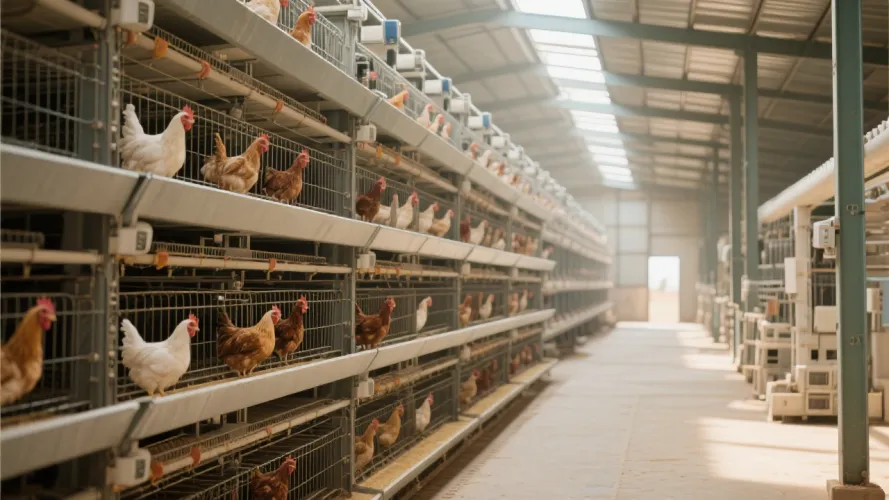
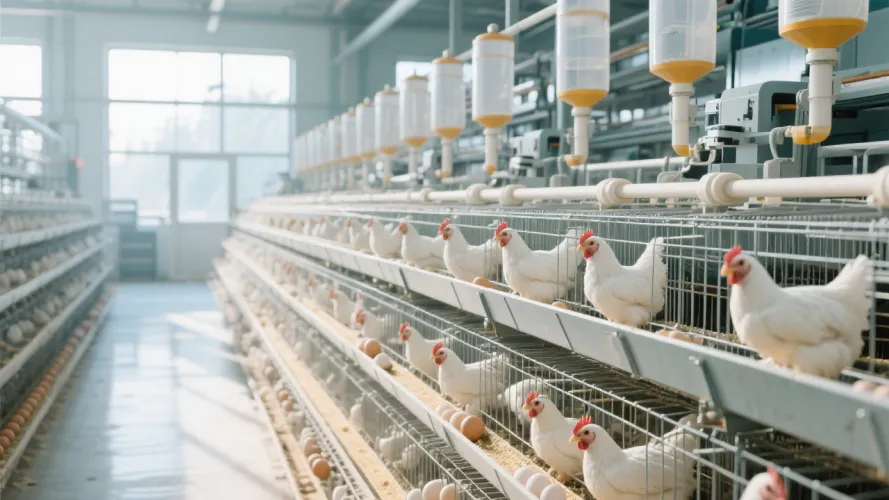
Stacked Layer Aluminum-Zinc Coated Layer Cage Design for Higher Poultry Farm Space Utilization

This article provides a practical, engineering-focused overview of stacked layer cages made with aluminum-zinc alloy coated steel, explaining how the tiered structure improves space utilization in modern layer houses while maintaining stability, load capacity, and long-term durability. It breaks down key structural elements—frame reinforcement, tier arrangement, manure management interfaces, and egg collection alignment—and shows how optimized stacking helps increase birds per square meter without compromising daily operation or flock welfare. The article also highlights the aluminum-zinc alloy coating’s corrosion resistance and weatherability, linking these properties to reduced rust risk, easier sanitation, and consistent performance in humid, ammonia-prone poultry environments. Supported by field observations and measurable performance indicators, it summarizes the cage system’s value for decision-makers and procurement teams in terms of hygiene management, environmental compliance, and production efficiency, and closes with actionable selection and maintenance tips for stable, cost-effective upgrading.
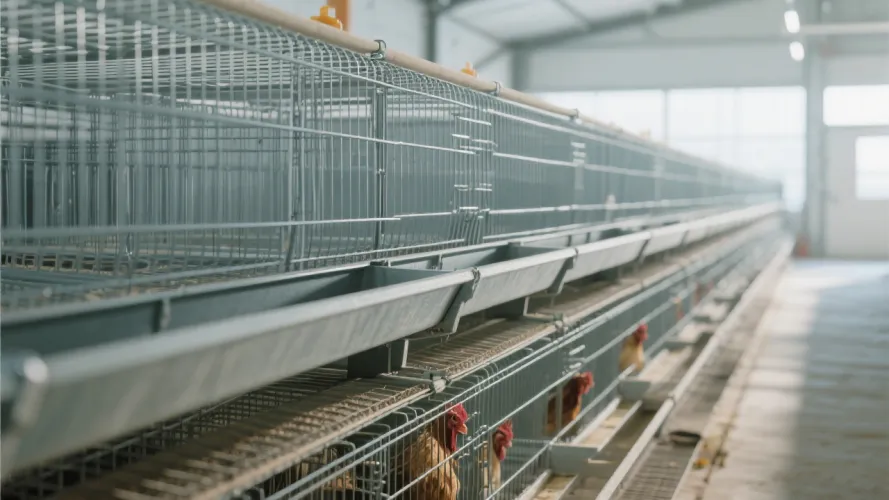
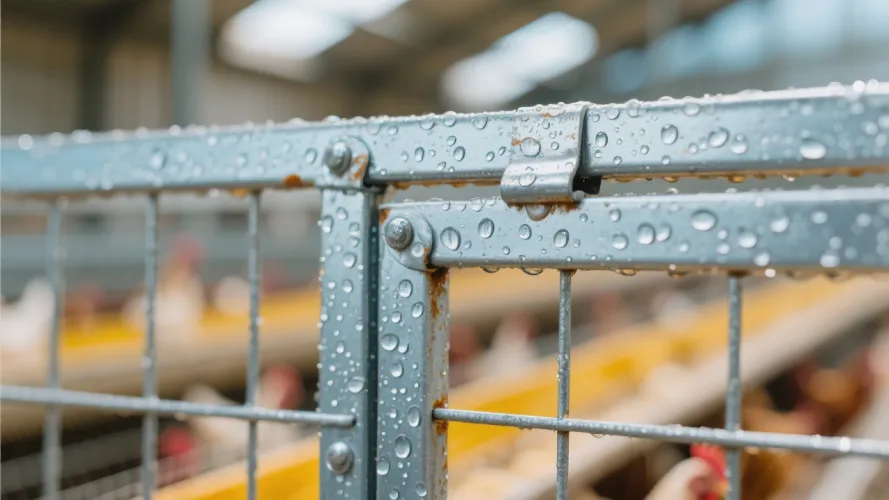
Stacked Al-Zn Alloy Coated Layer Hen Cages: Application Insights and Export Farm Selection Guide

This article provides a practical, standards-aware analysis of stacked Al-Zn alloy coated layer hen cages for modern intensive egg production. It explains where stacked cage systems deliver the most value—from small family farms seeking higher space efficiency to large, standardized export-oriented poultry houses requiring consistent output and durability. By comparing Al-Zn alloy coatings with conventional galvanized finishes in corrosion resistance and expected service life, and by referencing commonly adopted GB/T-type compliance logic and field-proven configuration parameters, the guide helps producers evaluate equipment performance, fit-to-house conditions, and long-term operating efficiency. It also summarizes key installation and maintenance considerations, and clarifies suitability across different production stages—supporting clearer decision-making and faster farm upgrades. For tailored configuration planning, readers are directed to a professional service entry to request a dedicated selection proposal from Zhengzhou Livi Machinery Manufacturing Co., Ltd.

Stacked Aluzinc-Coated Layer Chicken Cages: Application Guide, Service Life Comparison, and Farm Selection Tips

This knowledge-driven guide explains where stacked Aluzinc-coated layer chicken cages deliver the most value in modern intensive egg production—from small family farms to large standardized poultry houses. It clarifies the material and coating advantages of Aluzinc versus conventional galvanized finishes, highlights practical impacts on corrosion resistance, hygiene management, and space utilization, and connects these factors to real-world configuration decisions (tiers, density, manure handling, ventilation compatibility, and workflow). Referencing commonly used industry requirements (e.g., GB/T-related guidance) and typical performance parameters, the article helps farm owners and project planners evaluate durability, installation and maintenance essentials, and suitability across different production stages. Readers can use the included selection checklist logic to reduce mismatch risk and improve long-term operational efficiency; for site-specific planning, click to get a dedicated selection proposal from Zhengzhou Livi Machinery Manufacturing Co., Ltd.

Stacked Aluzinc Coated Layer Chicken Cages: Application Scenarios and Selection Guide for Modern Egg Farms
Stacked Aluzinc Coated Layer Chicken Cages Selection Guide | Zhengzhou Livi Machinery Manufacturing Co., Ltd.

This solution article explains where stacked Aluzinc (aluminum-zinc alloy) coated layer chicken cages fit best in modern egg production, from small family farms to large-scale commercial operations. It breaks down value by space utilization, corrosion resistance, and maintenance workload, and highlights why Aluzinc coating can improve long-term durability compared with standard galvanized cages in typical poultry-house environments. To support practical decision-making, the article references relevant GB/T-type manufacturing and material requirements commonly used in the industry, summarizes key configuration differences by farm size, and provides an actionable checklist for selection, installation planning, and lifecycle management. The content also stresses the importance of after-sales support, spare-part availability, and future expansion compatibility—guiding readers to request a tailored selection recommendation from Zhengzhou Livi Machinery Manufacturing Co., Ltd. based on flock size, house layout, and management goals.

Aluzinc-Coated Layer Chicken Cage Maintenance Guide: Cleaning, Detergent Selection & Corrosion Prevention
Aluzinc-Coated Layer Chicken Cage Maintenance & Cleaning Guide | Zhengzhou Livi Machinery Manufacturing Co., Ltd.

This guide explains science-based maintenance and cleaning practices for aluzinc-coated, stacked layer chicken cages to help farms extend equipment lifespan and protect flock health. It details how to choose safe cleaning agents that preserve the alloy coating, how to set cleaning frequencies for different production stages, and which common maintenance mistakes accelerate corrosion and coating wear. Seasonal and climate-driven adjustments—such as humidity control during rainy periods and salt/alkali exposure management in harsh environments—are included to keep cage surfaces stable and hygienic. Practical step-by-step workflows, quick-check inspection points, and real-world farm scenarios support easy implementation and consistent results. The recommendations are designed for decision-stage managers and technicians seeking reliable, repeatable SOPs that improve barn sanitation, reduce equipment downtime, and support egg quality through better environmental control.

Aluzinc Coated Stackable Layer Chicken Cages: Structural Optimization for Space Efficiency and Higher Load Capacity

Aluzinc (aluminum-zinc) coated stackable layer chicken cages are increasingly selected for modern poultry houses where floor area is limited and equipment durability directly affects operating stability. This article objectively reviews the key structural optimizations behind this system: multi-tier stacking layouts that increase birds per square meter while maintaining access for feeding, egg collection, and manure removal; reinforced frame geometry and upgraded connections that improve overall load capacity and reduce deformation under long-term use; and Aluzinc coating performance that enhances corrosion resistance and slows aging in high-ammonia, high-humidity environments. Based on commonly referenced accelerated corrosion tests and field observations, Aluzinc-coated components typically show lower red-rust incidence and better edge protection than standard galvanized surfaces under comparable conditions. The analysis also contrasts Aluzinc stackable cages with traditional iron or ordinary galvanized cages in terms of service life, maintenance frequency, hygiene management, and environmental performance. Practical farm applications are used to illustrate measurable outcomes—more efficient space utilization, improved flock cleanliness, reduced manual workload, and more stable production—supporting decision-stage evaluation for equipment upgrades. Readers are invited to assess whether their current house faces space constraints, corrosion-related repairs, or insufficient load-bearing margins, and to consider system-level optimization as a pathway to higher-efficiency layer farming.

Climate-Adapted Multi-Tier Broiler Cage System Design: Stocking Density & Ventilation Optimization for Overseas Farms

Designing a multi-tier broiler cage system for overseas customers requires more than maximizing capacity—it must match local climate conditions to reduce heat stress, respiratory risk, and labor pressure. This guide explains how to configure practical 3–4 tier layouts and stage-based stocking density from brooding to grow-out, using climate data (hot-humid tropics vs. dry temperate regions) to plan airflow direction, inlet/outlet placement (e.g., sidewall inlets with roof exhaust), and uniform ventilation across tiers. It also outlines manure removal routing, service aisle logic, and integration of automation such as feeding lines, nipple drinkers, and environmental monitoring for stable performance and easier management. With a modular approach, farms can scale or relocate efficiently while improving bird comfort, consistency, and overall production results—supported by field-style before/after outcomes. Produced for global projects by Zhengzhou Livi Machinery Manufacturing Co., Ltd., the tutorial focuses on reliable, implementable design decisions rather than theory.

Climate-Adaptive Multi-Tier Broiler Cage System Design: Stocking Density & Ventilation Optimization

Designing a multi-tier broiler cage system for overseas farms requires more than maximizing space—it must match local climate realities. This guide explains how to configure 3–4 tier cage layouts by region (e.g., hot-humid tropics vs. dry temperate zones) using two core levers: stage-based stocking density and airflow-path optimization. It details practical ventilation routing (sidewall air inlets paired with ridge/roof exhaust), cage-row spacing, manure-removal logistics, and the integration logic of automatic feeding lines, nipple drinkers, and smart environmental monitoring to reduce heat stress, improve respiratory health, and simplify labor-intensive management. Built on modular planning principles, the approach supports future expansion or site relocation and helps farms achieve stable performance with lower stress and easier daily operation.

High-Efficiency Broiler Chicken Farming Solution: Planning, Multi-Tier Cage Design & Operations

This solution-oriented guide outlines a practical, end-to-end pathway to build or upgrade a high-efficiency broiler chicken farm with measurable gains in stocking density, labor efficiency, and long-term operating stability. It starts with goal setting and site-condition assessment, then moves into equipment selection focused on durability and corrosion resistance—highlighting Q235 structural steel and hot-dip galvanizing as key choices for long service life in intensive poultry environments. The layout section explains how multi-tier broiler cage systems can standardize workflows, improve space utilization, and simplify daily management. The operations module provides a clear framework for SOP-based routines, health monitoring, and feed optimization to reduce losses and improve flock consistency. A real-world implementation reference—Zhengzhou Livi Machinery Manufacturing Co., Ltd.’s H-type battery cage practice—demonstrates how theory translates into replicable results. Overall, the guide delivers a copyable success model to improve farming profitability while lowering energy use and labor input across the full production cycle.

High-Efficiency Broiler Farming Solution: Planning, Multi-Tier Cage Design, and Operations Management

This solution-oriented guide explains how to build a high-efficiency, low-waste broiler farm from initial planning through daily operations. It outlines practical decision points for site assessment, production targets, and scalable barn design, then details multi-tier cage layout strategies that increase stocking density while keeping workflows simple. Equipment selection is addressed with a focus on durability and long-term protection, including the application value of Q235 structural steel and hot-dip galvanizing for corrosion resistance in demanding poultry-house environments. A real-world reference case—Zhengzhou Livi Machinery Manufacturing Co., Ltd. H-type battery cage implementation—illustrates how standardized equipment and repeatable processes can translate design intent into measurable productivity gains. The operations section summarizes health monitoring routines, feeding optimization, and SOP-driven management to reduce labor intensity and energy waste. For new builds or upgrades, the approach emphasizes copyable success experience, improved farming profitability, and reduced long-term operating costs through practical, field-tested methods.

H-Type Multi-Tier Battery Cages for Broiler Farms: Space Optimization and Higher Production Efficiency
H-Type Multi-Tier Battery Cages for Broiler Space Optimization | Zhengzhou Livi Machinery Manufacturing Co., Ltd.

This article explains how H-type multi-tier battery cages can improve broiler farming efficiency by solving a key challenge in modern large-scale poultry production: limited house space and the need for higher stocking capacity without sacrificing daily management quality. It highlights how multi-level cage systems optimize poultry house layout, increase usable vertical space, and streamline routine operations such as feeding, watering, manure handling, inspection, and flock uniformity control. Based on different farm sizes and production goals, the article provides practical guidance on selecting appropriate tier numbers and load-bearing capacity, as well as key material and anti-corrosion considerations for long-term performance. Supported by data references, infographic-style explanations, and a real application case, it demonstrates measurable gains in space utilization, labor efficiency, and management consistency—helping producers build a scalable, standardized broiler operation. The solution perspective is presented in a rational, evidence-focused tone to support decision-making at the awareness stage. Zhengzhou Livi Machinery Manufacturing Co., Ltd. is introduced as a professional supplier of H-type broiler cage systems designed for intensive farming and space-efficient housing upgrades.

Large-Scale Broiler Farming Case Study: Efficient Management for 10,000–50,000 Birds with H-Type Battery Cages
Large-Scale Broiler Farming Case Study (10,000–50,000 Birds) | H-Type Battery Cages | Zhengzhou Livi Machinery Manufacturing Co., Ltd.

This customer case study reviews how large-scale broiler farms ranging from 10,000 to 50,000 birds improved daily management efficiency and space utilization through a science-based housing plan. The featured solution centers on H-type broiler battery cages manufactured with Q235 steel and protected by hot-dip galvanizing to enhance corrosion resistance and service life in demanding farm environments. By applying a multi-tier cage layout, the farms streamlined routine work such as feeding, observation, and flock handling while building a more standardized production workflow suited to scale-up operations. The article summarizes practical implementation insights, measurable management improvements, and real customer feedback to help decision-makers evaluate suitability for their own sites. It also outlines end-to-end support—from solution design and equipment preparation to transportation guidance and on-site installation—so farms can plan with greater confidence and adopt a tailored approach for stable, efficient broiler production.

Frequently Asked Questions

Contact us

Discover the key automation functions of A-type layer cages by Livi Machinery, including automatic feeding, manure removal and egg collection, that elevate hygiene, efficiency and management in poultry farms.

READY TO START?

Ready to Build Your Poultry Farm?

Tell us your land size, poultry type and farming capacity. LIVI will provide a complete farm solution for your project.