


Uganda 50,000 Layers H Type Automatic Cage System Solution for Commercial Egg Farms

Uganda Layer Farm Solution
50,000 Layers Poultry Farm in Uganda with H Type Automatic Cage System
To build a 50,000 layers poultry farm in Uganda, the recommended solution is a fully automatic H-type layer cage system with automatic feeding, nipple drinking, belt manure removal, automatic egg collection, ventilation, cooling pads, and environment control.
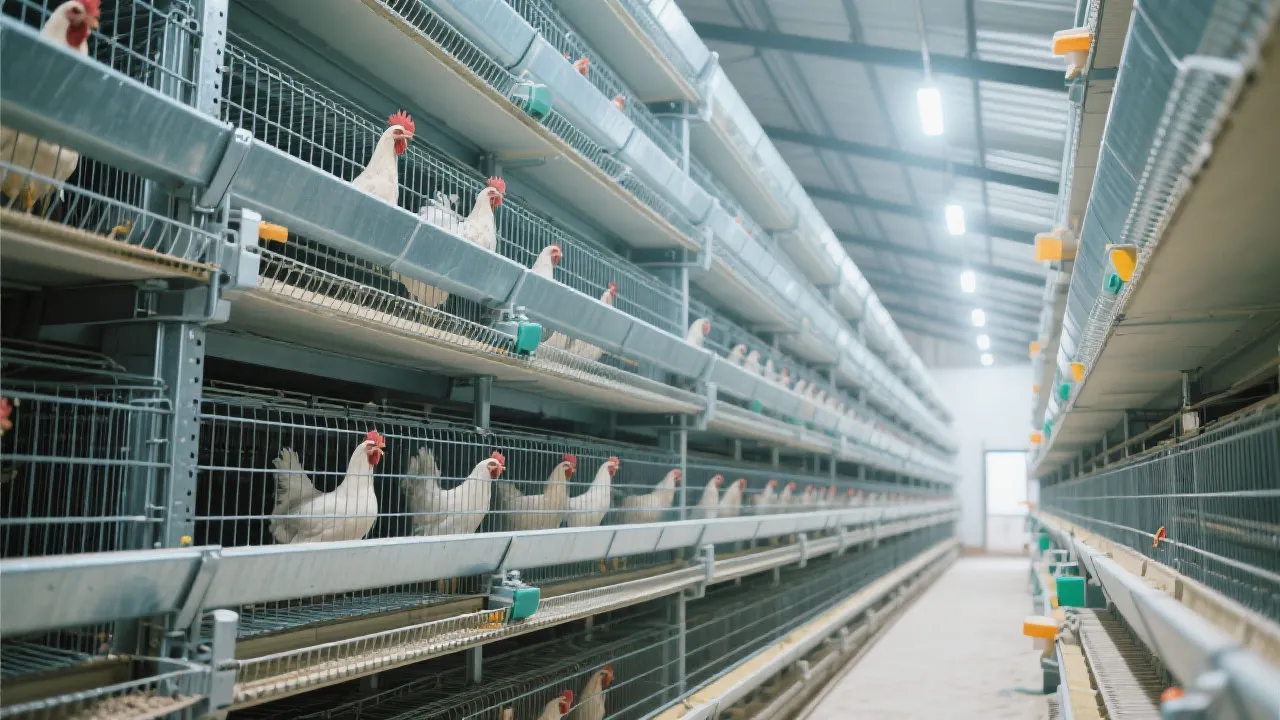
Livi Machinery recommends the Livi H-Type Cage System using 4-tier 4-door H-type cages. Based on 192 birds per set, about 261 cage sets are required. For better layout balance, about 265 sets can be planned.

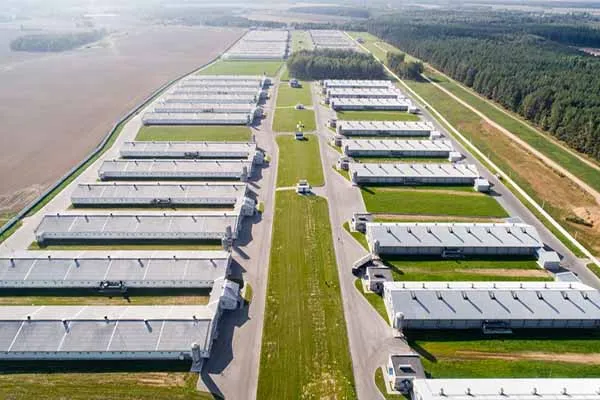
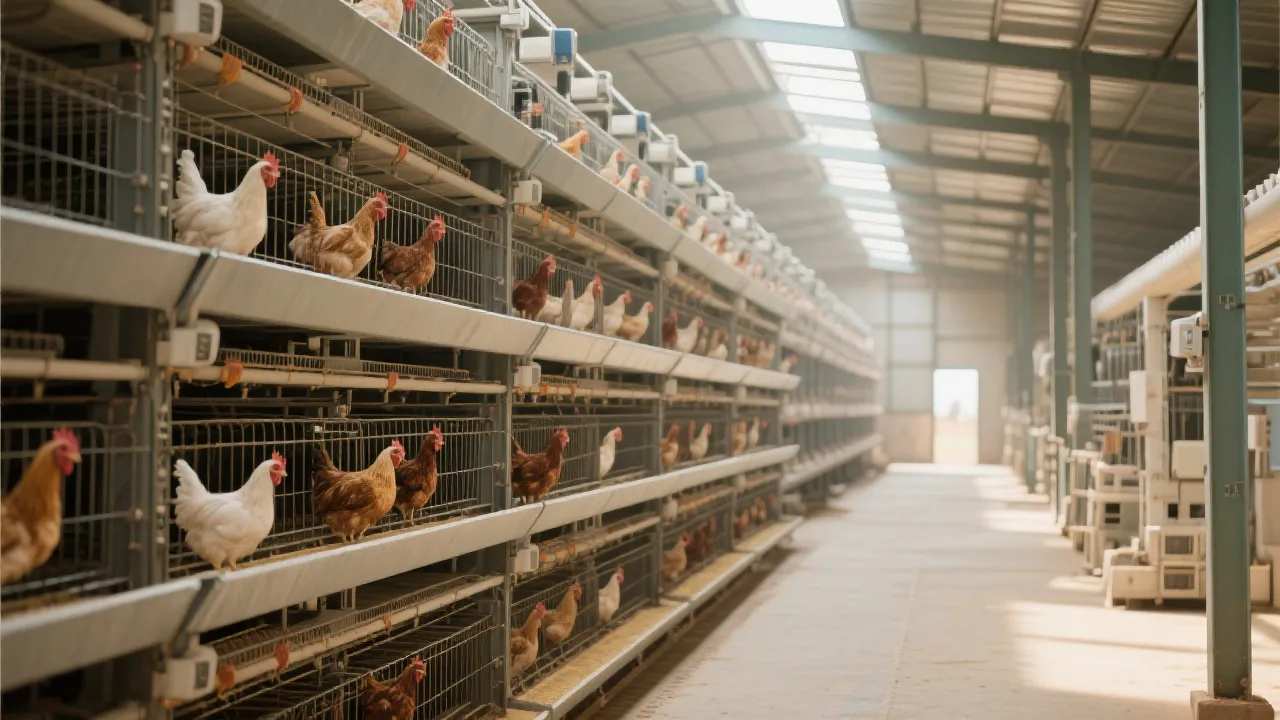
Reference image for a 50,000-layer H-type automatic cage farm layout.
Why Choose H-Type layer cages for 50,000 Layers in Uganda?
For a 50,000-bird commercial egg farm in Uganda, H-type layer cages are more suitable than A-type cages because they save land, improve automation efficiency, and allow higher stocking capacity in a closed poultry house. The H-type structure is especially suitable for medium and large farms that want stable egg production, lower labor demand, and better manure management.
Compared with an open or semi-automatic farm, a 50,000 layers poultry farm in Uganda using H-type automatic cages can reduce manual feeding, manual egg collection, and daily manure handling.
How Many H-Type Cage Sets Are Needed for 50,000 Layers?

1800mm H-type layer cage used for high-density commercial egg farms.
The cage quantity should be calculated by the formula: Total Birds ÷ Birds Per Set = Required Cage Sets. For this Uganda project, the recommended cage model is the 4-tier 4-door H-type layer cage with a capacity of 192 birds per set.
How Many Chicken Houses Should Be Built?
For 50,000 layers in Uganda, one closed chicken house is usually more economical for land use and automation. However, two houses may be better if the investor wants phased construction, easier disease control, or separate production batches.
The final chicken house size should be confirmed according to land length, road position, egg room location, feed silo position, manure outlet direction, and local building conditions. A customized Livi Poultry Farm Layout Solution can reduce layout mistakes before construction.
What Automatic Equipment Is Required?
A full automatic 50,000-layer farm should not only include cages. It should include feeding, drinking, manure removal, egg collection, ventilation, cooling, lighting, and environment control. These systems work together to reduce labor and keep the production environment stable.
- Automatic feeding: feed silo, conveying line and feeding trolley.
- Automatic drinking: nipple drinkers, regulator, filter and dosing device.
- Automatic manure removal: manure belt for each tier and outside conveyor.
- Automatic egg collection: egg belt, elevator and central egg collection line.
- Environment control: fans, cooling pads, air inlets and control cabinet.

Automatic poultry equipment should be planned together with house layout and ventilation.
For investors comparing different systems, a complete H type layer cage system for 50,000 chickens should be evaluated by cage layout, automation level, ventilation design, installation support, and future expansion plan.
How Should Ventilation Be Designed for Uganda Climate?
Uganda has warm regional conditions, and many layer farms need to control heat stress, humidity, ammonia, and air speed. For a closed 50,000-layer chicken house, ventilation should be designed as a complete tunnel ventilation and cooling system, not only by adding fans after construction.
The Livi Ventilation Design Standard usually considers house size, cage rows, bird density, local temperature, prevailing wind direction, cooling pad area, fan air volume, sidewall air inlet position, and emergency ventilation.
Cooling Pads
Placed at one end or side of the house to reduce inlet air temperature during hot periods.
Exhaust Fans
Installed at the opposite end to create stable tunnel airflow through the cage rows.
Air Inlets
Used for minimum ventilation and transitional ventilation when full cooling is not needed.
Control Cabinet
Controls fans, cooling pads, lighting, alarms, and temperature-based ventilation stages.
How to Build the 50,000 Layers Farm Step by Step?
A 50,000-layer farm should be planned before purchasing equipment. The correct sequence is farm capacity confirmation, land measurement, chicken house drawing, cage layout, automatic equipment configuration, ventilation calculation, production area planning, installation, testing, and staff training.
- Confirm production goal: 50,000 laying hens, egg production target, batch plan, and future expansion.
- Measure land size: confirm length, width, road access, drainage, power, and water supply.
- Design chicken house: choose one-house or two-house layout according to investment plan.
- Calculate cage quantity: use 261–265 sets of 4-tier 4-door H-type layer cages.
- Configure automation: feeding, drinking, manure removal, egg collection, ventilation, and control system.
- Install equipment: cage frame, waterline, feed line, manure belt, egg belt, fans, pads, and controller.
- Run system testing: check feeding uniformity, water pressure, belt movement, fan operation, and alarms.
- Train workers: daily inspection, egg handling, manure removal, feed management, and emergency response.
Before construction, farmers can request an automatic poultry farm design in Uganda to avoid wrong house width, insufficient fan quantity, unsuitable cage row spacing, or inconvenient egg room layout.
How Much Does a 50,000 Layers Poultry Farm Cost in Uganda?
The cost of a 50,000-layer poultry farm in Uganda depends on cage model, automation level, chicken house structure, ventilation standard, local civil work cost, transport cost, installation method, and whether the farm includes feed storage, egg room, manure treatment, generator, or solar power.
A quotation should be based on a complete automatic poultry equipment configuration, not only the cage price.
What Is the Daily Operation SOP?
A fully automatic cage system reduces manual work, but it still requires daily inspection. The farm manager should build an SOP for water, feed, eggs, manure, ventilation, bird health, and equipment alarms.
FAQ About Uganda 50,000 Layers H Type Automatic Cage System
How many workers are needed for 50,000 layers?
With a full automatic H-type cage system, a 50,000-layer farm usually needs fewer workers than a manual farm. In many projects, about 4–6 trained workers can manage feeding checks, egg handling, manure removal inspection, equipment monitoring, and daily records.
Is H-type cage better than A-type cage for this project?
For 50,000 layers, H-type cages are usually better because they save more land and match full automation more efficiently. A-type cages are suitable for smaller or medium farms with lower initial investment.
How many cage sets are needed?
If the project uses the 4-tier 4-door H-type cage with 192 birds per set, the basic calculation is 50,000 ÷ 192 = 260.4 sets. Therefore, at least 261 sets are required, while about 265 sets are more practical for layout design.
What chicken house size is recommended?
A practical one-house layout is about 110m × 15m × 4.2m. Another option is two houses of about 58m × 15m × 4.2m each. The final size should be adjusted according to land shape, fan position, cooling pad area and egg room.
Is automatic egg collection necessary?
Yes. For 50,000 layers, manual egg collection is time-consuming and can increase egg breakage, dirty eggs and labor pressure. The Livi Automatic Egg Collection System helps move eggs from each cage row to a central collection area.
Need a Layout and Equipment List for a 50,000 Layers Farm in Uganda?
If you are planning to build a 10,000–100,000+ layers poultry farm in Uganda, Livi Machinery can provide customized cage layouts, automatic equipment configuration, chicken house planning, ventilation design, and installation guidance according to your land size, climate, and investment plan.
Before quotation, it is useful to prepare your target bird quantity, land size, preferred chicken house number, power supply condition, water source, and whether you need future expansion.
automatic poultry equipment configuration


Hot Products

.jpg?x-oss-process=image/resize,m_fill,h_800,w_800/format,webp)


Popular articles






READY TO START?
Ready to Build Your Poultry Farm?
Tell us your land size, poultry type and farming capacity. LIVI will provide a complete farm solution for your project.