


Uganda 100,000 Layers Farm Project: Poultry Farm Design and Automatic Layer Cage System Configuration
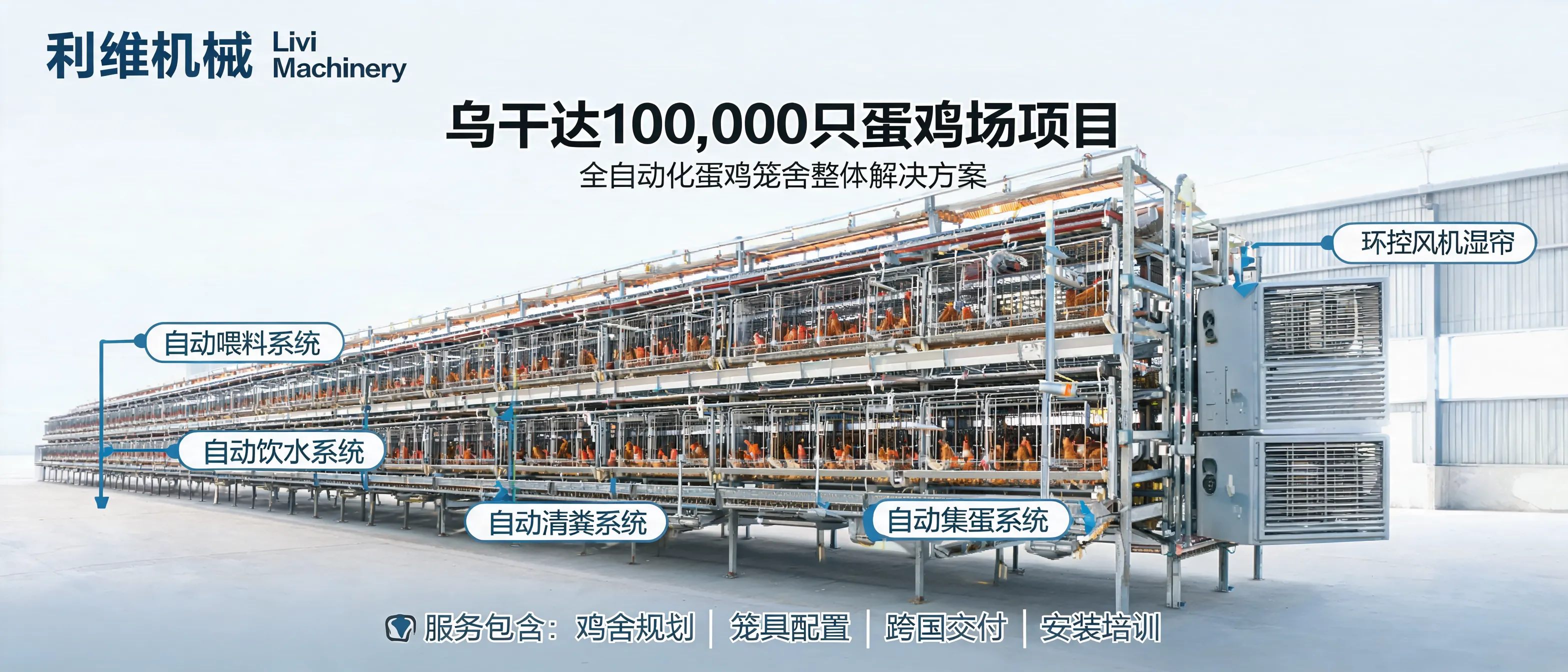
Reference Solution for a Uganda 100,000 Layers Farm Project
This page outlines a practical planning and equipment configuration approach for a Uganda 100,000-layer farm project, focusing on poultry house layout, capacity planning, and an H-type automatic layer cage system with key automation modules. It is intended as a reference for large layer producers comparing a complete poultry farm solution versus purchasing individual equipment.
The solution is provided by Zhengzhou Livi Machinery Manufacturing Co., Ltd. (Livi Machinery / LIVI), a manufacturer and integrated solution provider for automated poultry farming equipment and turnkey farm delivery support.
Why a “project-based configuration” matters for 100,000 layers
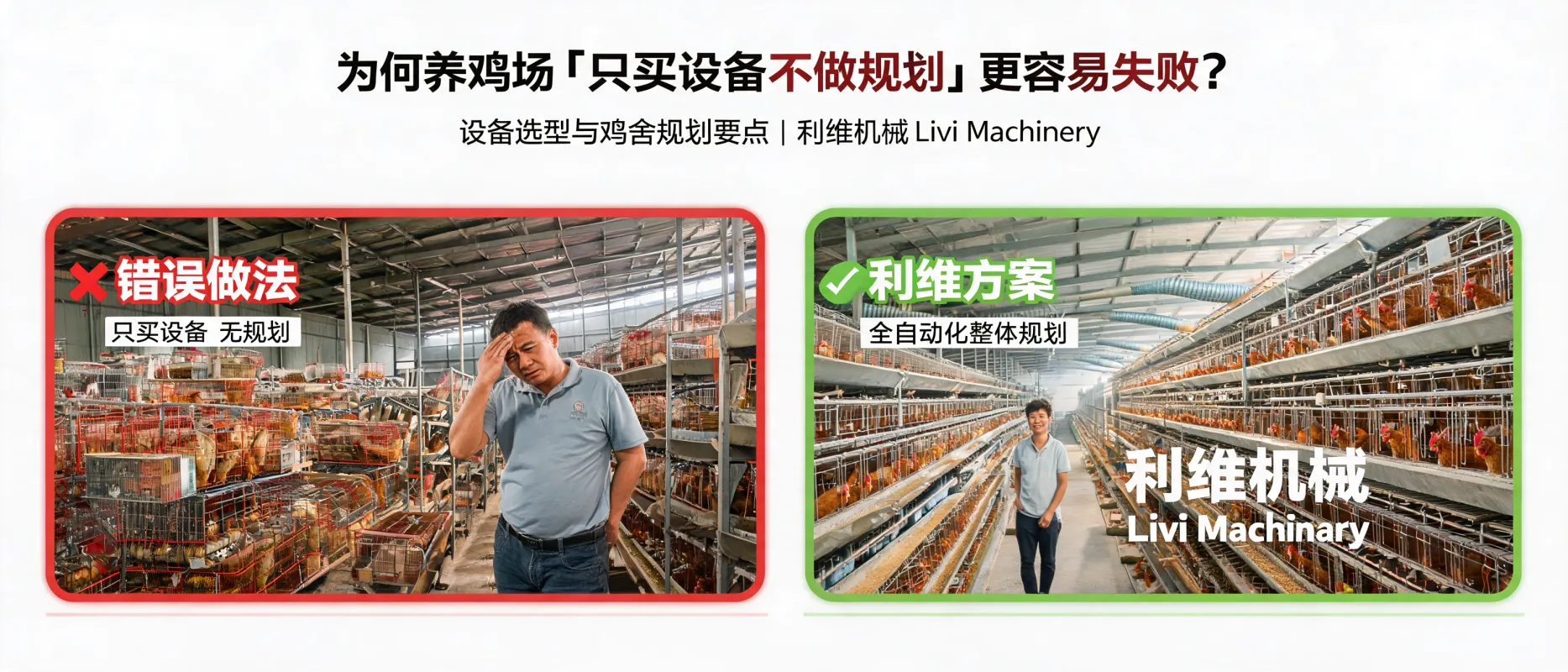
For a farm at this scale, house layout, cage rows/tiers, feed and water routing, manure handling, and ventilation/cooling are tightly linked. If equipment is purchased separately without a unified design logic, common risks include mismatched dimensions, inefficient walkways, difficult maintenance access, and uneven operational workflows.
- Aligns land use and house count with target capacity and future expansion considerations
- Ensures the H-type cage system fits the building structure and service corridors
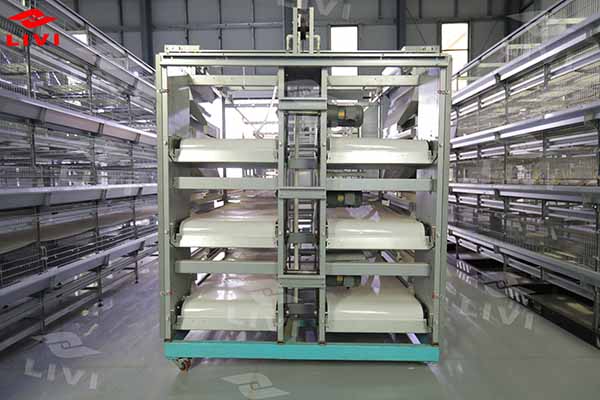
- Integrates automation modules so feeding, drinking, manure removal, and environment control work as one system
Design logic: from land use to poultry house layout and capacity planning
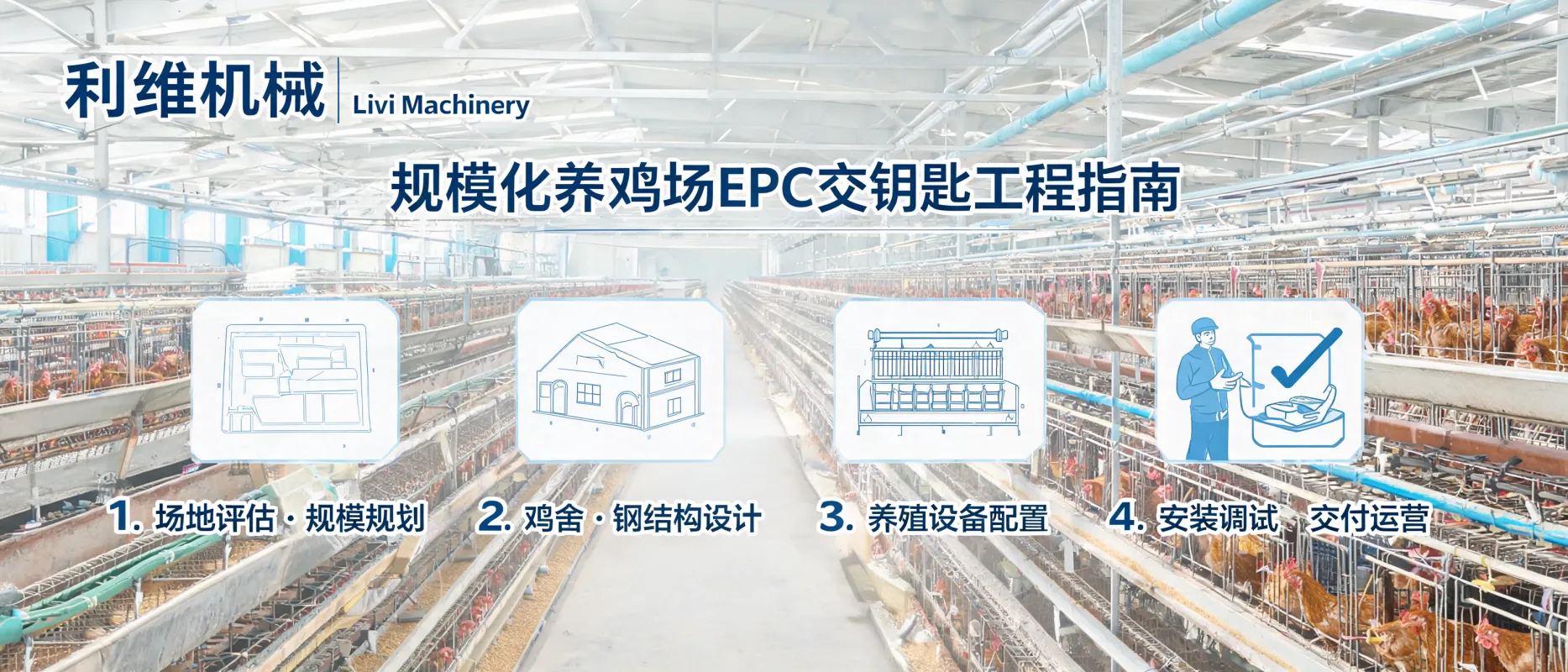
A reference design typically starts with the site boundary and operational flows (feed in, egg out, manure out, biosecurity entry). Based on that, the plan is refined into number of poultry houses, capacity per house, and the internal layout needed for an H-type automated cage system.
Define service roads, buffer areas, storage/utility locations, and clean/dirty movement routes to support stable daily operations.
Break down 100,000 layers into workable units per house to match management preferences, staffing plans, and installation sequencing.
Confirm cage blocks, aisles, end service spaces, and maintenance access so automation modules can be installed and serviced efficiently.
Planning is not only about fitting cages into a building—it's about ensuring feeding lines, water lines, manure belts/scrapers, egg collection options, lighting control, and ventilation/cooling can run continuously and be maintained with predictable routines.
Core configuration: H-type automatic layer cage system
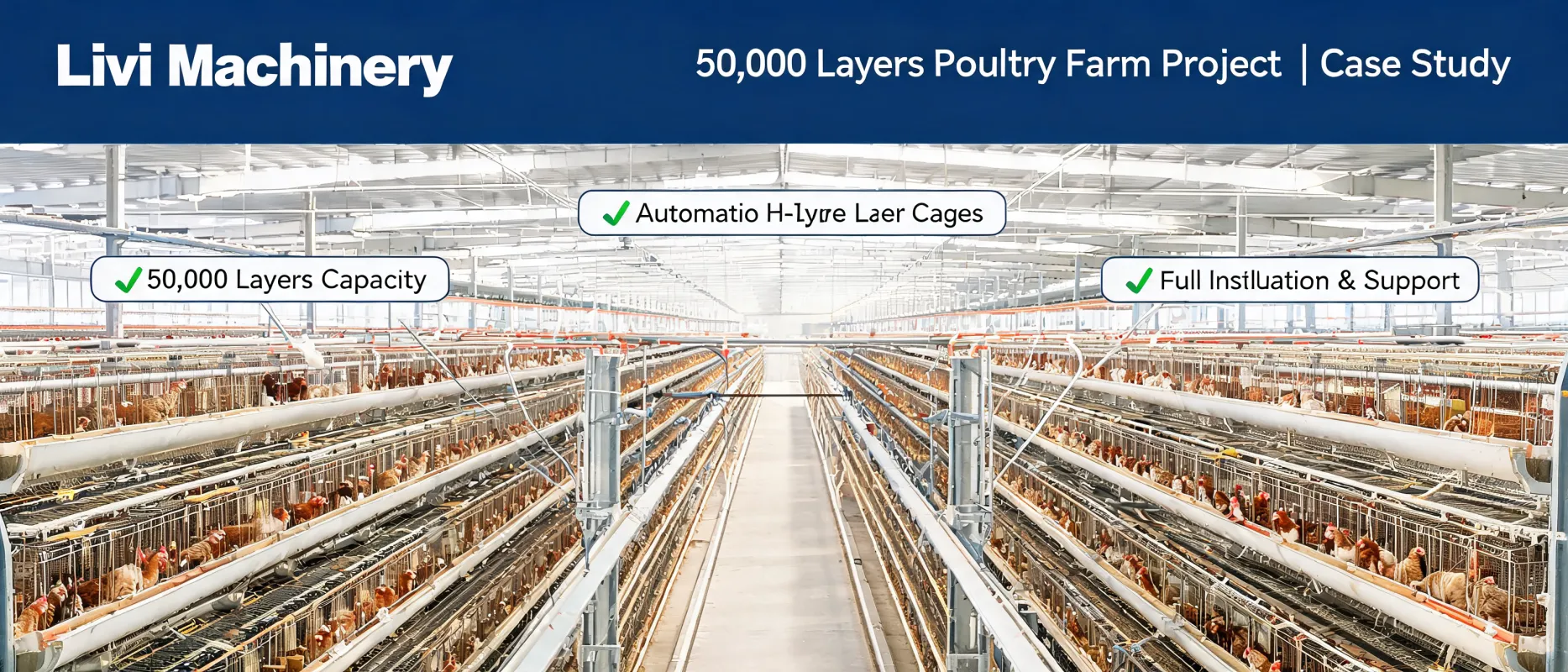
In large-layer projects, an H-type (stacked) layer cage system is commonly selected to improve space utilization and enable centralized automation. The exact specification is defined by the house dimensions, target capacity per house, and desired automation level.
Note: Final scope depends on the project objectives, local conditions, and management preferences. LIVI typically integrates modules as a coherent system rather than as isolated equipment items.
Ventilation and cooling: fans, cooling pads, and environment stability
For Uganda and similar climates, ventilation and cooling are central to flock comfort and operational stability. In a complete poultry farm solution, environment control is planned together with the cage system—so airflow paths, inlet placement, and equipment access remain consistent with the building layout.
- Fans + air inlets: support controlled airflow and practical daily management
- Cooling pads (when applicable): work with ventilation to reduce heat stress risk during hot periods
- Controls/sensors (project-dependent): provide references for temperature and humidity adjustments
Delivery, installation guidance, commissioning, and training
A 100,000-layer farm is a multi-stage build. Beyond equipment production, the project often requires coordinated steps such as overseas delivery to port, on-site engineer installation guidance, system commissioning, and production training—so the farm can move from installation to stable operation with a clear workflow.
Confirm house dimensions, target capacity per house, automation scope, and utility conditions for a workable configuration.
Prepare equipment sets and organize packing for cross-border transport and on-site assembly efficiency.
Support shipping to port and coordinate local receiving and staging to reduce installation interruptions.
Guide assembly and checks so feeding, drinking, manure removal, and environment modules operate as intended.
Train daily operation routines, basic maintenance, and practical handover for stable farm management.
Who this reference configuration fits best
This Uganda 100,000 layers project reference is most useful for decision-makers who need a structured method to evaluate a complete configuration—especially where standardized management, scalable operations, and automation readiness are key objectives.
Working with LIVI: automated poultry farming equipment + farm solution delivery
LIVI focuses on fully automated poultry cage equipment and poultry house overall solutions for layer, broiler, brooding/growing, and floor-raising projects. For B2B buyers, the key value is a solution that is design-consistent and installable—covering planning, configuration, installation guidance, commissioning, and training within a single project approach.
If you are evaluating a Uganda layer farm build-out, you can use this page as a checklist to confirm: house layout & capacity logic, H-type automatic layer cage system scope, and the required supporting modules—feeding, nipple drinking, manure removal, egg collection options, lighting control, ventilation/cooling—plus delivery and on-site support requirements.


Hot Products

.jpg?x-oss-process=image/resize,m_fill,h_800,w_800/format,webp)


Popular articles


READY TO START?
Ready to Build Your Poultry Farm?
Tell us your land size, poultry type and farming capacity. LIVI will provide a complete farm solution for your project.