


Turnkey EPC Solutions for Large-Scale Poultry Farms: Scope, Process, and Value
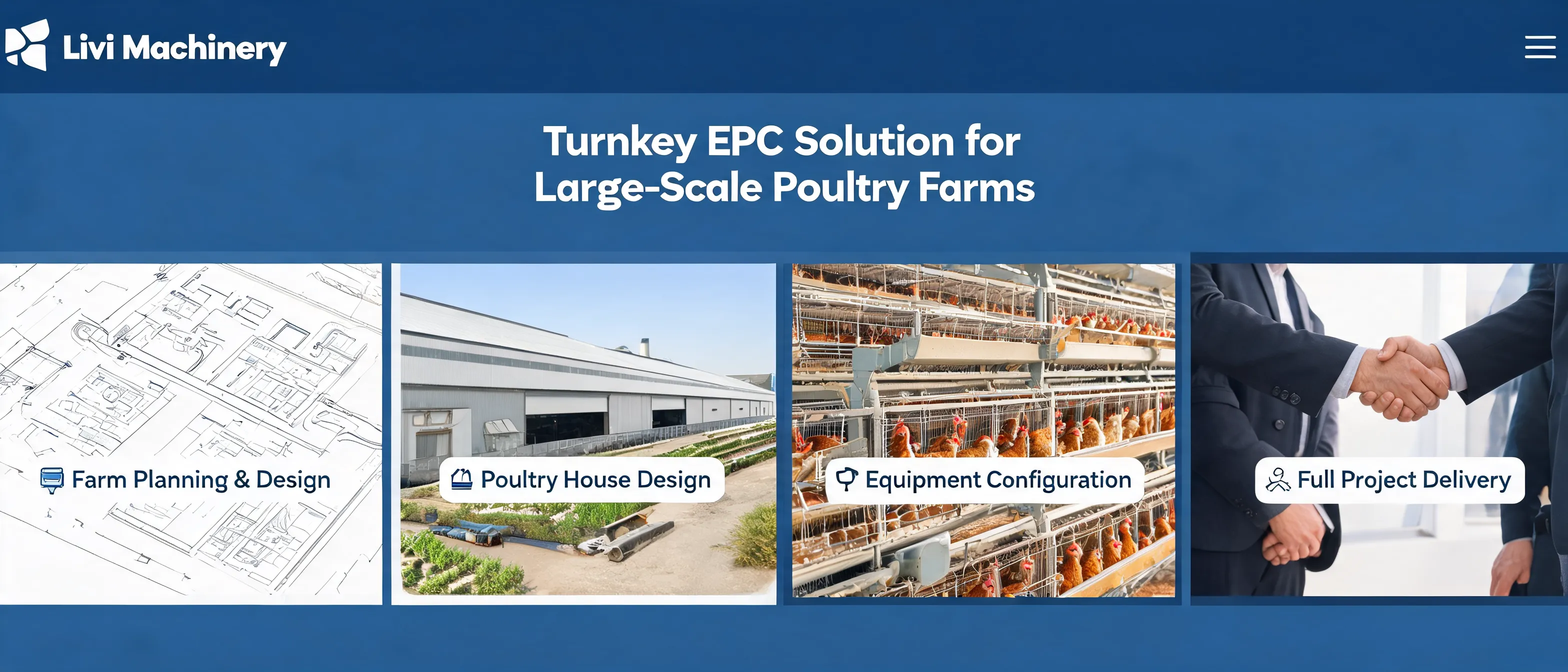
A turnkey EPC solution for a large-scale poultry farm is a project delivery model where one accountable partner manages the full journey—from early planning and poultry house design to equipment configuration, installation, commissioning, and handover. Instead of purchasing cages and systems separately, EPC integrates Engineering + Procurement + Construction into one coordinated scope.
Livi Machinery (Zhengzhou Livi Machinery Manufacturing Co., Ltd.) provides integrated EPC-style delivery for commercial chicken farm investors and operators who need clearer responsibilities, more predictable coordination, and a farm solution designed as a system—not as disconnected parts.
What “Turnkey EPC” Means in Large-Scale Poultry Farming
E — Engineering
Site and capacity assumptions, poultry house planning and layout, process flow, and system-level design considerations so housing, feeding, watering, manure removal, egg collection, and environment control work together.
P — Procurement
Coordinated sourcing and configuration of poultry farming equipment according to the project design, including compatibility checks, bill-of-material alignment, and delivery planning.
C — Construction & Delivery
Installation coordination, system commissioning, acceptance criteria alignment, and practical handover support—so the farm is delivered as an operating-ready project rather than a set of delivered boxes.
What Is Typically Included in a Complete Poultry Farm Solution
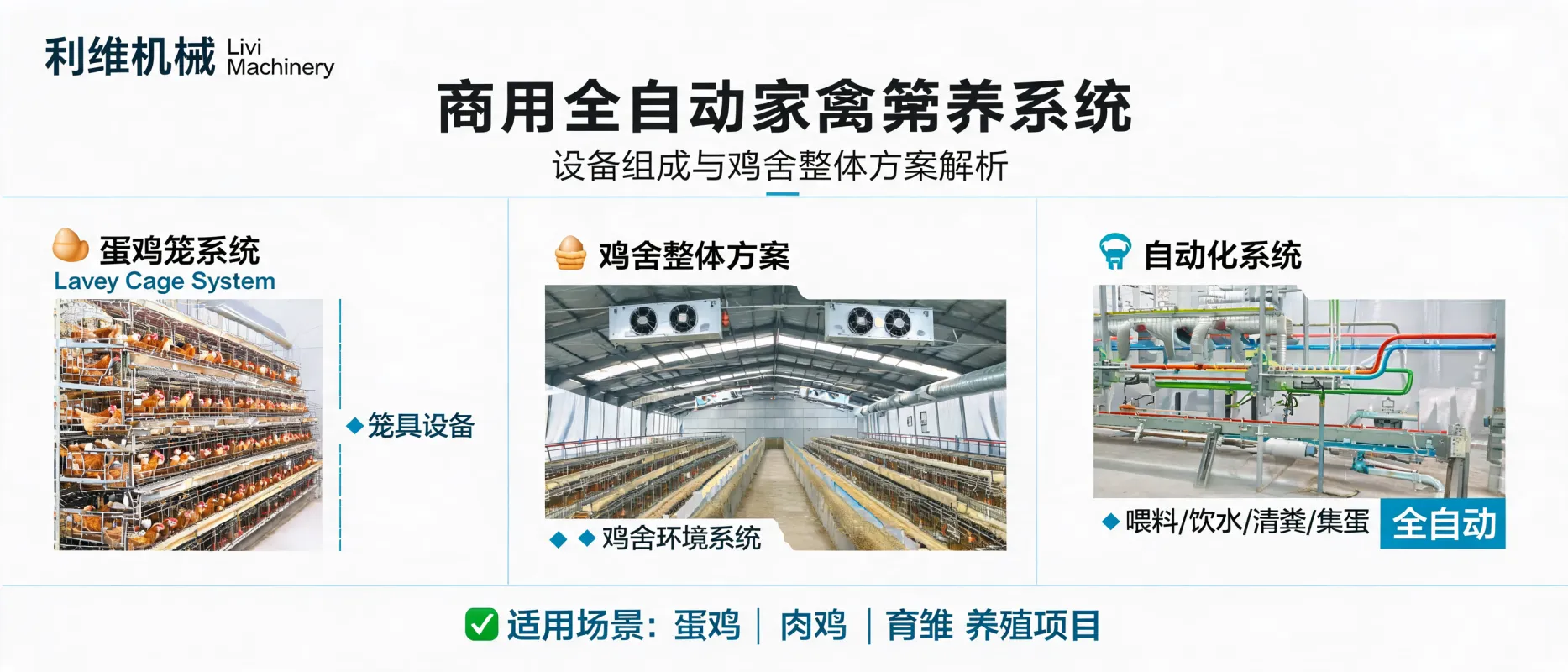
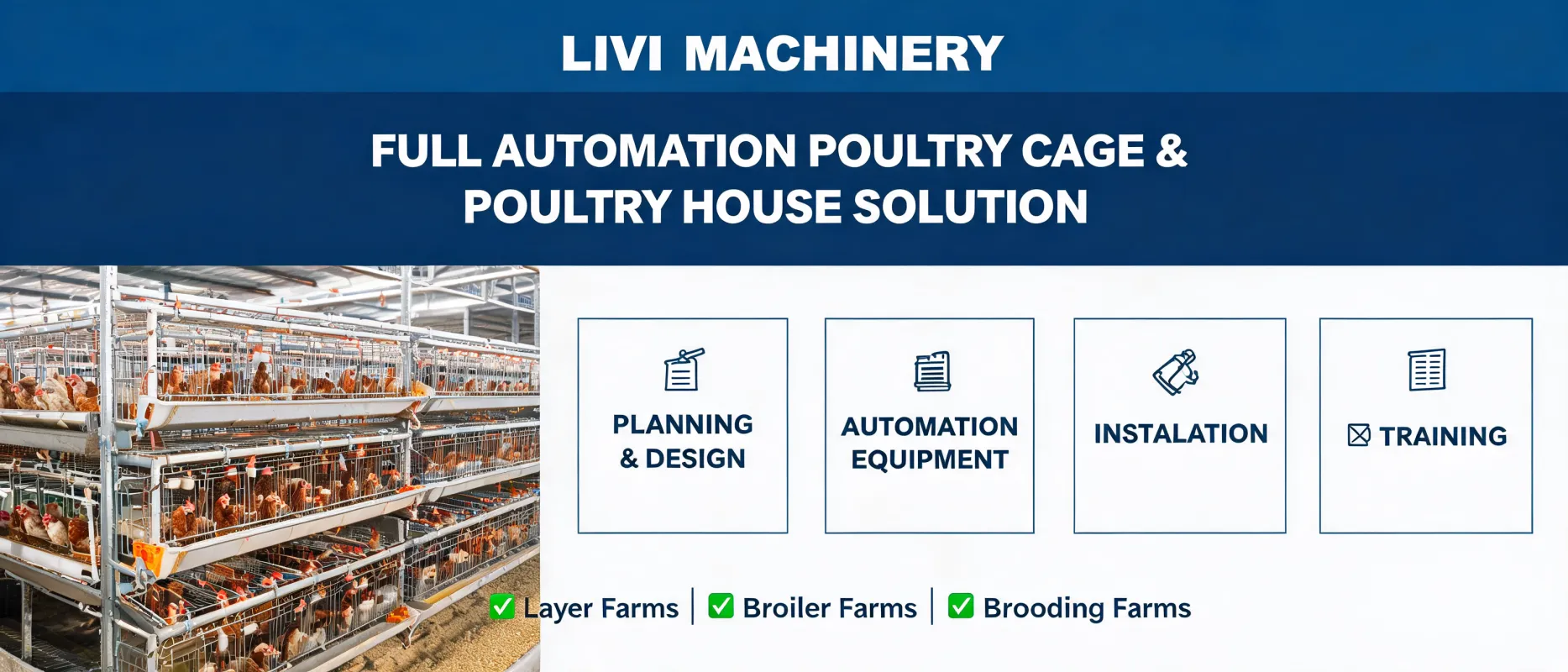
A large-scale poultry farm performs best when key subsystems are specified as one integrated solution. Depending on farm type (layers or broilers) and target capacity, an EPC scope often covers:
- Poultry house planning & layout: functional zoning, workflow routing, and equipment placement logic to support daily operations.
- Housing equipment selection: layer cages, broiler cages, brooding/growing cages, and matching accessories based on management needs.
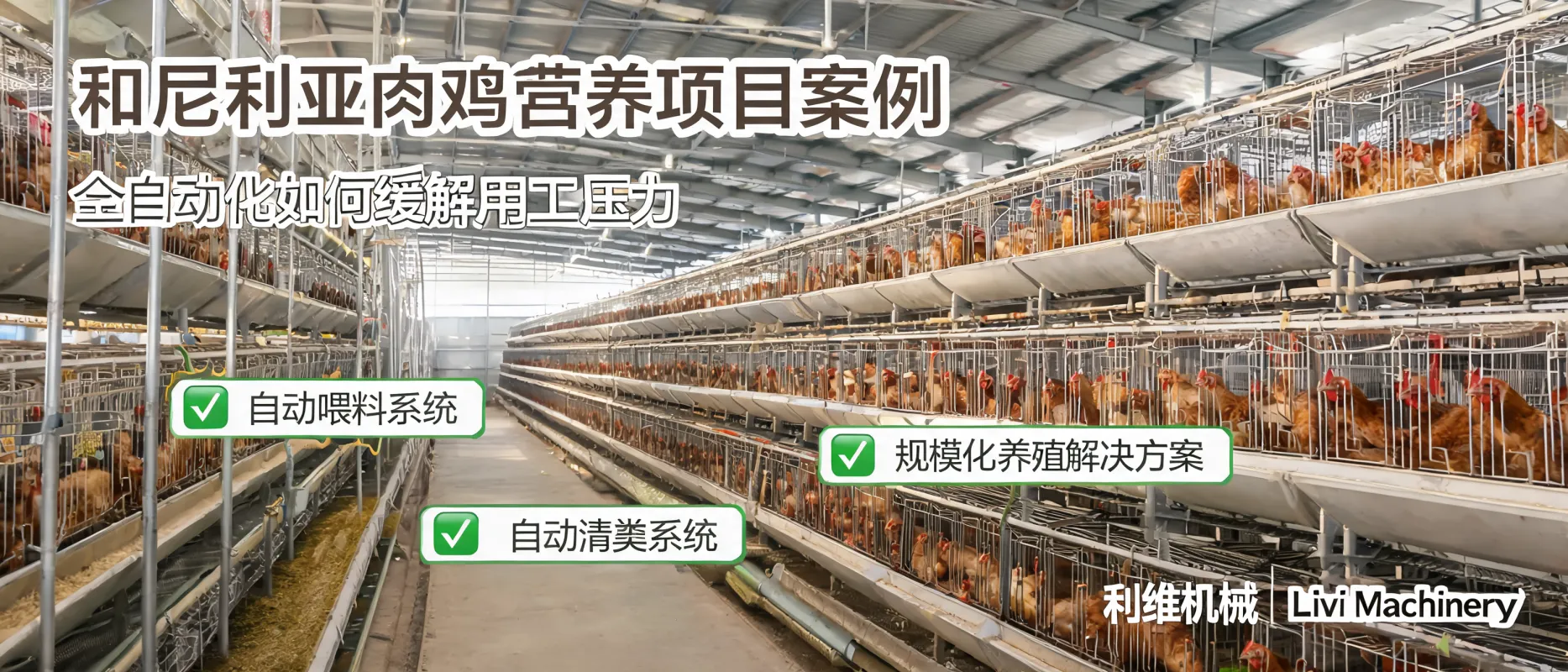
- Automatic feeding system: coordinated feeding lines and control considerations for stable feeding operations.
- Automatic drinking system: reliable watering configuration aligned to the chosen cage and house setup.
- Automatic manure removal system: manure handling configuration designed for the house layout and target labor model.
- Automatic egg collection system: for layer projects requiring higher handling consistency and reduced manual workload.
- Poultry house environment control equipment: ventilation/cooling/heating coordination as a system requirement, not an afterthought.
- Steel structure poultry house (where applicable): coordinated with equipment footprint and installation requirements.
- On-site commissioning & handover support: practical checks to verify system linkage and operational readiness.
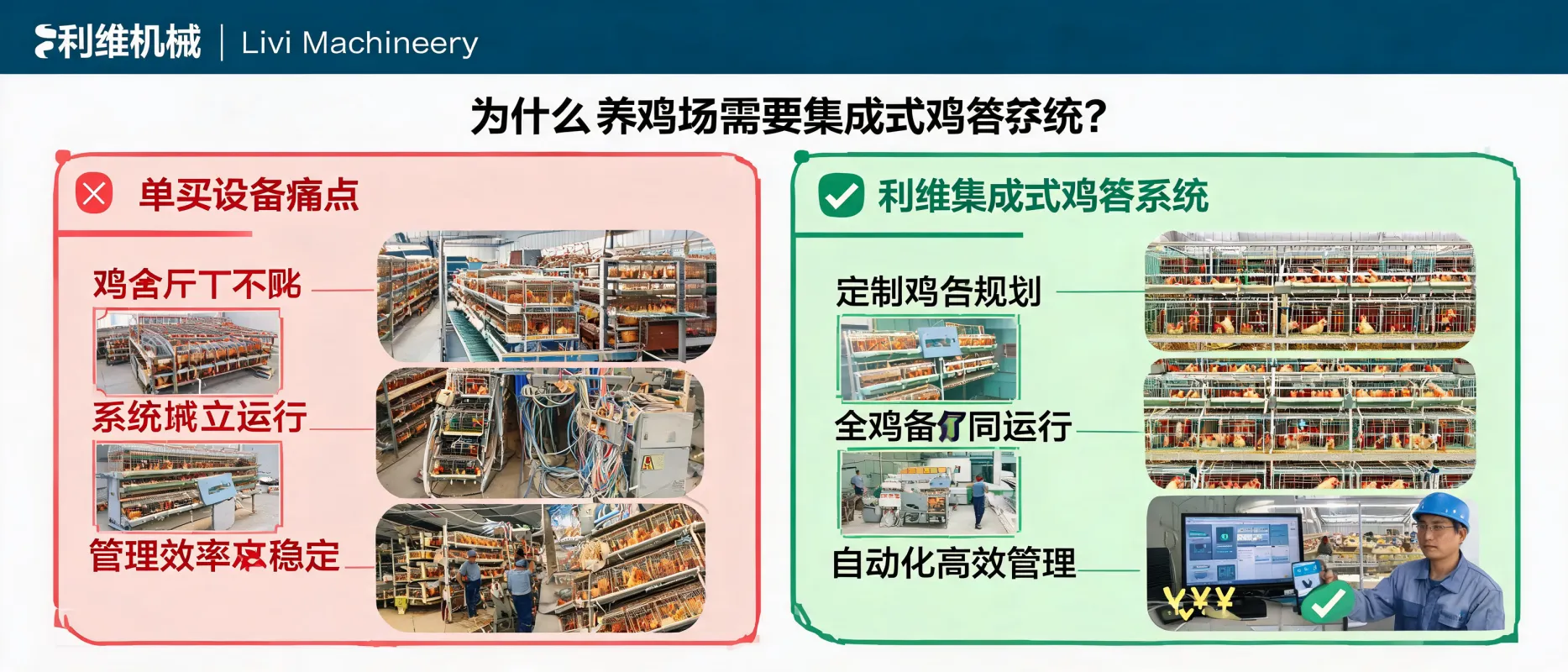
Turnkey EPC is not about “more equipment.” It is about system coordination—ensuring design, procurement, and installation decisions support stable farm operation and clearer project accountability.
EPC vs. Buying Individual Poultry Equipment: Practical Differences
| Evaluation Point | Buying Individual Equipment | Turnkey EPC Farm Solution |
|---|---|---|
| Responsibility | Split across multiple vendors; coordination often sits with the farm owner. | More centralized accountability for scope alignment and interface management. |
| Design Consistency | Risk of mismatched specifications and installation constraints. | Design and equipment configuration are planned as one system. |
| Schedule Control | Multiple delivery timelines; delays can compound at interfaces. | Procurement and installation planning are coordinated under one delivery plan. |
| Commissioning | Each supplier verifies their own system; overall linkage may be unclear. | System-level commissioning focus: interfaces and operational readiness. |
| Owner Workload | Higher management effort for vendor coordination and technical decisions. | Reduced coordination burden through integrated engineering and delivery. |
Note: Actual inclusions vary by project scope, local regulations, and farm goals. A clear scope definition and acceptance criteria are essential in both approaches.
Typical Turnkey EPC Process (From Planning to Handover)
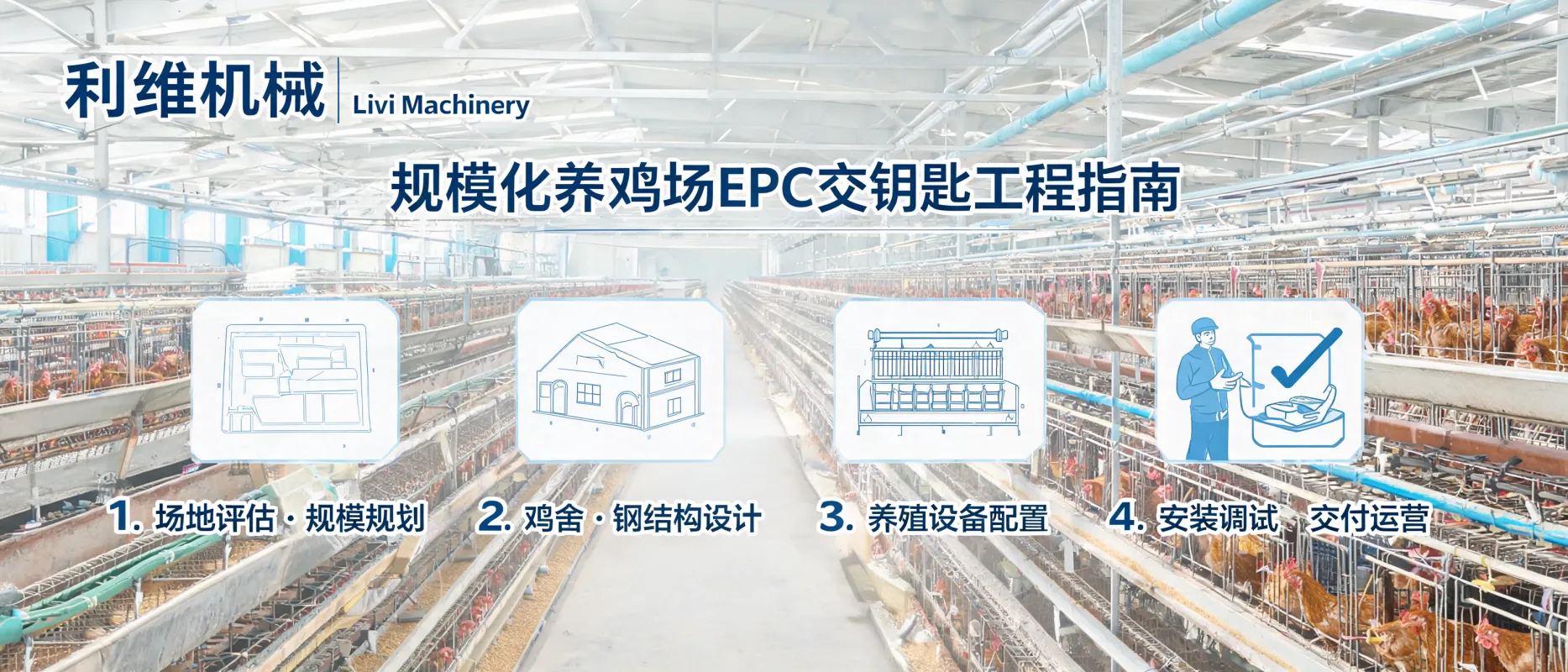
- Requirement alignment: production goals, farm type, management model, and boundary confirmation (what is included/excluded).
- Farm planning & poultry house layout: layout logic that supports operations and the chosen equipment configuration.
- Equipment configuration: selection of cages and automated systems with interface compatibility checks.
- Procurement & delivery coordination: packaging, shipping, and delivery sequencing to reduce on-site friction.
- Installation coordination: structured installation steps and quality checks from frame alignment to system linking.
- Commissioning & acceptance: verify operation of feeding/watering/manure/egg collection/environment control as an integrated farm system.
- Project handover: documentation and practical guidance for stable operation and ongoing maintenance planning.
Who This EPC Approach Is For
Commercial farm investors & owners
When you need a scalable, coherent plan and want clearer accountability across design, equipment, and delivery interfaces.
Operators upgrading to automation
When moving from manual systems to automated feeding, drinking, manure removal, egg collection, and environment control.
Projects in diverse global markets
Suitable for buyers in Africa, the Middle East, Southeast Asia, South America, Central Asia, and Europe seeking a coordinated poultry equipment solution and delivery model.
Why Livi Machinery for an Integrated Poultry Farm Solution
- Focused expertise: R&D and manufacturing of poultry farming equipment since 2013, covering cages, incubators, and full-process farm systems.
- Quality-first practices: strict inspection from raw material selection through shipment, supporting consistent project delivery.
- End-to-end service mindset: from site planning to delivery and commissioning—aligned with a turnkey EPC approach.
- Global delivery experience: served customers across 80+ countries with on-the-ground farm visits (experience varies by project and region).
- Integrated scope options: layer cages, broiler cages, brooding/growing cages, automated feeding/watering/manure removal/egg collection, and poultry house environment control equipment—configured as a system.
Livi Machinery operates as an integrated manufacturer and solution provider, supporting multiple fulfillment models (direct shipment, local production, overseas warehouse, and local distribution) depending on project needs and region.
How to Evaluate Your EPC Scope Before You Start
For a smoother large-scale poultry farm project, clarify these items early:
Project boundary: What is included in engineering, procurement, and construction—what is not.
Acceptance criteria: How commissioning and handover will be verified at system level.
Interface management: Coordination points between poultry house, utilities, and equipment systems.
Delivery plan: Sequenced shipment and installation to reduce on-site delays.
If you want to discuss a turnkey EPC poultry farm solution for your capacity and region, Livi Machinery can align scope, equipment configuration, and delivery planning based on your farm objectives—helping you compare an integrated project approach versus purchasing equipment individually.

Hot Products

.jpg?x-oss-process=image/resize,m_fill,h_800,w_800/format,webp)


Popular articles


READY TO START?
Ready to Build Your Poultry Farm?
Tell us your land size, poultry type and farming capacity. LIVI will provide a complete farm solution for your project.