


Top 5 Poultry Farm Solutions for Large-Scale Projects in Uzbekistan (Cold-Region Focus)

Cold-Region Ready Poultry Farm Planning in Uzbekistan: Compare 5 Core Solutions
Large-scale poultry projects in Uzbekistan often compare the same five solution blocks: automatic chicken cage systems, automatic feeding, automatic drinking, chicken manure removal, and closed poultry house integration (insulation + ventilation + energy management). The best outcome usually comes from how these parts work together—especially when winter temperatures and year-round production stability are key.
Livi Machinery (Zhengzhou Livi Machinery Manufacturing Co., Ltd.) provides fully automated poultry cage equipment and integrated poultry house solutions for layers, broilers, chicks/pullets, and floor systems—supporting projects from planning and configuration to installation guidance and training.
The “Top 5” Poultry Farm Solutions—What They Are and How They Fit Together
In practice, these solutions are not separate purchases. A stable large-scale operation usually requires a coordinated system design—so equipment selection, house dimensions, service corridors, and airflow paths do not conflict.
1) Automatic Chicken Cage System
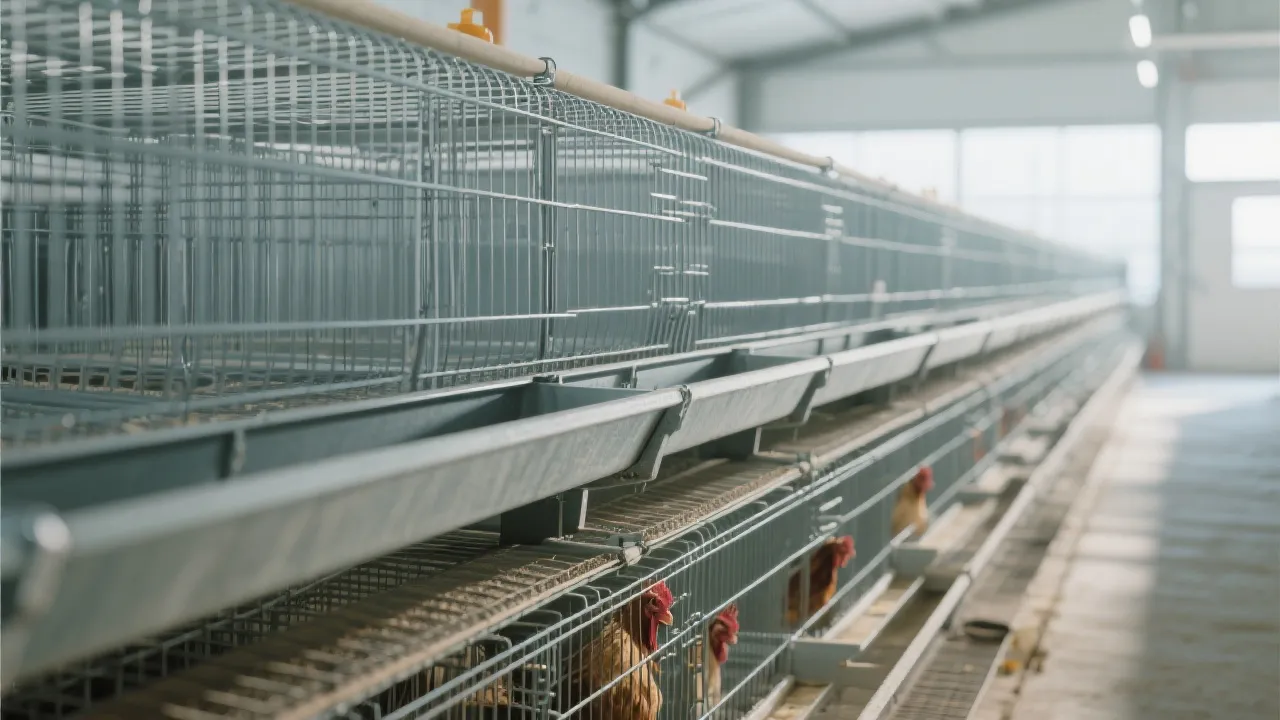
The cage system defines the farm’s core geometry (rows, tiers, aisle width, service access). For Uzbekistan projects, cage selection should be reviewed together with ventilation and manure handling to avoid bottlenecks.
- Applicable to layers, broilers, and brooding/growing stages
- Common structures include A-type and H-type configurations depending on scale and space utilization goals
2) Automatic Feeding System
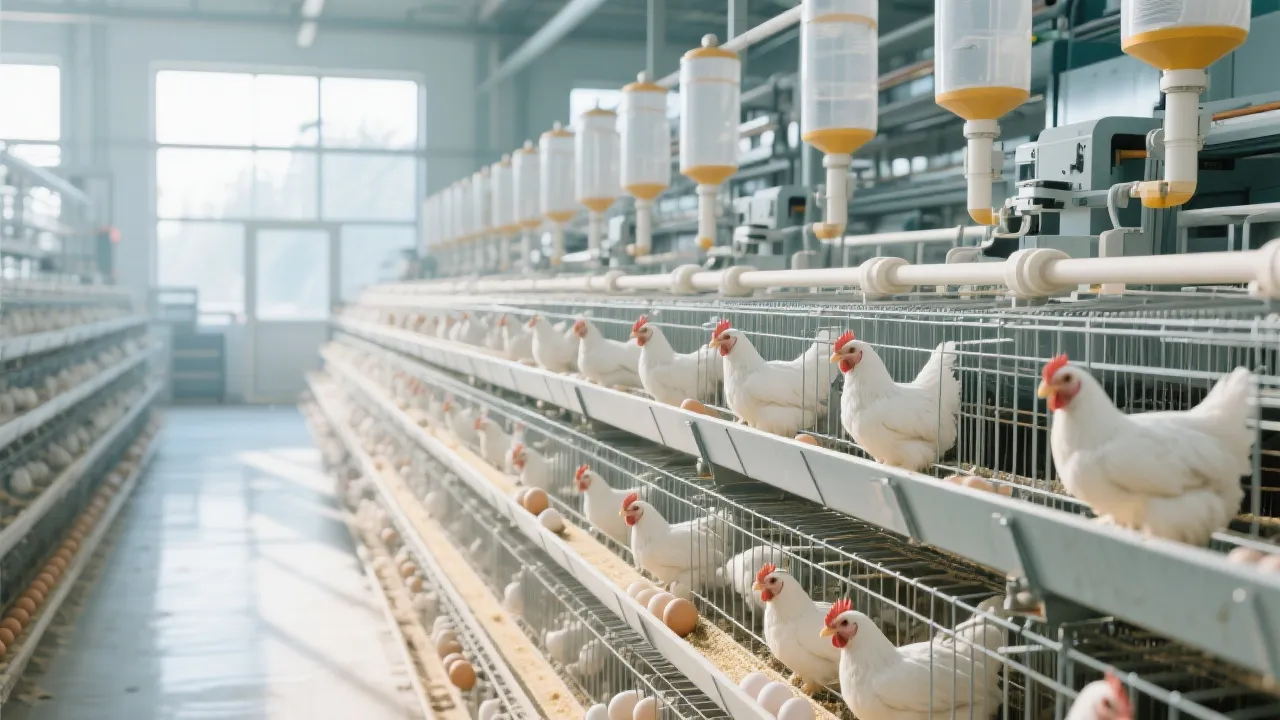
Feeding automation is mainly about consistent delivery and predictable daily routines—important for large houses where manual feeding becomes uneven and labor-intensive.
- Designed to distribute feed along each tier/line
- Planned together with power availability and maintenance access
3) Automatic Drinking System
Drinking lines and water treatment/pressure regulation support hygiene and help keep litter/manure areas drier. In cold seasons, planning should also consider stable operation and house moisture control.
- Typically uses nipple drinkers with filtration and pressure components
- Layout must match cage tiers and aisle servicing
4) Chicken Manure Removal System
Manure removal strongly impacts ammonia, humidity, and overall indoor air quality—factors that become more sensitive when houses are kept tighter for insulation in winter.
- Supports cleaner aisles and more stable hygiene routines
- Should be selected with ventilation targets and house sealing strategy in mind
5) Closed Poultry House Integration (Cold-Region Focus)
A “closed house” approach integrates insulation, controlled air inlets, fans, and supporting systems so the house can balance fresh air with heat retention and energy use.
- Ventilation components (e.g., fans, cooling pads, inlets) are designed as one airflow system
- Sensors/controllers help operators adjust by temperature and humidity rather than guesswork
How to Choose in Uzbekistan: Practical Comparison Criteria (No Overpromises)
When multiple suppliers quote similar equipment lists, decision quality comes from checking system compatibility and cold-region operating logic. Below is a practical comparison framework used in many large-scale planning discussions.
| Solution block | What to verify for large-scale builds | Cold-region considerations (Uzbekistan) |
|---|---|---|
| Automatic cage system | House dimensions, aisle widths, tier height, service access, future expansion | Integration with airflow path; avoid dead zones that trap humidity/ammonia when house is sealed |
| Feeding | Line routing, motor/power matching, ease of cleaning and maintenance | Stable daily operation in winter; ensure maintenance access without disrupting house climate |
| Drinking | Water quality handling, pressure regulation, leak control, line alignment with tiers | Moisture control becomes more important; drier floors support better air quality in sealed houses |
| Manure removal | Removal frequency planning, discharge routing, service safety and reliability | Works with ventilation targets to manage ammonia/humidity without excessive heat loss |
| Closed house integration | Air inlet plan, fan sizing, sensor/control strategy, insulation and sealing details | Balance insulation, ventilation, and energy consumption to support year-round production stability |
A realistic rule of thumb for procurement: request a single coordinated layout (house + cages + feeding/drinking/manure lines) rather than isolated product specs—this reduces the risk of installation conflicts and operational inefficiencies later.
What Livi Machinery Delivers as an Integrated Poultry Farm Solution
Livi Machinery is a poultry farming equipment manufacturer and integrated solution provider focused on automation-oriented cage equipment and supporting poultry house systems. For layer, broiler, brooding/growing, and floor projects, we support the full build cycle—from planning to stable start-up.
Project-oriented recommendations based on poultry type, target scale, site conditions, and desired automation level.
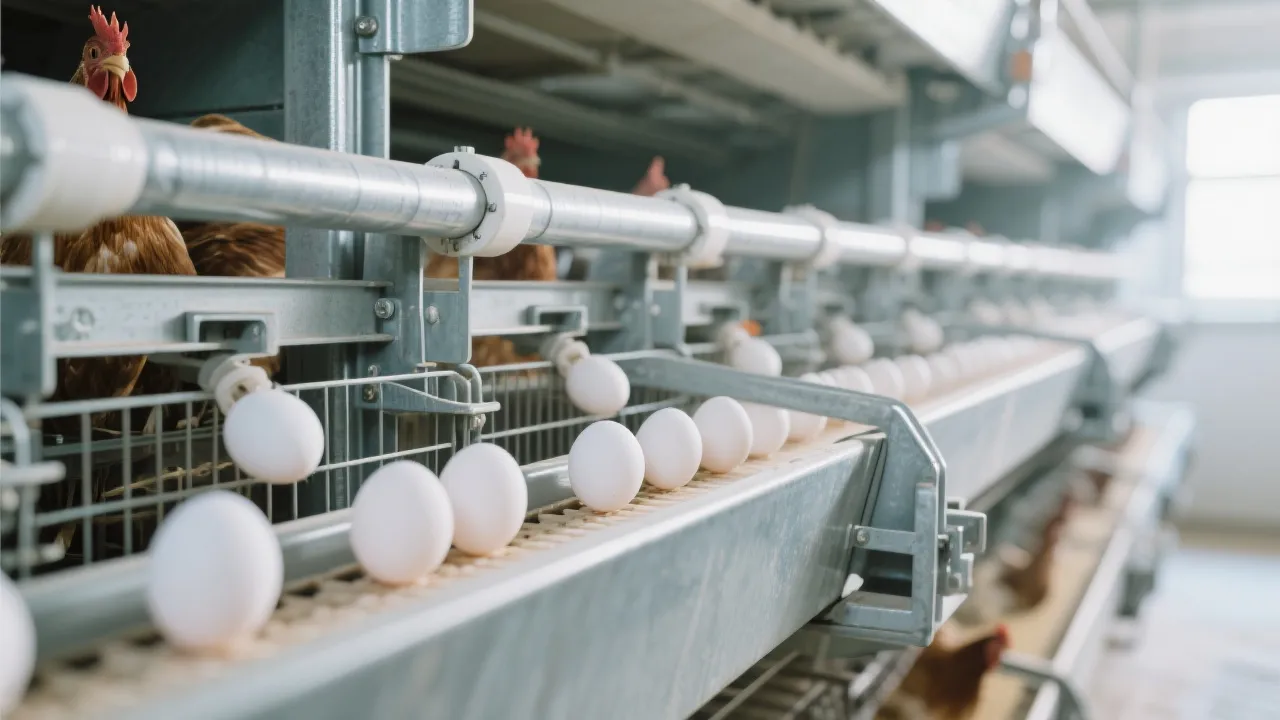
Coordinated selection of cage systems with feeding, drinking, manure removal, and (where applicable) egg collection and house environment supporting systems.
Support for installation workflow and operator training to help teams adopt standardized daily routines.
Deliverables can include layout drawings and equipment lists to streamline communication between investors, integrators, and farm operators.
Who This Page Is For (Uzbekistan Large-Scale Projects)
This comparison is intended for investors, integrators, and commercial poultry farms evaluating new builds or upgrades in Uzbekistan—especially where cold-season operation requires disciplined balancing of insulation, ventilation, and energy use.
If you are comparing poultry equipment suppliers in Uzbekistan or estimating poultry equipment cost in Uzbekistan, the most reliable next step is to confirm your house dimensions, target capacity, and cold-season operating strategy—then review an integrated configuration (cage + feeding + drinking + manure removal + closed-house systems) as one complete solution set.



Hot Products

.jpg?x-oss-process=image/resize,m_fill,h_800,w_800/format,webp)


Popular articles





READY TO START?
Ready to Build Your Poultry Farm?
Tell us your land size, poultry type and farming capacity. LIVI will provide a complete farm solution for your project.