


Top 5 Commercial Poultry Farm Equipment Options for a Modern Layer Farm Project

Selecting commercial poultry farm equipment for a modern layer farm project is not about buying “more machines”—it’s about choosing systems that fit your house layout, stay maintainable under real farm conditions, integrate with automation, and deliver stable long-term operating value.
This page ranks five essential equipment options using four practical criteria: installation fit, maintenance demands, automation compatibility, and long-term operating value. The list is built around the core of most scalable layer projects: an H-type layer cage solution from Zhengzhou Livi Machinery Manufacturing Co., Ltd. (Livi Machinery).
Buyer intent guidance: If your goal is scalable egg production, start with the cage system and the automation chain around it. If your goal is mainly labor reduction and environment stability, prioritize manure removal, egg collection automation, and poultry house ventilation / climate control.
Ranking Criteria (Used for All 5 Options)
Installation fit
House dimensions, aisle widths, foundation tolerance, and layout efficiency (rows/tiers/clearances).
Maintenance demands
Ease of cleaning, access for inspection, wear-part serviceability, and downtime risk.
Automation compatibility
Interface readiness for feeding, drinking, egg collection, manure removal, and climate equipment.
Long-term operating value
Material durability, corrosion protection, and stable performance across production cycles.
Top 5 Commercial Poultry Farm Equipment Options for a Modern Layer Farm Project
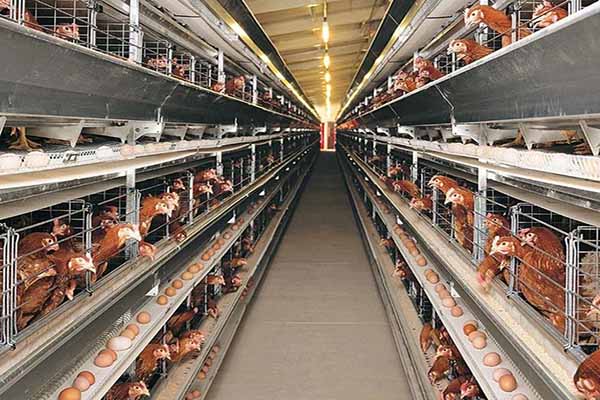
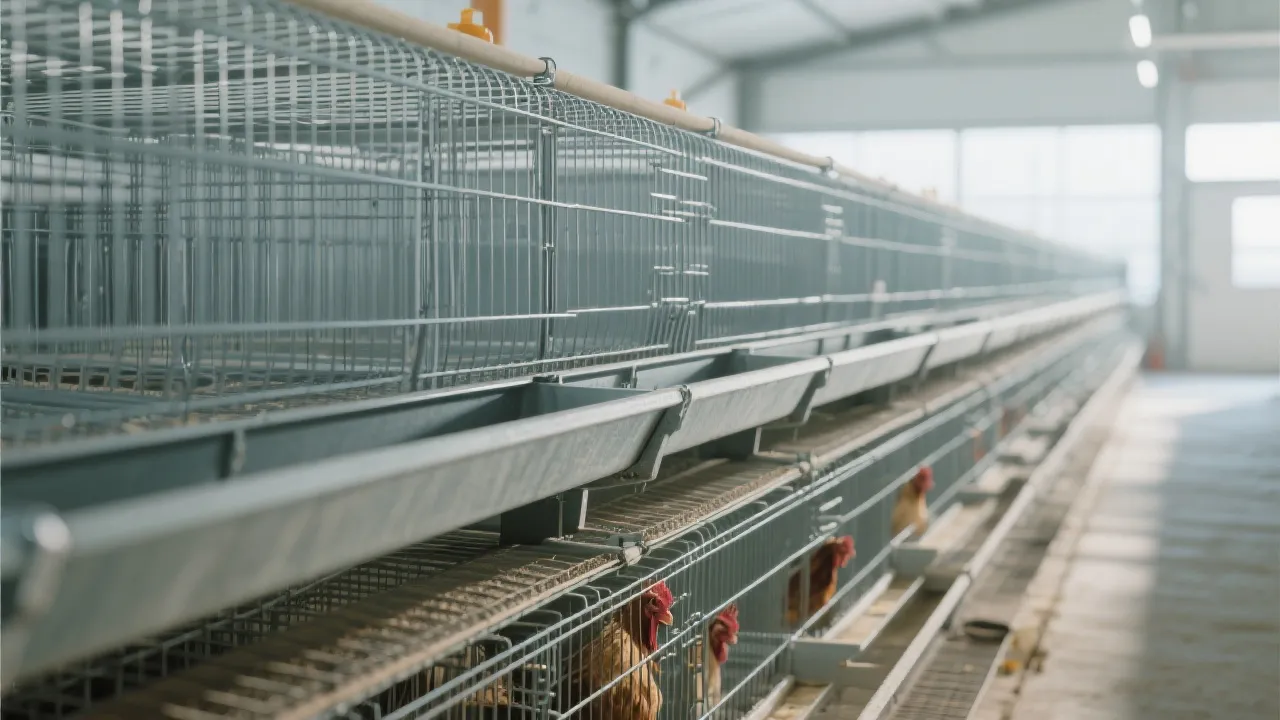
#1 — High-efficiency H-type Layer Cage System (Core Production Infrastructure)
The H-type layer cage system is the structural backbone of a modern layer farm project. It directly determines capacity planning, space utilization, daily workflow efficiency, and how smoothly automation modules can be connected.
What it is (Livi Machinery specification highlights)
- Designed for commercial layer farms, suitable for projects of approximately 5,000–30,000 birds (project-dependent).
- Built with Q235 steel; surface protection includes hot-dip galvanizing and Al-Zn alloy coating for corrosion resistance.
- Durability reference: 15–20 years service life under appropriate use and conditions.
- H-type structure supports efficient aisles for feeding, cleaning, and egg collection management.
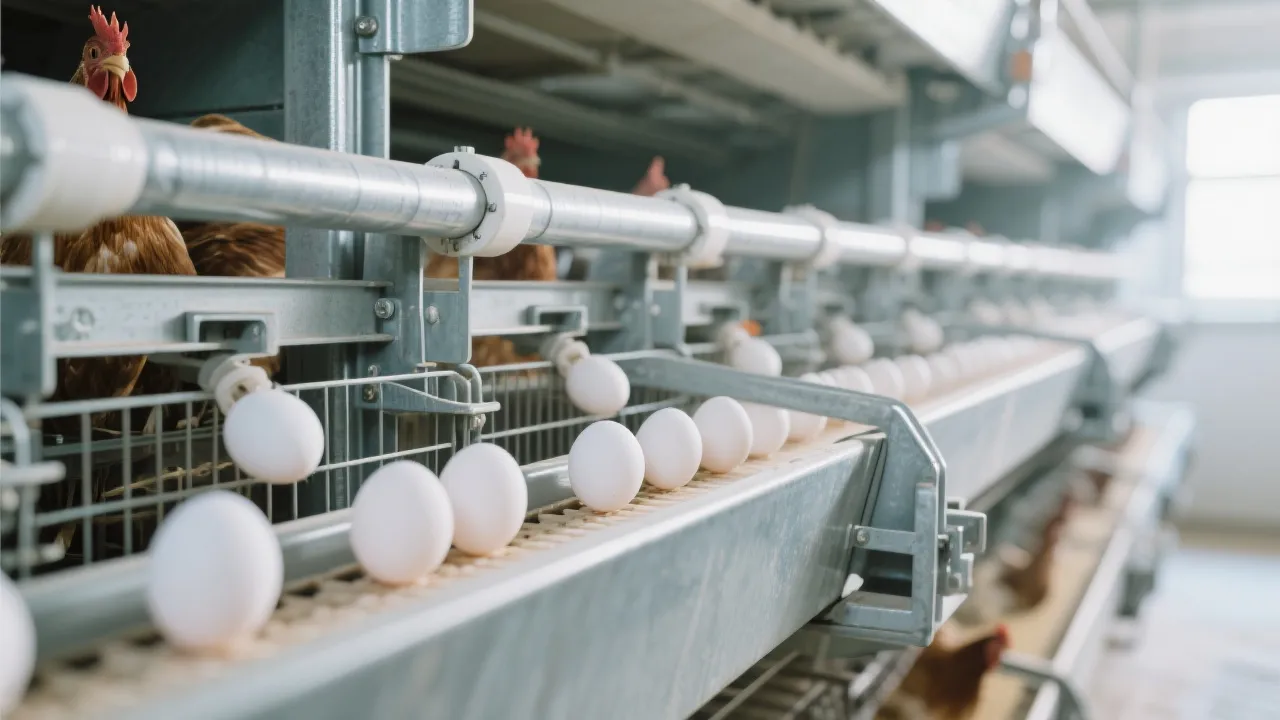
- Designed to work with automatic egg collection and automatic manure removal systems.
Selection notes (what to verify)
- House width/length and the target row & tier configuration (affects installation fit and airflow paths).
- Coating choice vs. local humidity and cleaning chemistry (impacts long-term operating value).
- Access for inspection and repairs (maintenance demands) without disrupting production.
- Planned automation modules and control logic compatibility.
Livi Machinery develops and manufactures poultry farming equipment and offers one-stop project support—from planning to delivery—so the cage system can be integrated into a complete, automation-ready layer farm solution.
#2 — Automatic Feeding System (Labor Efficiency & Uniform Distribution)
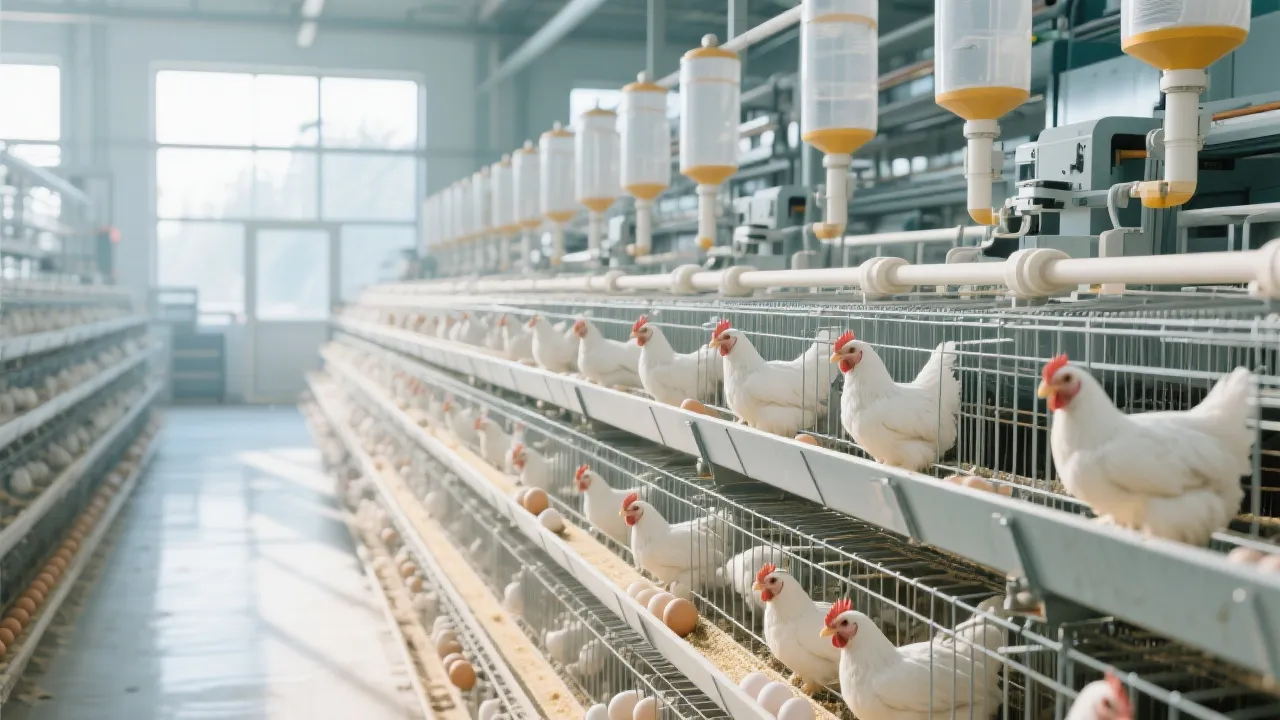
An automatic feeding system supports consistent daily routines and reduces manual workload. For modern layer projects, feeding automation should be evaluated mainly on how well it matches the cage layout and how easy it is to service.
- Installation fit: routing along rows/tiers and access clearance at turns and drive points.
- Maintenance demands: accessibility for cleaning and inspection; ease of troubleshooting in high-dust environments.
- Automation compatibility: coordination with drinker lines and egg collection schedule to avoid workflow conflicts.
- Long-term operating value: stable operation across cycles with manageable wear parts.
#3 — Automatic Drinking System (Daily Stability & Easy Sanitation)
The automatic drinking system is a foundational utility in a layer house. Buyers typically prioritize stable water delivery, straightforward line management, and serviceability—especially when scaling from one house to multiple houses.
| Evaluation point | What to check on-site |
|---|---|
| Installation fit | Line placement relative to cage tiers; ease of access for adjustment and inspection. |
| Maintenance demands | Routine cleaning approach; parts that may require periodic replacement; leak prevention practices. |
| Automation compatibility | Integration with control routines and daily workflow (feeding/egg collection/manure removal). |
| Long-term operating value | Consistency over time and ease of keeping water lines in good operating condition. |
#4 — Automatic Manure Removal System (House Hygiene & Labor Reduction)
An automatic manure removal system is a key labor-saving module and an operational hygiene enabler. In an H-type layer house, it should be selected as part of the full workflow—how manure is moved, collected, and serviced without blocking aisles.
- Installation fit: alignment under tiers and compatibility with the cage frame design.
- Maintenance demands: access for cleaning and tension/drive checks; ease of resolving jams.
- Automation compatibility: scheduling with egg collection and feeding to keep routine smooth.
- Long-term operating value: durability of critical components and practicality of routine service.
Practical note: In project planning, manure handling is often underestimated. Confirm the removal route and maintenance access early—these decisions affect long-term operating value more than many buyers expect.
#5 — Poultry House Ventilation & Climate Control Equipment (Environment Consistency)
A poultry house ventilation system and climate control equipment help maintain a stable environment across seasons and stocking densities. For modern layer farms, the best equipment choices are those that match the house structure and support consistent operation with reasonable upkeep.
- Installation fit: airflow paths, fan placement, and how ventilation works with cage row layout.
- Maintenance demands: routine cleaning access, component replacement practicality, and downtime tolerance.
- Automation compatibility: coordination with farm routines and any integrated control strategy.
- Long-term operating value: stable performance under local dust, humidity, and temperature profiles.
How These 5 Options Work Together (Modern Layer Farm Logic)
Production scalability driver
The H-type layer cage system defines capacity and layout. Once the cage infrastructure is right, the farm can scale more predictably with standardized routines and expansion planning.
Labor reduction & routine stability
Automatic feeding, automatic drinking, and automatic manure removal reduce repetitive manual work and improve daily operational consistency—especially important at commercial scale.
Environment control
Ventilation and climate control support a stable house environment. When paired with a well-planned layout, it strengthens long-term operating value by reducing stress factors and operational disruptions.
Why Buyers Choose Livi Machinery for Layer Farm Projects
- Specialized focus: poultry farming equipment R&D and manufacturing since 2013, serving global commercial poultry markets.
- Project-oriented delivery: from planning to delivery, supporting “give us land, we provide a farm” style implementation for customers who prefer an EPC / turnkey approach.
- Quality process emphasis: strict inspection from raw material selection to shipment (company stated quality policy).
- System coverage: layer cages, broiler cages, brooding/rearing cages, automated feeding, drinking, manure removal, egg collection, and poultry house environmental control—supporting a complete automatic poultry farm solution when required.
For procurement teams comparing automatic poultry equipment, Livi Machinery can help map equipment choices to your building parameters, farm routine, and automation roadmap—so the final configuration is practical to install, run, and maintain.
Typical Use Fit (Who This List Helps Most)
Best suited for
- Commercial layer farm investors and integrators planning scalable capacity.
- Farm owners upgrading from manual to semi/fully automated operations.
- EPC/turnkey projects needing a coherent equipment chain rather than isolated purchases.
Useful questions to prepare
- Target bird capacity and house dimensions (current or planned).
- Preferred automation scope (feeding, manure, egg collection, climate).
- Local environment (humidity/temperature) and maintenance resources.
- Delivery preference: direct shipment, local production, overseas warehouse, or local distribution (where applicable).
Planning a Modern Layer Farm Project?
If you’re evaluating equipment for a new build or expansion, Livi Machinery can align an H-type layer cage system with the right automation modules—feeding, drinking, manure removal, egg collection, and poultry house ventilation/climate—based on your installation constraints and operating goals.



Hot Products

.jpg?x-oss-process=image/resize,m_fill,h_800,w_800/format,webp)


Popular articles


READY TO START?
Ready to Build Your Poultry Farm?
Tell us your land size, poultry type and farming capacity. LIVI will provide a complete farm solution for your project.