


Top 5 Automatic Chicken Cage Systems for 50,000 Birds in Ghana: Selection Guide for Hot & Humid Farms

A practical selection guide for 50,000-bird farms in Ghana (hot & humid)
For a 50,000-bird commercial poultry project in Ghana, choosing an automatic chicken cage system is not only about cages. The right result depends on how the poultry house plan, automation modules (feeding, drinking, manure removal, egg collection), ventilation/cooling, and corrosion resistance work together under hot, humid conditions.
This page is provided by Livi Machinery (Zhengzhou Livi Machinery Manufacturing Co., Ltd.), a poultry equipment manufacturer and integrated solution provider offering automatic poultry cage equipment and chicken house solutions from planning to installation guidance.
Before you compare systems: define the project basics
Layer (egg) or broiler (meat). Cage layout, egg collection need, and stocking design differ significantly.
New build vs. renovation; one house or multiple houses; whether to reserve space for future scaling.
Choose modules that reduce repetitive work while remaining maintainable with your team and local support.
In hot & humid regions, procurement should prioritize stable ventilation/cooling integration and anti-corrosion design alongside capacity.
Top 5 automatic chicken cage system options for a 50,000-bird project
The “top” choice depends on your farm target (layer/broiler), house dimensions, desired automation, and site conditions in Ghana. The five options below are common configurations used in modern commercial planning and can be adapted as part of an integrated chicken house solution.
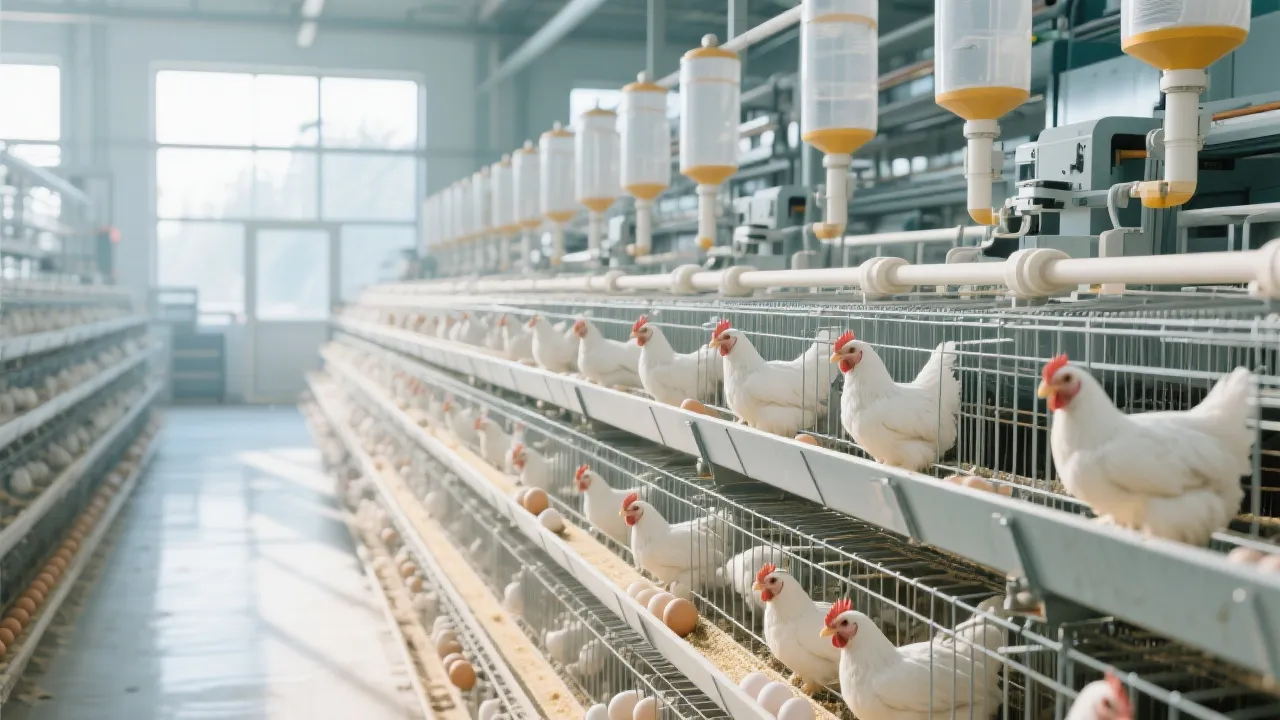
Option 1: A-type layer cage System (step-in automation)
A practical entry for commercial layers where you want a clear structure and the ability to upgrade automation by stages.
- Best for: small-to-medium scaling and budget-controlled projects
- Typical add-ons: feeding + drinking + manure removal (as needed)
- Key check: aisle space for service and future module installation
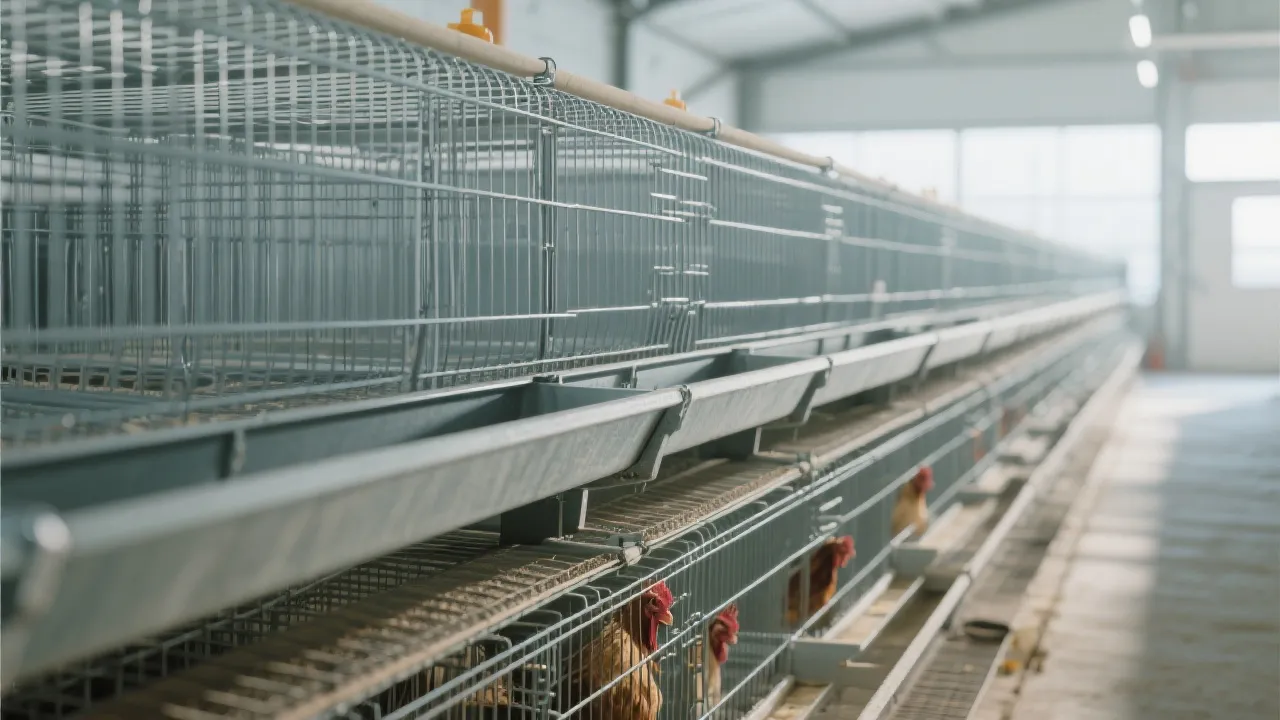
Option 2: H-Type Layer Cage System (high-density, centralized management)
Designed for larger modern layer houses, improving space utilization and supporting stronger automation coordination.
- Best for: large-scale layer investment with standard operating procedures
- Typical add-ons: feeding + drinking + manure removal + egg collection
- Key check: ventilation/cooling layout compatibility with cage rows and tiers
Option 3: H-type broiler cage System (organized batch management)
Focuses on efficient growing management and reducing workload in feeding and manure handling for broiler production.
- Best for: commercial broiler output planning
- Typical add-ons: feeding + drinking + manure removal
- Key check: practical access for batch operations and cleaning routines
Option 4: Brooding / Pullet Cage System (early-stage stability)
For chicks or pullets where stable environment and easy grouping/transfer are priorities—often paired with a later layer/broiler system.
- Best for: integrated farms planning stable early-stage growth
- Typical add-ons: feeding + drinking + heating/insulation planning
- Key check: temperature/humidity control design for the local climate
Option 5: Floor-Raising (Deep-litter) with Automation Lines
A floor system supported by automated feeding/watering and environmental control—useful where you prefer non-cage management but still need standardization.
- Best for: floor-based operation preferences with automation needs
- Typical add-ons: feeding line + drinking line + ventilation/cooling
- Key check: litter management plan and humidity-related sanitation control
What to check in Ghana: shed planning, climate integration & corrosion resistance
Poultry house planning (layout first)
- House length/width/height alignment with cage type (A-type or H-type)
- Service aisles and maintenance access for feeders, drinkers, and manure belts
- Space for control room, egg handling area (layers), and manure outlet logistics
Ventilation & cooling (design as a system)
- Integration of fans, cooling pads, air inlets, and airflow paths with cage rows
- Sensor/controller readiness to support stable daily operation (temperature & humidity)
- Power condition considerations and practical operation routines for hot seasons
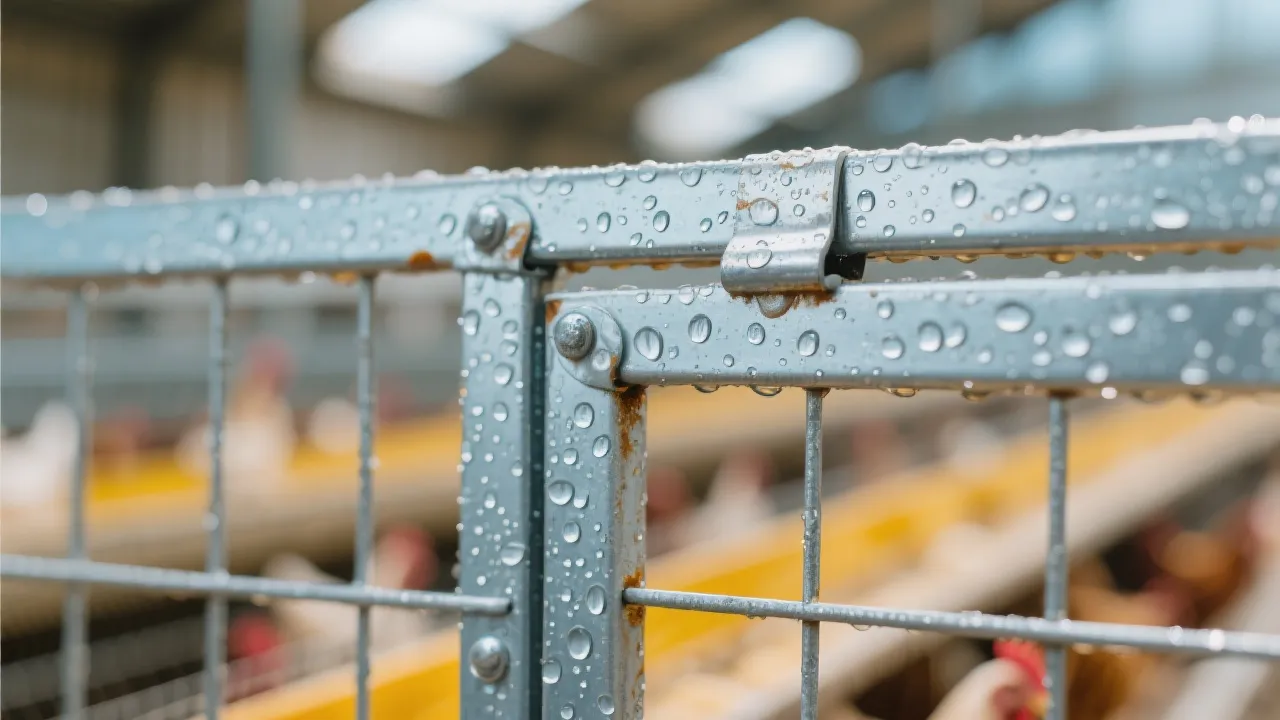
Corrosion resistance (humid-proof details)
- Material and surface treatment choices for cages and structural parts
- Moisture exposure points around drinker lines and manure zones
- Fasteners, joints, and hard-to-clean corners where rust often starts
When capacity is large, small mismatches (layout clearance, airflow direction, manure discharge position) can create ongoing operational friction. A combined review of house drawings + equipment list + ventilation/cooling plan is often more reliable than comparing cage prices alone.
Automation modules: what you’re really buying
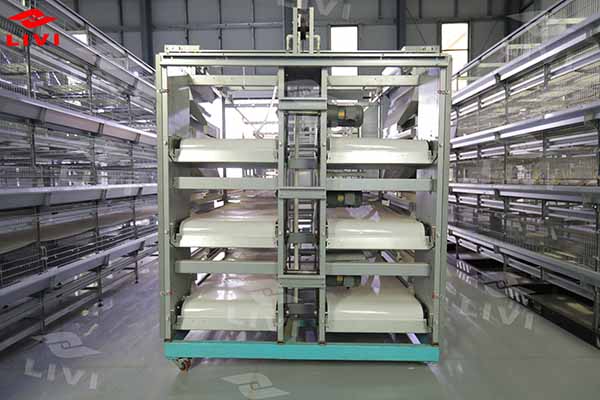
In Livi Machinery’s integrated approach, an automatic chicken cage system is assembled as a working chain—each module affects daily labor, hygiene stability, and management consistency.
How Livi Machinery supports a 50,000-bird project (from planning to commissioning)
Zhengzhou Livi Machinery Manufacturing Co., Ltd. provides fully automated poultry cage equipment and integrated chicken house solutions for layer, broiler, brooding and floor-raising projects. The focus is to help customers move from purchasing equipment to building a workable farm setup.
Recommended house layout and equipment combination based on site conditions, climate, and target farming mode.
Manufacturing, packing and shipping preparation with practical considerations for cross-border project delivery.
Installation guidance and operator training to help farms reach stable daily operation after commissioning.
With experience serving global poultry markets, Livi Machinery focuses on quality control from material selection to inspection before shipment, and provides project-oriented support so your equipment configuration matches the realities of a hot & humid farm environment.
A simple checklist to request a proposal
To evaluate the best automatic poultry equipment setup for Ghana, prepare the following:
- Target bird type (layers/broilers) and planned capacity (50,000 birds)
- Site location and basic climate notes (hot & humid), plus power availability
- Preferred house type (new build or renovation) and approximate dimensions
- Desired automation modules: feeding, drinking, manure removal, egg collection, environment control
- Material / anti-corrosion expectations for long-term use
Based on these inputs, Livi Machinery can align poultry house planning with cage selection and automation modules, helping you compare options with clearer technical boundaries and practical operating considerations.





Hot Products

.jpg?x-oss-process=image/resize,m_fill,h_800,w_800/format,webp)


Popular articles




READY TO START?
Ready to Build Your Poultry Farm?
Tell us your land size, poultry type and farming capacity. LIVI will provide a complete farm solution for your project.