


Why Scaling Poultry Farms Requires a Proper Cage Plan, Not Just Equipment

Scale starts with a plan—especially for cage-based automation
Many poultry projects struggle to scale not because the equipment is “bad”, but because the poultry house layout and cage plan were never designed as one system. When cages, feeding, drinking, manure removal, egg collection, and climate control are purchased separately, farms often face bottlenecks in space utilization, labor efficiency, and automation coordination.
Livi Machinery (Zhengzhou Livi Machinery Manufacturing Co., Ltd.) supports layers, broilers, brooding/growing, and floor-raising projects with automated poultry cage equipment and an overall poultry house solution—from planning and configuration to installation guidance and training—so the farm can run as a scalable, standardized operation.
Why farms fail to scale when they buy equipment without an overall plan
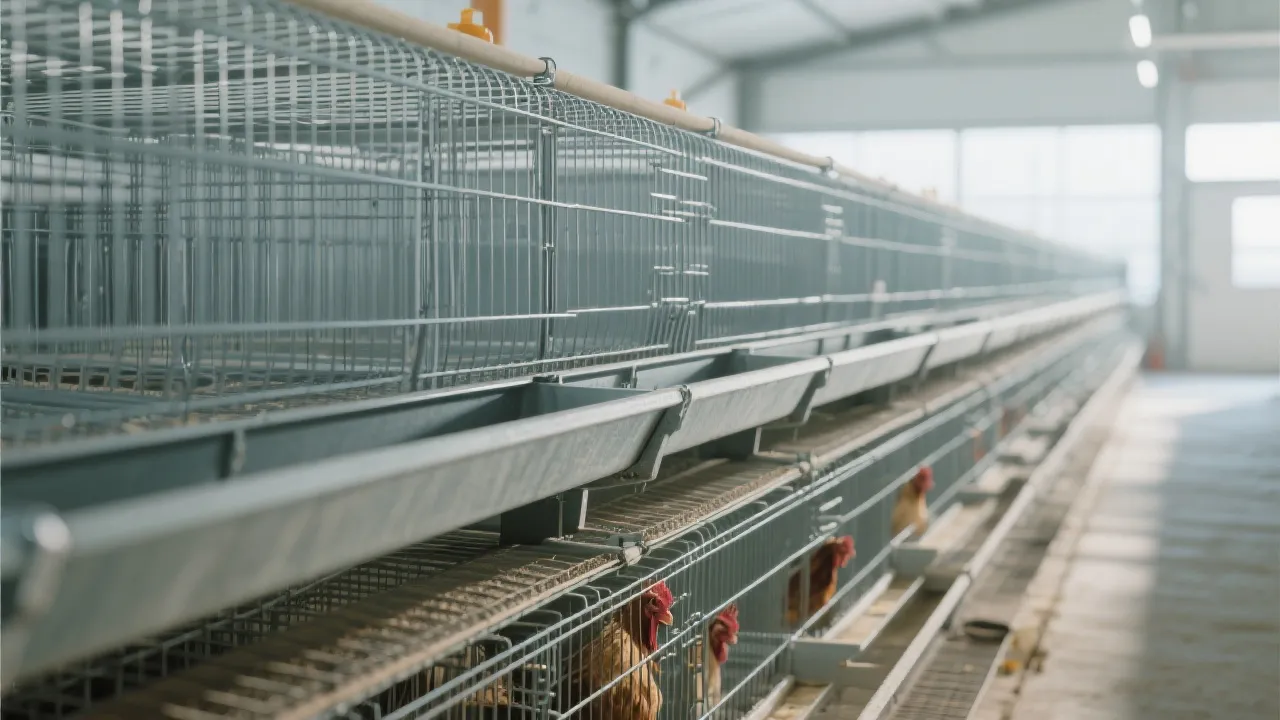
Scaling poultry production is a systems problem. A poultry cage system is not a standalone product—its performance depends on how it is placed inside the poultry house, how workers can access it, and how automated subsystems interact. Without integrated poultry house planning, “more equipment” can actually create more constraints.
1) Space utilization becomes the hidden limiter
Incorrect row spacing, aisle width, tier height, or house orientation can reduce capacity, block service routes, and limit future expansion. The result is a farm that cannot increase bird numbers without costly rework.
2) Labor cost rises from daily “workarounds”
When equipment is not laid out for smooth workflows, routine tasks (feeding checks, egg handling, cleaning, repairs) require extra steps, more staff, and more time—making scale economically harder.
3) Automation coordination fails in real conditions
Feed lines, drinker lines, manure belts/scrapers, egg collection, and ventilation must be synchronized with the cage layout. If purchased separately, farms may face interference, maintenance conflicts, or unstable operation.
4) Climate mismatch affects performance and management
A system that works in one region may not suit another. Temperature, humidity, ventilation strategy, and power conditions influence cage density, air movement, manure drying, and overall stability.
Key takeaway: A scalable poultry project needs an integrated poultry house + cage plan that connects layout, automation, and environment control—before equipment is finalized.
What an integrated poultry house & cage plan includes
Livi Machinery’s approach is to design the farm as an operational system—so the poultry cage system and automated poultry equipment work together from day one. The plan typically considers the poultry type (layers, broilers, brooding/growing, or floor raising), poultry house dimensions, target management style, and local conditions.
House layout & serviceability
- Cage rows/tiers aligned with aisles and maintenance access
- Space reserved for future expansion and equipment replacement
- Clear routes for daily inspection and farm management
Poultry cage system selection
- A-type and H-type cage options based on scale and management needs
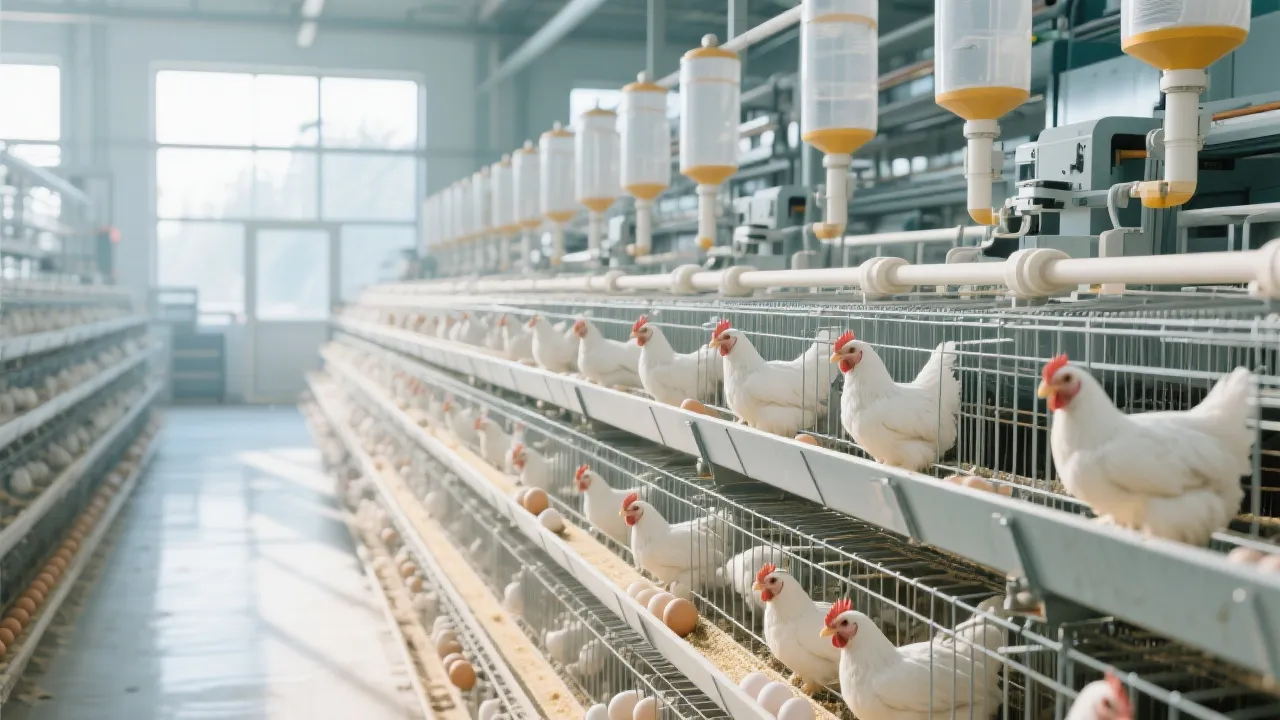
- Layer cage systems, broiler cage systems, brooding/growing cage systems
- Floor-raising support with matching feed/water/environment setups
Automation coordination (designed together)
- Automated feeding system matched to cage lines and capacity
- Automated drinking system (nipple lines + filtration/pressure components)
- Automated manure removal for cleaner air and steadier routines
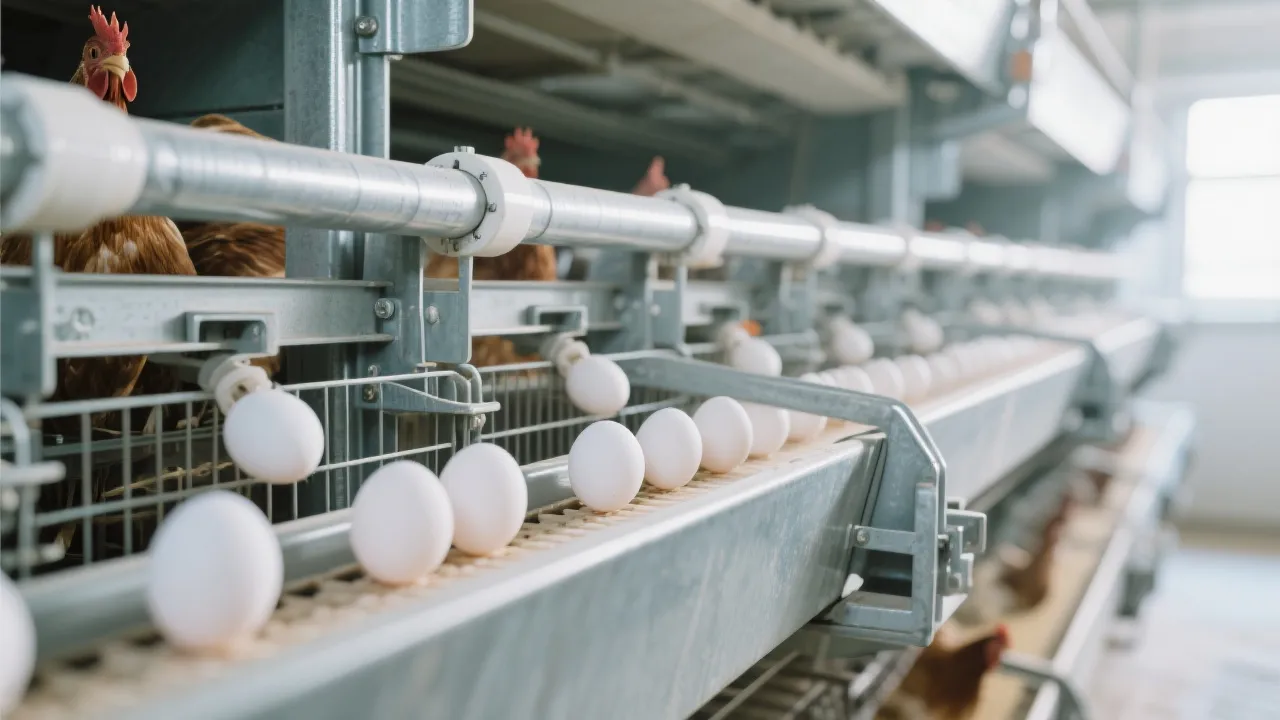
- Automated egg collection for efficient, centralized handling (for layer projects)
Climate- and country-adapted design
- Ventilation/cooling/heating concepts aligned with local climate
- Environmental control components sized for the poultry house and bird load
- Practical considerations for local power conditions and operating habits
How automation supports scaling (when planned correctly)
Automation is most valuable when it creates repeatable routines across the whole poultry house. An integrated plan clarifies where each subsystem sits, how it runs, and how it is maintained—helping farms move from “manual coordination” to “system coordination”.
| Subsystem | What it changes operationally | Why planning matters |
|---|---|---|
| Automated feeding | More consistent feeding rhythm; less daily manual handling | Line routing, drive placement, and access must match the cage layout |
| Automated drinking | Cleaner water delivery with reduced leakage and wet litter risk | Water lines, pressure/filtration setup, and service access must be reserved |
| Manure removal | Improved cleanliness and easier routine scheduling | Clearance, discharge direction, and ventilation interaction affect results |
| Egg collection (layers) | Centralized collection and reduced handling steps | Conveying paths, turning points, and egg room interface require early layout decisions |
| Environmental control | Better control of temperature, humidity, and air quality | Airflow pattern depends on cage arrangement, house size, and local climate strategy |
Where Livi Machinery fits: from planning to stable operation
As an integrated manufacturing and solution provider, Zhengzhou Livi Machinery Manufacturing Co., Ltd. delivers more than individual products. The focus is helping B2B customers build a poultry farm that can be scaled and managed with clearer standards.
Scope of solution
Automated poultry cage equipment and overall poultry house solutions for layers, broilers, brooding/growing, and floor-raising projects.
Delivery support
Planning and configuration support, installation guidance, and training—so the system is not only delivered, but also understood and operated correctly on site.
Quality mindset
Quality control is treated as a priority—from raw material selection to outgoing inspection—to support stable use over the project lifecycle.
Practical note for decision-makers: If your goal is expansion, standardization, or multi-house replication, start by confirming the poultry house layout and poultry cage system plan—then choose automated subsystems as a coordinated set.
Who this solution is built for
Livi Machinery serves global poultry markets with flexible fulfillment options (direct shipment, local production, overseas warehouses, and local distribution). If you are evaluating a poultry cage system, the most reliable starting point is a complete poultry house planning discussion—so equipment choices support long-term scaling rather than limiting it.


Hot Products

.jpg?x-oss-process=image/resize,m_fill,h_800,w_800/format,webp)


Popular articles



READY TO START?
Ready to Build Your Poultry Farm?
Tell us your land size, poultry type and farming capacity. LIVI will provide a complete farm solution for your project.