


How to Plan Poultry Cages and Automation Systems for a Large-Scale Chicken Farm
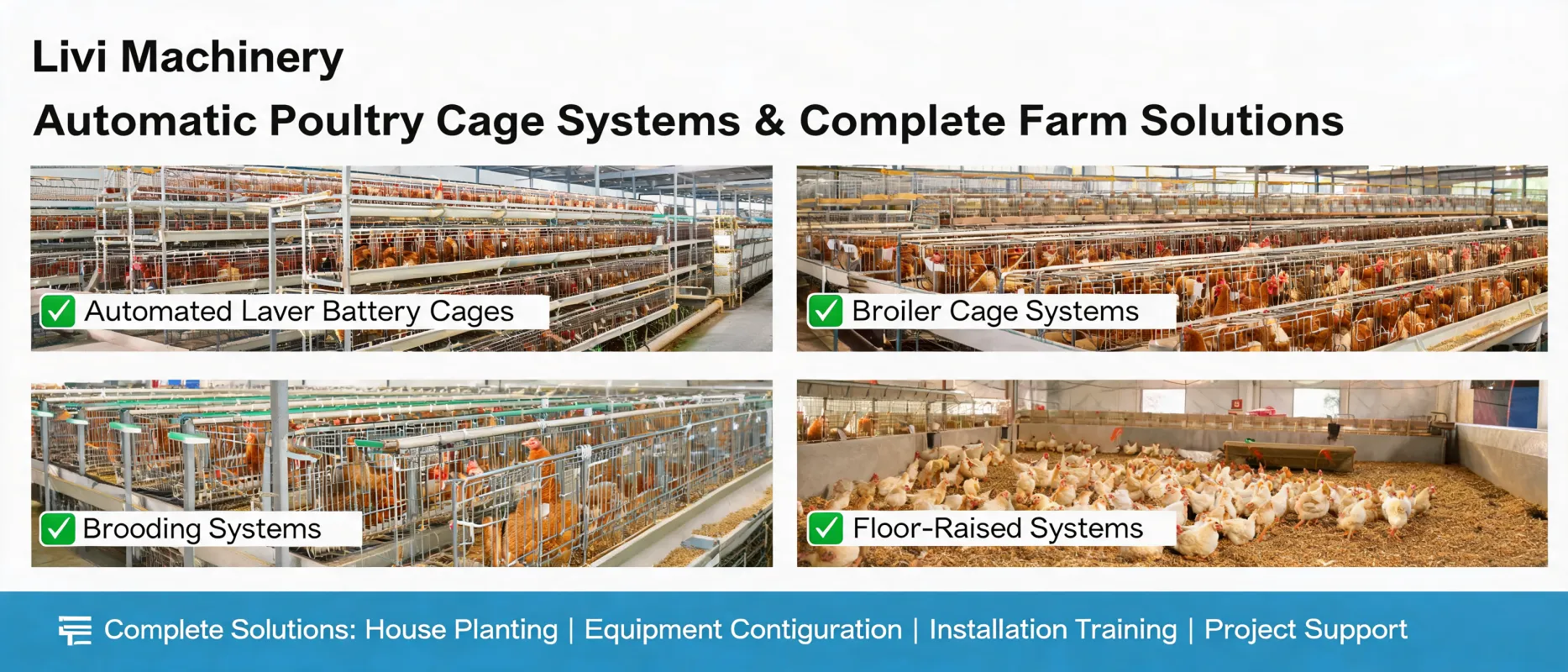
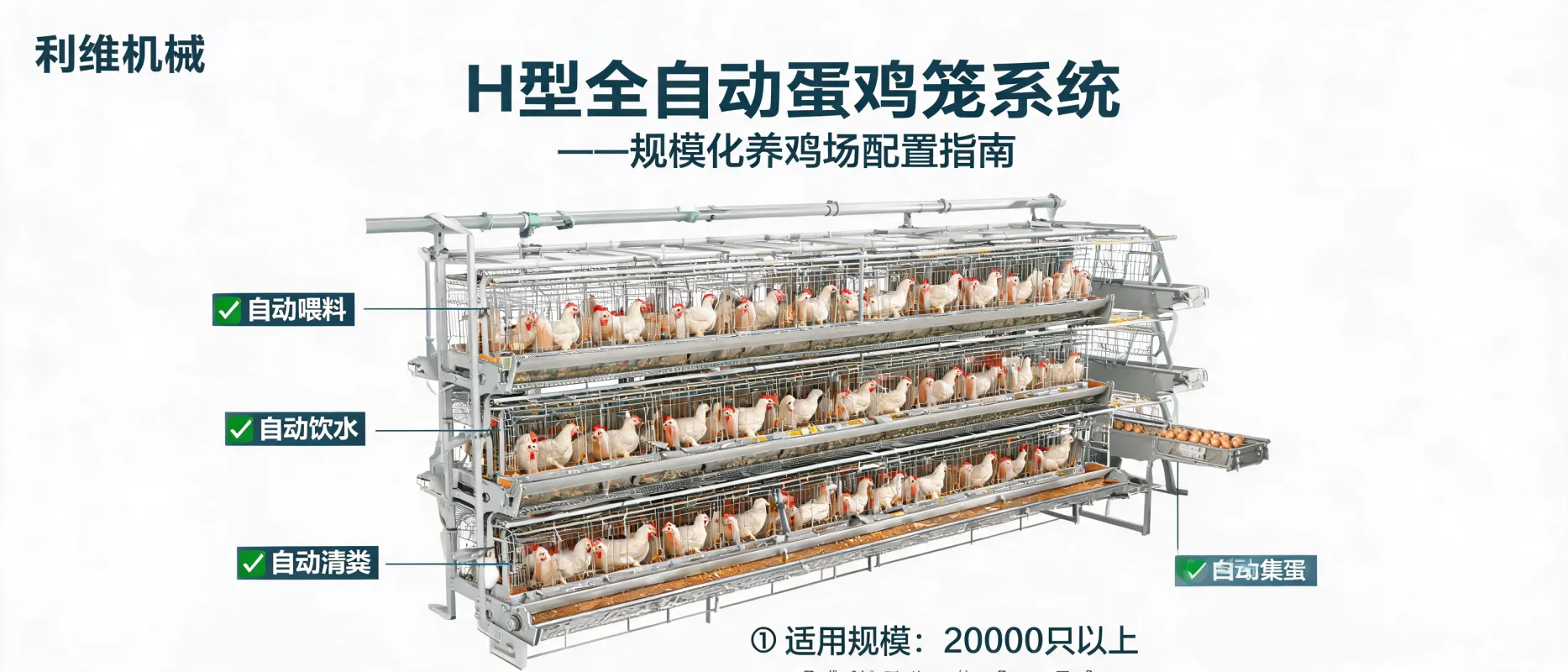
Planning a large-scale chicken farm starts with one practical question: which cage system do you need, and which automation modules must match it so the whole house runs smoothly. This configuration guide from Livi Machinery (Zhengzhou LIVI Machinery Equipment Co., Ltd.) helps you align layer cages, broiler cages, and brooding & rearing cages with key systems—automatic feeding, automatic drinking, manure removal, egg collection, and house climate control.
Use this page to build an initial selection framework and a clear equipment checklist based on farm type, capacity, automation targets, local climate, and budget.
1) Start with Farm Type: Layer vs. Broiler vs. Brooding/Rearing
Layer (Egg Production)
Prioritize egg handling stability, bird comfort, and consistent daily operation. Equipment planning typically centers on cage layout + egg collection + reliable manure removal and climate control.
Broiler (Meat Production)
Focus on growth-cycle efficiency and house turnover. Configuration often emphasizes feeding/drinking capacity, robust manure management, and ventilation/cooling suited to stocking density.
Brooding & Rearing
Put temperature uniformity and access to feed/water first. Brooding/rearing cage systems require tighter climate control and careful matching of drinker type, feeder access, and manure removal rhythm.
2) Core Modules and How They Connect
A reliable large-scale poultry farm is a system: cages define the structure, while automation modules define the daily workflow. The goal is to avoid “islands” of equipment that don’t match line capacity, layout, or climate demands.
| Module | What it does | Key compatibility checks | Most critical for |
|---|---|---|---|
| Layer/Broiler/Brooding Cages | Defines stocking layout, access to feed/water, and service paths. | House dimensions, aisle width, tier/row arrangement, maintenance access, future expansion plan. | All farm types |
| Automatic Feeding System | Delivers feed consistently across rows/tiers. | Line length and capacity, feed bin/silo positioning, uniform distribution, control logic and backup handling. | Layer, broiler, brooding/rearing |
| Automatic Drinking System | Provides stable water supply with appropriate drinker options. | Water pressure stability, filtration/medication readiness (if required), height adjustment for growth stage, anti-leak management. | Brooding/rearing and broiler (high sensitivity to water issues) |
| Manure Removal (Cleaning) Solution | Removes manure efficiently to support hygiene and air quality. | Removal frequency, belt/scraper path layout, collection point design, maintenance access, integration with ventilation. | Especially layer farms (continuous production) |
| Egg Collection System | Moves eggs from cages to collection/packing area. | House layout to egg room, line routing, collection capacity, transfer points, ease of operation. | Layer farms |
| House Climate Control | Controls ventilation, temperature, humidity, and overall house comfort. | Local climate, insulation strategy, ventilation/cooling/heating choices, sensor/control integration, emergency power planning. | All farm types; decisive in extreme climates |
Practical rule: choose the cage system first, then size feeding and drinking lines to match distribution needs, and finally lock in manure removal, egg collection (layers), and climate control based on house layout and climate.
3) Configuration Checklist (What You Should Define Before Quotation)
Farm & Production Inputs
- Poultry type: layer / broiler / brooding & rearing
- Target capacity and house count (single house vs. multi-house project)
- Operation model: automation priority vs. manual support points
- Available utilities: electricity stability, water quality and pressure
Site & Building Constraints
- House dimensions (length/width/height), column spacing, and service corridors
- Local climate profile: hot season peaks, cold season lows, humidity, wind/dust
- Ventilation and insulation approach; climate equipment placement
- Manure/egg logistics: collection area location and route planning
Equipment-Level Parameters
- Cage layout concept (rows/tiers) and growth stage requirements
- Feeding and drinking line routing, control method, and access for maintenance
- Manure removal rhythm and cleaning access design
- For layers: egg collection route and collection/packing interface
Budget & Delivery Considerations
- Preferred automation level (must-have vs. optional upgrades)
- Project timeline and installation plan
- Spare parts expectations and long-term service approach
- Local compliance constraints (if applicable)
4) Planning by Automation Level (Keep the System Balanced)
Essential Automation
- Feeding + drinking sized to cage layout
- Baseline manure removal suited to the house
- Functional ventilation/climate design based on local climate
Efficiency-Focused Automation
- More integrated controls for daily routines
- For layers: smoother egg collection flow to reduce handling
- Enhanced hygiene workflow around manure management
High Automation Target
- System-level coordination to avoid bottlenecks across lines
- Strong emphasis on climate control stability in extreme regions
- Operational planning for installation, training, and ongoing technical support
Note: “More automation” only helps when each module’s capacity and routing are aligned. A balanced configuration is usually more reliable than adding isolated upgrades.
5) Climate & Region: Designing for Real Operating Conditions
Local climate influences equipment selection and house configuration—especially ventilation, cooling, heating, and insulation planning. Livi Machinery supports customized poultry farm design and equipment solutions for diverse climates, including regions with temperatures as low as -40°C and as high as 50°C (project conditions may vary by site).
- Hot climates: prioritize ventilation strategy, cooling capacity planning, and stable water supply for drinking systems.
- Cold climates: focus on insulation, controlled ventilation, and heating planning to maintain uniform house conditions.
- High humidity/dust: consider equipment protection, filtration/maintenance access, and house airflow management.
6) How Livi Machinery Supports Your Equipment Planning
End-to-End Poultry Farm Solution
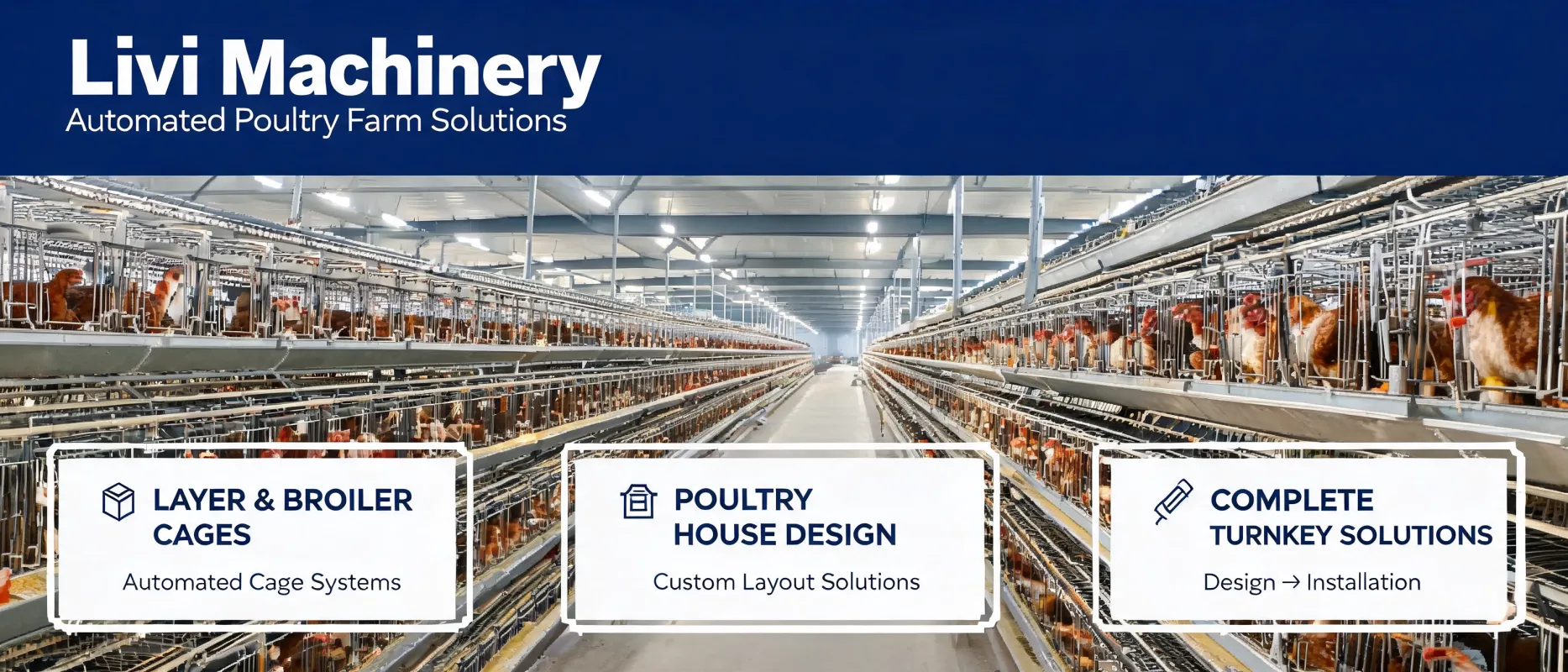
As an integrated manufacturer and solution provider, Livi Machinery supplies modern poultry farming equipment across cage systems and automation modules—supporting projects from site evaluation and planning to custom design, production, installation, and technical support.
Global Delivery & Service Readiness
With experience across international markets and localized installation/technical service capability in multiple countries, we help farms implement equipment configurations effectively and keep operations on track after commissioning.
What to Send for a Faster, More Accurate Proposal
- Farm type (layer/broiler/brooding & rearing) and target capacity
- House dimensions or drawings (if available) and number of houses
- Preferred automation modules: feeding, drinking, manure removal, egg collection (layers), climate control
- Project location and climate notes; utility availability (power/water)
- Budget range and timeline expectations
This information helps turn the guide into a practical equipment checklist tailored to your site and operation goals.
7) Typical Equipment Scope (Reference Map)
Below is a reference scope for large-scale farm equipment planning. Final configuration depends on house design, management preference, and environmental requirements.
Cage Systems
- Layer cage system
- Broiler cage system
- Brooding & rearing cage system
Automation Modules
- Automatic feeding system
- Automatic drinking system
- Manure removal (cleaning) solution
- Egg collection system (layers)
- House climate control equipment
If you are preparing a new farm build or upgrading an existing poultry house, this guide can serve as a clear starting point for poultry farm equipment configuration. Livi Machinery can support you in translating production goals and site conditions into a practical cage-and-automation plan that is ready for engineering, procurement, and installation.



Hot Products

.jpg?x-oss-process=image/resize,m_fill,h_800,w_800/format,webp)


Popular articles


READY TO START?
Ready to Build Your Poultry Farm?
Tell us your land size, poultry type and farming capacity. LIVI will provide a complete farm solution for your project.