
Nigeria Poultry Farm Project
For a 100,000-layer poultry farm in Nigeria, the key requirement is not only cage capacity. Farmers also need a compact chicken house layout, automatic feeding, fast egg collection, timely manure removal, and stable ventilation for hot and humid conditions. This project uses the Livi H-Type Layer Cage System with automatic feeding, drinking, egg collection, manure removal, and environmental control to build a high-density commercial egg production farm.
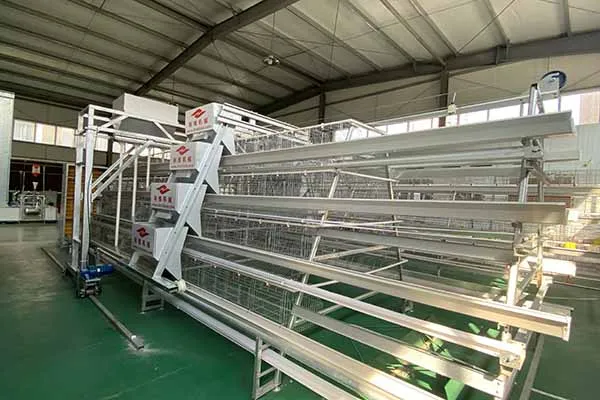
Large-scale poultry farm layout reference for 100,000 layers project planning.
The recommended solution for a 100,000-layer poultry farm in Nigeria is a fully automatic H-type layer cage system. H-type cages use vertical space more efficiently than A-type cages and are more suitable for large commercial farms where land cost, labor cost, and daily management efficiency must be controlled.
The Livi H-Type Layer Cage System can be configured as 3-tier, 4-tier, 5-tier, or 6-tier structures. For a 100,000-layer farm, 4-tier and 5-tier H-type cages are commonly selected because they balance stocking density, ventilation efficiency, house height, installation cost, and maintenance convenience.
The final quantity depends on the selected cage model. Livi H-type layer cages have different birds-per-set capacities according to the number of tiers and cage doors. For example, a 4-tier 2-door H-type cage can hold about 144 birds per set, while a 4-tier 4-door H-type cage can hold about 192 birds per set.
| H-Type Cage Model | Specification | Birds per Set | Estimated Sets for 100,000 Layers |
|---|---|---|---|
| 4-Tier 2-Door | 1200 × 625 × 480 mm | 144 birds/set | About 695 sets |
| 5-Tier 2-Door | 1200 × 625 × 480 mm | 180 birds/set | About 556 sets |
| 4-Tier 4-Door | 1800 × 600 × 430 mm | 192 birds/set | About 521 sets |
| 5-Tier 4-Door | 1800 × 600 × 430 mm | 240 birds/set | About 417 sets |

A 100,000-layer farm should usually be divided into several poultry houses instead of placing all birds in one building. This improves ventilation control, biosecurity, worker movement, egg transportation, and equipment maintenance.
A large-scale layer farm needs complete system coordination. The cage body is the base structure, while feeding, drinking, egg collection, manure removal, ventilation, and control systems determine daily operating efficiency.
| System | Function | Value for 100,000 Layers |
|---|---|---|
| Automatic Feeding System | Transfers feed from silo to cage troughs evenly. | Reduces manual feeding and improves feed uniformity. |
| Automatic Drinking System | Uses nipple drinkers, pressure regulators, filters, and water lines. | Keeps water supply clean and reduces wet manure. |
| Automatic Egg Collection System | Moves eggs from cage belts to the central egg collection line. | Reduces egg breakage and saves egg-picking labor. |
| Automatic Manure Removal System | Uses manure belts under each tier to remove manure regularly. | Improves ammonia control and keeps the house cleaner. |
| Ventilation Control System | Controls fans, cooling pads, air inlets, sensors, and temperature. | Important for Nigerian hot seasons and high-density poultry houses. |
Nigeria has hot weather, seasonal humidity, and high ventilation requirements. H-type cages are suitable because each tier can be equipped with manure belts, egg belts, nipple water lines, and controlled airflow. This helps reduce heat stress, wet manure, ammonia concentration, and daily management difficulty.
The Livi Ventilation Design Standard can include exhaust fans, cooling pads, side wall air inlets, environmental sensors, and intelligent control cabinets. For large farms, the ventilation layout should be calculated according to house length, stocking density, local temperature, humidity, and bird age.
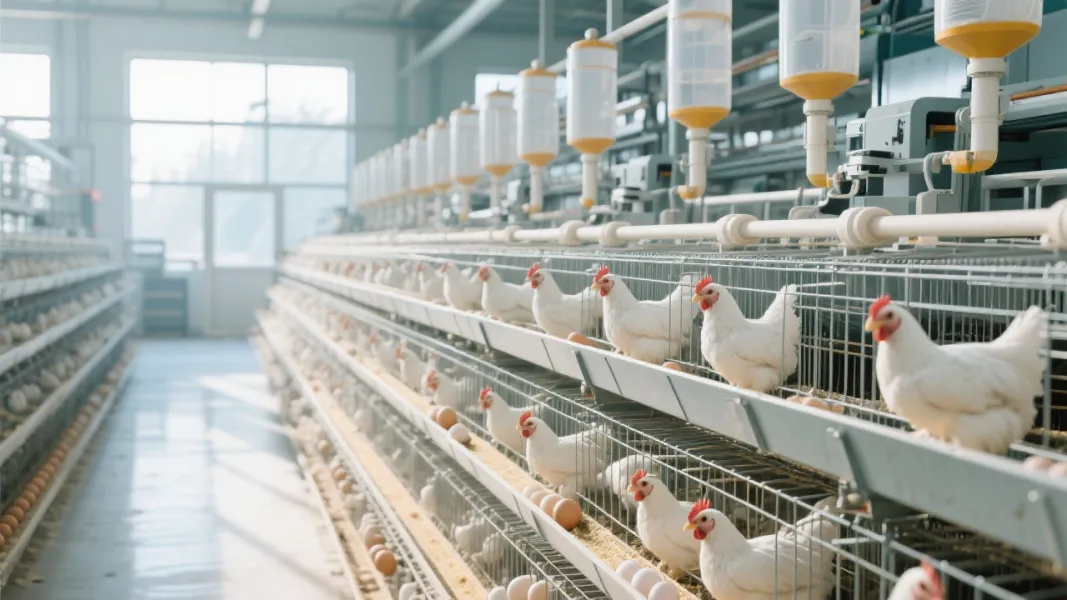
H-type layer cage installation reference for automatic poultry farm projects.
In a traditional manual poultry house, workers spend many hours feeding chickens, picking eggs, cleaning manure, checking water lines, and moving materials. In a 100,000-layer farm, this workload becomes difficult to manage if the farm depends only on manual labor.
The Livi Automatic Egg Collection System, automatic feeding system, and manure belt cleaning system help standardize daily operations. Workers mainly monitor equipment, check bird condition, record production data, and handle abnormal situations.
| Daily Task | Manual Farm | Automatic H-Type Farm |
|---|---|---|
| Feeding | Manual feed transport and distribution | Feed silo + conveyor + cage feeding machine |
| Egg collection | Workers collect eggs row by row | Egg belts and central egg collection line |
| Manure cleaning | Manual scraping or delayed removal | Manure belts remove manure regularly |
| Environment control | Manual fan and curtain adjustment | Sensors, fans, cooling pads, and control cabinet |
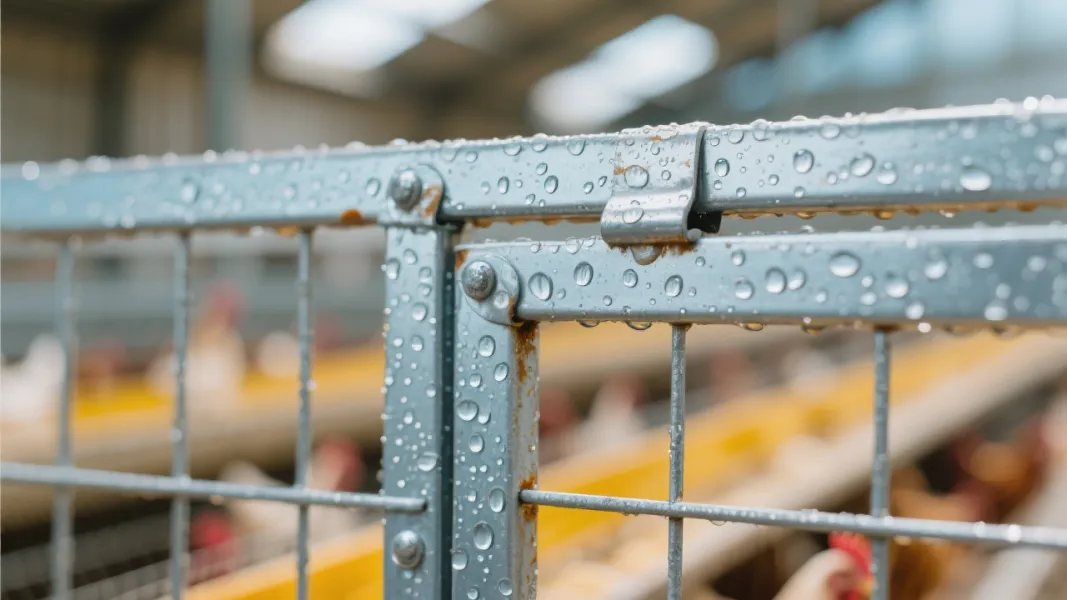
For Nigerian poultry farms, corrosion resistance is important because high humidity, manure gas, and water lines can shorten equipment life. The cage mesh should use hot-dip galvanized or Aluzinc-coated steel to improve corrosion resistance and reduce maintenance frequency.
The Livi H-Type Layer Cage System is designed for long-term intensive poultry farming. Cage wire, frame structure, feed trough, manure belt, egg belt, nipple drinking line, and ventilation parts should be inspected regularly to keep the system stable.
Commercial poultry farm house design reference for large-scale automatic layer projects.
This configuration is designed for commercial egg production. The exact house size and cage row quantity should be adjusted according to land size, local climate, electricity supply, road access, and the customer’s future expansion plan.
| Country | Nigeria |
| Farm Scale | 100,000 laying hens |
| Cage System | Livi H-Type Layer Cage System |
| Automation | Automatic feeding, drinking, egg collection, manure removal, and ventilation control |
| Suggested House Quantity | 3–5 layer houses, depending on land and cage layout |
| Project Goal | High-density egg production with lower labor cost and cleaner house management |
Measure land length, width, road access, drainage direction, wind direction, water supply, and available electricity before cage layout design.
Choose 4-tier or 5-tier H-type cages according to house height, ventilation capacity, investment budget, and management preference.
Configure feeding lines, egg collection, manure belts, nipple drinking, fans, cooling pads, sensors, and control cabinets.
Arrange installation guidance, equipment testing, worker training, and daily maintenance procedures before birds enter the house.
A fully automatic farm needs fewer workers than a manual farm because feeding, egg collection, manure removal, and ventilation can be handled by equipment. The exact labor number depends on house quantity, egg packing method, manure treatment method, and management standard.
Both can work. A 4-tier cage is easier for ventilation and maintenance. A 5-tier cage improves stocking density and saves more house area. For hot regions in Nigeria, the decision should consider house height, fan capacity, cooling pad area, and local temperature.
Automatic feeding, egg collection, and manure removal usually save the most daily labor. Feeding avoids repeated manual feed transport. Egg collection reduces row-by-row picking. Manure belts reduce cleaning workload and help keep the chicken house cleaner.
Egg breakage can be reduced by using a proper bottom net slope, smooth egg rolling path, stable egg belts, buffer devices, and regular belt tension adjustment. Workers should also avoid collecting eggs too late when production volume is high.
Yes. Expansion should be considered during the first layout design. The feed silo area, manure discharge direction, road width, electricity capacity, water supply, and ventilation spacing should leave enough margin for future poultry houses.
If you are planning to build a layer farm in Nigeria, Livi Machinery can provide customized cage layout, automatic equipment configuration, chicken house design suggestions, installation guidance, and operation SOP based on your land size, farm scale, and local climate.
WhatsApp: +86 173 4489 8347
Email: [email protected]
Get a Free Design Plan: Contact Livi Machinery