


Climate-Adapted Multi-Tier Broiler Cage System Design: Stocking Density & Ventilation Optimization for Overseas Farms

Designing a Climate-Ready Multi-Tier Broiler Cage System for Overseas Farms
When broiler farms scale fast, the weak link is rarely genetics or feed—it’s often the building + equipment layout. In hot-humid regions, birds pant and stop eating. In dry temperate zones, dust and uneven airflow trigger respiratory stress. And everywhere, labor costs keep creeping up. This guide walks through a practical, climate-adaptive approach to multi-tier broiler cage system design, focusing on two core levers that decide outcomes: stocking density and ventilation pathway. The goal is simple: keep birds calm, air clean, and management predictable—without overbuilding.
Best for: hot & humid, hot & dry, temperate climates
Key outcomes: lower heat stress, fewer respiratory issues, smoother labor flow
Design focus: 3–4 tiers, air in/out logic, manure & automation integration
1) Start From Climate Reality: What Birds “Feel” Is Not Your Weather App
Overseas projects often fail in small ways: the farm copies a layout from another country and assumes it will behave the same. But broilers respond to effective temperature—a blend of heat, humidity, airspeed, and radiant load. A workable planning habit is to collect (or request) monthly averages plus daily peak humidity and temperature for the hottest season. For many Southeast Asian locations, it’s common to see 30–34°C with 70–90% RH in peak hours. In parts of the Middle East, you may see 38–45°C with 15–35% RH, where dehydration and dust become the daily battle.
Expert note: “A cage system can’t ‘fix’ bad air. It can only amplify good air distribution. Plan airflow first, then decide tier count.”
For Zhengzhou Livi Machinery Manufacturing Co., Ltd., climate-adaptive projects typically begin with a simple question: Will this house remove heat and moisture fast enough at peak load? That single answer guides tier selection, aisle width, fan placement, and even manure belt scheduling.
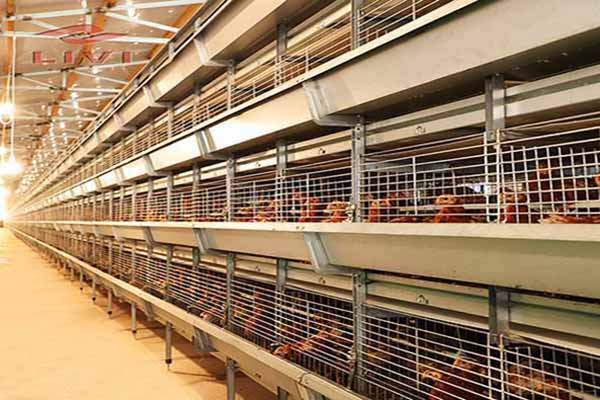
2) Why 3–4 Tiers Are Usually the “Safe Maximum” for Broilers
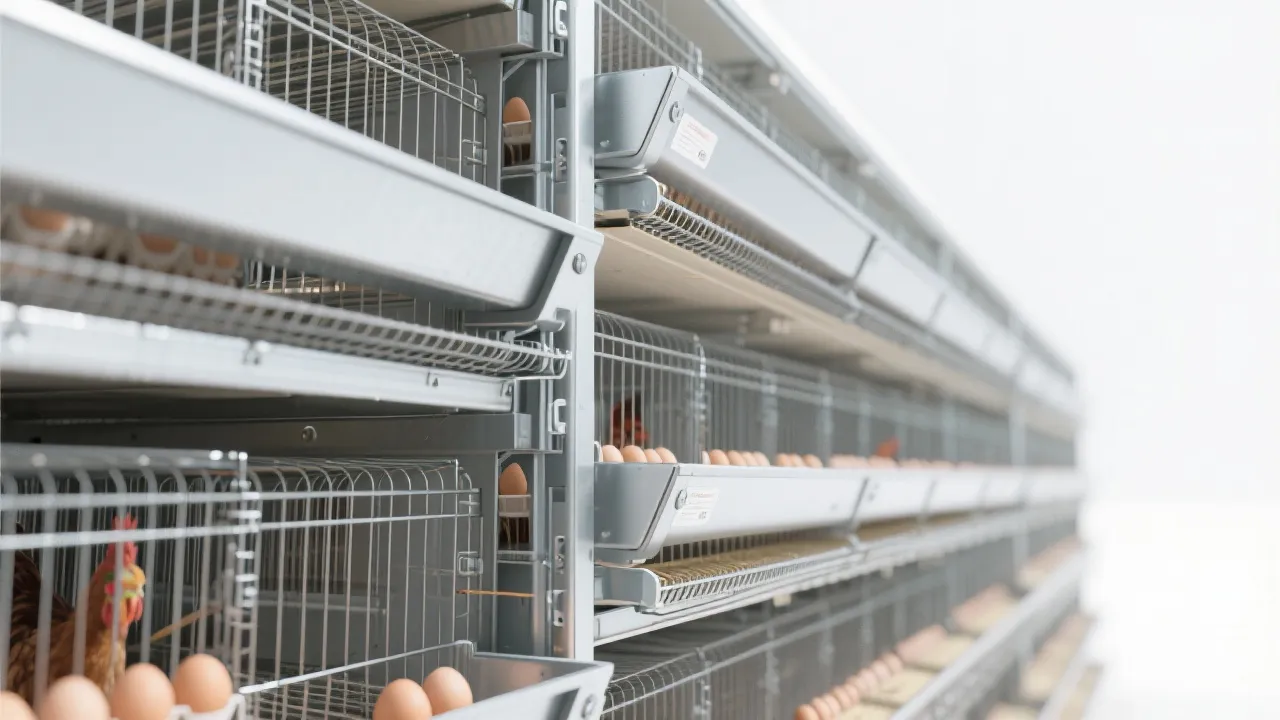
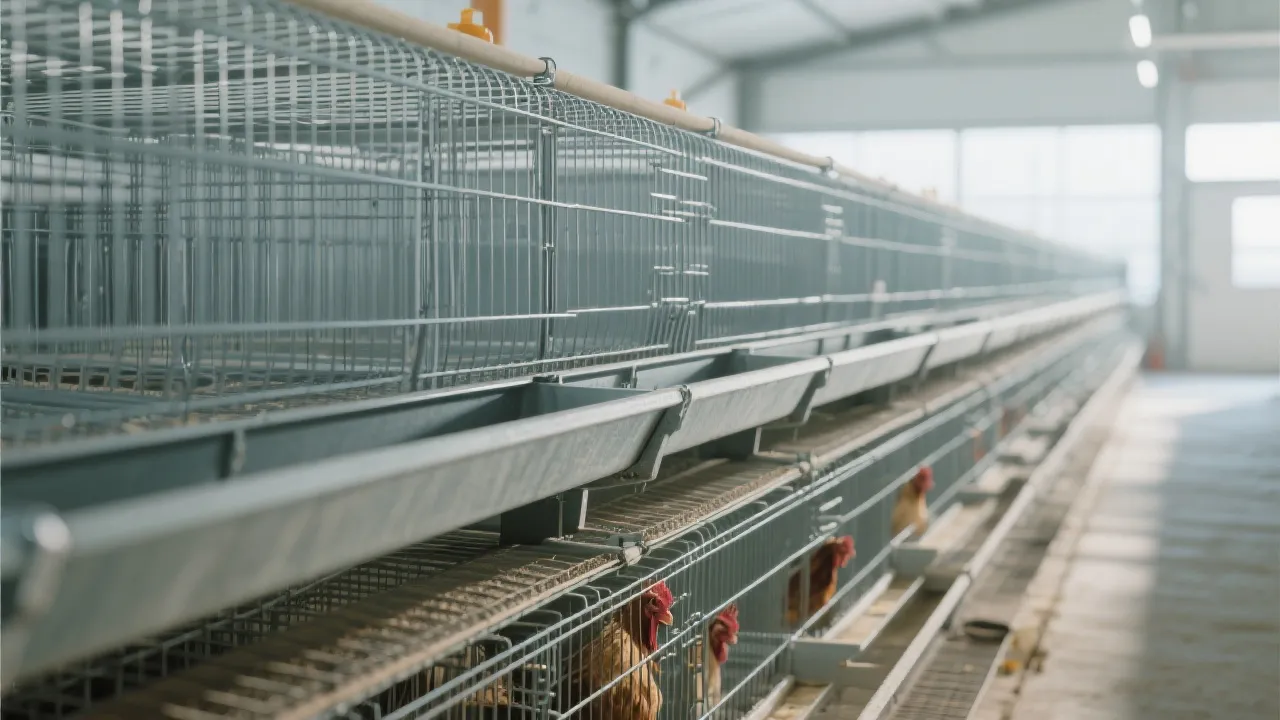
In broiler cage applications, going taller is tempting—especially where land is expensive. But multi-tier design has a hidden cost: the higher the stack, the harder it becomes to keep uniform airspeed and even temperature across tiers. For most climates and poultry house heights, 3 tiers is the comfort-first choice, while 4 tiers can be excellent when the ventilation pathway and static pressure are engineered properly.
A practical rule-of-thumb (field-friendly)
If your hottest-season afternoons regularly exceed 32°C and RH stays above 75%, prioritize air exchange stability over maximum bird count. In these conditions, many farms see better results with 3 tiers and a more aggressive ventilation design than with 4 tiers and “average” airflow.
| Climate type | Typical risk | Recommended tier strategy | Ventilation emphasis |
|---|---|---|---|
| Tropical hot & humid | Heat stress + wet litter/manure moisture | 3 tiers first; 4 tiers only with strong exhaust capacity | Moisture removal, high airspeed without drafts on chicks |
| Hot & dry | Dehydration + dust + ammonia pockets | 3–4 tiers feasible with dust control planning | Filtration/inlet control, avoiding dead zones |
| Temperate / seasonal | Winter condensation + uneven heating | 4 tiers often efficient if heating distribution is uniform | Minimum ventilation, condensation control |
3) Density That Works: Separate Brooding vs. Grow-Out Decisions
Overseas buyers often ask for one number—“How many birds per square meter?”—but performance comes from stage-based density control. A realistic approach is to design for brooding comfort first, then “open up” density during grow-out using partition planning and management protocols.
Reference ranges (adjust to breed, market weight, and welfare rules)
- Brooding (0–14 days): keep airflow gentle at chick level; avoid crowding that traps humidity. Many farms target 25–35 kg/m² final-equivalent planning and then expand usable area as chicks grow.
- Grow-out (15–35/42 days): common operational targets fall around 30–38 kg/m², depending on climate and ventilation capacity. In hot-humid zones, staying closer to the lower end reduces panting and uneven weight gain.
- Heat-event buffer: if your region has 2–4 months of extreme heat, plan a 10–15% “capacity buffer” so the house can survive peak days without sudden mortality spikes.
Note: Local welfare regulations and integrator standards may set different limits; design should comply with the strictest applicable requirement.
Space utilization: a fast calculation you can use in meetings
Suppose an overseas partner plans a 12 m × 100 m house (1,200 m²). If the target is 34 kg/m² at a 2.5 kg market weight, theoretical capacity is: 1,200 × 34 / 2.5 ≈ 16,320 birds. In hot-humid climates, a conservative derating of 10% brings it to about 14,700 birds—often a smarter number if it prevents heat-stress losses and maintains feed conversion stability.
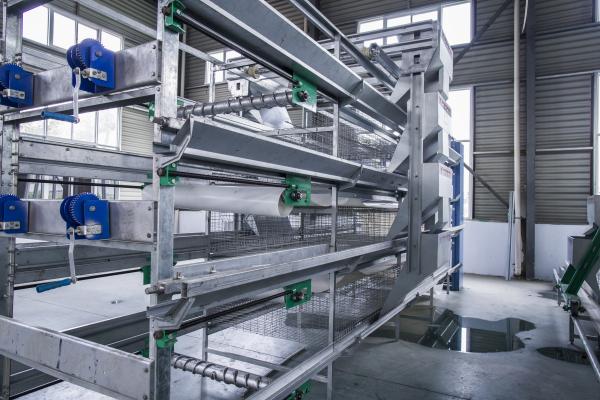
4) Ventilation Pathway Design: Move Air Intentionally, Not Hopefully
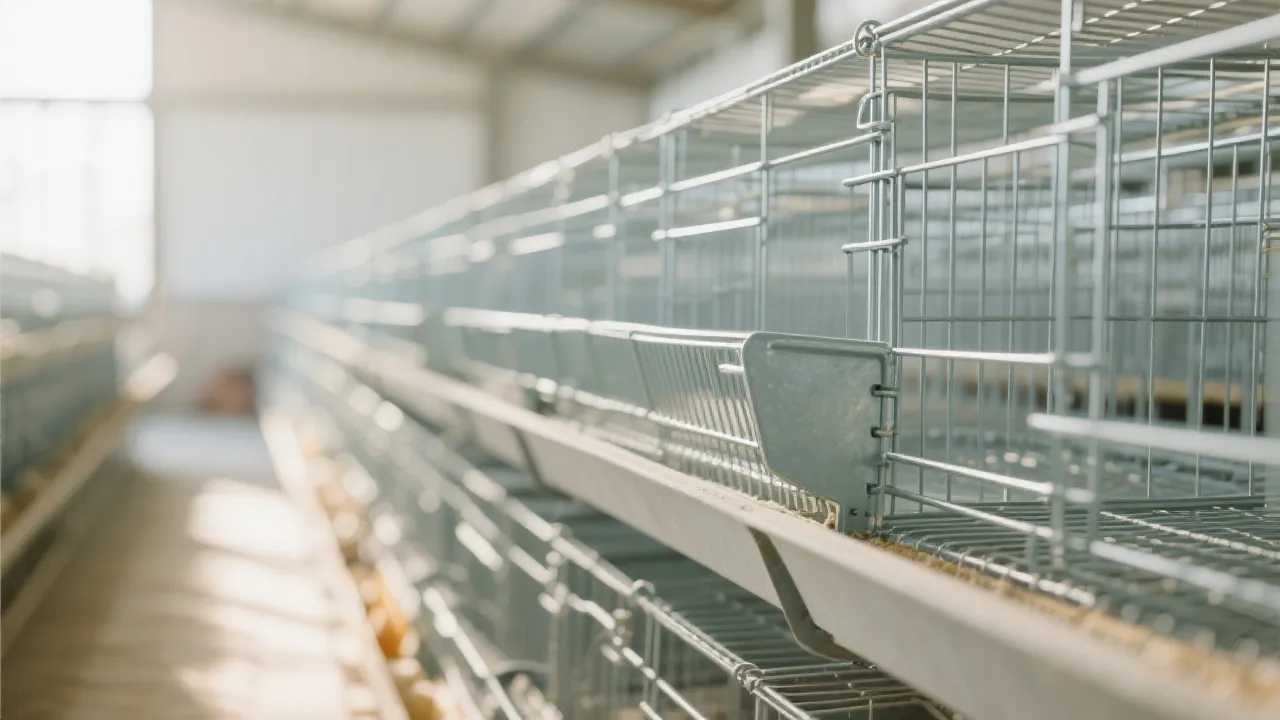
A multi-tier broiler cage system is essentially an airflow puzzle. The goal is to avoid “quiet corners” where ammonia builds and birds sit in stagnant air. One widely used, easy-to-explain approach for varied climates is the sidewall inlet + roof exhaust combination, tuned by season.
What “good airflow” looks like in real barns
Uniformity across tiers: the top tier should not run 2–3°C hotter than the bottom tier during peak hours. If it does, you’re not distributing air—you're just exhausting it.
Moisture control: in hot-humid areas, ventilation must remove moisture fast enough that ammonia does not climb. Many operators aim to keep ammonia < 20–25 ppm to reduce respiratory irritation risk.
Airspeed with purpose: during heat events, higher airspeed can help birds cool, but avoid creating harsh drafts during brooding. This is why staged fan control and inlet management matter.
Climate-specific tuning examples (how overseas farms actually use it)
Imagine you’re operating in Southeast Asia: afternoon humidity peaks, and the barn feels “heavy.” Here, the priority is stable exhaust and a clear air path. A practical setup is to keep inlets consistent along the sidewalls and ensure roof exhaust capacity can keep up during the wettest hours—especially if manure belts are running and adding moisture load.
Now imagine you’re in a dry, dusty inland region: the temptation is to open everything. But uncontrolled inlets can bring dust directly into breathing zones. In those projects, the best-performing houses often use better inlet positioning and tighter control to prevent dead zones while reducing dust entry.
5) Manure Flow & Service Flow: The Layout That Saves Labor (and Odor)
Ventilation performance is closely tied to manure handling. If manure stays too long, moisture and ammonia rise; if removal is irregular, airflow “drags” odor through the house. A well-planned manure line is not only a hygiene feature—it’s part of climate control.
Operational logic that works in multi-tier systems
- Keep manure movement linear: fewer turns and crossings reduce spillage and simplify maintenance checks.
- Plan removal frequency by climate: in hot-humid seasons, more frequent belt runs can reduce ammonia spikes; in cooler seasons, balance against heat loss and energy use.
- Separate “bird air” and “waste air” as much as possible: avoid routing exhaust so it pulls across manure accumulation points.
In many retrofit projects, farms report tangible improvements after optimizing airflow + manure scheduling together: it’s common to see noticeably lower odor and a reduction in cough-like symptoms, with mortality drops of 1–3% in problematic hot seasons when ventilation dead zones are eliminated and ammonia is controlled.
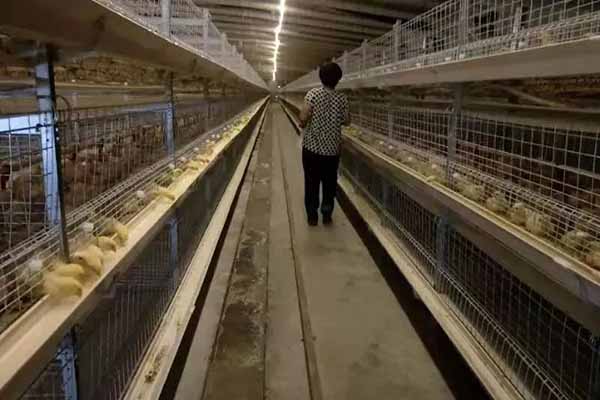
6) Automation & Monitoring: The “Small Systems” That Protect Big Investments
Climate-adaptive design is not only steel and fans. In practice, overseas farms win with consistent feeding, reliable water delivery, and real-time environmental feedback. When these elements are integrated, staff spend less time reacting and more time preventing issues.
A simple integration checklist (what should talk to what)
- Feeding line ↔ bird uniformity: stable feed access reduces aggressive behavior and weight spread; aim for predictable feed delivery timing.
- Nipple drinking system ↔ heat events: water availability becomes a survival factor above ~32°C; pressure and line placement must remain consistent across tiers.
- Environmental sensors ↔ fan staging: temperature and RH sensors (plus ammonia if available) should drive staged fan control, not manual guessing.
- Alarm logic ↔ real response: alerts should be tied to actionable thresholds (power, fan failure, temperature spike), and staff should have a clear response SOP.
Even basic monitoring can pay back quickly: farms that move from “manual checks” to “trend-based control” often report smoother flock behavior and fewer late-night emergencies during extreme weather shifts.
Quick Self-Test: Does Your Poultry House Meet These 3 Standards?
Standard #1: Tier-to-tier temperature difference stays within a narrow band during peak hours (no “hot top tier”).
Standard #2: Air moves through the barn in a clear, repeatable path—no corners where birds avoid resting.
Standard #3: Manure removal schedule and ventilation strategy are planned together for the hottest season.
If you answered “no” to any one of these, a multi-tier broiler cage installation may still work—but the layout should be adjusted before equipment ships.
A Practical Next Step for Overseas Projects
If you’re comparing options for a new build or planning a poultry house retrofit, the fastest way to reduce risk is to validate your density plan and airflow pathway against local peak-season climate data—before finalizing tier count and equipment spacing. Zhengzhou Livi Machinery Manufacturing Co., Ltd. supports international farms with climate-adaptive layouts, modular expansion planning, and integrated automation logic designed for real-world management.
Download the Multi-Tier Broiler Cage Configuration Self-Check List (Free)
A field-ready checklist to verify tier selection, ventilation routing, manure flow, and automation integration for your climate—use it with your building drawings or during supplier evaluation.
Get the Multi-Tier Broiler Cage ChecklistPrefer a faster route? Request a free layout review based on your house size, target market weight, and hottest-season temperature/RH profile.
Brand keywords (naturally applied)
This guide aligns with buyers searching for multi-tier broiler cage design, ventilation system layout, stocking density optimization, and climate-adaptive poultry housing—especially when integrating automatic feeding lines, nipple drinkers, and smart monitoring into scalable broiler operations.




Hot Products

.jpg?x-oss-process=image/resize,m_fill,h_800,w_800/format,webp)




READY TO START?
Ready to Build Your Poultry Farm?
Tell us your land size, poultry type and farming capacity. LIVI will provide a complete farm solution for your project.