Climate-Adaptive Multi-Tier Broiler Cage System Design: Stocking Density & Ventilation Optimization
Zhengzhou Livi Machinery Manufacturing Co., Ltd.
2026-04-03
Tutorial Guide
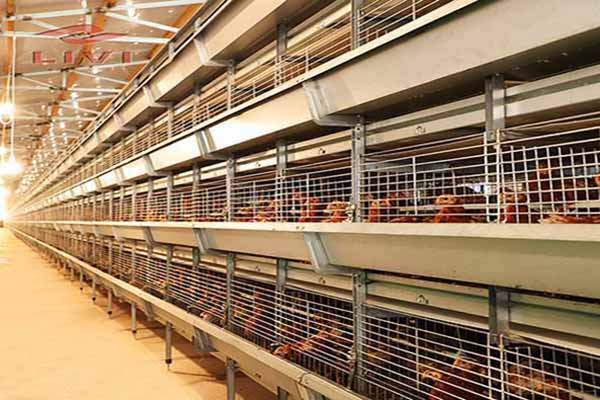
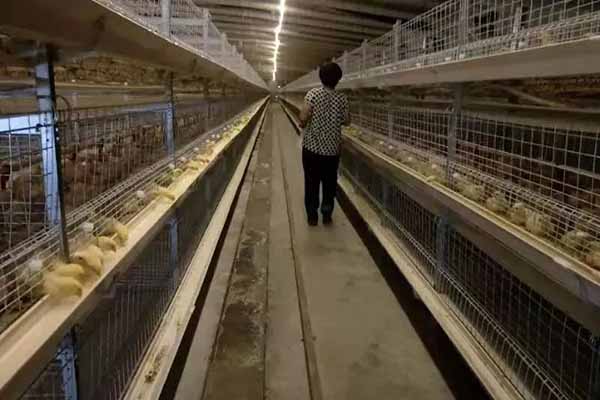
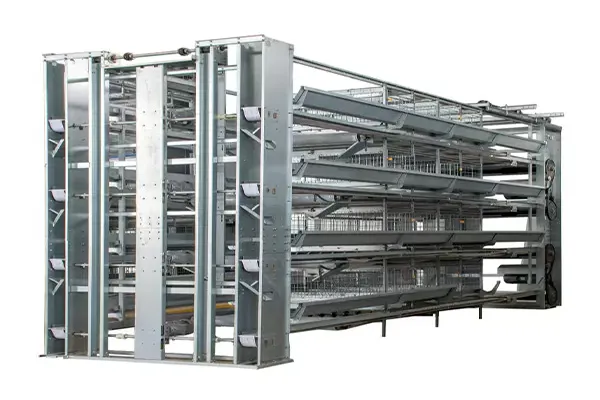
Designing a multi-tier broiler cage system for overseas farms requires more than maximizing space—it must match local climate realities. This guide explains how to configure 3–4 tier cage layouts by region (e.g., hot-humid tropics vs. dry temperate zones) using two core levers: stage-based stocking density and airflow-path optimization. It details practical ventilation routing (sidewall air inlets paired with ridge/roof exhaust), cage-row spacing, manure-removal logistics, and the integration logic of automatic feeding lines, nipple drinkers, and smart environmental monitoring to reduce heat stress, improve respiratory health, and simplify labor-intensive management. Built on modular planning principles, the approach supports future expansion or site relocation and helps farms achieve stable performance with lower stress and easier daily operation.

Designing a Climate-Fit Multi-Tier Broiler Cage System for Overseas Farms
For most overseas broiler operations, the cage system itself isn’t the root problem—climate mismatch is. High heat + humidity drives stress and wet litter odors; dry temperate zones trigger dust and respiratory pressure; sharp day–night swings cause uneven growth. A well-designed 3–4 tier broiler cage system can turn these risks into controllable variables—when stocking density and ventilation are engineered as one plan, not two separate purchases.
Best-fit use case
Farms upgrading from floor rearing or retrofitting older houses where airflow paths and manure logistics must be predictable.
Typical risk
Adding more tiers without redesigning ventilation often increases ammonia pockets and temperature stratification.
Outcome target
Lower heat stress, cleaner air, easier manure flow, and more stable daily weight gain—without adding unnecessary labor.
Start With Buyer Reality: Three Overseas Pain Points That Repeat Everywhere
In practical B2B projects, broiler cage system design for export markets usually needs to solve three recurring problems. It helps to name them explicitly before drawing a single line on the layout:
1) Heat & humidity stress
In Southeast Asia or coastal West Africa, houses often sit at 28–34°C with 70–90% RH during hot periods. Birds struggle to dissipate heat, and airflow must remove moisture fast enough to prevent “sticky air” and ammonia build-up.
2) Respiratory pressure from poor air paths
If intake air hits one tier strongly and bypasses another, you get uneven microclimates—dust in one lane, humidity in another. A practical design keeps air velocity and distribution stable across tiers.
3) Rising labor & inconsistent routines
In many markets, wages and staff availability are changing fast. Automated feeding, drinking, manure removal, and monitoring turn “human variability” into a controlled process, improving flock uniformity.
Why 3–4 Tiers Are Usually the Sweet Spot (and When to Avoid More)
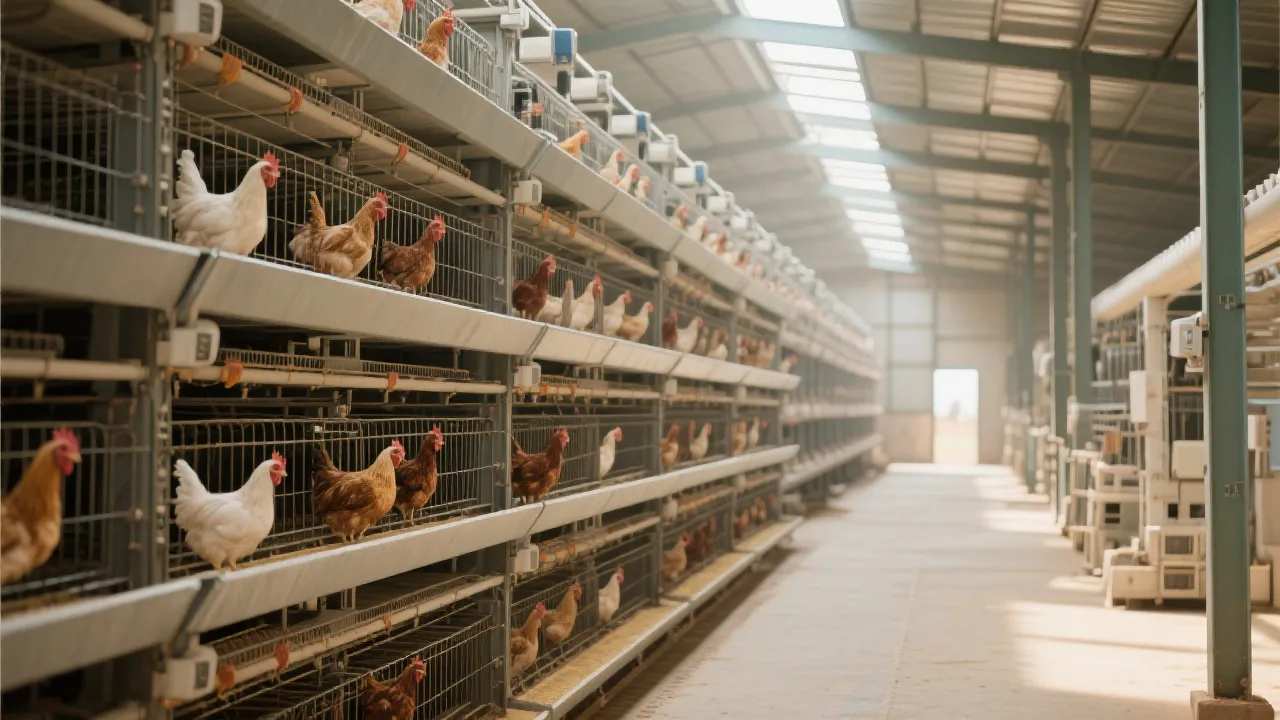
More tiers can look like instant capacity—but overseas projects show a consistent pattern: 3–4 tiers often deliver the best balance of throughput, airflow controllability, and serviceability. Above that, the design becomes less forgiving: static pressure rises, hot air stratifies, and maintenance access gets harder.
Expert note (field engineering perspective): “If the ventilation plan can’t guarantee consistent air exchange on every tier, adding tiers will amplify microclimate differences and increase medication costs. Prioritize airflow uniformity before capacity.”
A practical stage-based density mindset (not a single number)
Buyers often ask for a fixed “optimal stocking density,” but a climate-fit plan treats density as a phase variable—especially for broilers where heat output rises quickly with body weight. In warm climates, a common operational target is to keep house conditions aligned so birds spend less time panting; in cooler climates, density may be higher if air quality remains stable. As a reference point used by many integrators, broiler market weight programs frequently aim around 30–38 kg live weight per m² in well-ventilated houses, then adjust based on local temperature peaks, genetics, and airflow capacity.
Climate adjustment rule-of-thumb (easy to apply)
| Local climate pattern |
Main risk in multi-tier cages |
Design adjustment you can quote to a buyer |
| Tropical hot & humid (e.g., 30–34°C, 75–90% RH) |
Moisture retention, ammonia spikes, heat stress |
Prioritize high air exchange & uniformity; keep wider air corridors; avoid “dead corners” behind end walls |
| Temperate & dry (e.g., 10–25°C, 30–50% RH) |
Dust, dehydration risk, uneven airspeed |
Use controlled inlets and avoid excessive air velocity on top tiers; integrate monitoring for dust/PM and RH |
| Large day–night swing (semi-arid inland) |
Temperature shock, stratification by tier |
Design zoning control and staged ventilation; prevent cold drafts at chick level |
Ventilation That Works With the Cage Stack: Build a Clear Air Route
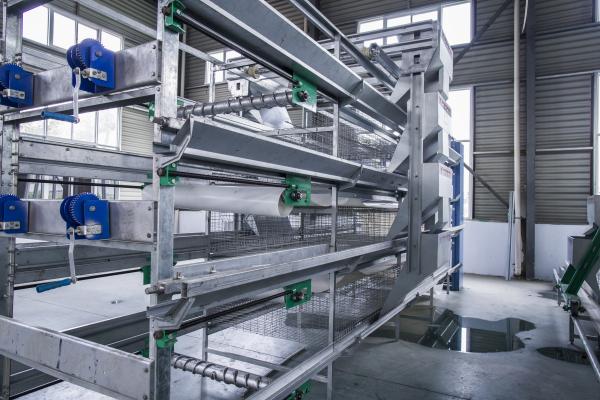
Think of a multi-tier broiler cage system as a set of “air floors.” If air enters and leaves without a defined route, it will take shortcuts, leaving some tiers under-served. Many overseas retrofits succeed with a sidewall inlet + roof exhaust concept because it creates a predictable pressure gradient—especially in houses where wind direction is inconsistent.
A simple, buyer-friendly checklist for air distribution
- Uniformity over peak power: airflow should reach every tier consistently before you chase higher fan capacity.
- No “hidden pockets”: avoid structural obstacles that trap warm, wet air behind end panels or along corners.
- Tier-to-tier consistency: verify that top tiers aren’t significantly warmer while lower tiers stay damp.
- Ammonia control goal: many operations target < 10–15 ppm ammonia for performance stability; persistent higher readings often signal ventilation routing issues, not just manure frequency.
Scenario: “Assume you’re building in Southeast Asia…”
In a hot-humid environment, the priority is removing moisture-laden air fast enough to maintain comfort at bird level. A practical approach is to keep air corridors open, avoid over-compressing cage rows, and ensure the exhaust pathway doesn’t recycle warm air back to the inlets. When buyers report “fans are running but birds still pant,” the underlying issue is often air not passing through the occupied zones—it’s circulating above or bypassing tiers.
Manure & Workflow: The Hidden Lever Behind Air Quality
Ventilation performance depends on manure handling more than buyers expect. If manure stays in the house longer than planned—or if belt routing creates “stagnant zones”—humidity and ammonia rise, and the ventilation system has to work harder. For multi-tier setups, the goal is a clean, straight movement line: collect → convey → exit, with minimal turns and minimal time inside the building.
Operational targets that buyers understand
Manure removal rhythm: increase frequency during peak heat/humidity periods to reduce ammonia volatility.
Smooth logistics: design belt discharge points so trucks/collection don’t block service aisles.
Odor control: when ammonia rises, feed conversion and uniformity often suffer before mortality shows it.
Automation Integration: Feeding + Drinking + Monitoring Must “Talk” to Ventilation
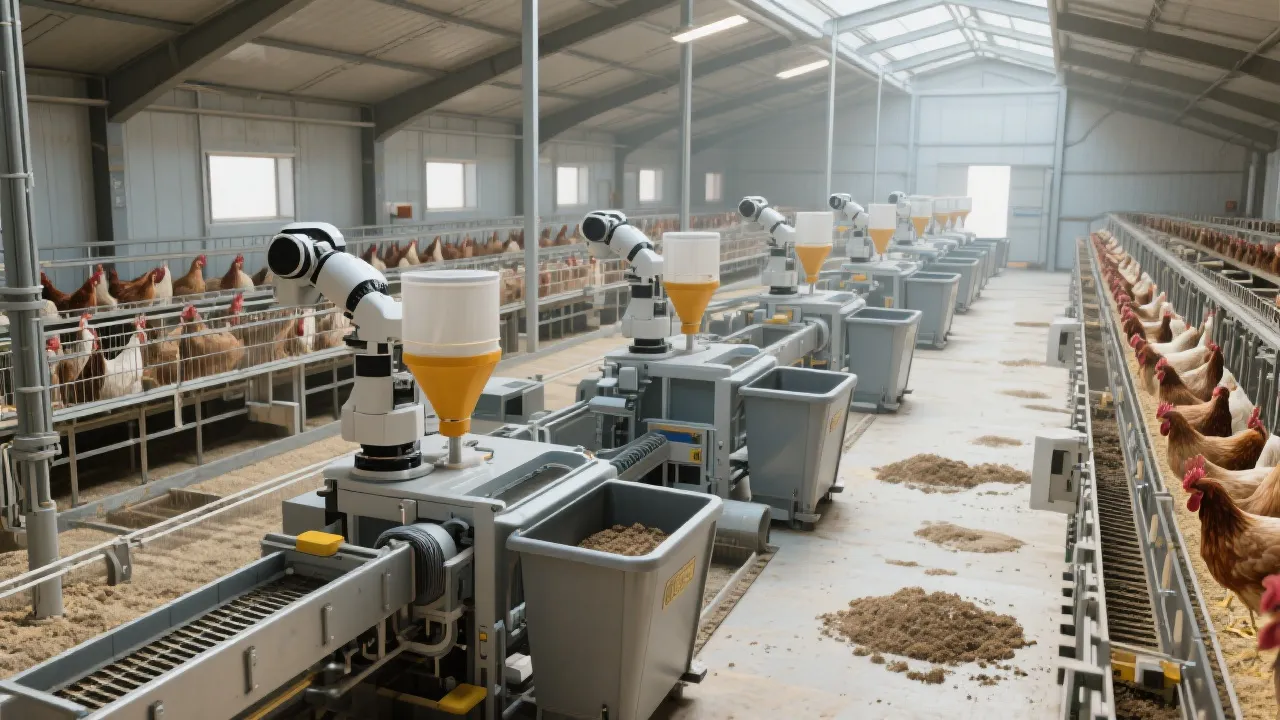
Overseas buyers rarely want automation for technology’s sake—they want fewer surprises. A modern broiler cage project typically integrates automatic feeding, nipple drinking lines, and environment monitoring so management becomes data-driven instead of reactive. This is where Zhengzhou Livi Machinery Manufacturing Co., Ltd. projects often emphasize modular compatibility: equipment should be upgradeable without rebuilding the entire house.
How the coordination works (in plain terms)
- Feeding schedule stabilizes heat output: consistent intake reduces sudden metabolic heat spikes that worsen hot-hour stress.
- Drinking line tuning prevents wet manure: correct pressure/height reduces spillage—less moisture means easier ammonia control.
- Monitoring closes the loop: temperature, RH, and ammonia (or CO₂ proxy) readings help adjust fan stages and inlet openings before performance drops.
Field-style performance references (for decision discussions)
In retrofit projects where airflow routing and manure handling are corrected (not just “more fans”), farms commonly report 10–25% lower ventilation energy during hot seasons due to improved efficiency, alongside 1–3% lower mortality and better flock uniformity. Actual results vary with genetics, feed, vaccination, and local weather extremes, but these ranges are realistic benchmarks used in many upgrade ROI conversations.
Quick Self-Test: Does Your Poultry House Meet These 3 Standards?
Before a buyer commits to a multi-tier broiler cage purchase, this mini-check often reveals whether the project will succeed as planned—or struggle from day one:
Standard #1: Air reaches every tier
If some tiers feel still while others draft, redesign the inlet/exhaust route before increasing capacity.
Standard #2: Manure exits smoothly
If manure storage lingers inside the house or discharge blocks aisles, air quality and labor will deteriorate.
Standard #3: Data beats guesswork
If adjustments happen only after birds pant, eat less, or smell worsens, add monitoring and staged control.
Get a Layout That Matches Your Climate (Not a Generic Drawing)
If you’re planning a new house or upgrading an older building, the fastest way to avoid costly airflow mistakes is to validate tier count, row spacing, ventilation routing, and manure logistics against your local climate data. Share your city, house dimensions, and target bird weight range, and receive a practical configuration checklist you can discuss with your team.
Designed for overseas broiler producers evaluating climate-adaptive housing upgrades with modular automation and scalable capacity.





.jpg?x-oss-process=image/resize,m_fill,h_800,w_800/format,webp)