


Multi-Tier Cage System Design for Profitable Broiler Chicken Farming at Scale

How to Scientifically Design a Multi-Tier Cage System for Higher ROI in Large-Scale Broiler Farming
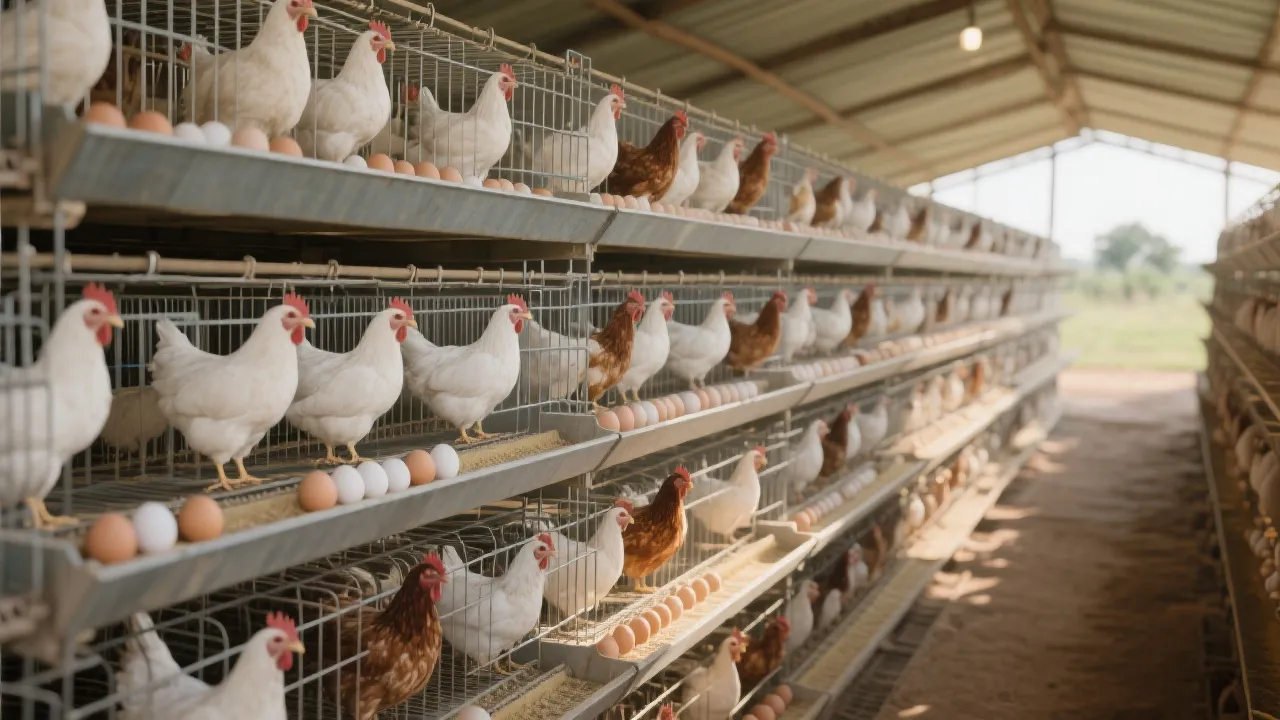
In modern broiler production, “more birds” does not automatically mean “more profit.” The difference between stable performance and chronic losses is often hidden in the layout math: site measurement, cage tier decisions, airflow logic, manure-handling routes, and how automation and monitoring are integrated as a single operating system. This article explains a practical design framework used by engineering teams and commercial farms to build a low-loss, high-output poultry house with multi-tier cage equipment—especially relevant for integrators and ambitious growers planning capacity expansion.
1) Start with Site Measurement: Capacity Planning That Prevents “Over-Stocking by Design”
Scientific cage design begins with a straightforward question: How many birds can the building support without compromising air quality and labor flow? A common mistake is calculating capacity only from floor area and then “fitting” ventilation and manure removal afterward. In broiler cage systems, the correct order is reversed: determine environmental limits first, then finalize cage tiers and unit count.
Key sizing parameters used in engineering practice
- Target live weight & cycle: e.g., 2.2–2.8 kg at 38–45 days (drives heat and moisture load).
- Stocking logic (cage): farms often plan by kg/m² equivalent and equipment geometry rather than open-floor density.
- Ventilation envelope: design for both minimum ventilation (cold season moisture control) and peak summer heat removal.
- Service clearance: safe aisle width and maintenance zones for feed lines, drinker regulation, and belt drive systems.
As a field rule-of-thumb for early-stage planning, many commercial designs target a peak ventilation capacity in the range of 6–10 m³/h per kg live weight for hot periods (exact needs depend on climate, insulation, and tunnel/cross ventilation strategy). If the building cannot move and exchange air at that level, adding tiers may increase gross capacity but reduce net profitability through higher mortality, slower growth, and medication cost.
2) Choosing Cage Tiers: When 3 Tiers Beat 4 (and When They Don’t)
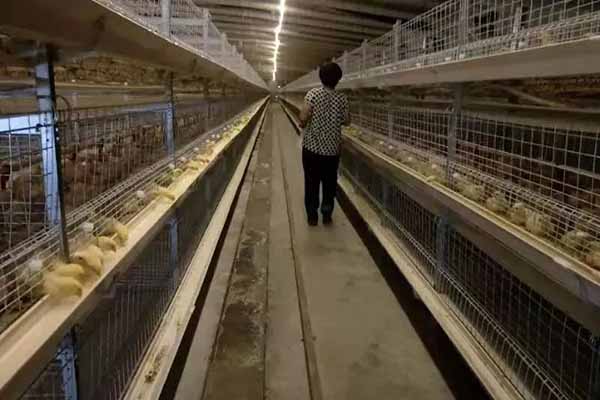
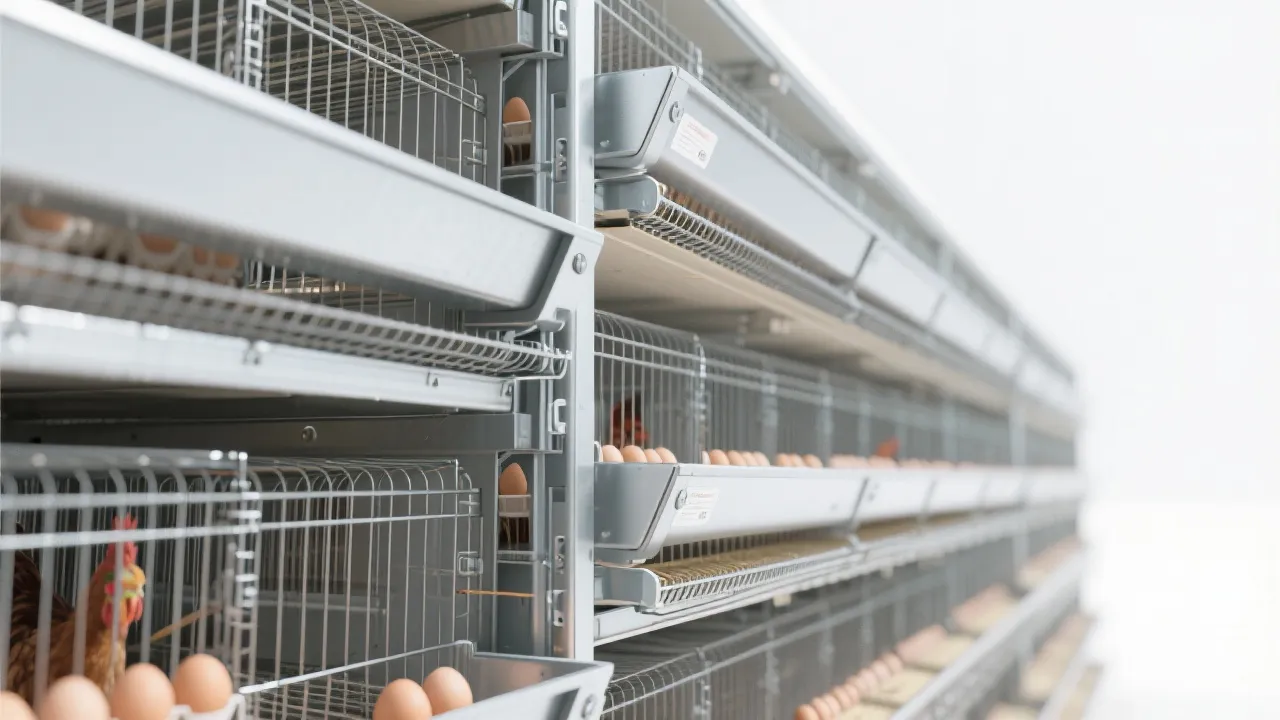
The best tier count is not a trophy number—it is an optimization result. In large-scale broiler farming, moving from 3 tiers to 4 tiers can increase bird capacity, but it also raises requirements for static pressure control, lighting uniformity, inspection convenience, and manure belt reliability.
Decision checklist that engineering teams apply
- Building height & truss constraints: ensure top-tier headroom for maintenance and uniform airflow.
- Air distribution feasibility: more tiers mean more “shadow zones” if inlets and deflectors are not engineered.
- Labor model: higher tiers require better inspection routines and safer access solutions.
- Manure handling tolerance: belt mis-tracking and overload risk rises with longer runs and heavier cycles.
Many farms find that 3 tiers provides a balanced sweet spot for inspection efficiency and airflow robustness, while 4 tiers may be preferred when land cost is high, the house is engineered for higher air exchange, and the operator commits to stronger preventive maintenance. For procurement teams, it is worth requesting an equipment supplier to provide a house-level airflow and loading calculation rather than a cage-only quotation.
3) Airflow, Feeding, and Manure Routes: Design the “Three Lines” to Avoid Hidden Loss
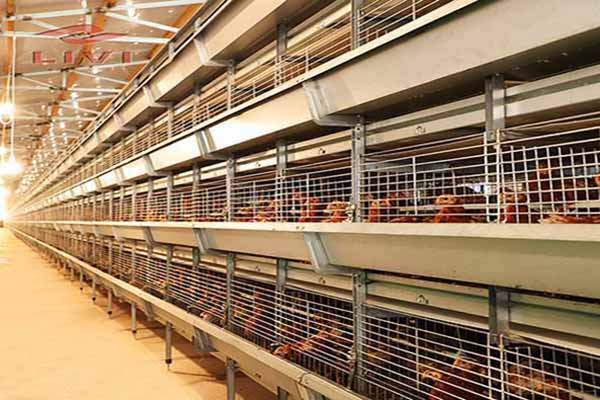
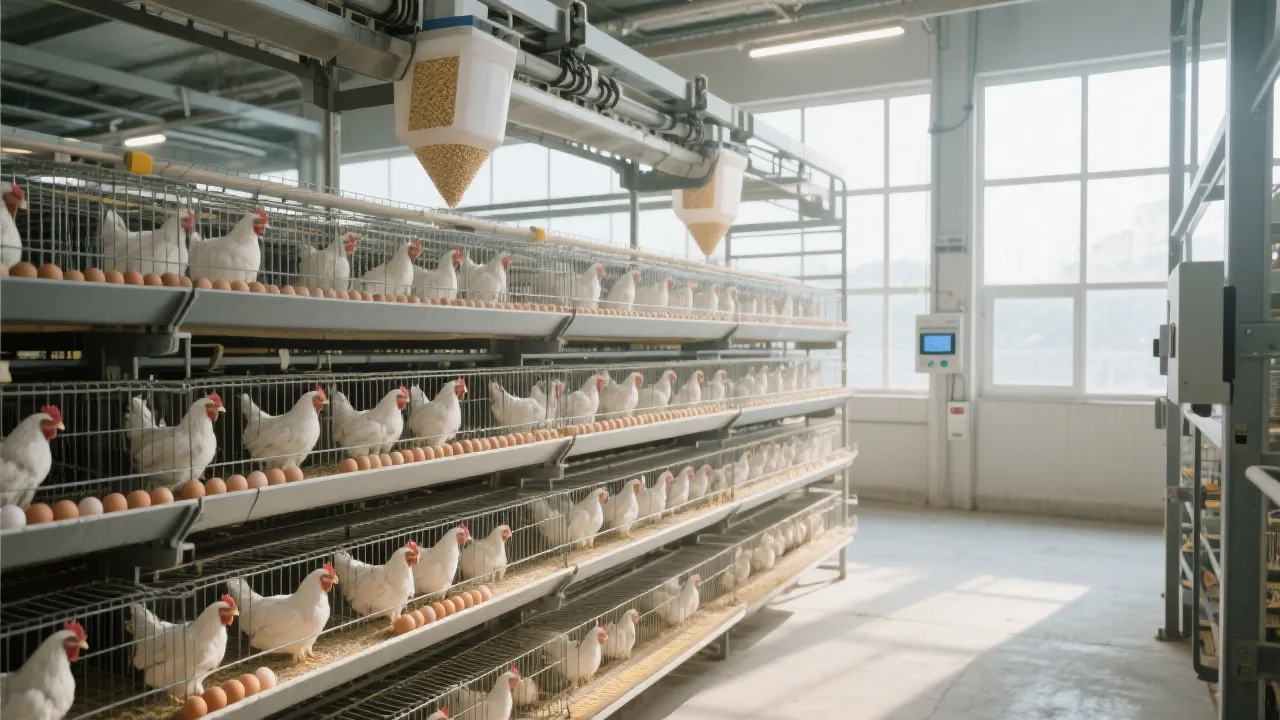
Multi-tier broiler cage houses perform best when three operational lines are planned together: ventilation line (air in/out), feeding & drinking line, and manure removal line. If one line is compromised, the other two will show symptoms—wet litter/manure, uneven body weight, ammonia spikes, higher footpad lesions, and increased culls.
Practical layout principles that reduce cross-contamination
| System | What “Good” Looks Like | Typical Failure Mode |
|---|---|---|
| Ventilation | Uniform air speed across tiers; controllable static pressure; minimal dead zones | Top-tier heat stress or bottom-tier dampness due to poor inlet throw |
| Feeding & drinking | Stable feed delivery; even access; easy adjustment as birds grow | Uneven body weight from inconsistent flow or poor line leveling |
| Manure removal | Regular belt schedule; dry manure; safe discharge route | Ammonia rise from delayed belt runs or wet manure accumulation |
In well-managed houses, operators commonly aim to keep ammonia below 10–15 ppm during most of the cycle, because chronic exposure can reduce feed efficiency and increase respiratory stress. Manure belt operation frequency, drinker management, and minimum ventilation settings work together to keep moisture under control—especially in cold seasons where “saving heat” often creates hidden humidity problems.

4) Automation + Monitoring: Turn Equipment into a Management System
Large-scale broiler farming becomes predictable only when routine operations are standardized. That is why cage projects increasingly integrate automatic feeding, nipple drinking lines, and manure belts with sensors and alarms. The goal is not “high-tech for show,” but faster response to the small deviations that usually become big losses 48–72 hours later.
What smart monitoring should track (minimum viable stack)
- Temperature & RH by zone/tier: not a single-point reading; gradients matter in multi-tier systems.
- Water consumption trend: sudden drops often signal blockages, leaks, or early disease pressure.
- Feed delivery status: motor load and run-time anomalies can indicate bridging or line friction.
- Fan status & static pressure: alarms prevent silent ventilation failures.
Industry consultants often emphasize that trend-based management beats single readings: a stable flock usually shows smooth daily curves in water and feed intake, while risk events show abrupt pattern breaks. When data is visible and actionable, farms can reduce emergency labor, tighten biosecurity movement, and improve batch-to-batch consistency.
5) Stage-Matched Use: Align Cage Settings with Growth Phases
One reason multi-tier cage projects underperform is not equipment quality but phase mismatch. Broilers change rapidly: feeder height, drinker pressure, ventilation rate, and lighting programs should shift with growth. When farms operate “one setting for all,” the flock pays through uneven weights and avoidable stress.
Operational adjustments that typically matter most
Early phase (brooding / start): prioritize stable temperature and easy access to water/feed; confirm uniform line height and nipple function across tiers.
Mid phase (growth): increase air exchange to manage moisture; watch for tier-to-tier intake differences and correct airflow imbalances.
Late phase (finishing): manage heat load and CO₂/ammonia risk; maintain manure belt schedule to keep the house dry and breathable.
For buyers evaluating suppliers, it is reasonable to ask for an operation & maintenance playbook that includes belt running recommendations, drinker regulation guidance, and a commissioning checklist. For multi-tier systems, commissioning quality often determines whether the first two cycles are profitable or become expensive “learning cycles.”
6) Common Project Pitfalls (and How Better Design Prevents Them)
Field cases show that losses typically come from predictable weak points: undersized ventilation for hot spells, insufficient service access for cleaning and repair, and manure handling that cannot keep up with peak output. The fix is not “work harder,” but building a system that allows normal staff to operate consistently.
Reality-based prevention actions used by commercial farms
- Reserve maintenance clearance and avoid “too-tight” row spacing that blocks repairs and sanitation.
- Validate air inlet throw and exhaust balance before the first placement, not after performance drops.
- Create a one-direction workflow for personnel and tools to reduce cross-contamination between zones.
- Standardize daily checks: feed motors, water pressure, belt tracking, fan alarms, and sensor calibration.
As a manufacturer serving global poultry projects, Zhengzhou Livi Machinery Manufacturing Co., Ltd. typically sees the best outcomes when the farm treats equipment selection, house layout, and operating discipline as one integrated decision. In practical terms, the farm that invests time in design verification often gains it back quickly through smoother cycles and fewer emergency interventions.
High-Value Actions for Faster, Safer Scale-Up
Farms planning a multi-tier broiler cage project can reduce uncertainty by validating tier count, aisle widths, ventilation capacity, and manure discharge routes before procurement. To help engineering teams and owners move faster:
- Click to get the “Multi-Tier Cage Configuration Self-Check List” and verify your house assumptions in 15–20 minutes.
- Book a free evaluation with a technical consultant to review your poultry house layout and identify bottlenecks before installation.
Designed for commercial broiler operations evaluating multi-tier cage design, airflow routing, feeding/drinking lines, and manure belt workflow—so decisions are based on measurable constraints, not guesswork.



Hot Products

.jpg?x-oss-process=image/resize,m_fill,h_800,w_800/format,webp)


Popular articles




READY TO START?
Ready to Build Your Poultry Farm?
Tell us your land size, poultry type and farming capacity. LIVI will provide a complete farm solution for your project.