


Livi Machinery vs Regional Equipment Suppliers: A Guide to Choosing the Best Supplier for Chicken Farms in Africa
Livi Machinery vs Regional Equipment Suppliers: A Guide to Choosing the Best Supplier for Chicken Farms in Africa
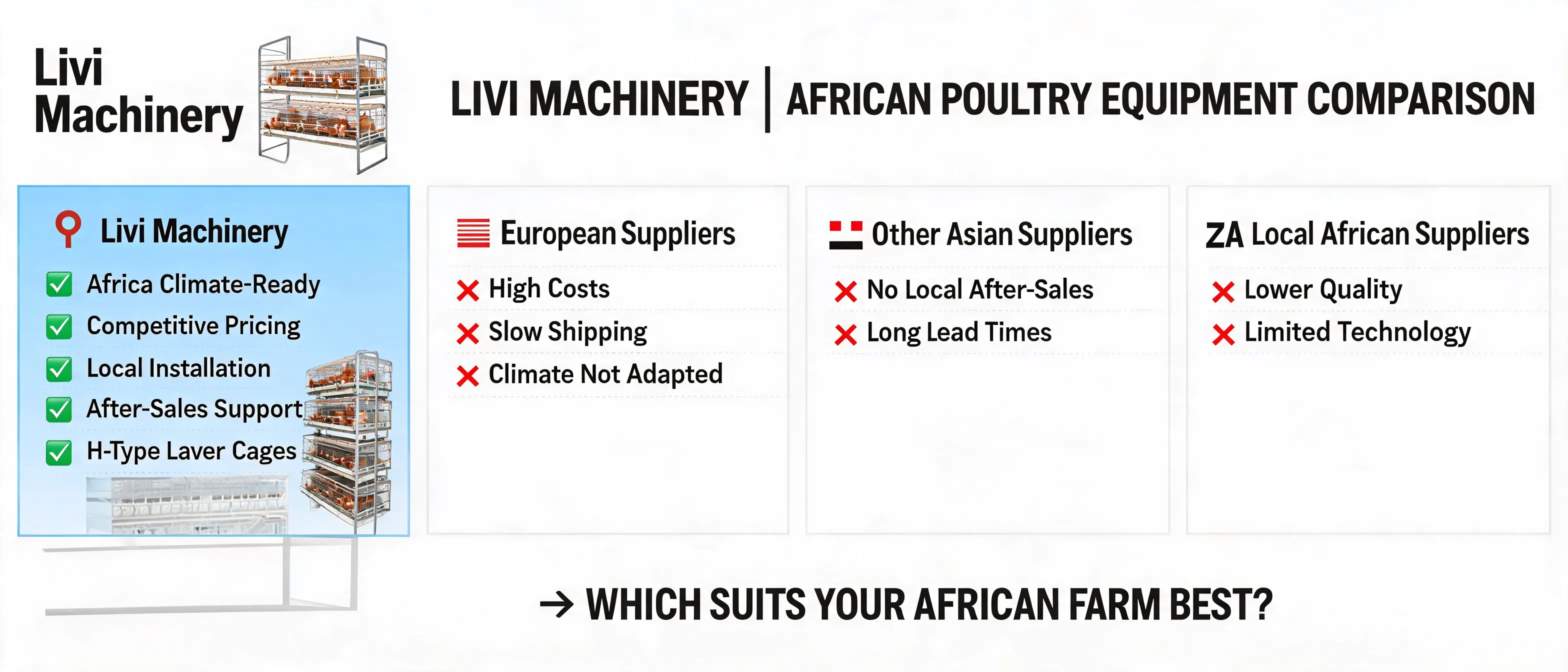
This guide compares Livi Machinery with local poultry equipment suppliers in Europe, Asia, and Africa across key dimensions such as price, quality, automation, climate adaptability, transportation, installation, and after-sales service. It helps farmers and purchasing decision-makers planning to build or upgrade chicken farms in Africa identify which type of supplier is more suitable for their project conditions.
Overview of Comparison Dimensions
| Dimension | Livi Machinery China Supplier | European OEM suppliers (such as Big Dutchman/Jansen) | African local suppliers |
|---|---|---|---|
| Product quality and material durability | Made with galvanized steel wire and corrosion-resistant materials, it is suitable for various climate zones, including extreme temperatures (-40–50℃), and has many years of export and project experience. ([livimachine.com](https://www.livimachine.com/about/?utm_source=openai)) | Typically, materials meet higher standards and are more durable. Climate control and comfort designs (such as the EUROVENT EU system and OptiCoat anti-rust coating) comply with EU standards. Mingsheng's advantages lie in its attention to detail and certification compliance. ([bigdutchman.com](https://www.bigdutchman.com/en/products/egg-production/enriched-colony-systems/eurovent-eu/?utm_source=openai)) | Materials and processes may not be standardized due to local manufacturers' production capacity and supply chain limitations; maintenance and repair are convenient, but durability may be lower than that of European OEMs; suitable for new or small-scale projects with tight budgets. |
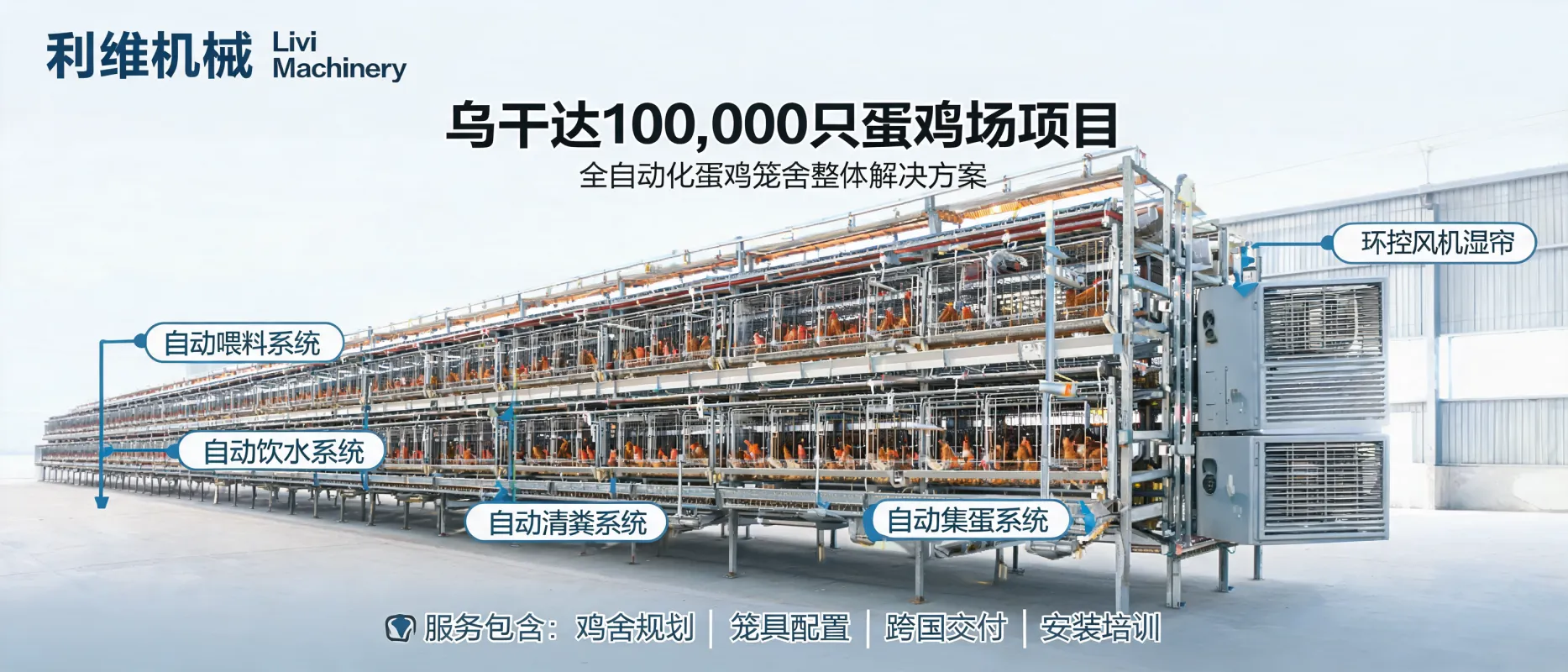
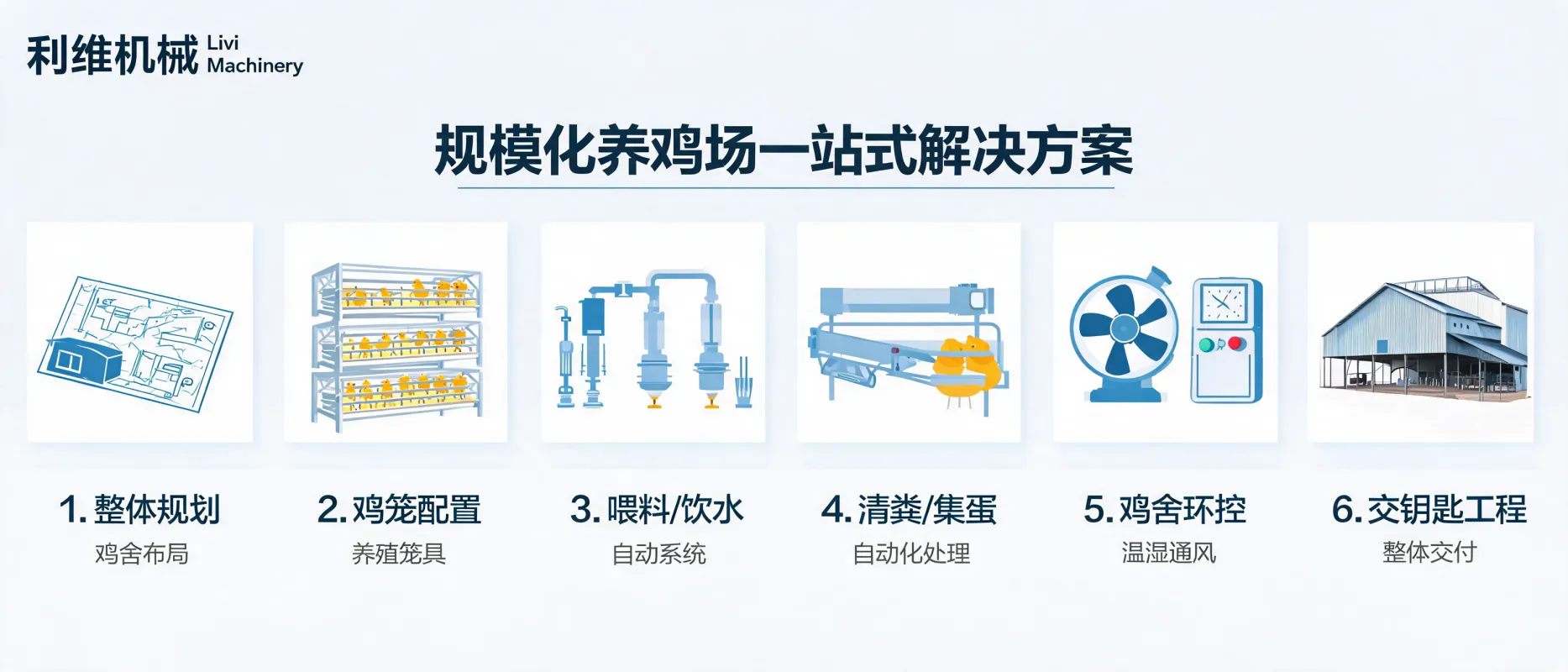
| Automated configuration and system integration | We provide integrated solutions encompassing fully automated feeding, watering, manure removal, egg collection, and environmental control systems, with project cases covering various scales. ([livimachine.com](https://www.livimachine.com/32-layers-of-a-cages-and-scrapers-for-5000-laying-hens-in-ghana/?utm_source=openai)) | European OEMs are at the forefront of automation and environmental control, with advancements in technologies such as Big Dutchman's multi-level climate control system, energy management, and animal welfare monitoring. These systems offer high integration accuracy but also come with significant cost and technical requirements. ([bigdutchman.com](https://www.bigdutchman.com/en/news-stories/article/good-poultry-climate-control-pays-off/?utm_source=openai)) | The level of automation is usually low; the equipment is simple and easy to maintain; local manufacturers can respond quickly, but lack support for complex systems and long-term system integration experience. |
| Climate adaptability (high temperature, high humidity, cold) | Livi exports to over 70 countries, with case studies in both high-temperature and low-temperature regions; its design capabilities cover a wide range of climates, and it is equipped with environmental control systems to adapt to high temperature and humidity challenges. ([livimachine.com](https://www.livimachine.com/about/?utm_source=openai)) | European OEMs have a clear technological advantage, with mature ventilation systems, insulation materials, and temperature and humidity sensors and controllers. However, their equipment costs and energy consumption are higher. Investments in tropical or power-unstable regions require consideration of backup systems and load capacity. ([bigdutchmanusa.com](https://www.bigdutchmanusa.com/poultry-production/products/?utm_source=openai)) | Local manufacturers' designs are closer to the local climate, but they may lack a high-quality supply of large-area wet curtains, negative pressure fans, or insulation materials; they also face higher operational risks and maintenance requirements in extreme climates. |
| Price and initial investment | Hardware costs are relatively low; even with transportation and customs fees, the overall investment remains competitive. For reference, the freight rate for a 20-foot container from China to South Africa is approximately USD 2,150–2,950 per container (Q2 2026 data). ([capmad.com](https://www.capmad.com/post/shipping-a-container-from-china-to-africa-routes-costs-and-risks-to-watch-in-2026?utm_source=openai)) | Original manufacturer pricing is high, and the added costs of engineering, certification, transportation, installation, and maintenance result in a significant premium; however, the long lifespan and depreciation period make it suitable for long-term, large-scale projects. | Lowest cost, low freight and import tax; however, if spare parts need to be imported or the quality does not meet the standards, the later maintenance cost will increase; suitable for small to medium-sized projects or phased expansions. |
| Transportation, installation and delivery time | We have experience shipping from China and can provide equipment lists, packaging plans, customs documents, and complete installation training. Shipping to most African countries requires sea freight + inland transport + customs clearance, and the timeframe is affected by port and logistics conditions. ([livimachine.com](https://www.livimachine.com/about/?utm_source=openai)) | Within Europe or for export to neighboring countries, delivery is fast; however, to many African countries, the transport chain is long, and customs clearance and inland transportation costs and times are high. Certification and standards compliance may lead to lengthy pre-delivery preparation times. | Delivery and installation may be the fastest; local companies are familiar with transportation, ports and regulations; however, equipment production capacity, inventory of specific spare parts and technical support capabilities may limit the speed of installation of large-scale automated or integrated systems. |
| After-sales service and spare parts support | Livi offers local installation and maintenance support in over 30 countries, with a technical team providing both remote and on-site service; spare parts lists and system training are included in the solution. ([livimachine.com](https://www.livimachine.com/about/?utm_source=openai)) | European OEMs have global distribution and service networks, and their spare parts are of high quality; however, the cost of transporting and installing spare parts in remote areas is relatively high. Standardized maintenance and training services are provided. ([newquip.co.uk](https://www.newquip.co.uk/?utm_source=openai)) | It offers fast response times and a low burden of local spare parts inventory; however, when there is a lack of spare parts for complex systems or automated control components, reliance on imports is necessary, resulting in time and additional costs. Maintenance capabilities are affected by local technical expertise and training support. |
Livi Machinery's Case Study: Ghana's 5,000 Layer Hen Type A Cage Project
A Ghanaian layer farm with 5,000 laying hens requested 32 sets of Type A layer cages and manure scraping systems from Livi Machinery, including custom design and on-site installation services. This project demonstrates how Chinese suppliers can provide a one-stop solution from design to commissioning in medium-sized chicken farms.
- Chicken coop construction and equipment configuration are customized according to site size and climate conditions.
- This includes materials, ocean shipping to Ghanaian ports, customs clearance, and inland transportation.
- The installation process includes line setting and positioning, cage frame construction, installation of feed troughs and drinking lines, and debugging of the manure scraping system.
- Train local staff to master routine maintenance and system operation logic
When is Livi the better choice? When would a European or local supplier be more suitable?
- The projects range in size from medium to large, with budgets aimed at controlling equipment costs, but requiring a moderate to high level of automation and environmental control.
- The chicken farm is located in an area accessible by seaports and inland transportation, and while the power and climate conditions present certain challenges, they can be adapted through overall design.
- The client has clearly defined the number of chickens to be raised, the size of the chicken coop, the climate characteristics, and the automation requirements, and is open to customized solutions and import procedures.
- Pursuing high standards of animal welfare or compliance with laws (such as exporting to markets in the EU, UK, etc., or to countries where local standards are close to European standards).
- With a sufficient budget, the company expects long equipment lifespan and maintenance cycles, and has high requirements for materials and automation precision.
- The project is relatively small in scale and has a limited investment budget. We hope to start quickly and prioritize the procurement of spare parts and manpower resources from nearby locations.
- Automation requirements are low or limited to simplified feeding and watering; climate adaptability requirements are not extreme.
- They expect suppliers to provide on-site construction and installation support but are unwilling to bear the complexities of long-distance transportation and import.
Procurement Recommendations and Risk Control
- Prepare detailed information before purchasing: climate data for the chicken house area (temperature, humidity, power stability), number of chickens, size of the chicken house, and details of automation requirements.
- When comparing supplier quotes, request a list of equipment, material specifications, shipping methods and costs, customs clearance responsibilities, and installation and maintenance support services.
- Verify that the supplier has local project cases and on-site installation experience, including customer feedback and on-site inspections.
- The contract clearly defines the backup system, warranty policy, spare parts supply cycle and price, and employee training responsibilities.
- To avoid high transportation and import costs or delays, arrange full container load (FCL) shipping whenever possible, taking into account the distance to the destination port and road conditions. For reference, the freight cost for a 20-foot container from China to South Africa is approximately USD 2,150–2,950 per container.
- Consider the operating costs of the project's electricity, water supply, backup power generation, climate control, and ventilation in different seasons, not just the initial investment.
FAQ: Frequently Asked Questions When Purchasing Suppliers
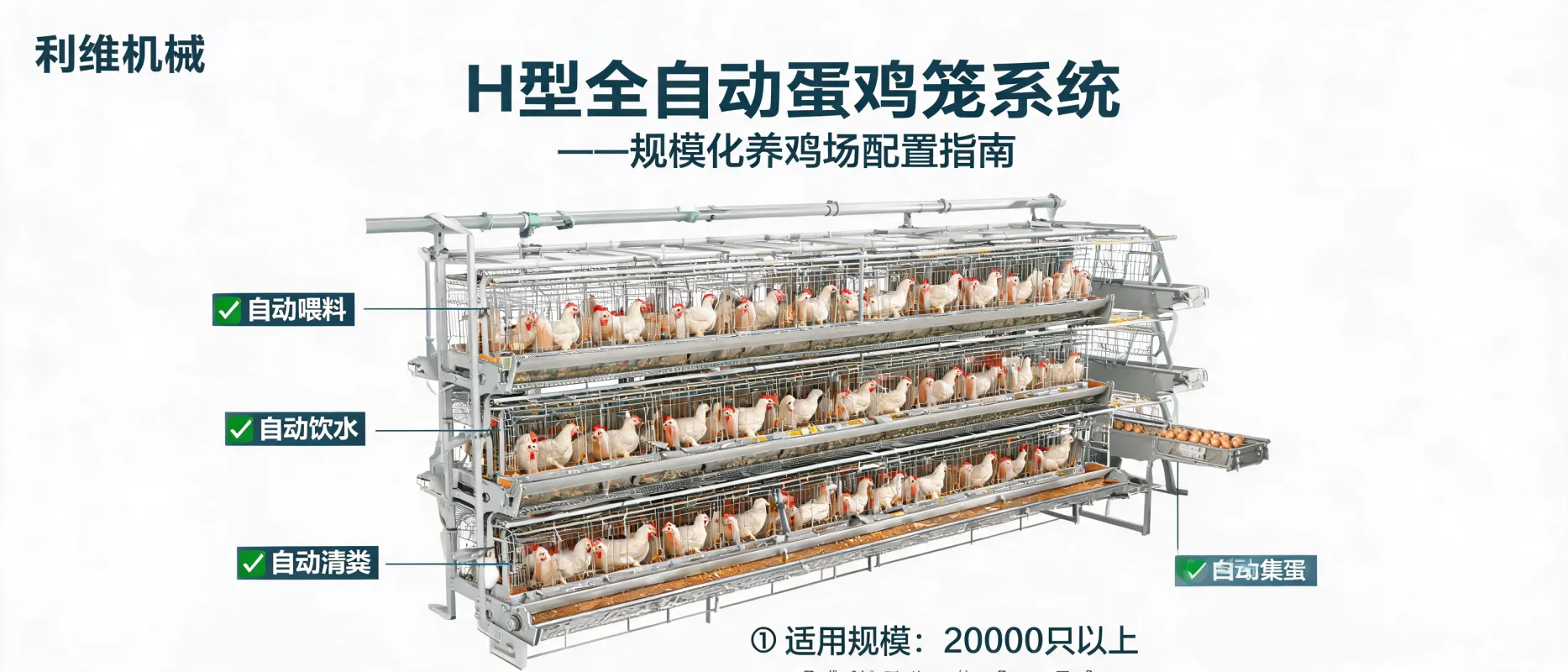
A: The initial investment for H-type cages (cages themselves + structural steel bars + automatic systems) is usually higher than that for A-type cages, but the egg production per unit area or slaughter efficiency is also higher. If land is scarce, labor costs are high, or intensive management is desired, H-type cages may recoup costs faster. For those with limited budgets or who expect phased construction, A-type cages are more flexible.
Q: European OEMs are of such high quality, why do many African projects still choose Chinese suppliers?
A: The reasons include: the total price of equipment and transportation from Chinese suppliers is still lower than that of European OEMs; Chinese manufacturers are becoming increasingly mature in terms of customization to adapt to different climates and installation support; the update cycle is fast, and there are differences in maintenance and manual parts response time; and if legal and standard requirements do not specifically require European standards, they may have a better cost performance.
Q: What are the potential risks associated with local small suppliers?
A: Smaller suppliers may lack the technical expertise and standardized processes required for complex systems; their materials may not be durable enough and their automation precision may be insufficient; they require rigorous scrutiny in terms of quality control, after-sales spare parts inventory, and long-term stability.
If you are planning to build or upgrade a chicken farm in Africa, please provide the following information to our technical team so we can prepare a customized layout plan, equipment configuration suggestions, an initial estimate of the number of containers, and a project quote : country, city, type of chicken farming (laying hens/broilers/chickens), number of chickens, chicken house dimensions (length, width, height/number of floors and aisles), automation requirements (feeding, watering, manure removal, egg collection, environmental control, etc.), and project budget.


Hot Products

.jpg?x-oss-process=image/resize,m_fill,h_800,w_800/format,webp)


Popular articles



READY TO START?
Ready to Build Your Poultry Farm?
Tell us your land size, poultry type and farming capacity. LIVI will provide a complete farm solution for your project.