


International Standard Certification Analysis for Laying Hen Farming Equipment: Technical Requirements and Practices of ISO9001, ISO14001, and CE Certification

In the global market of layer farming equipment, international certifications play a crucial role in determining a product's quality, safety, and environmental friendliness. This article will provide an in - depth analysis of three key international certifications: ISO 9001, ISO 14001, and CE, and explain why they are essential for accessing high - end markets.
ISO 9001: The Cornerstone of Quality Management
ISO 9001 is an internationally recognized quality management system standard. It sets out the criteria for a quality management system and is based on a number of quality management principles including a strong customer focus, the involvement of top management, a process approach, and continual improvement. For layer farming equipment, ISO 9001 certification means that the manufacturer has established a rigorous quality control system.
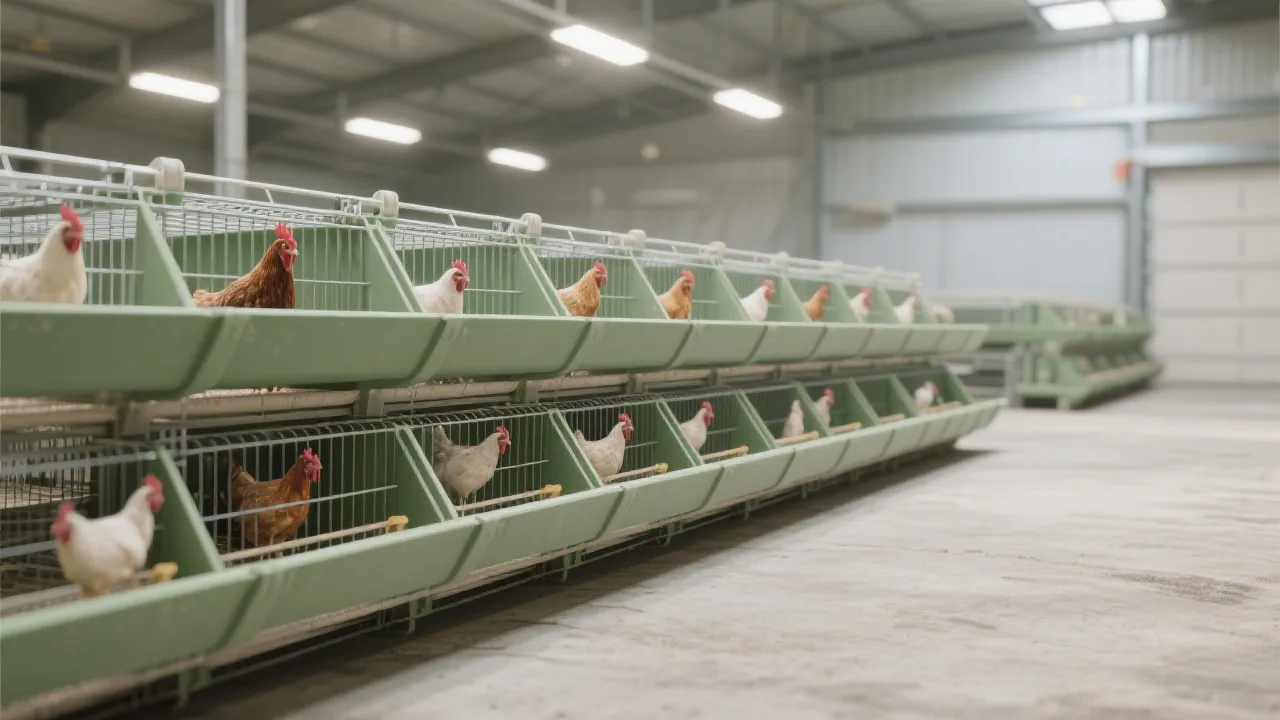
For example, in the production of layer cages, a manufacturer with ISO 9001 certification ensures that the thickness of the hot - galvanized layer is at least 85μm. This high - standard galvanization process not only prolongs the service life of the cages but also reduces corrosion risk, ensuring long - term stability and safety for the hens. A report from the Food and Agriculture Organization (FAO) emphasizes that high - quality equipment can significantly improve the overall efficiency of layer farming. [Reference box: "FAO points out that well - managed quality systems can increase the productivity of layer farms by 15% - 20%."]
ISO 14001: Promoting Environmental Sustainability
ISO 14001 is an environmental management standard that helps organizations improve their environmental performance. In the context of layer farming equipment, this standard promotes the reduction of energy consumption, waste management, and the use of eco - friendly materials. For instance, some state - of - the - art feeding systems are designed to minimize feed waste, and ventilation systems are optimized to reduce energy usage.
Without ISO 14001 certification, farms may face long - term environmental costs. A real - world case shows that a farm using non - certified equipment had to spend a significant amount of money on waste disposal and ended up with a high carbon footprint. In contrast, farms with ISO 14001 - certified equipment not only reduce their environmental impact but also comply with the growing global environmental regulations.
CE Certification: Ensuring Safety and Compliance
The CE mark is a certification mark that indicates conformity with health, safety, and environmental protection standards for products sold within the European Economic Area (EEA). For layer farming equipment, CE certification focuses on electrical safety, mechanical safety, and overall product compliance. For example, electrical components in the equipment must meet strict electrical safety requirements, with noise levels restricted to no more than 65dB.
A common problem for equipment without CE certification is that it may encounter clearance delays when exported to the EU. In one case, a batch of layer farming equipment was held at a European port for weeks due to electrical non - compliance. This not only caused financial losses but also damaged the business reputation of the exporter. Table 1 shows the differences between certified and non - certified equipment:
| Features | Certified Equipment | Non - certified Equipment |
|---|---|---|
| Service Life | 5 - 10 years | 2 - 5 years |
| Maintenance Frequency | Once a year | Once every 3 - 6 months |
| Employee Health Risk | Low | High |
How can you avoid being rejected at EU import due to electrical non - compliance? The answer lies in choosing equipment with proper international certifications. By investing in certified layer farming equipment, you can not only ensure smooth customs clearance but also significantly reduce long - term operating costs, and build a sustainable and standardized farming system.
If you want to ensure that your layer farming equipment meets international standards, download our free International Layer Equipment Compliance Self - Check List PDF. Get Your Copy Now!





Hot Products

.jpg?x-oss-process=image/resize,m_fill,h_800,w_800/format,webp)


Popular articles






READY TO START?
Ready to Build Your Poultry Farm?
Tell us your land size, poultry type and farming capacity. LIVI will provide a complete farm solution for your project.