


Collaborative Optimization Scheme of Manure Cleaning System and Ventilation System in Layer Cages: Practical Experience in Improving Farm Air Quality
Addressing Modern Laying Hen Farming Challenges
In modern laying hen farming, improper manure management has led to severe air pollution and increased disease risks. The air in chicken coops often contains high levels of ammonia, which not only endangers the health of the chickens but also poses a threat to the environment and human health. With the growing emphasis on environmental protection and sustainable development, the green transformation of the laying hen farming industry has become an urgent task.
Analysis of Two Main Manure Cleaning Technologies
Scraper - Type Manure Cleaning Technology
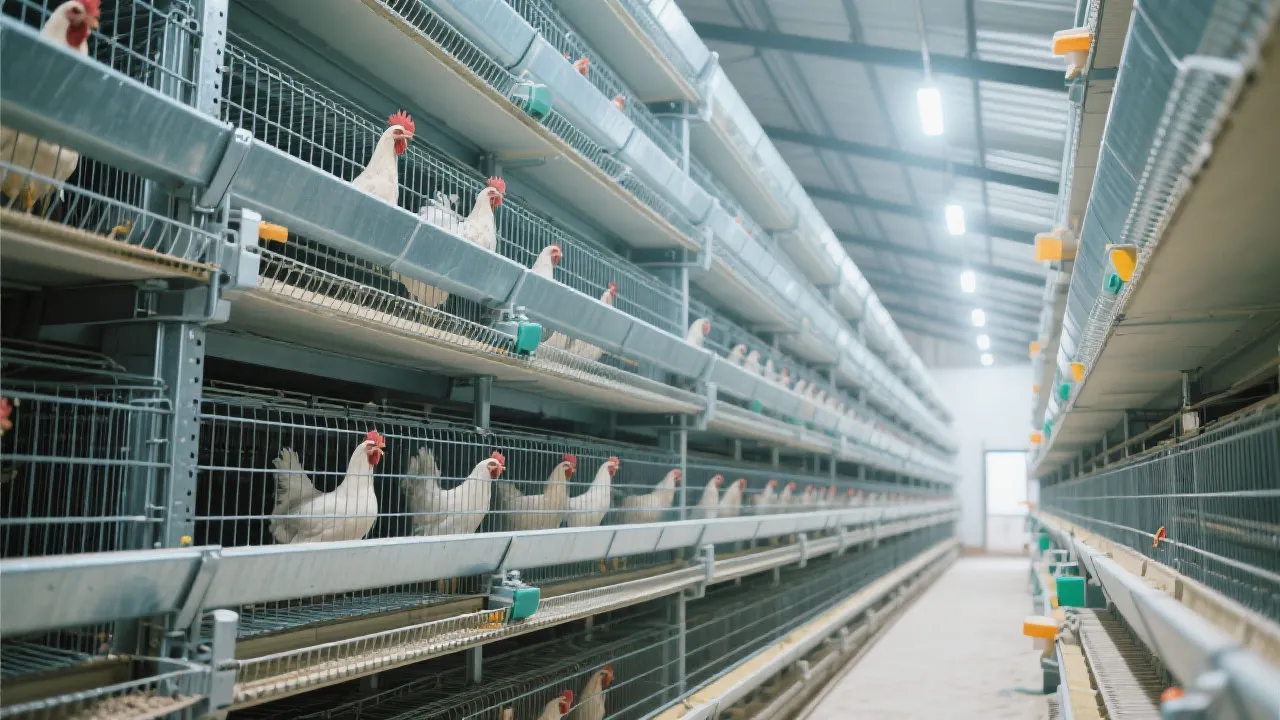
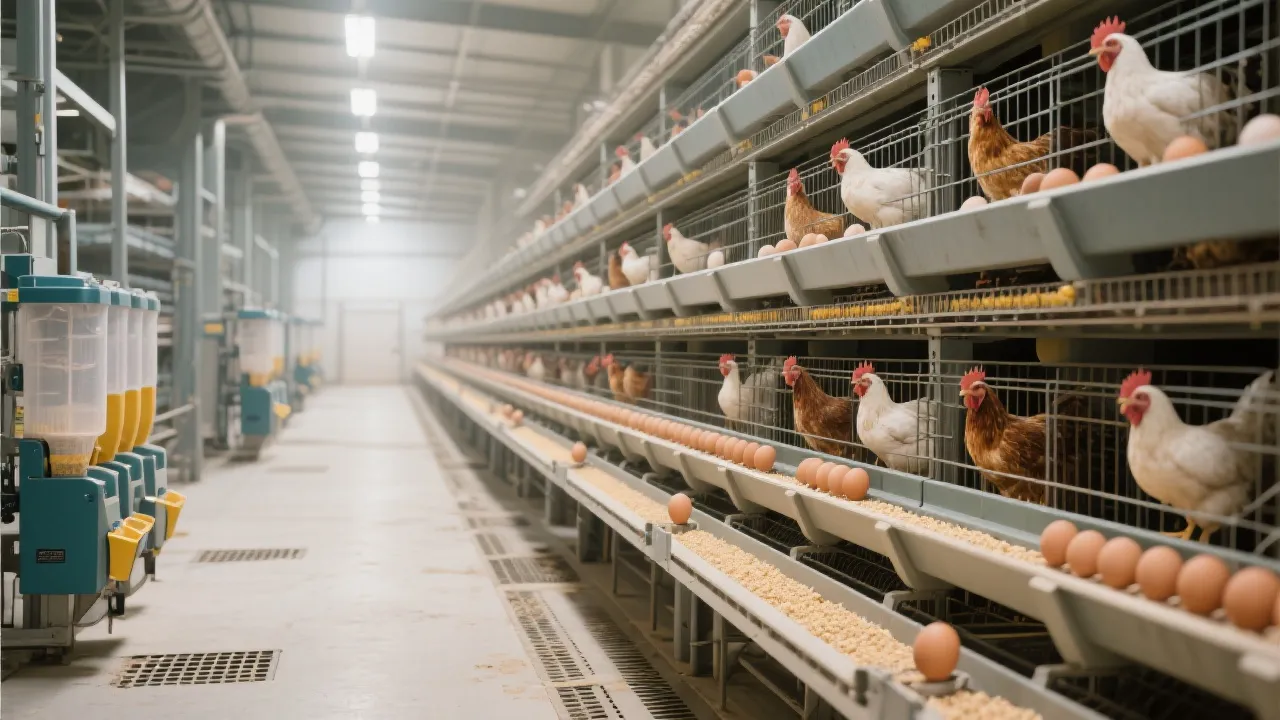
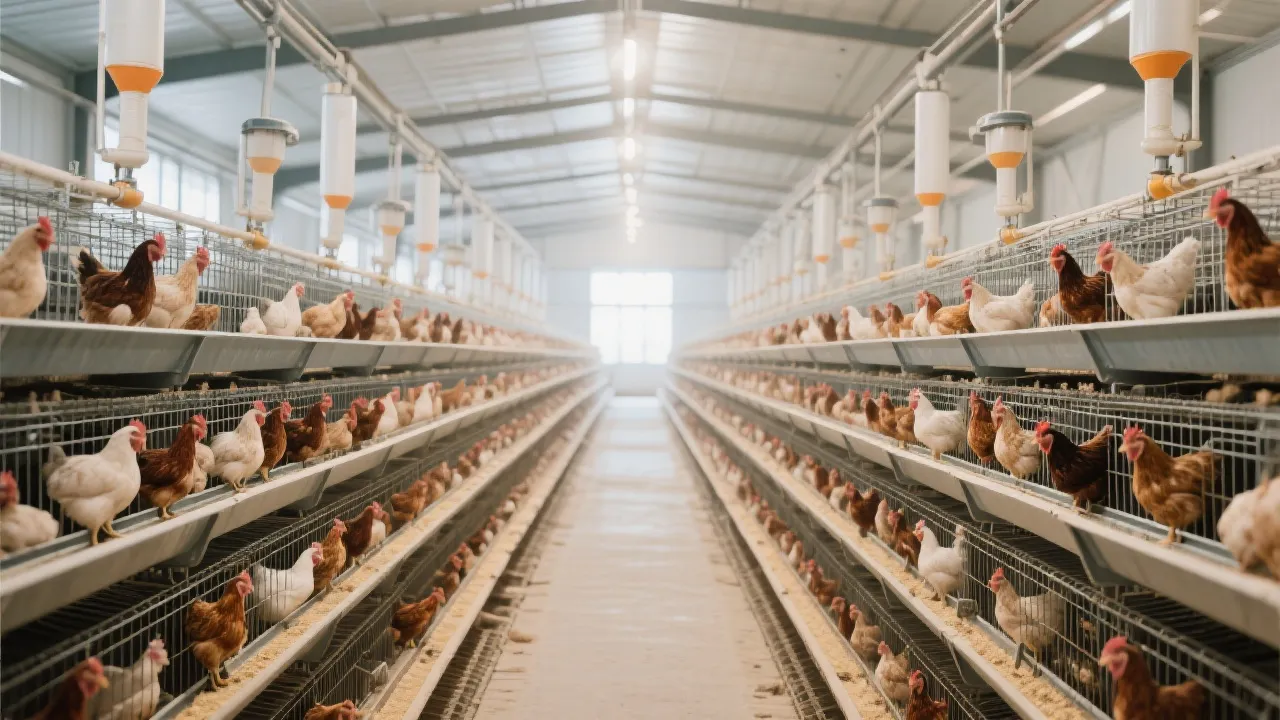
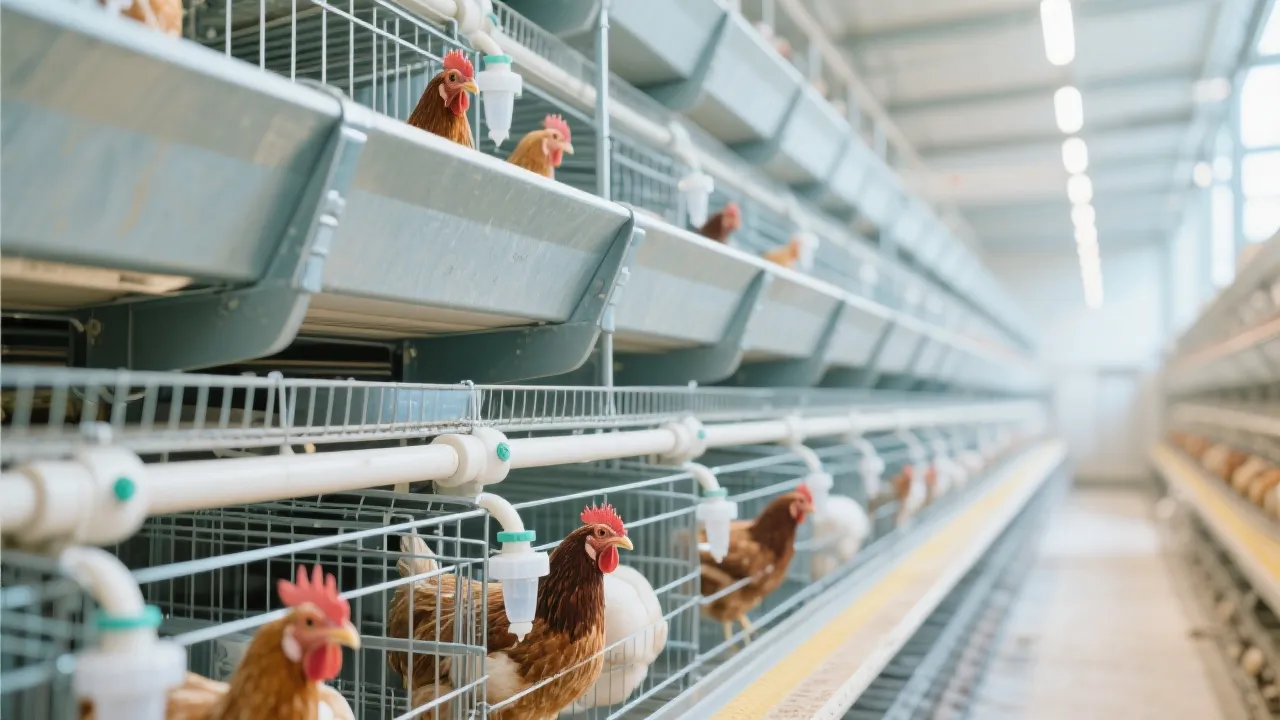
The scraper - type manure cleaning technology is widely used in H - type laying hen cages. Its main advantage is its high cleaning efficiency. The scraper can quickly remove manure from the cage floor, reducing the time for manure to accumulate in the coop. In terms of energy consumption, although it requires a certain amount of power to drive the scraper, its overall energy consumption is relatively stable. For an H - type laying hen cage farm with a scale of 10,000 chickens, the daily power consumption of the scraper - type manure cleaning system is about 30 - 40 kWh.
Screw Conveyor Manure Cleaning Technology
The screw conveyor manure cleaning technology has its unique advantages in the H - type structure. It can transport manure more smoothly and is suitable for longer - distance manure transportation. However, its energy consumption is relatively higher than that of the scraper - type technology. For the same - scale farm, the daily power consumption of the screw conveyor manure cleaning system is about 40 - 50 kWh. But it has better adaptability in some complex manure transportation scenarios.
Intelligent Control System for Energy Saving
The intelligent control system plays a crucial role in the optimization of the manure cleaning system. By using sensors and control algorithms, it can dynamically adjust the operating parameters of the manure cleaning equipment. For example, it can adjust the speed of the scraper or the screw conveyor according to the amount of manure. Through the use of this intelligent control system, the power consumption of the manure cleaning system can be reduced by more than 20%. In a real - world case, a farm reduced its monthly electricity bill for manure cleaning from $500 to $400 after implementing the intelligent control system.
Scientific Maintenance Mechanism
Establishing a scientific maintenance cycle mechanism is essential for the long - term operation of the manure cleaning equipment. Regular maintenance can extend the service life of the equipment and reduce the downtime caused by sudden failures. For example, the scraper should be lubricated every two weeks, and the screw conveyor should be inspected for wear and tear every month. By implementing this maintenance mechanism, the service life of the equipment can be extended by about 2 - 3 years, and the sudden failure rate can be reduced by more than 50%.
Linkage Logic between Manure Cleaning and Ventilation
The linkage between the manure cleaning system and the ventilation system is the key to improving the air quality in the chicken coop. By adopting a timed manure cleaning strategy and precise ventilation control, the ammonia concentration in the coop can be reduced by 35%. For example, cleaning the manure every 8 hours and ventilating for 2 hours after each cleaning can effectively reduce the ammonia concentration. At the same time, the health indicators of the chicken flock, such as the mortality rate and the incidence of respiratory diseases, have also been significantly improved.
Environmental Protection and Resource Utilization
Combined with the ISO14001 environmental management system, the manure from laying hen farms can be effectively managed and utilized. The compost conversion rate of manure can reach more than 80%. Through composting, the manure can be converted into organic fertilizer, which can be sold as a by - product. In addition, biogas power generation is also a feasible option. For a farm with 10,000 chickens, the manure produced every day can generate about 10 - 15 cubic meters of biogas, which can be used for power generation or heating.
Real - World Farm Case Analysis
Let's take a real - world laying hen farm as an example. Before implementing the optimization scheme, the ammonia concentration in the chicken coop was as high as 25 ppm, and the chicken flock had a relatively high incidence of respiratory diseases. After implementing the coordinated optimization of the manure cleaning system and the ventilation system, the ammonia concentration was reduced to 16 ppm, and the mortality rate of the chicken flock was reduced by 15%. At the same time, through the resource utilization of manure, the farm also obtained additional economic benefits.
Are you interested in learning more about efficient manure cleaning solutions? Get a free technical manual now!





Hot Products

.jpg?x-oss-process=image/resize,m_fill,h_800,w_800/format,webp)


Popular articles



READY TO START?
Ready to Build Your Poultry Farm?
Tell us your land size, poultry type and farming capacity. LIVI will provide a complete farm solution for your project.