Hot-Dip Galvanized + Al-Zn Alloy Coatings for Layer Cages | Corrosion Protection in High-Humidity Poultry Houses
Zhengzhou Livi Machinery Manufacturing Co., Ltd.
2026-07-14
Technical knowledge
In high-humidity, high-ammonia poultry houses, corrosion resistance largely determines the service life of layer cages and the reliability of daily operations. This article explains, in practical terms, why combining hot-dip galvanizing with an aluminum–zinc (Al-Zn) alloy top coating can significantly outperform common finishes such as powder coating or electro-galvanizing. Hot-dip galvanizing provides durable barrier coverage and sacrificial (cathodic) protection when the surface is scratched, while the Al-Zn alloy layer forms a dense, stable passivation film that improves resistance to moisture, acids, and alkalis commonly found in manure-related environments. Field comparisons across humid southern regions versus colder northern regions show that the composite coating can deliver more than a threefold increase in cage lifespan under severe moisture exposure while remaining stable in low-temperature conditions. The article also outlines easy inspection and verification methods—such as coating thickness measurement, visual checkpoints, and suggested quarterly or semiannual maintenance routines—helping farms identify higher-quality cages, reduce replacement frequency, and lower long-term operating effort. A reader prompt is included: Is your poultry house already showing early signs of corrosion risk?
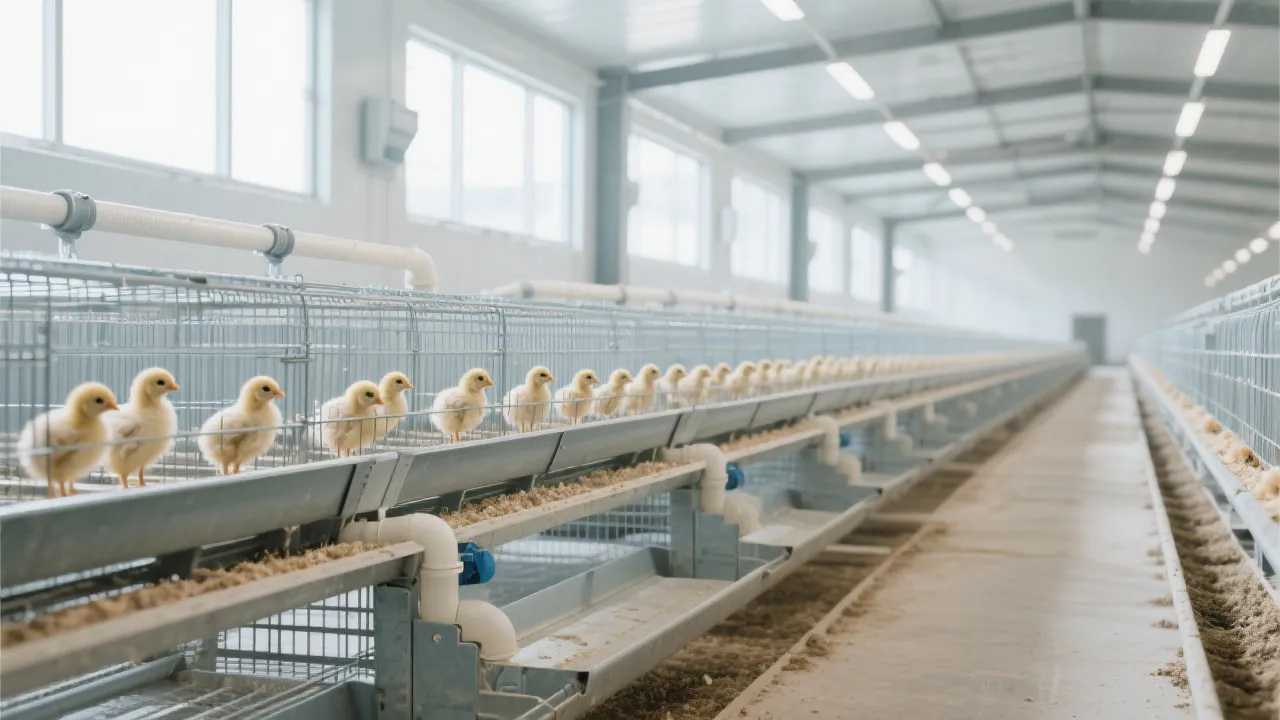
In layer houses, corrosion isn’t a “surface issue.” It quietly eats away at cages, weld points, and load-bearing wires—until doors misalign, feeders jam, and sharp rust edges become a biosecurity and welfare risk. In high humidity and high ammonia environments, the coating you choose is often the difference between frequent replacement and long-term stable production.
Here’s the practical question many farm owners should ask early: Is your poultry house already in a corrosion-risk zone? If you see recurring white rust, bubbling paint, or reddish streaks near joints, your equipment is likely losing protection faster than expected.
1) The real pain point: why high humidity + ammonia destroys layer cages faster
Layer cages operate inside a constant “corrosion reactor”: moisture condenses on cool metal surfaces, manure breakdown releases ammonia, and cleaning routines introduce water plus mild alkalinity or detergents. The result is accelerated electrochemical corrosion, especially at weld seams, cut edges, and high-contact zones (doors, drinker lines, egg collection interfaces).
What farmers typically notice first
White rust spots becoming frequent after wash-down cycles
Paint film cracking or bubbling at corners
Rust bleeding lines under feeders or drinkers
Increased maintenance time and parts replacement
The hidden cost behind “just corrosion”
More frequent cage replacement = downtime and labor peaks
Rough surfaces increase cleaning difficulty and pathogen load
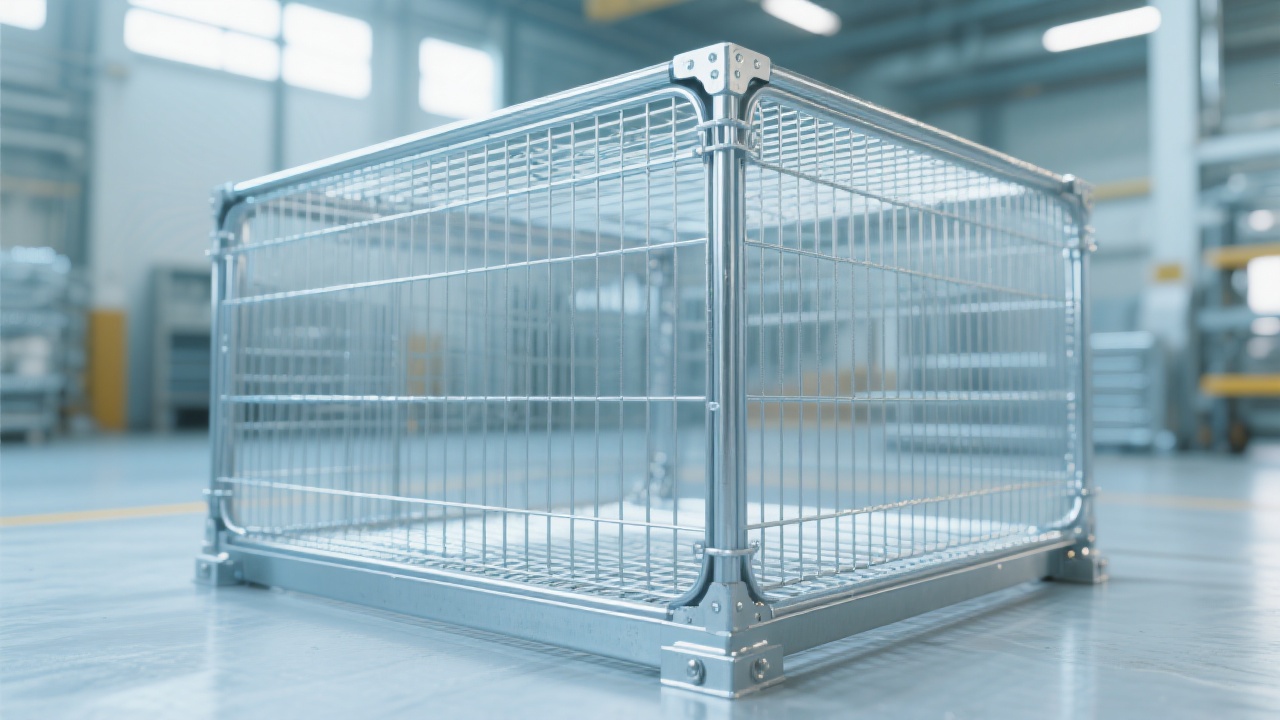
A high-performance layer cage coating system is not only about “thickness.” It’s about how the coating behaves electrochemically and how it reacts when exposed to water, ammonia, and cleaning chemicals. The most durable systems combine hot-dip galvanizing with an aluminum-zinc alloy coating to deliver two complementary protections.
In hot-dip galvanizing, steel is immersed in molten zinc, forming a bonded zinc layer and zinc-iron alloy layers. When the surface is scratched or the coating is locally damaged, zinc can still protect exposed steel by acting as a sacrificial anode. In farm terms: minor damage doesn’t immediately become deep rust.
Aluminum in an Al-Zn alloy helps form a stable, dense oxide/passivation film that slows down further attack, especially under repeated wet/dry cycles. This “barrier effect” is particularly valuable in poultry houses where condensation and drying happen daily.
Why the combination matters
Hot-dip zinc handles “damage tolerance” through cathodic protection, while Al-Zn strengthens “chemical resistance” and slows corrosion progression. Together, they help cages remain stable under high ammonia, wet manure air, and periodic chemical cleaning.
What this means operationally
Choosing the right coating = fewer replacements = lower operating cost. It also supports smoother automation performance because cage geometry and connection points stay reliable for longer.
3) Service life comparison: real-world reference data (humid South vs cold North)
Field performance varies by ventilation design, manure handling, washing frequency, and regional climate. Still, farms in high humidity zones consistently report that a hot-dip galvanized + Al-Zn alloy coated cage structure holds up far longer than common alternatives like powder coating or electro-galvanizing (cold galvanizing).
Reference service life (typical layer houses, normal maintenance)
Coating process
Humid / high-ammonia regions (South)
Cold / lower humidity regions (North)
Powder coating (paint film)
~2–4 years (film damage leads to under-film rust)
~4–6 years
Electro-galvanized / cold galvanized
~3–6 years (thin zinc, faster consumption)
~6–9 years
Hot-dip galvanized + Al-Zn alloy coating
~10–15 years (often 3×+ vs powder coating)
~12–18 years
Notes: Values are practical reference ranges observed in commercial operations under typical wash-down schedules and ventilation. Actual results vary by zinc/Al-Zn layer quality, weld finishing, and house management.
Suggested infographic: “Years of Service Life by Coating Type” (bar chart)
Humid South (Typical)
Powder coating2–4y
Cold galvanized3–6y
HDG + Al-Zn10–15y
Cold North (Typical)
Powder coating4–6y
Cold galvanized6–9y
HDG + Al-Zn12–18y
4) How to verify coating quality on-site (tools, thickness, and visual checkpoints)
Many coating failures are not caused by “bad material” but by inconsistent processing: thin spots, poor edge coverage, pinholes, or incomplete treatment at welds. A simple inspection routine can help farms and procurement teams avoid costly surprises.
Recommended measurement tool
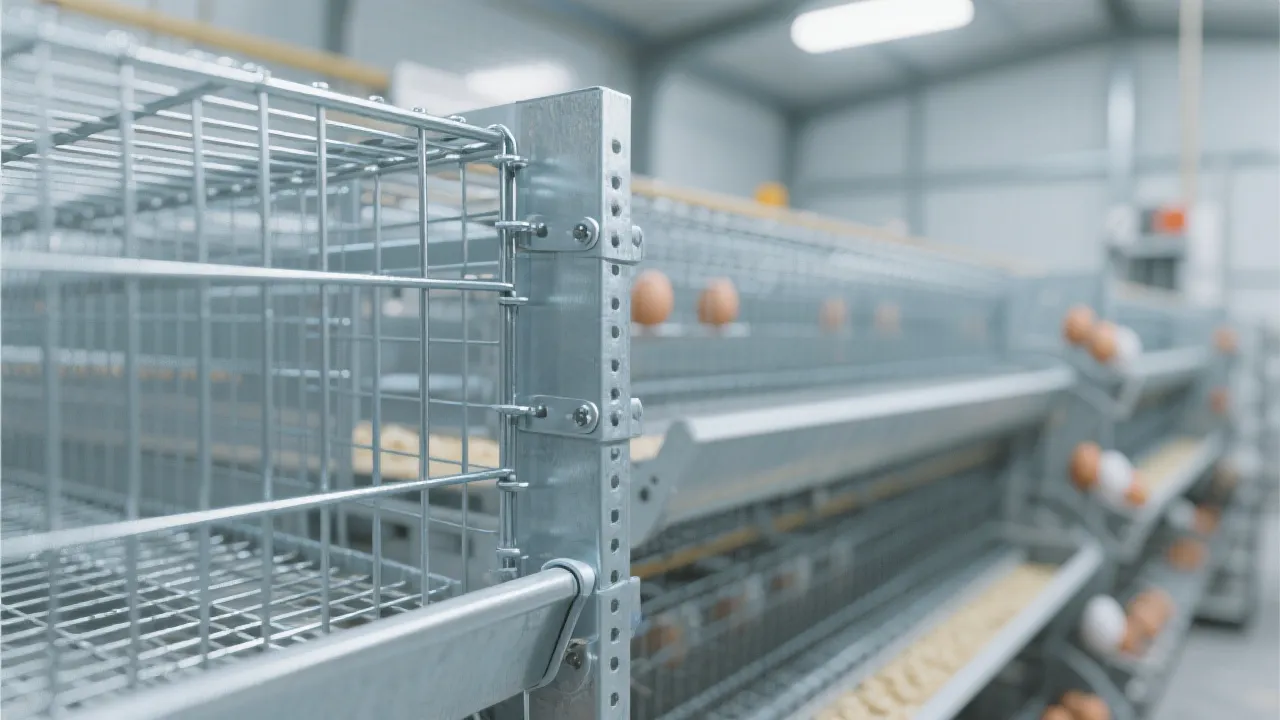
Use a coating thickness gauge (magnetic/eddy current type) designed for zinc and alloy coatings. For heavy-duty farm equipment, a practical target is often: hot-dip zinc layer ~60–100 μm depending on design and standards, with consistent coverage at joints and corners.
Visual checks that matter most
Weld areas: no bare steel, no sharp burrs, uniform coating transition
Edges/cut ends: not “thin and shiny” compared to flat surfaces
Surface texture: even and consistent; avoid heavy runs, flakes, or blistering
Fasteners/contact points: look for early wear zones and verify reinforcement
Interactive check-in for readers: Does your poultry house show rust lines near welds, white powdery spots after cleaning, or recurring paint bubbles? Share what you’re seeing and your region (humid/coastal, inland, cold) to compare notes with other layer producers.
5) Why durability matters more as farms automate
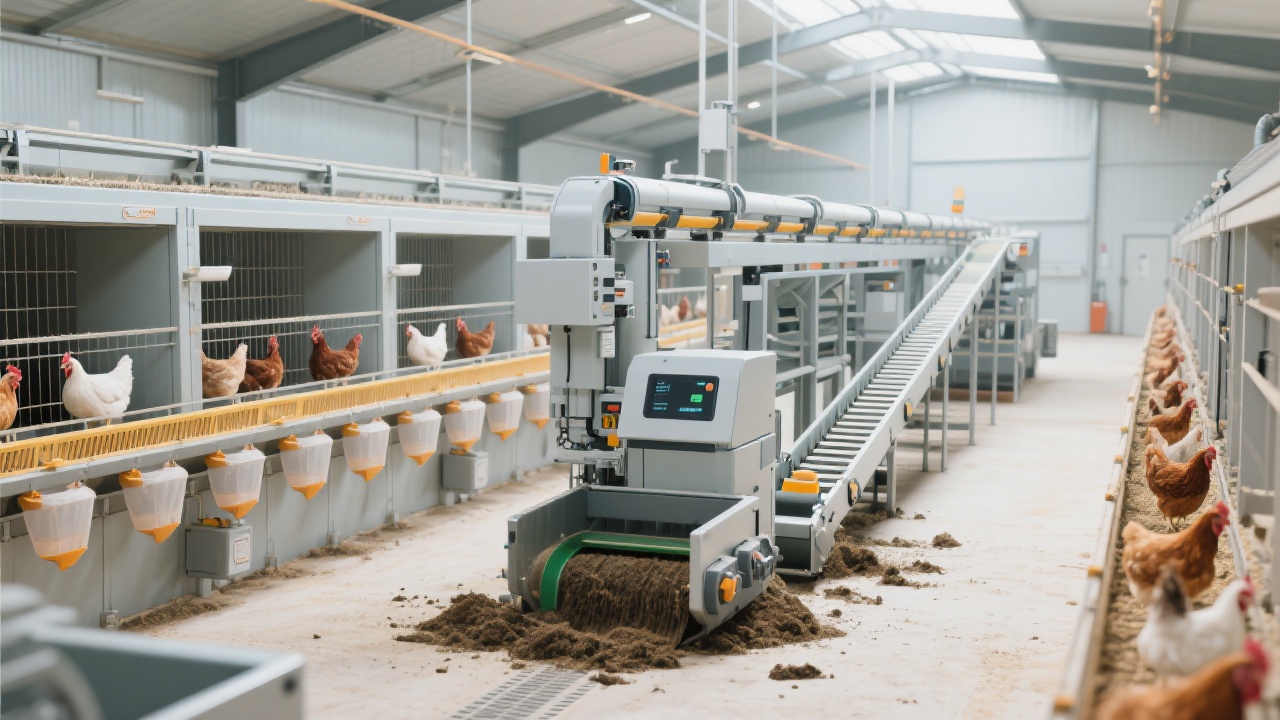
As layer farms scale up, cages aren’t isolated pieces of equipment anymore—they become the structural “backbone” for automation: egg collection belts, manure removal systems, feeding lines, and drinker pipelines. In this setup, corrosion doesn’t just shorten cage life; it increases friction, misalignment, vibration, and unexpected stops.
Where corrosion disrupts automation
Egg belt supports and guide rails losing alignment
Manure belt frames weakening at joints
Increased debris buildup on rough, corroded surfaces
More frequent micro-repairs that interrupt daily routines
What long-life coatings enable
A stable corrosion protection system helps keep frames rigid, surfaces smoother, and interfaces consistent—so automation runs with fewer exceptions. In practical terms, durability supports predictable maintenance, not emergency fixes.
If your farm operates in humid, high-ammonia conditions, selecting a corrosion-resistant cage finish is one of the most direct ways to lower long-term operating cost. Get detailed specifications, coating options, and application guidance for hot-dip galvanized + aluminum-zinc alloy coated layer chicken cages.
Tip for buyers: Ask for coating thickness ranges, process standards, and weld-area treatment details—those three usually predict real service life better than glossy photos.







.jpg?x-oss-process=image/resize,m_fill,h_800,w_800/format,webp)