


Large-Scale Poultry Farm Equipment Configuration: Matching Cages, Automation, and Climate Control

Configuring equipment for a large-scale poultry farm is not just “buying cages and machines”—it is an engineering decision that links farming type, target capacity, house layout, workflow, biosecurity, and management habits into one consistent system. Livi Machinery (Zhengzhou Livi Machinery Manufacturing Co., Ltd.) provides a practical configuration method to help you match cage systems, automation lines, and poultry house climate control into a clear evaluation framework and a complete purchasing checklist.
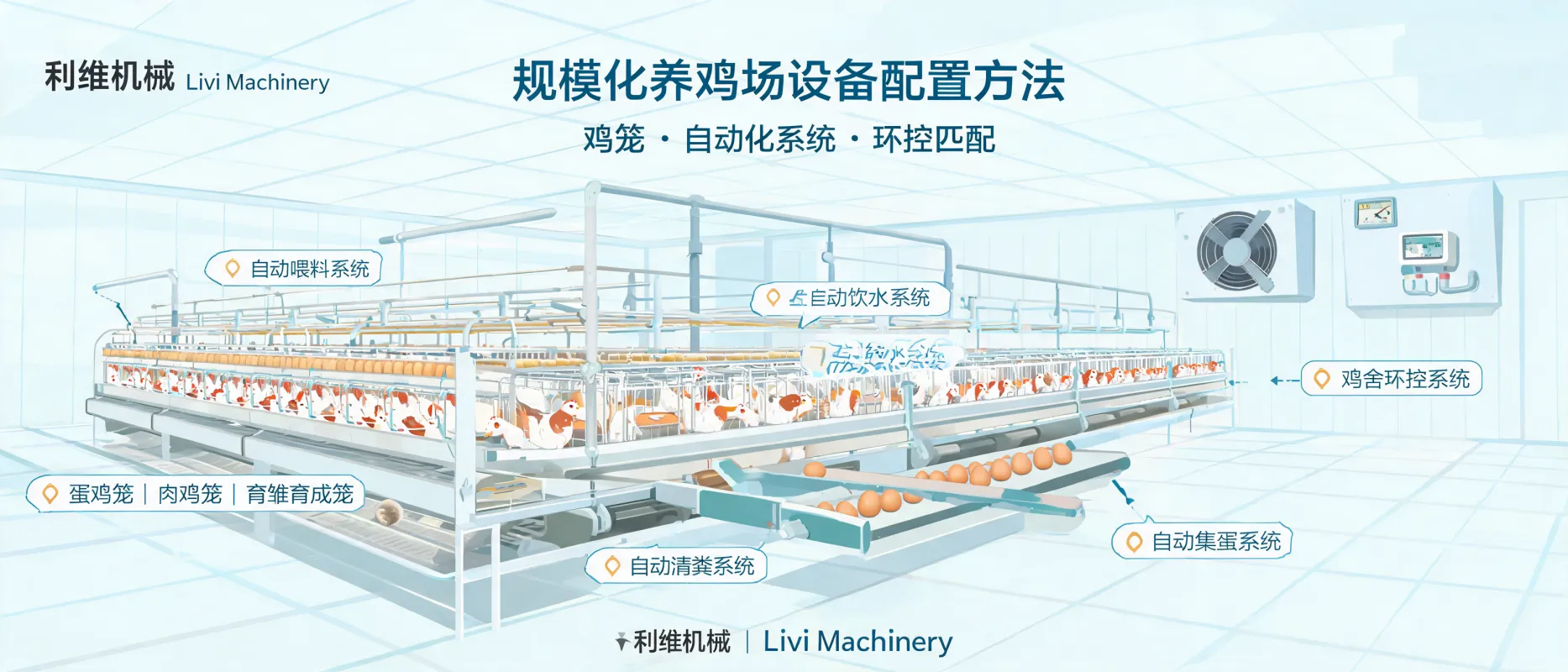
Scope covered: layer cages, broiler cages, brooding & rearing cages, automatic feeding, automatic drinking, manure removal, egg collection, and poultry house climate control systems.
Outcome: a configuration plan that fits your farming objectives and a procurement checklist that reduces missing items and mismatched interfaces during installation.
1) Start with 5 inputs: what you must define before choosing equipment
To avoid under-sizing, over-buying, or incompatible components, define these five inputs first. They drive every later choice—especially cage type, automation level, and environmental control capacity.
- Farming type: layers (eggs), broilers (meat), or brooding & rearing (pullets/chicks).
- Target scale: planned headcount per house and the expansion path (phase-by-phase or one-time build).
- House layout & building conditions: available length/width, column spacing, height, ventilation route, and service corridors.
- Feeding workflow & labor plan: how feed, water, eggs, and manure move—plus staffing levels and shift design.
- Automation & management needs: desired automation level, maintenance capability, spare parts strategy, and monitoring requirements.
2) Select the cage system: match bird type, density goals, and daily workflow
Layer cage system selection (egg production)
- Prioritize stable access for egg collection, feeding, and inspection routes.
- Plan interfaces early: cage rows must align with egg belts/egg collection lines and manure belts/scrapers if used.
- Confirm aisle widths and service paths for routine tasks (vaccination, culling, repairs).
Broiler cage system selection (meat production)
- Focus on fast turnover workflow: loading/unloading, cleaning schedules, and manure handling capacity.
- Make sure feeding and drinking lines are easy to maintain and support uniform access across the house.
- Coordinate with climate control design to maintain comfort under high stocking density.
Brooding & rearing cages (chicks/pullets)
- Define age stages and transfer plan (brooding → rearing → layer/broiler house) to avoid equipment gaps.
- Give extra attention to drinking system stability and temperature/ventilation control for early-stage birds.
Practical tip: decide the cage system first, then “wrap” automation and climate control around it. This reduces rework caused by mismatched line positions, aisle widths, or ceiling height constraints.
3) Configure automation modules: build a consistent material flow
Automation should follow your workflow. For large-scale farms, the goal is stable daily operation—feeding, drinking, manure removal, and egg collection (for layers)—with reliable interfaces between modules.
Automatic feeding system
- Match feeding routes to cage rows and aisle design to avoid dead zones and difficult maintenance points.
- Plan daily feeding rhythm and power/backup considerations according to management habits.
Automatic drinking system
- Confirm water source conditions and filtration strategy; align drinker lines with bird type and stage.
- Keep access points serviceable for routine flushing and inspection.
Manure removal system
- Select a manure handling approach that matches house layout and cleaning schedule.
- Ensure compatibility with ventilation design to help manage humidity and ammonia.
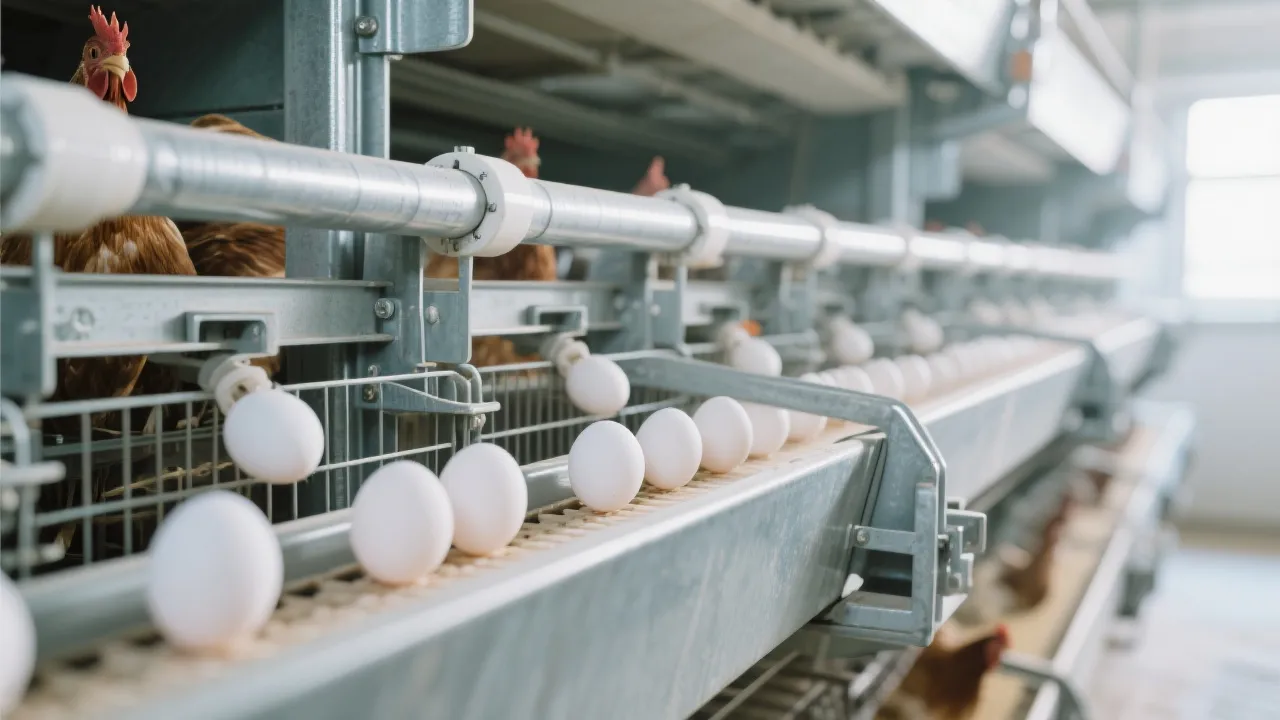
Automatic egg collection system (layers)
- Define egg flow direction (row → cross conveyance → collection/packing) early in the layout stage.
- Reserve space for collection points, operator safety, and maintenance access.
4) Poultry house climate control: align environment with stocking density and local conditions
Climate control is the “stability layer” of a large-scale poultry farm. Your ventilation path, cooling/heating method, and monitoring points should be designed as one system—then coordinated with cage rows and automation lines.
5) Build your procurement checklist: avoid missing items and interface conflicts
Use the table below as a structured purchasing checklist. It helps align cage systems, automation modules, and climate control into one consistent project scope.
| Module | What to confirm | Typical interfaces |
|---|---|---|
| Cage system (layer/broiler/brooding & rearing) | House dimensions, aisle widths, row count, service access, future expansion plan | Feeding line, drinking line, manure system, egg collection (layers), ventilation path |
| Automatic feeding | Route, daily operation plan, maintenance access, power requirements | Cage row alignment, aisle clearance, control points |
| Automatic drinking | Water quality assumptions, filtration/flush plan, stage suitability | Water source/piping, cage line mounting, service points |
| Manure removal | Removal method concept, cleaning schedule, discharge/collection arrangement | Cage base structure, ventilation/humidity management, external handling area |
| Egg collection (layers) | Egg flow direction, collection point location, operator workflow | Cage egg belt, cross conveyance, packing/handling area |
| House climate control | Ventilation route, cooling/heating concept, sensor/control needs, serviceability | Building envelope, cage/aisle layout, manure system, electrical/control room planning |
Why configure with Livi Machinery
As an integrated manufacturer and solution provider focused on poultry farming equipment since 2013, Livi Machinery supports commercial farms with an end-to-end approach—from planning and equipment selection to delivery and project execution. Our product scope covers poultry cages, brooding & rearing systems, and key automation modules including feeding, drinking, manure removal, egg collection, and poultry house climate control—so your farm can be configured as one coherent system rather than disconnected parts.
For EPC / turnkey planning
We help translate farming goals and site conditions into a practical equipment scope and layout logic—supporting a clearer bill of materials and smoother coordination during installation.
For global delivery models
Depending on project needs, Livi Machinery can support different fulfillment approaches such as direct shipment, local production, overseas warehouse supply, and local distribution coordination.
If you share your farming type, target capacity, and house size/layout, Livi Machinery can help you structure an equipment configuration checklist covering cages, automation, and climate control—ready for project evaluation and procurement alignment.


Hot Products

.jpg?x-oss-process=image/resize,m_fill,h_800,w_800/format,webp)


Popular articles

READY TO START?
Ready to Build Your Poultry Farm?
Tell us your land size, poultry type and farming capacity. LIVI will provide a complete farm solution for your project.