A Step-by-Step Guide to Large-Scale Poultry Farm Construction: From Site Selection to Delivery
Zhengzhou Liwei Machinery Equipment Co., Ltd.
2026-07-21
Industry Guide
Livi Machinery explains the end-to-end process of building a large-scale poultry farm—from site selection and project planning to poultry house design, equipment selection, automation systems, manufacturing, installation, commissioning, and final delivery—helping overseas investors structure project discussions and requirements.
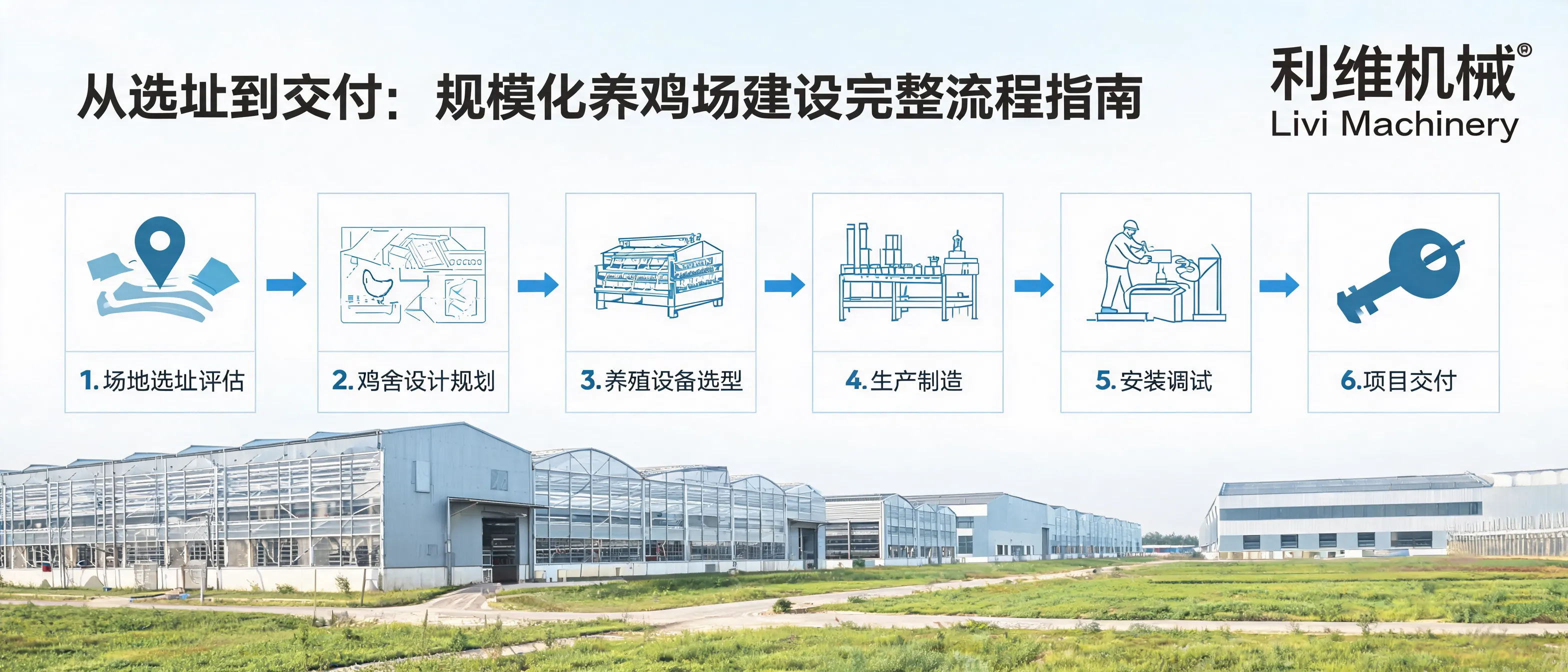
Building a large-scale poultry farm is a multi-discipline project involving land assessment, poultry house design, steel structure works, equipment and automation systems, manufacturing, installation, and commissioning. This page provides a practical, end-to-end workflow reference to help overseas investors and operators structure discussions, clarify requirements, and align milestones.
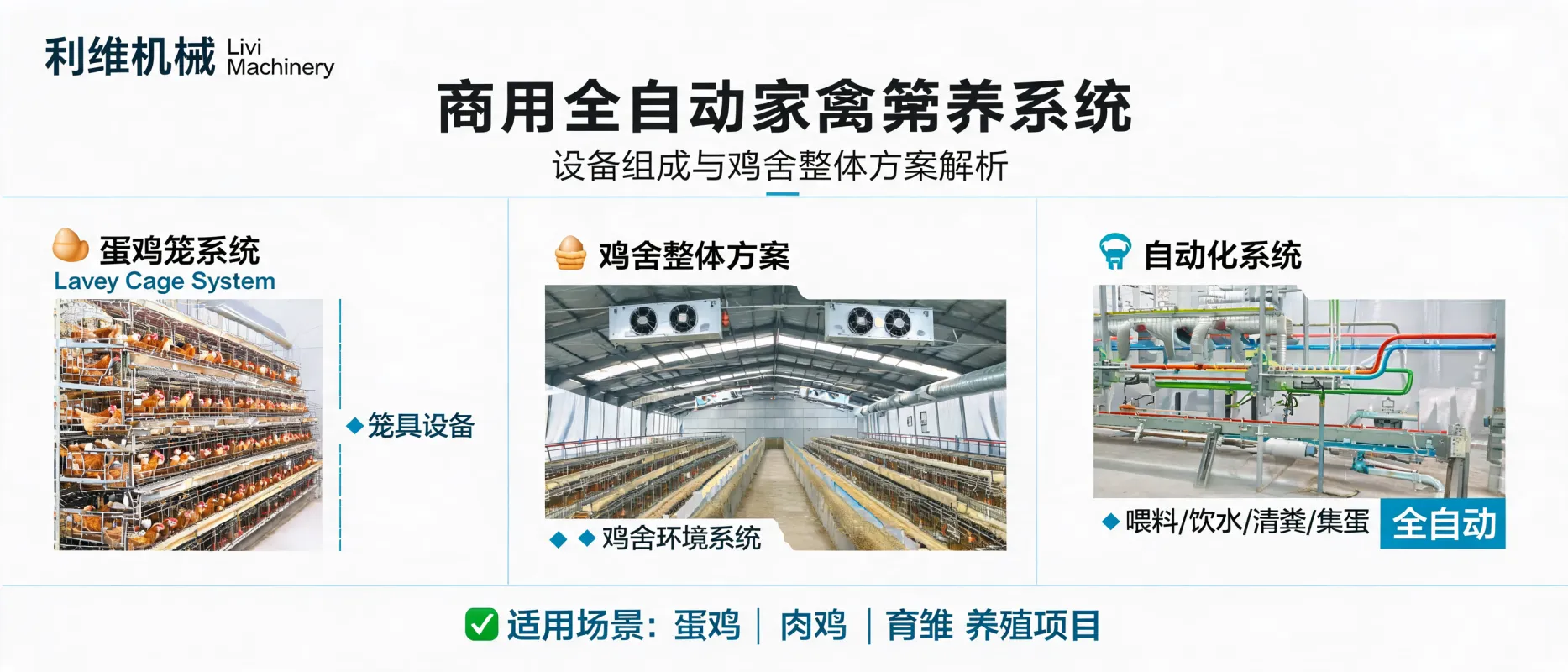
Livi Machinery (Zhengzhou Livi Machinery Manufacturing Co., Ltd., established in 2013) focuses on poultry farming equipment R&D and manufacturing—covering layer cages, broiler cages, brooding/growing systems, incubators, and integrated farm automation. As a system solution provider, we support projects from planning to delivery for global customers.
Who this workflow is for
- Overseas poultry farm investors preparing a turnkey scope
- Operators expanding into large-scale, intensive production
- EPC/contractor teams aligning design + equipment interfaces
- Distributors needing a structured project discussion checklist
End-to-End Workflow: From Site Selection to Final Delivery
The workflow below follows a typical sequence used in turnkey poultry farm projects. Depending on your local regulations, climate, construction readiness, and production plan, some steps may run in parallel—but the decision points remain consistent.
1) Site selection & condition assessment
2) Project planning & requirement definition
3) Poultry house & steel structure design
4) Equipment selection & automation integration
5) Manufacturing & quality inspection
6) Delivery, installation & commissioning
7) Acceptance & handover
1) Poultry Farm Site Selection & Site Condition Assessment
Site selection sets the foundation for construction feasibility and long-term operating cost. For overseas projects, the goal is to define site constraints early so that design and equipment choices remain compatible with local conditions.
- Land & access: road conditions for containers/trucks, space for expansion, internal farm traffic flow
- Utilities: power availability/stability, water source and basic treatment plan
- Climate factors: temperature range, humidity, prevailing winds (impacts ventilation and house orientation)
- Biosecurity layout: separation of clean/dirty zones, visitor route planning, vehicle disinfection point
Tip for requirement discussions: list what is
fixed (site boundaries, utility limits, local rules) and what can be
designed (house count, equipment level, automation scope).
2) Project Planning: Capacity, Production Targets & Scope Definition
Before drawing plans or selecting equipment, define the project baseline. This avoids redesign cycles and ensures the poultry house design and automation systems match your business model.
Key decisions to lock in
- Bird type and stage: layers, broilers, or brooding/growing
- Target capacity and farm phasing (build now vs. expand later)
- Management level: manual vs. semi-auto vs. high automation
- Local standards for building, fire safety, and environmental compliance
Outputs for the next steps
- Project scope boundary (civil works vs. equipment supply vs. installation)
- Functional list for each house (feeding, drinking, manure removal, egg collection, environment control)
- Milestone plan: design freeze, manufacturing, delivery windows, commissioning
3) Poultry House Design & Steel Structure Planning
Poultry house design connects construction with animal comfort and operational efficiency. Steel structure planning should consider equipment layout, maintenance space, and future expansion.
- House type and layout: row planning, service corridors, loading/unloading areas
- Ventilation concept: airflow path compatible with the local climate and stocking density
- Equipment interfaces: anchoring points, cable routing, water pipelines, control room location
- Maintenance & safety: access for cleaning, manure removal path, emergency procedures
At this stage, Livi Machinery typically aligns poultry house design details with the chosen poultry farming equipment and automation scope, so the project remains buildable and service-friendly.
4) Equipment Selection & Automation System Integration
Equipment selection should be based on production goals, labor availability, and local supply conditions. For large-scale farms, consistent integration matters as much as individual equipment quality.
| Module |
What to define in requirements |
Interface considerations |
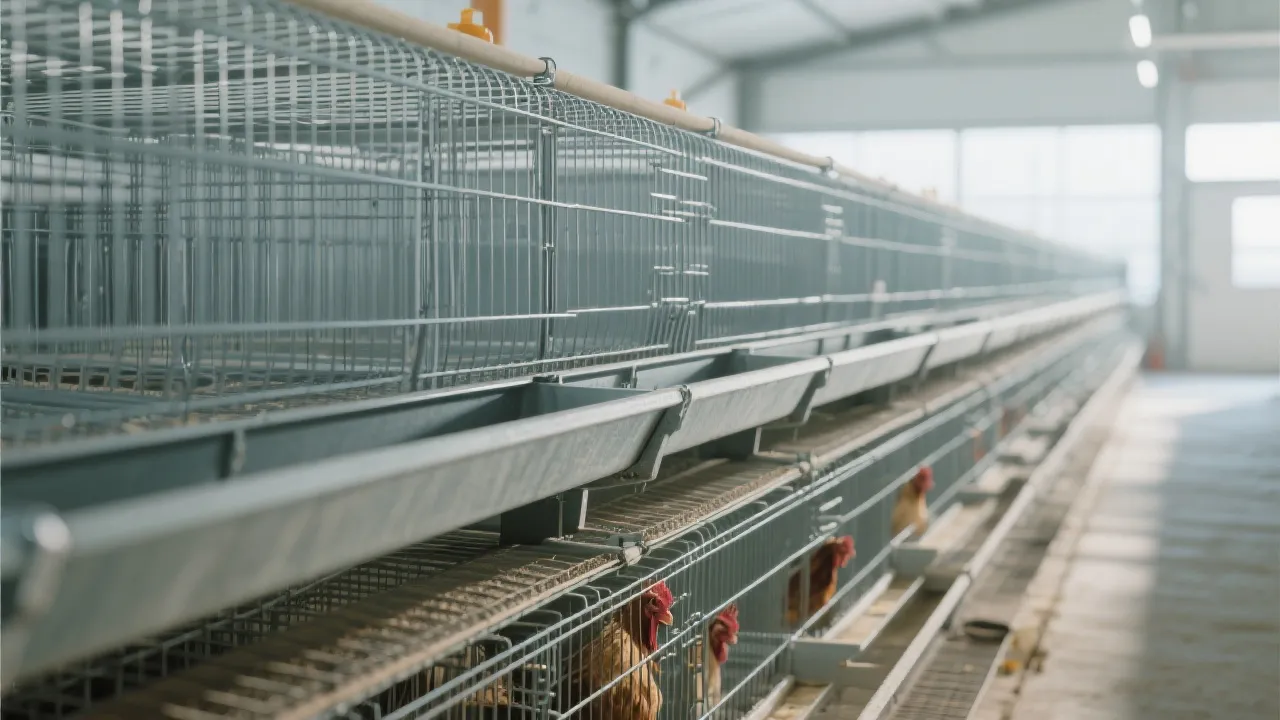
Cage system
layers / broilers / brooding |
house dimensions, aisle width, stocking plan, maintenance access |
steel structure spacing, anchoring, walkway safety |
| Feeding system |
feed storage approach, feeding method, control preference |
power, control wiring, daily operation workflow |
| Drinking system |
water source quality, filtration, pressure stability |
pipeline routing, drainage design, seasonal conditions |
| Manure removal |
removal frequency, collection point arrangement |
house slope/leveling, outside handling route |
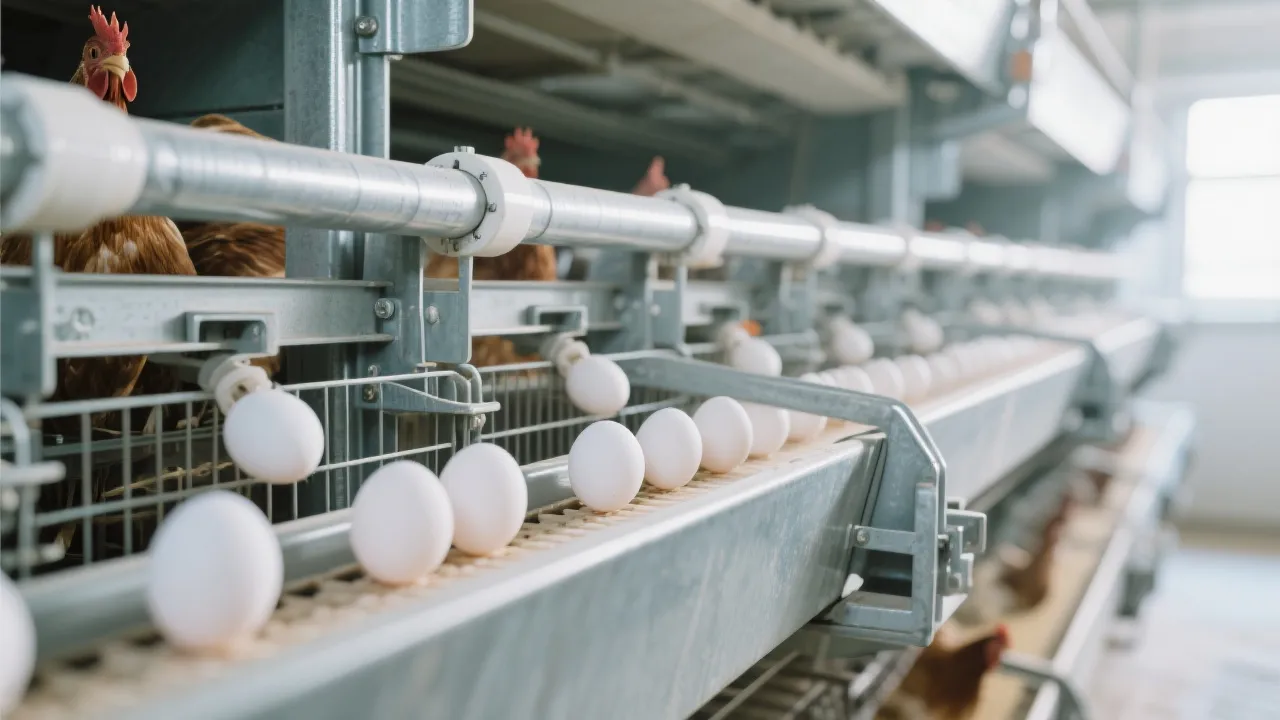
| Egg collection (layers) |
collection method, packing area layout |
conveyor path, workspace safety, logistics flow |
| Environment control |
ventilation/cooling/heating concept suited to climate |
sensor placement, control room, backup power planning |
Livi Machinery’s offering typically covers major poultry farming equipment modules and helps align them into a coherent automation system, reducing mismatch risks between house design and equipment operation.
5) Manufacturing, Quality Inspection & Shipment Preparation
After design freeze and equipment confirmation, manufacturing begins. For export projects, packaging, labeling, and shipment planning should match the installation sequence to reduce on-site delays.
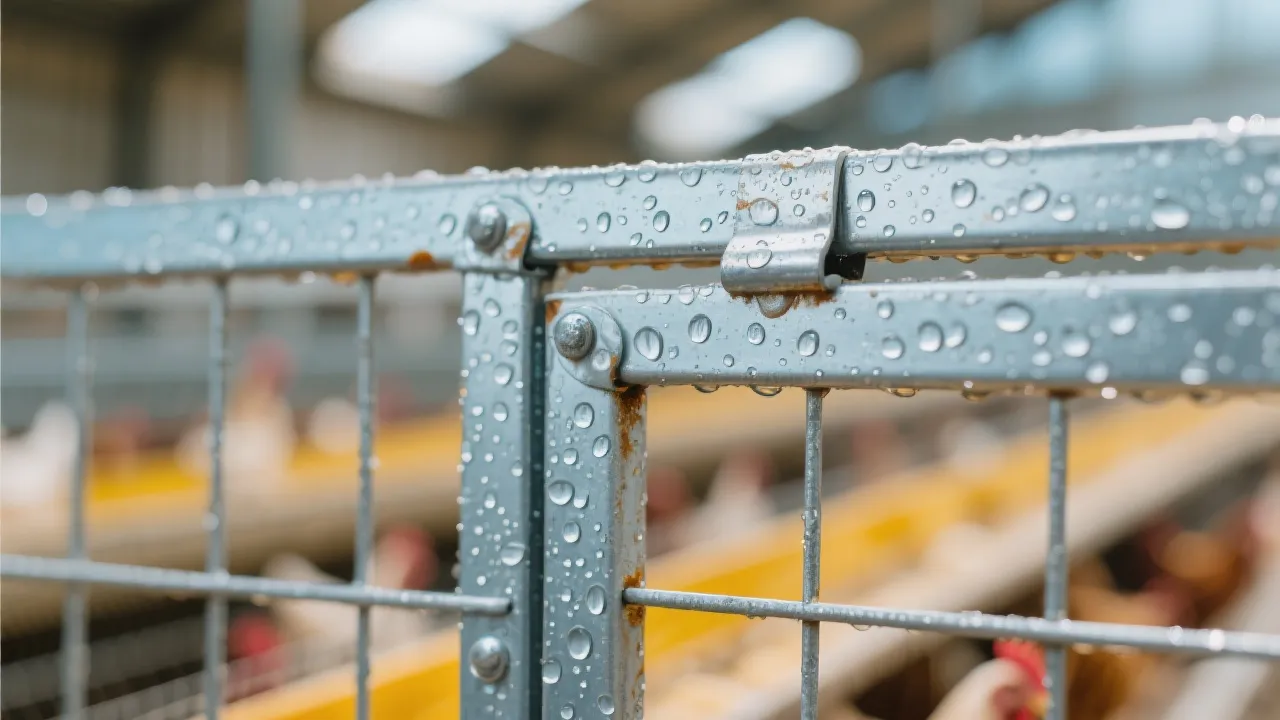
- Material & process control: consistent standards from raw material selection to finished product
- Inspection checkpoints: component checks, assembly fit, and pre-shipment review
- Shipment readiness: packing list aligned with house/zone installation order, spare parts preparation
Quality note: Zhengzhou Livi Machinery Manufacturing Co., Ltd. emphasizes quality control throughout—from raw material screening to strict inspections before shipment.
6) On-Site Installation, System Commissioning & Trial Run
Installation quality directly impacts daily farm operation. Commissioning verifies that the cage lines, feeding, drinking, manure removal, egg collection, and environment control work together under real operating conditions.
- Pre-installation alignment: confirm foundations, house dimensions, and equipment placement points
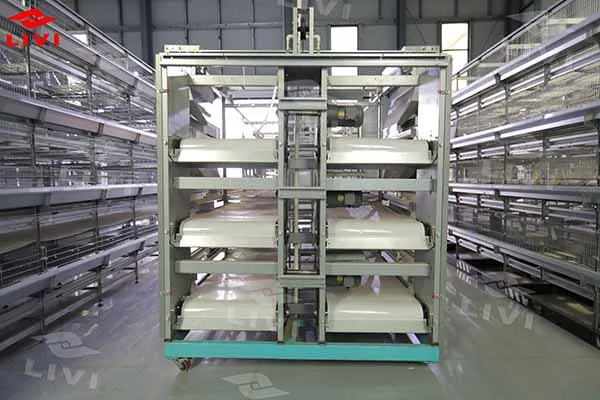
- Mechanical installation: cages and main lines assembled per zone/house sequence
- Utilities connection: power, water lines, controllers, and safety checks
- Commissioning: run each module, then run integrated tests (interlocks, sensors, emergency stops)
- Trial operation: confirm workflow suitability for local staffing and management routines
7) Final Delivery, Acceptance & Handover Documentation
Final delivery is not only about completing installation—it is about ensuring the farm is ready for stable operation with clear documentation and a defined handover scope.
- As-built confirmation and acceptance checklist per house/module
- Operating and maintenance guidance for key equipment modules
- Spare parts list and recommended routine inspection items
- Handover of project scope boundaries and warranty-related records (as applicable)
Key Inputs to Prepare Before Talking Turnkey Scope
For site selection & planning
- Location, land boundary, and access photos/videos
- Power and water availability details
- Climate notes (hot/humid, cold seasons, wind direction)
- Local compliance requirements (construction and environmental)
For poultry house design & equipment
- Bird type (layers/broilers/brooding) and target capacity
- Preferred automation level (feeding, drinking, manure, egg collection, environment control)
- Labor conditions and daily management routine expectations
- Project timeline constraints (shipping window, installation window)
For delivery & execution
- Preferred delivery model: direct shipment, overseas warehouse, local distribution (if applicable)
- Installation responsibility split (your team vs. supplier vs. third-party)
- On-site storage and security conditions for equipment
- Commissioning and acceptance process expectations
Why Many Overseas Teams Use Livi Machinery as a Workflow Reference
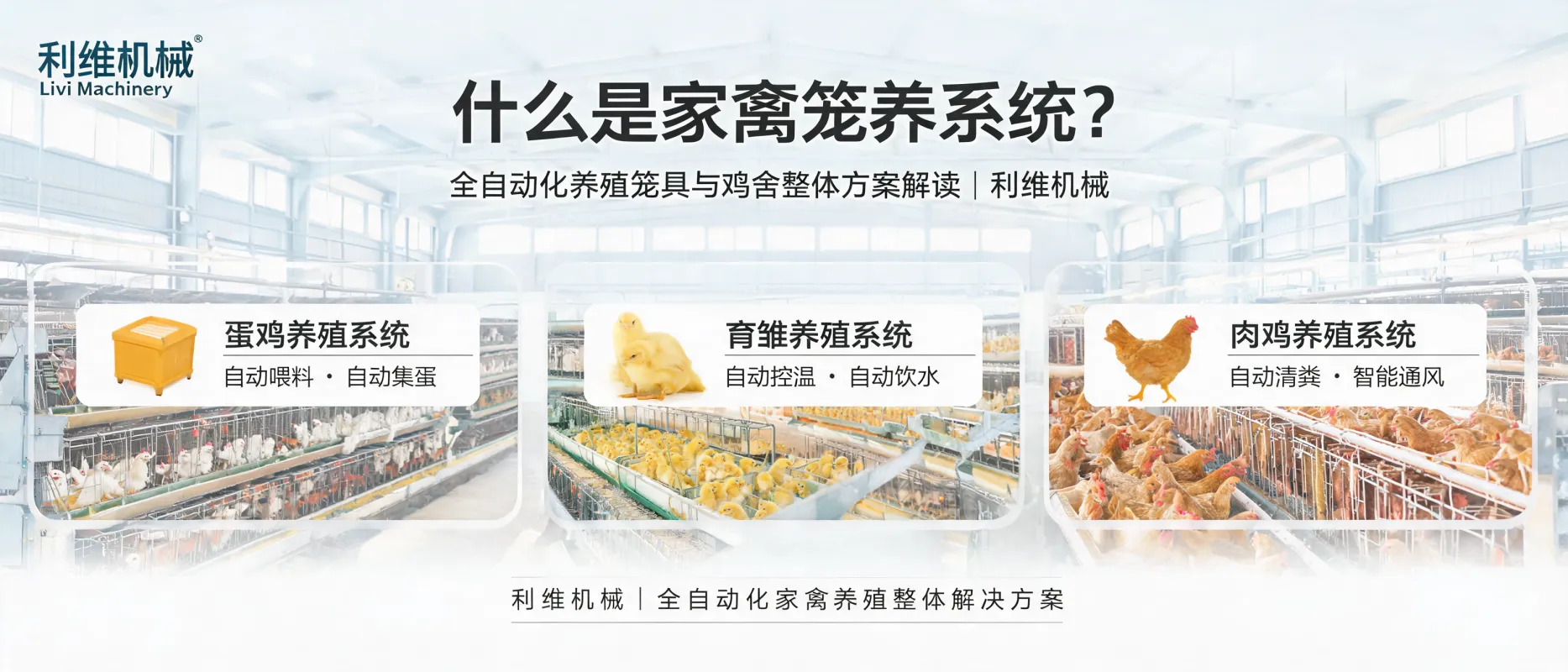
As an integrated manufacturing and solution provider in poultry farming equipment, Livi Machinery supports project conversations with a structured “from site selection to delivery” perspective—helping teams clarify design boundaries, equipment interfaces, and implementation milestones. Our product scope typically includes layer cages, broiler cages, brooding/growing systems, and automation modules such as feeding, drinking, manure removal, egg collection, and environment control—plus steel structure poultry house solutions for large-scale farms.
Communication-friendly
Clear modules and decision points to reduce ambiguity in turnkey scope discussions.
Buildability-focused
Aligns poultry house design, steel structure, and equipment interfaces for smoother execution.
Quality-aware
Emphasizes inspection and shipment readiness to support overseas delivery and installation planning.
If you are preparing a turnkey poultry farm project, you can use the sections above as a checklist to organize your requirements—covering poultry farm site selection, poultry house design, equipment selection, automation integration, manufacturing, installation & commissioning, and final delivery.





.jpg?x-oss-process=image/resize,m_fill,h_800,w_800/format,webp)