


Key Indicators for Selecting High-Efficiency Automatic Egg Collection Systems and Introduction to Industry-Leading Solutions

The Pain Points of Traditional Manual Egg Collection
In the poultry farming industry, traditional manual egg collection has long been a labor - intensive and inefficient process. Workers have to spend a significant amount of time walking through the poultry houses, bending down to pick up eggs one by one. This not only consumes a large amount of human resources but also has a relatively low efficiency. On average, a worker can collect about 1000 - 1500 eggs per hour manually. In addition, manual collection is prone to egg breakage, with a breakage rate of approximately 3% - 5%, which directly affects the economic benefits of the farm.
Core Components and Working Mechanisms of the Automatic Egg Collection System
Roller Conveyor Belt
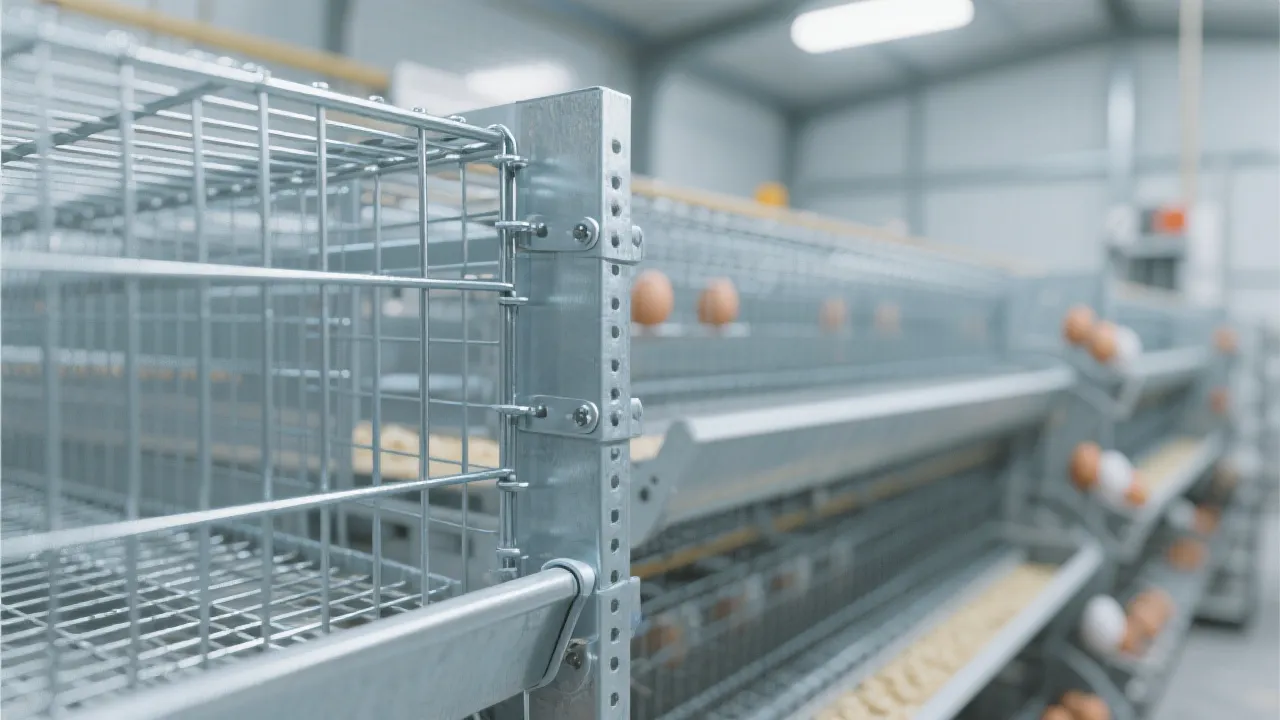
The roller conveyor belt is the backbone of the automatic egg collection system. It is designed to gently transport eggs from the laying area to the collection point. The conveyor belt's speed can be adjusted according to the actual situation of the farm. For example, in a medium - sized farm with a laying capacity of about 50,000 eggs per day, a conveyor belt speed of 1 - 2 meters per minute can ensure stable egg transportation. The smooth surface of the roller conveyor belt reduces the friction on the eggs, effectively reducing the breakage rate to less than 1%.
Inductive Identification and Sorting Module
The inductive identification and sorting module uses advanced sensors to detect the size, shape, and quality of eggs. It can accurately identify cracked eggs, abnormal - sized eggs, and normal eggs, and then sort them into different channels. This module can sort about 2000 - 3000 eggs per hour, greatly improving the efficiency of egg sorting.
System Integration and Space Utilization with H - Type Laying Hen Cages
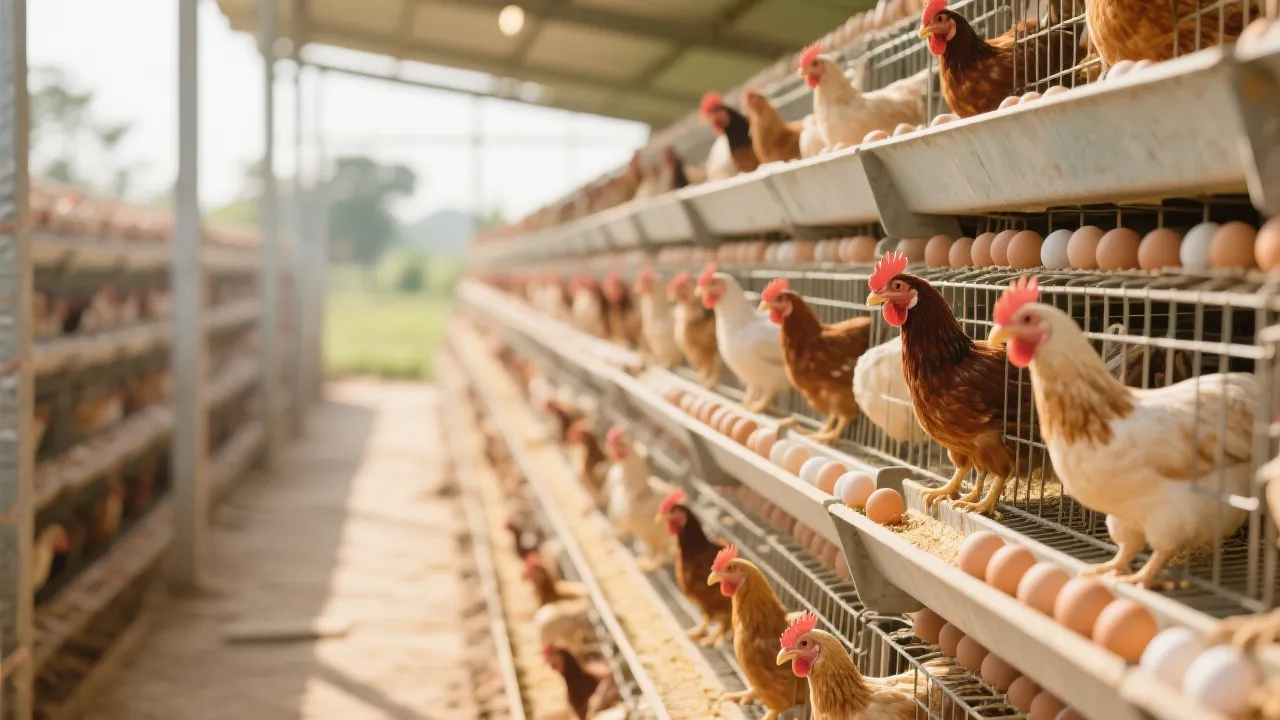
The H - type laying hen cage has a unique structure that allows for high - density chicken farming. The automatic egg collection system can be well integrated with the H - type cage, making full use of the vertical space in the poultry house. Compared with traditional cage systems, the H - type cage combined with the automatic egg collection system can increase the space utilization rate by about 30%, which means more chickens can be raised in the same area.
System Stability and Chicken Behavior Response under Different Stocking Densities
In different stocking density scenarios, the automatic egg collection system shows excellent stability. When the stocking density is relatively low (about 4 - 5 chickens per square meter), the system can run smoothly, and the chickens have more space to move around, which is conducive to their physical and mental health. As a result, the egg - laying efficiency can be increased by about 10%. When the stocking density is high (about 6 - 7 chickens per square meter), the system can still maintain stable operation, and through proper design and adjustment, it can ensure that the chickens have a relatively comfortable living environment, and the egg - laying efficiency will not be significantly affected.
Practical Operation Guide
Daily Maintenance Points
Regularly clean the roller conveyor belt to prevent the accumulation of dirt and debris. Check the sensors of the inductive identification and sorting module at least once a week to ensure their normal operation. Lubricate the moving parts of the system every month to reduce wear and tear.
Fault Troubleshooting
If the conveyor belt stops running, first check the power supply and the motor. If the egg sorting is inaccurate, check the sensor calibration and the software settings. Most common faults can be solved through simple troubleshooting steps.
Policy - Oriented and Future Trends
In recent years, the government has issued a series of policies to promote the intelligent development of the poultry farming industry. For example, subsidies are provided for farms that carry out automated transformation. The automatic egg collection system is in line with this trend, which can help farms achieve green and efficient development. By using this system, farms can reduce labor costs by about 70%, improve the integrity rate of eggs, and optimize the comfort of the chicken flock, moving towards a new stage of intelligent farming.
Are you also troubled by the low efficiency of manual egg collection? Do you want to achieve intelligent transformation in your farm? Click here to immediately obtain a customized intelligent farming solution consultation!






Hot Products

.jpg?x-oss-process=image/resize,m_fill,h_800,w_800/format,webp)


Popular articles




READY TO START?
Ready to Build Your Poultry Farm?
Tell us your land size, poultry type and farming capacity. LIVI will provide a complete farm solution for your project.