
To build a 100,000 layers poultry farm in Uganda, the recommended solution is a fully automatic H-type layer cage system with automatic feeding, automatic drinking, automatic manure removal, automatic egg collection, tunnel ventilation, cooling pads, and intelligent environmental control.
For this scale, farm planning should start from chicken house layout, cage quantity, ventilation direction, egg handling route, manure treatment, power supply, and worker management. Investors planning a 100,000 layers poultry farm in Uganda should confirm the equipment configuration before starting civil construction.
For a 100,000-layer poultry farm, H-type layer cages are more suitable than floor systems or ordinary A-type cages because they provide higher stocking density, better automation integration, and lower labor dependence.
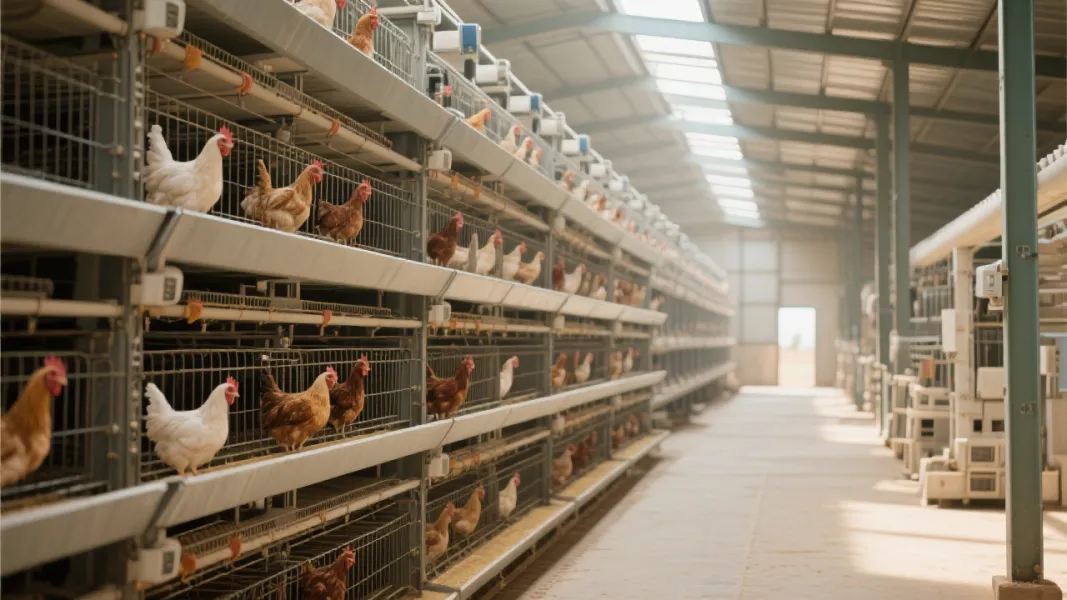
An H-type layer cage system is a multi-tier vertical cage structure designed for intensive egg production. It can be connected with automatic feeding, drinking, egg collection, manure removal, and environmental control systems. The Livi H-Type Cage System is suitable for large farms above 30,000 layers and can be expanded to 100,000, 200,000, or more birds.
For large commercial egg farms, the key value of an H type layer cage system for 100,000 chickens is not only higher stocking density, but also the ability to connect feeding, egg collection, manure cleaning, and ventilation into one complete production system.
| System | Suitable Scale | Labor Demand | Best Use |
|---|---|---|---|
| Floor raising system | Small farms | High | Low-budget traditional farms |
| A-type layer cage | 5,000–30,000 layers | Medium | Medium farms and phased investment |
| H-type layer cage | 30,000–300,000+ layers | Low | Large automatic poultry farms |
Cage quantity depends on the selected H-type cage model. For a 100,000 layers poultry farm in Uganda, the common option is a 4-tier H-type cage system. If one 4-tier H-type cage set holds 192 birds, about 521 cage sets are needed. If one cage set holds 144 birds, about 695 cage sets are needed.
| Cage Model | Specification | Capacity per Set | Estimated Sets |
|---|---|---|---|
| 4-tier 2-door H-type cage | 1200mm × 625mm × 480mm | 144 birds/set | About 695 sets |
| 4-tier 4-door H-type cage | 1800mm × 600mm × 430mm | 192 birds/set | About 521 sets |
A 100,000-layer automatic poultry farm in Uganda can be designed as 2, 4, or 5 chicken houses. The most common commercial solution is 2 houses with 50,000 layers per house. This layout reduces management complexity and keeps the feeding, egg collection, and manure removal systems more centralized.
For each 50,000-layer house, a reference chicken house size can be around 100–120 meters long and 16–18 meters wide. The final size should be calculated according to cage rows, aisle width, egg belt position, manure belt outlet, fan wall, cooling pad area, and service passage.
A good commercial egg production farm layout should separate clean routes and dirty routes. Eggs, feed, workers, and manure should not move through the same path.
A 100,000-layer poultry farm cannot rely on manual operation. The complete automatic system should include H-type cages, automatic feeding, nipple drinking, manure belt cleaning, egg collection, ventilation fans, cooling pads, lighting, sensors, and an intelligent control cabinet.
| Equipment | Function | Value for Uganda Farm |
|---|---|---|
| Livi H-Type Cage System | High-density layer housing | Saves land and supports large-scale farming |
| Automatic Feeding System | Delivers feed evenly to cage rows | Reduces labor and feed waste |
| Automatic Drinking System | Nipple drinking with pressure control | Keeps water supply stable and reduces leakage |
| Automatic Manure Removal | Removes manure by belts | Reduces ammonia and improves house hygiene |
| Livi Automatic Egg Collection System | Collects eggs by belt and central line | Improves collection speed and reduces breakage |
| Ventilation and Cooling System | Controls temperature, humidity, and airflow | Reduces heat stress in hot seasons |
Check land size, road access, water source, drainage, electricity, and distance from residential areas. Reserve space for future expansion.
Choose 2, 4, or 5 chicken houses according to budget and management plan. Confirm house length, width, height, cage rows, and ventilation direction.
Use bird capacity per cage set to calculate total cage sets. For 192 birds/set, about 521 sets are needed for 100,000 layers.
Match automatic feeding, drinking, manure removal, egg collection, ventilation, lighting, and control systems with the cage layout.
Prepare the foundation, drainage, embedded parts, fan wall, cooling pad wall, feed silo foundation, manure outlet, and egg room.
Test feeding, drinking, manure belts, egg belts, ventilation fans, cooling pads, lighting, sensors, alarms, and backup power before stocking birds.
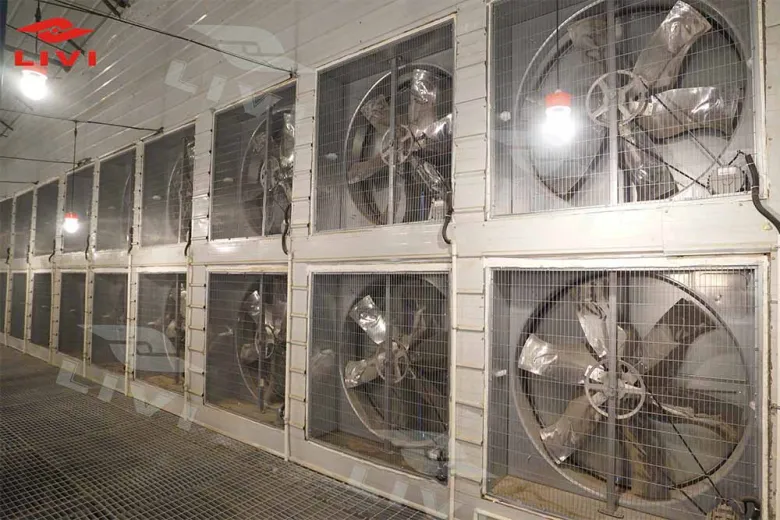
Ventilation is one of the most important parts of a 100,000-layer farm in Uganda. High-density layer farming produces heat, moisture, dust, and ammonia. Without enough airflow, chickens may suffer heat stress, feed intake reduction, egg production decline, and higher mortality.
A reliable automatic poultry farm design in Uganda should include exhaust fans, cooling pads, air inlets, temperature sensors, humidity sensors, and an intelligent control cabinet.
The total cost depends on cage model, automation level, chicken house structure, ventilation design, shipping, installation, local civil work, generator system, water system, and egg handling equipment. A serious quotation should be based on exact farm layout and house dimensions.
| Cost Item | Included Content | Cost Impact |
|---|---|---|
| H-type cage system | Cage frame, cage mesh, trough, drinking line support | High |
| Automatic equipment | Feeding, drinking, egg collection, manure removal | High |
| Ventilation system | Fans, cooling pads, air inlets, controller, sensors | Medium to high |
| Chicken house | Steel structure or civil construction | High |
| Shipping and installation | Sea freight, inland transport, engineer guidance | Medium |
A fully automatic H-type cage farm needs far fewer workers than a manual farm. Automatic feeding, drinking, egg collection, manure removal, and ventilation control can reduce daily manual work. The final worker number depends on house quantity, egg packing method, manure handling method, and management standard.
Yes. H-type cages are more suitable for 100,000 layers because they provide higher stocking density, stronger automation compatibility, and better land use. A-type cages are more suitable for small and medium farms, while H-type cages are better for large commercial egg farms.
Before designing the project, the supplier needs chicken quantity, land size, chicken house dimensions, local temperature, power condition, water source, preferred automation level, and future expansion plan. These details help calculate cage quantity, house layout, ventilation, and equipment configuration.
If you are planning to build a 10,000–100,000+ layers poultry farm in Uganda, Livi Machinery can provide customized H-type cage layouts, automatic equipment configuration, chicken house planning, ventilation design, and installation guidance according to your land size, climate, and investment plan.
automatic poultry equipment configurationSend your chicken quantity, land size, and chicken house dimensions to get a suitable cage layout and automatic equipment plan.