


High-Efficiency Broiler Farming Solution: Planning, Multi-Tier Cage Design, and Operations Management

A High-Efficiency Broiler Farming Solution, End to End: Planning, Cage System Design, and Daily Operations
Building a modern broiler operation is no longer just about “more birds.” It is about repeatable performance: stable growth curves, predictable feed conversion, controlled mortality, and a facility design that keeps labor and energy under control. In practice, the biggest gains come from aligning three layers: site planning, multi-tier cage layout, and standardized operation management. This guide presents a practical, engineering-minded pathway used in real projects—an approach that can be copied, measured, and improved.
1) Start With Clear Targets: Capacity, Turnover, and “Cost per kg”
Before selecting any poultry farming equipment, a farm needs measurable targets. In commercial broiler production, three indicators typically drive the entire design: annual throughput (birds/year), feed conversion ratio (FCR), and total cost per kg live weight.
Reference benchmarks (for context): In many well-managed broiler systems, FCR often lands around 1.55–1.75 depending on genetics, climate, and management. Mortality is commonly targeted below 3–5% per cycle. These are not promises—just realistic ranges used for planning.
With targets defined, the planning stage becomes less emotional and more mathematical: how many square meters are available, what ventilation and power constraints exist, and how the chosen broiler farming solution will scale over multiple cycles without creating “hidden” labor or energy burdens.
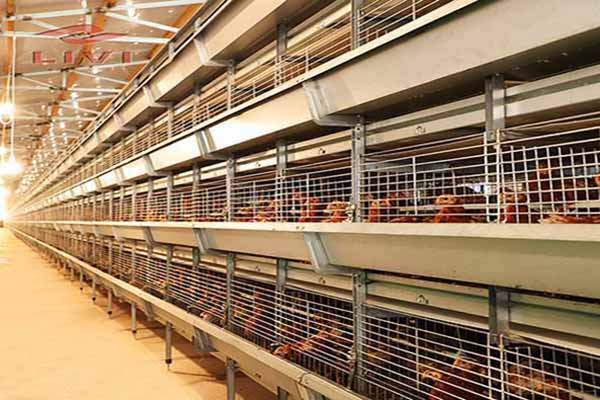
2) Facility & Layout Logic: Why Multi-Tier Broiler Cages Change the Economics
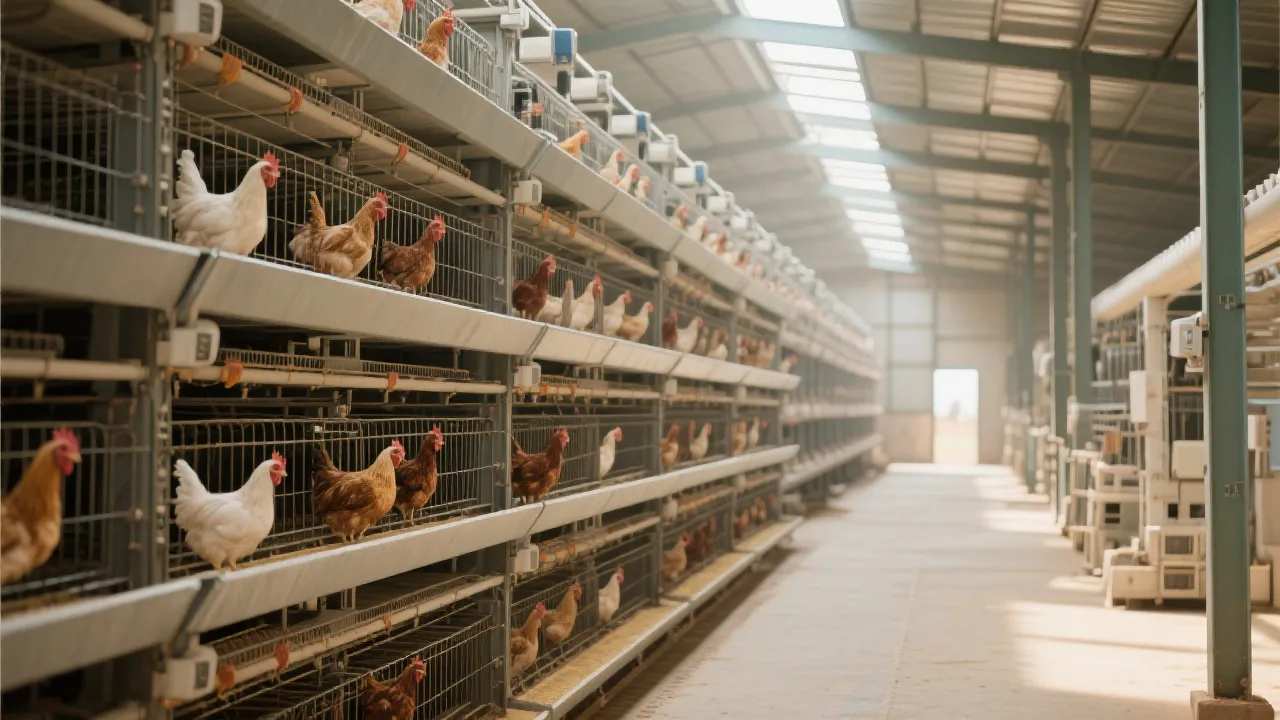
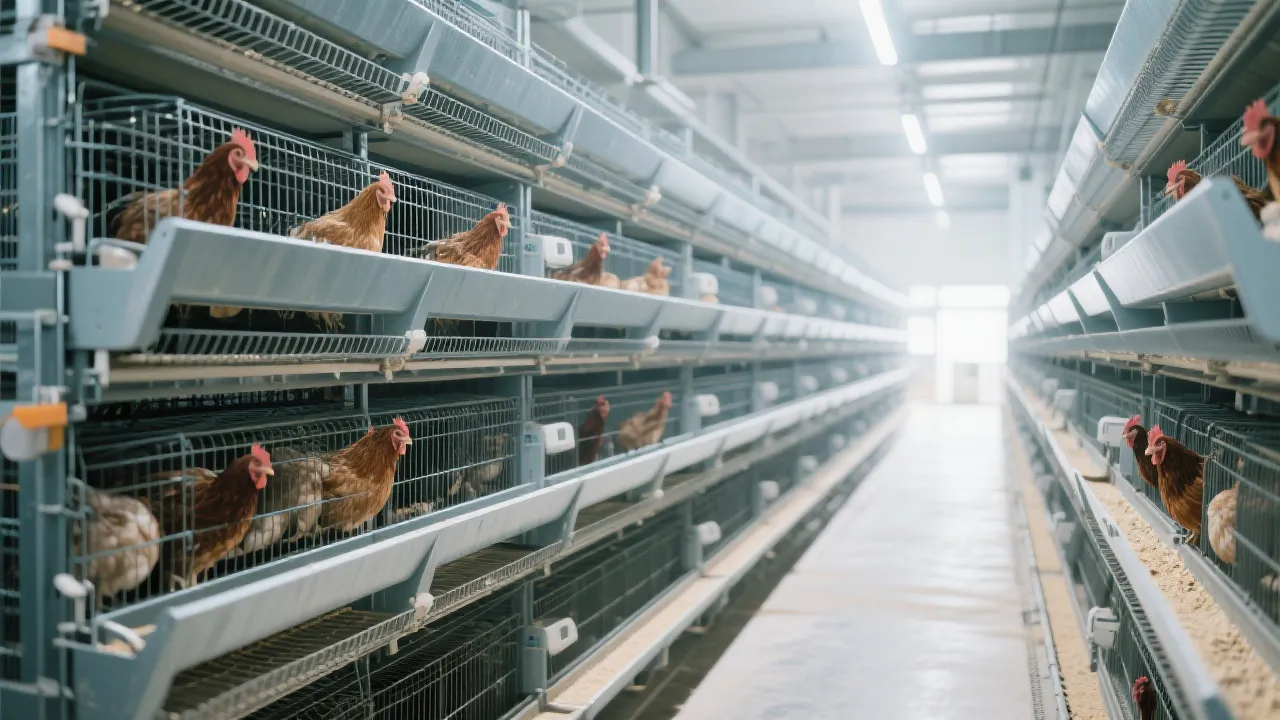
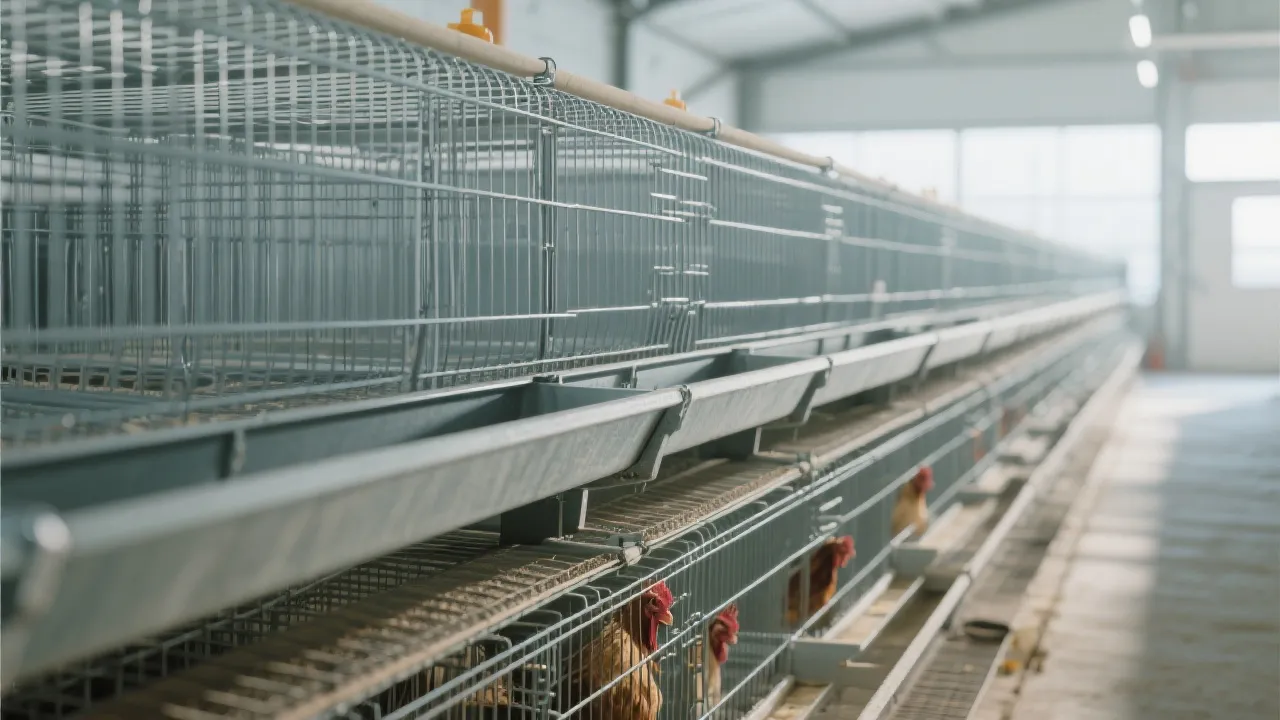
In regions where land, construction time, and labor availability are constraints, multi-layer broiler cages are often used to push productivity per square meter while keeping daily handling systematic. The value is not only “more birds,” but repeatable workflows: feeding, watering, manure management, and inspection are easier to standardize when equipment and movement paths are consistent.
A practical density perspective (reference ranges)
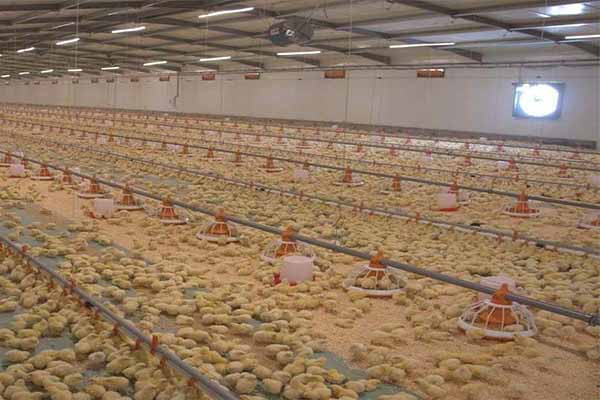
Floor-based systems often rely on litter management and wider movement areas. A cage-based approach can raise capacity per building footprint when designed correctly. In real projects, farms commonly report +30% to +80% capacity uplift versus older layouts, depending on starting point, tier count, and aisle design. The most successful upgrades treat density as a controlled parameter—paired with ventilation, drinker performance, and monitoring discipline.
Quick layout checklist (used in planning meetings)
- Aisle width supports daily inspection and emergency handling without bottlenecks.
- Air path aligns with cage rows to reduce “dead zones” and heat stress risk.
- Water line zoning avoids pressure drop at end points (common in long houses).
- Manure removal rhythm matches staffing reality (not a theoretical schedule).
- Biosecurity flow separates clean/dirty movement (people, tools, crates).
3) Material & Corrosion Strategy: Q235 Steel + Hot-Dip Galvanizing for Long Service Life
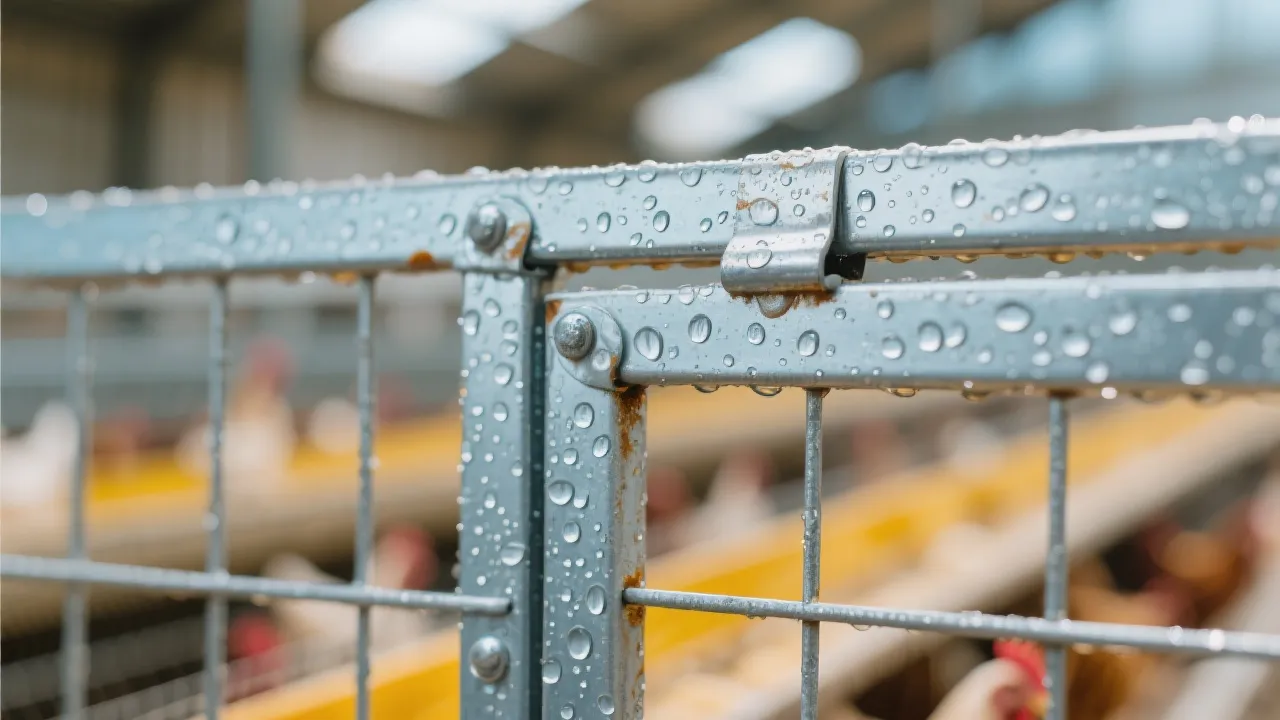
In broiler houses, corrosion is not a cosmetic issue—it directly affects structural reliability, cleaning efficiency, and maintenance frequency. Many engineered cage systems use Q235 steel (often selected for balanced strength, availability, and fabrication consistency) combined with hot-dip galvanizing to form a practical anti-corrosion baseline.
Reference technical notes (planning-level)
- Q235 steel is commonly used in agricultural structures due to stable mechanical behavior and wide manufacturing compatibility.
- Hot-dip galvanizing creates a zinc layer that slows corrosion in humid, ammonia-exposed environments typical of poultry houses.
- A robust corrosion plan reduces unplanned downtime and helps keep long-term operating cost predictable.
For buyers comparing poultry farming equipment suppliers, the key is to ask for process clarity: galvanizing method, coating uniformity expectations, and what maintenance routine is recommended in high-humidity or coastal areas. This is where “cheap upfront” can quietly become expensive later.
4) Operations Management: Turning Equipment into Performance
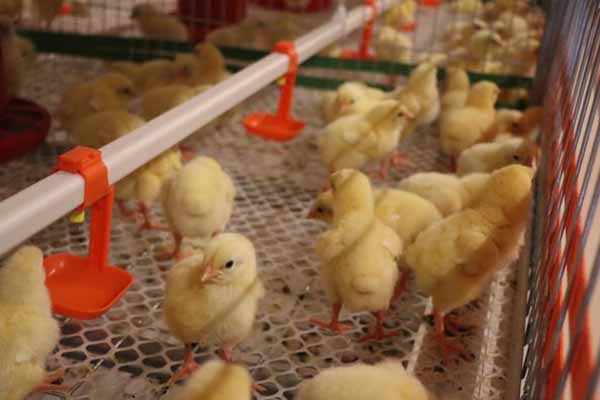
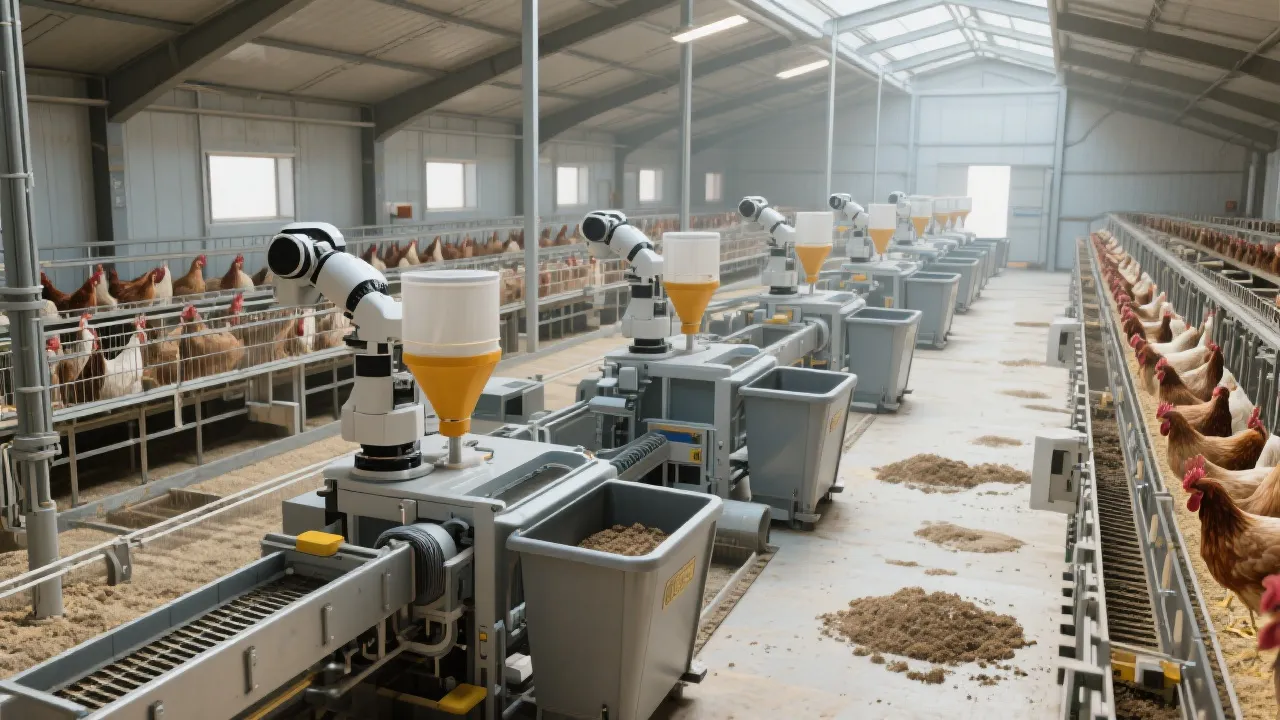
Even a well-designed broiler farm can underperform without disciplined daily routines. High-efficiency operations typically standardize four daily control loops: feed, water, environment, and health observation. These are simple in concept, but powerful when tracked consistently.
A workable SOP rhythm (example)
| Control point | Daily check | What it prevents | Useful record |
|---|---|---|---|
| Water intake | Line pressure, leaks, nipple function | Dehydration, uneven growth | L/day per house + anomaly notes |
| Feed delivery | Uniform access, blockage points | FCR drift, stress pecking | kg/day + bird behavior observations |
| Environment | Temperature, airflow, humidity | Heat stress, respiratory issues | Sensor log + manual spot checks |
| Health scan | Dead birds count, gait, droppings, sound | Late detection of outbreaks | Mortality %, culls, intervention time |
The operational advantage of a structured broiler farming solution is consistency: small issues show up in records before they become expensive. Over multiple cycles, this approach supports more predictable output and helps lower long-term costs through fewer emergency repairs, fewer performance crashes, and less wasted feed.
5) Case Logic: What “Repeatable Success” Looks Like in the Field
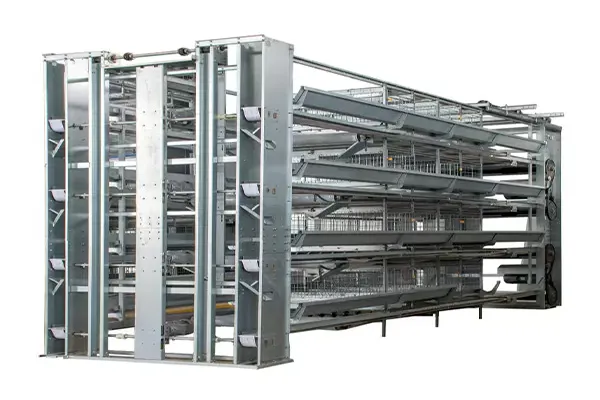
In projects associated with Zhengzhou Livi Machinery Manufacturing Co., Ltd., a frequent pattern appears: farms that gain the most are not the ones chasing novelty—they are the ones that implement a copyable system from structure to daily routines. One example often discussed in engineering circles is the application of an H-type battery cage approach to improve space utilization, reduce manual handling time, and keep inspection paths clean.
Field feedback (typical): “After the layout was standardized, daily checks became faster and more consistent. Problems showed up earlier, and the team could respond with less stress.”
The credibility of such outcomes comes from process transparency: layout drawings, material specification, installation checks, and training for day-to-day operation. That “from theory to execution” bridge is often what separates a successful upgrade from a frustrating one.
6) Technical Support That Actually Matters: Design-to-Operation Continuity
For buyers in the awareness stage, the key question is not “Which cage is best?” but “Can the supplier help connect design, installation, and operation into one working system?” Effective support usually includes: site assessment, layout proposal, equipment matching, installation guidance, and operation training.
Buyer questions that improve supplier selection (save these)
- What tier configuration is recommended for the local climate and building width?
- Which corrosion protection method is used, and how is coating quality controlled?
- What daily maintenance tasks are expected, and what tools are needed?
- What are the typical failure points in the first 90 days, and how are they prevented?
- Is there a clear training checklist for staff (feeding, water, inspection, biosecurity)?
CTA: Get a Layout-Ready Multi-Layer Broiler Cage Plan (Built for Your Building Size)
If the priority is higher stocking density with lower long-term operating cost, the fastest way forward is a plan that connects layout, steel structure and corrosion strategy, and daily management workflow—so the result is measurable, not theoretical.
Request a Multi-Layer Broiler Cage Solution from Zhengzhou Livi Machinery Manufacturing Co., Ltd.Typical next step: share your house dimensions, target birds per cycle, local climate notes, and power availability for an initial configuration discussion.
A question for decision-makers
Which part of the broiler farming process is the top priority right now: site planning, equipment selection, multi-tier cage layout, or daily operation management?



Hot Products

.jpg?x-oss-process=image/resize,m_fill,h_800,w_800/format,webp)


Popular articles




READY TO START?
Ready to Build Your Poultry Farm?
Tell us your land size, poultry type and farming capacity. LIVI will provide a complete farm solution for your project.