Solution Brief (Awareness Stage) · Space Optimization for Large-Scale Broiler Farms
How H-Type Multi-Tier Battery Cages Raise Broiler Farming Efficiency—A Space-First Layout Strategy for Modern Poultry Houses
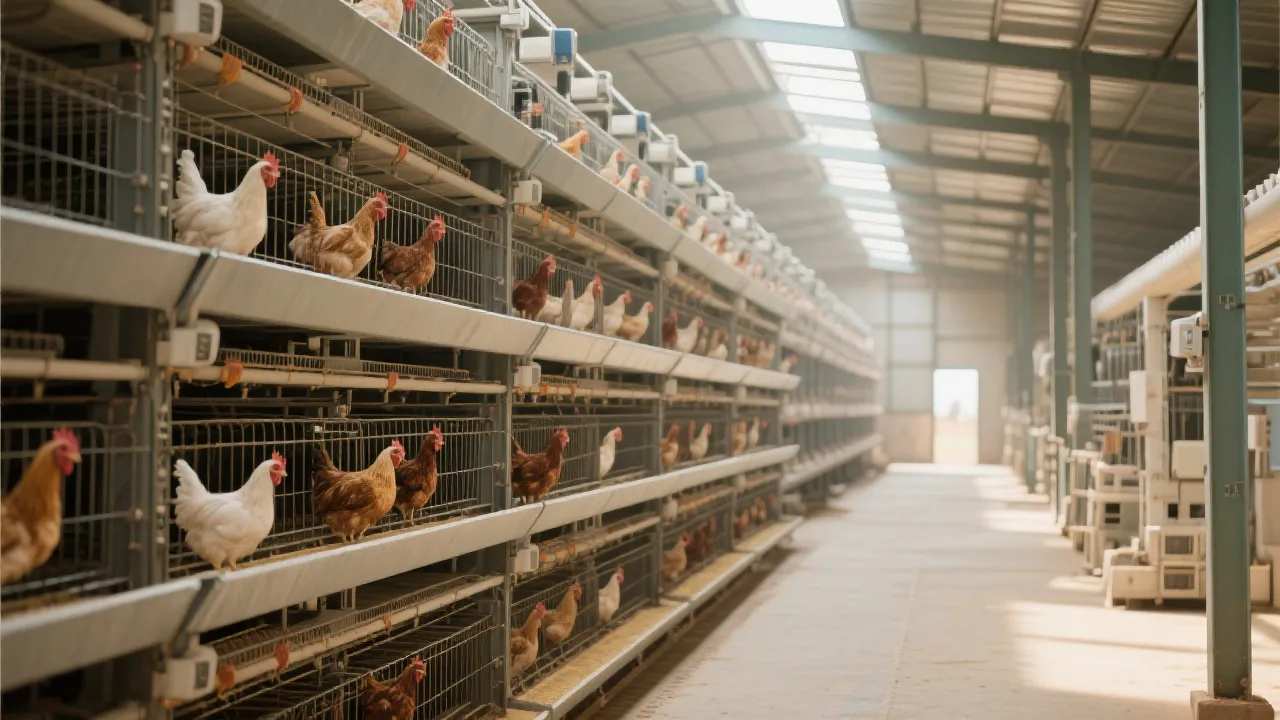
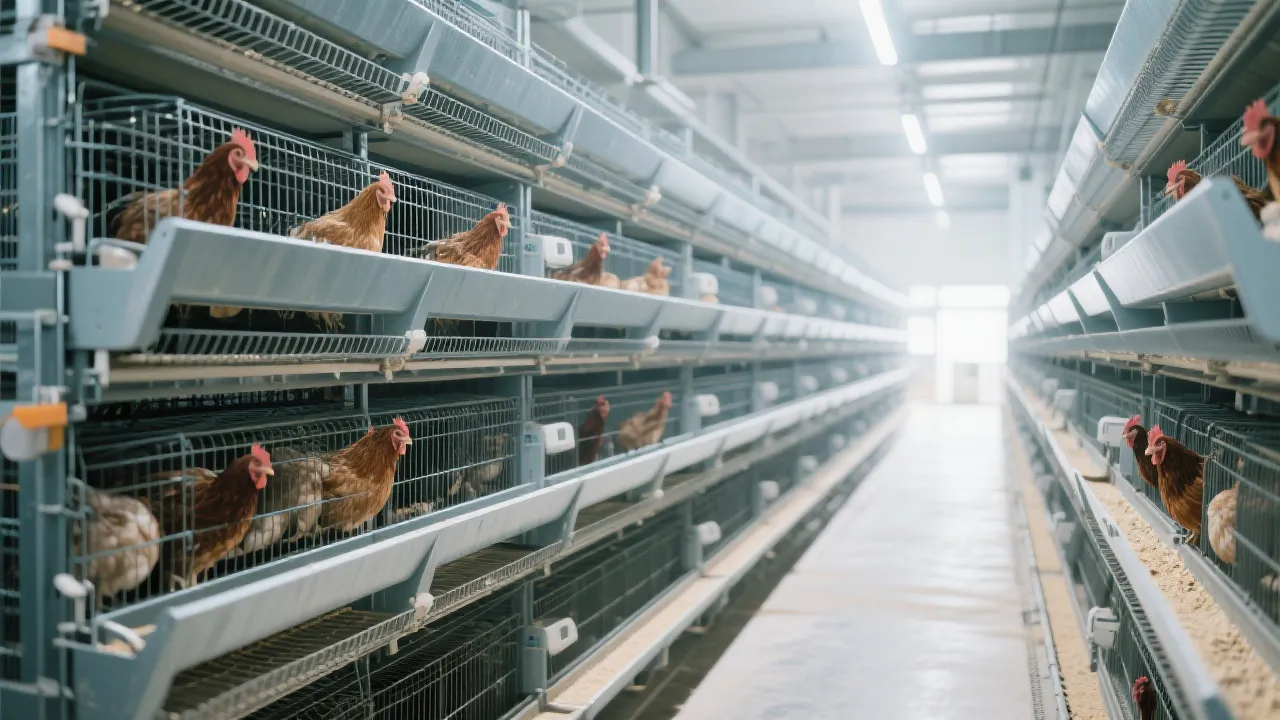
In many fast-expanding broiler operations, the limiting factor is not demand or genetics—it is usable square meters per house and the cost of maintaining consistent management at higher stocking loads. An H-type multi-tier broiler battery cage addresses this constraint by shifting production from “floor-spread” to “vertical organization,” helping farms improve throughput per building while keeping workflows measurable and repeatable.
Why space becomes the hidden bottleneck in scale broiler production
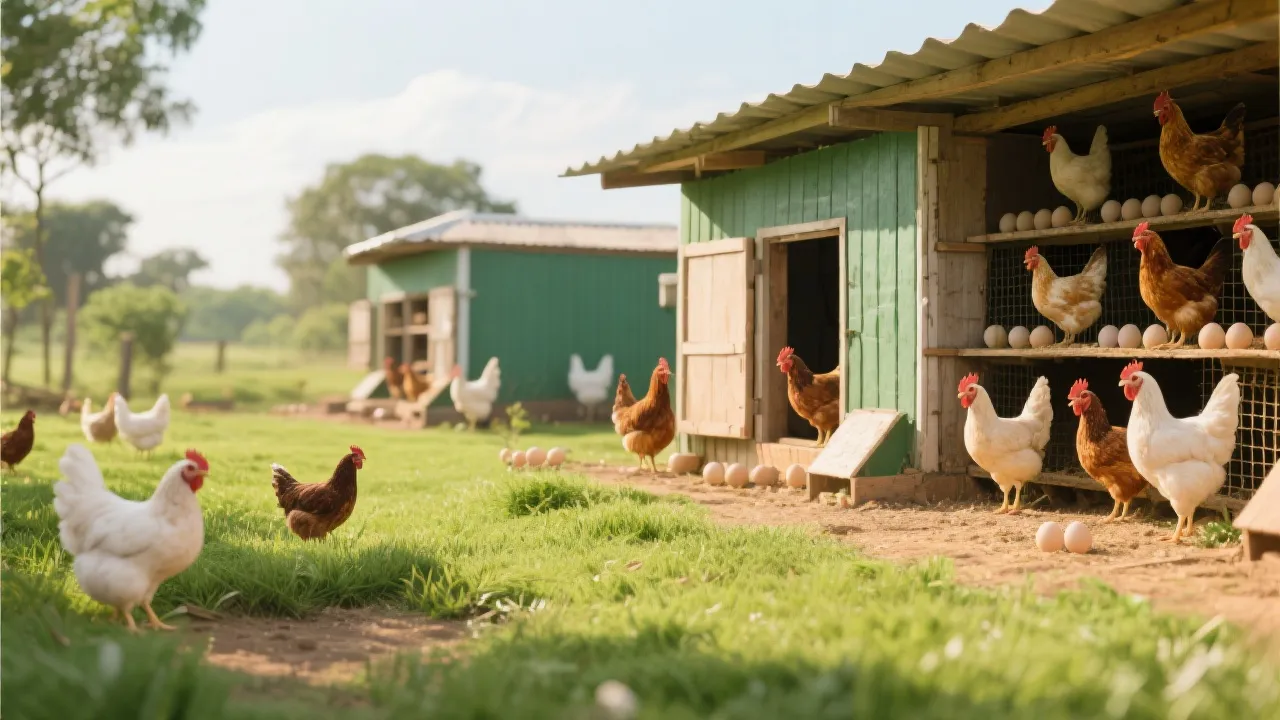
Broiler houses are often optimized for ventilation and temperature uniformity, yet day-to-day efficiency can be undermined by three practical issues: low effective space utilization, uneven bird distribution, and labor intensity during feeding, inspection, and removal. In floor systems, each additional bird typically increases litter management, ammonia risk, and the time required for routine checks.
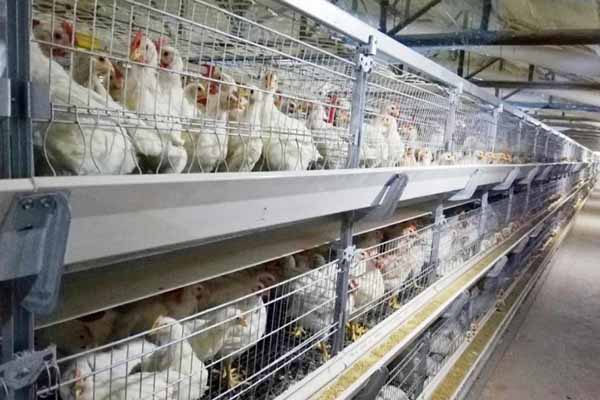
By contrast, multi-tier battery cages support a more structured layout: aisles, feed lines, watering lines, and inspection paths become standardized. The result is not simply “more birds”—it is more controllable production per house.
Typical farm targets improved by vertical housing
- Higher output per building footprint (birds/m² of house)
- More consistent access to feed & water across groups
- Cleaner separation between birds and manure zone
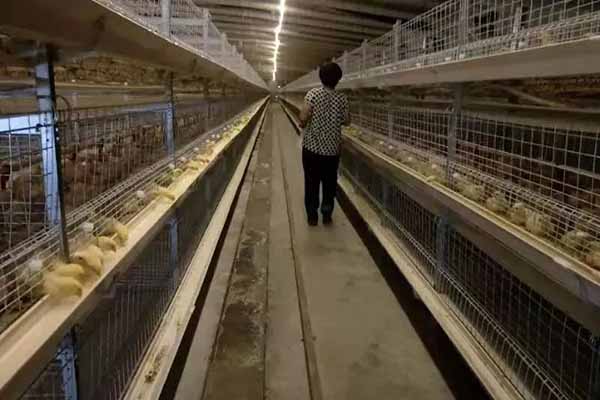
- Faster inspection routines with repeatable check points
A realistic expectation (reference ranges)
In comparable commercial setups, well-designed cage-layering and aisle planning commonly enables a 1.6–2.3× increase in birds per unit of building area versus conventional floor distribution, depending on tier count, ventilation capacity, and local welfare limits.
Note: actual results depend on house width, fan capacity, cooling pads, stocking policy, and management protocol.
What makes an H-type multi-tier battery cage different in daily operations
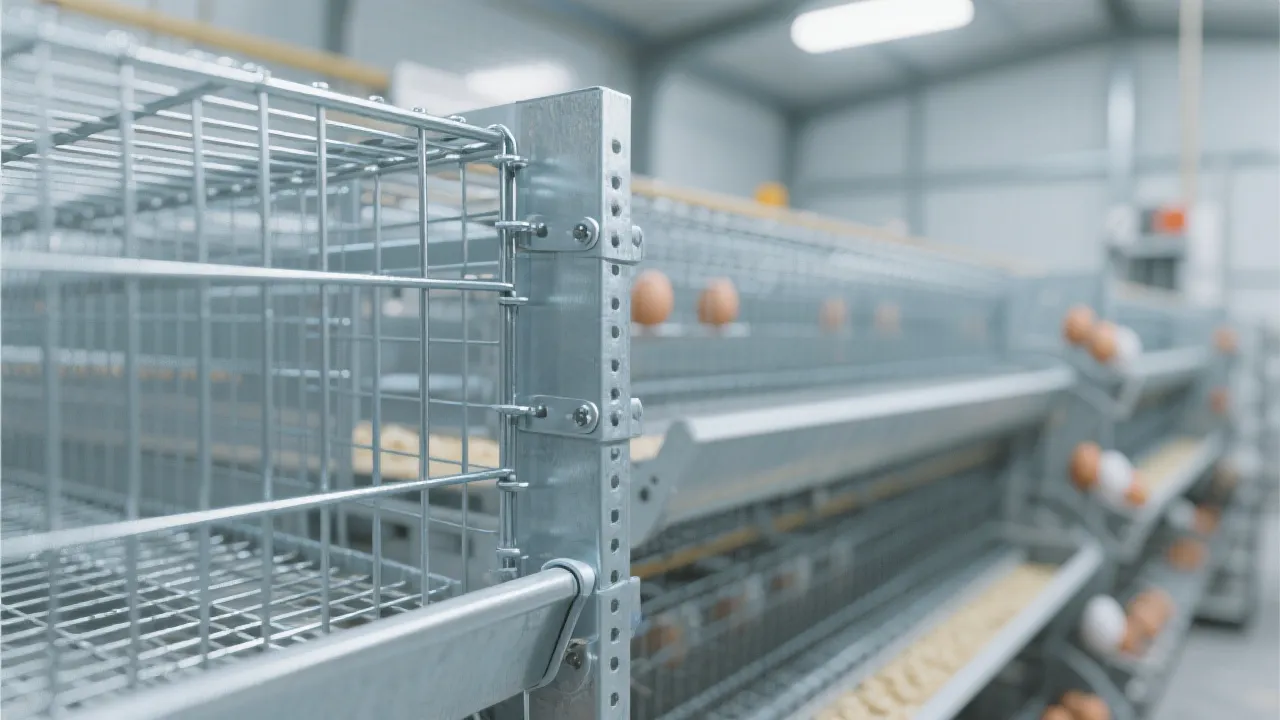
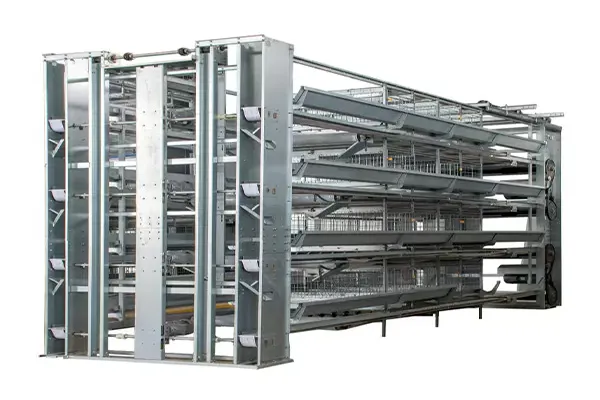
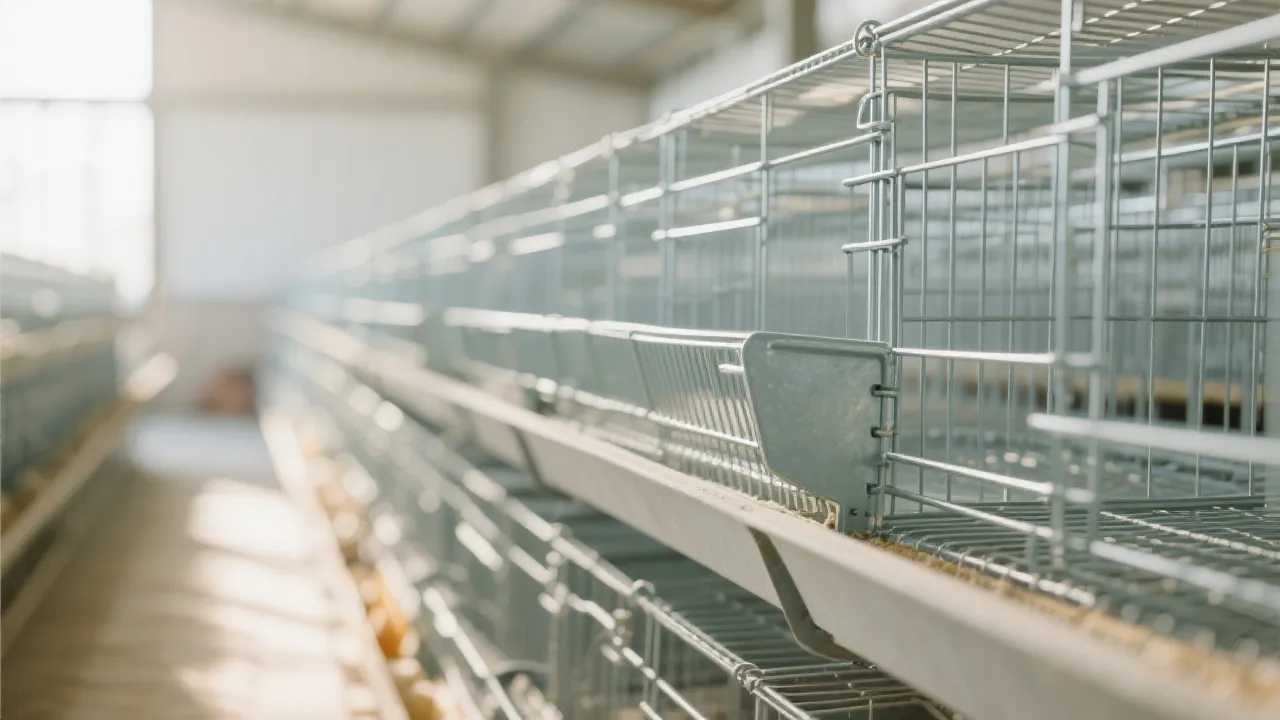
The “H-type” structure is widely adopted because it delivers stable stacking geometry with practical aisle spacing. In broiler production, stability and access matter: cages must withstand dynamic bird movement, routine handling, and long production cycles without twisting or misalignment.
Key efficiency mechanisms (why it works)
For farms that operate under tight labor availability, this standardization is often the first noticeable benefit: less time spent “walking and searching,” more time spent on measurable tasks—feed adjustment, waterline checks, bird uniformity checks, and ventilation tuning.
Choosing tier count and load capacity: a practical decision framework
Multi-tier does not mean “the more the better.” The right configuration balances vertical capacity with airflow, service height, and daily handling speed. For many operations, the best-performing layout is the one that workers can service with minimal lifting risk while keeping ventilation uniform across tiers.
Reference selection table (typical commercial planning)
| Farm type | Common tier choice | Why it fits | Planning note |
|---|---|---|---|
| Retrofit / limited house height | 2–3 tiers | Simplifies airflow uniformity and worker access | Verify ridge height and fan placement before finalizing |
| New build / medium-large scale | 3–4 tiers | Strong space gain while keeping service manageable | Design aisles for equipment and emergency access |
| High-output industrial operation | 4+ tiers (site-dependent) | Maximizes production per building footprint | Requires strong ventilation engineering and strict SOPs |
Load capacity and durability: what buyers should verify
- Frame rigidity under daily vibration and handling (avoid long-term misalignment).
- Corrosion protection for humid, ammonia-prone environments—commonly galvanized steel with appropriate coating weight.
- Fastener and joint quality—critical for multi-tier safety and long lifecycle.
- Serviceability—can workers clean, inspect, and replace components without stopping the entire line?
Operational payback: where efficiency gains typically come from
In practice, farms tend to see benefits in four measurable areas: space utilization, labor efficiency, environmental consistency, and flock uniformity. While exact outcomes vary by region and management, industry field observations often report the following reference ranges after stabilization (typically 2–4 cycles):
| Metric | Common improvement range | What drives it |
|---|---|---|
| Birds per building area | +60% to +130% | Vertical tiers + aisle planning |
| Routine inspection time | -15% to -35% | Standardized walk paths and check points |
| Mortality risk related to management delay | Reduced (site-dependent) | Faster identification of drinker/feed issues |
| House hygiene workload | -10% to -25% | Cleaner separation + simpler wash-down routines |
These ranges are provided as planning references; always align design with local animal welfare standards and ventilation engineering requirements.
Real-world application snapshot: space upgrade without adding buildings
A mid-size broiler producer in Southeast Asia upgraded one house from a floor-based layout to an H-type multi-tier cage arrangement after facing expansion limits on land. Post-upgrade, the farm reported a substantial increase in birds per house while keeping the same building envelope, and management highlighted two operational changes: faster routine checks and clearer responsibility zones per aisle.
The key learning from this case was not “install cages and hope.” The farm treated the upgrade as a system project: ventilation verification, aisle width planning, and a simple SOP for daily inspection (feed line, drinker line, bird behavior, mortality removal) executed on a fixed route. Once routines stabilized, throughput became more predictable.
Interactive: a quick comment prompt for farm planners
If a poultry house is currently constrained, which factor is the most limiting right now—building footprint, labor, or ventilation capacity? Share the top constraint in the comments, and include house dimensions and target birds per cycle for a more practical discussion.

Where Zhengzhou Livi Machinery Manufacturing Co., Ltd. fits into this solution
For buyers evaluating an H-type multi-tier battery cage system, supplier capability is as important as the cage itself: manufacturing consistency, corrosion protection processes, modular design logic, and the ability to adapt layouts to different house widths and management styles.
Zhengzhou Livi Machinery Manufacturing Co., Ltd. provides broiler cage solutions designed for space optimization, scalable layouts, and practical farm operation—with an emphasis on stable structure and long-term use in demanding poultry house environments.
Request a layout plan that maximizes your house capacity—without sacrificing daily manageability
Get a practical configuration suggestion for H-type multi-tier broiler battery cages based on your house dimensions, target capacity, and workflow preferences (aisles, feeding, watering, cleaning). A clear plan upfront is often what separates “more capacity” from “more complexity.”
Explore H-Type Multi-Tier Broiler Battery Cage SolutionsTip: include house length/width, ridge height, ventilation type, and target birds per cycle for a faster, more accurate recommendation.





.jpg?x-oss-process=image/resize,m_fill,h_800,w_800/format,webp)