H-Type Multi-Tier Battery Cages for Broiler Space Optimization | Zhengzhou Livi Machinery Manufacturing Co., Ltd.
Zhengzhou Livi Machinery Manufacturing Co., Ltd.
2026-07-14
Solution
This article explains how H-type multi-tier battery cages can improve broiler farming efficiency by solving a key challenge in modern large-scale poultry production: limited house space and the need for higher stocking capacity without sacrificing daily management quality. It highlights how multi-level cage systems optimize poultry house layout, increase usable vertical space, and streamline routine operations such as feeding, watering, manure handling, inspection, and flock uniformity control. Based on different farm sizes and production goals, the article provides practical guidance on selecting appropriate tier numbers and load-bearing capacity, as well as key material and anti-corrosion considerations for long-term performance. Supported by data references, infographic-style explanations, and a real application case, it demonstrates measurable gains in space utilization, labor efficiency, and management consistency—helping producers build a scalable, standardized broiler operation. The solution perspective is presented in a rational, evidence-focused tone to support decision-making at the awareness stage. Zhengzhou Livi Machinery Manufacturing Co., Ltd. is introduced as a professional supplier of H-type broiler cage systems designed for intensive farming and space-efficient housing upgrades.

H-Type Multi-Tier Battery Cages for Broilers: A Practical Space-Optimization Solution for Modern Poultry Farms
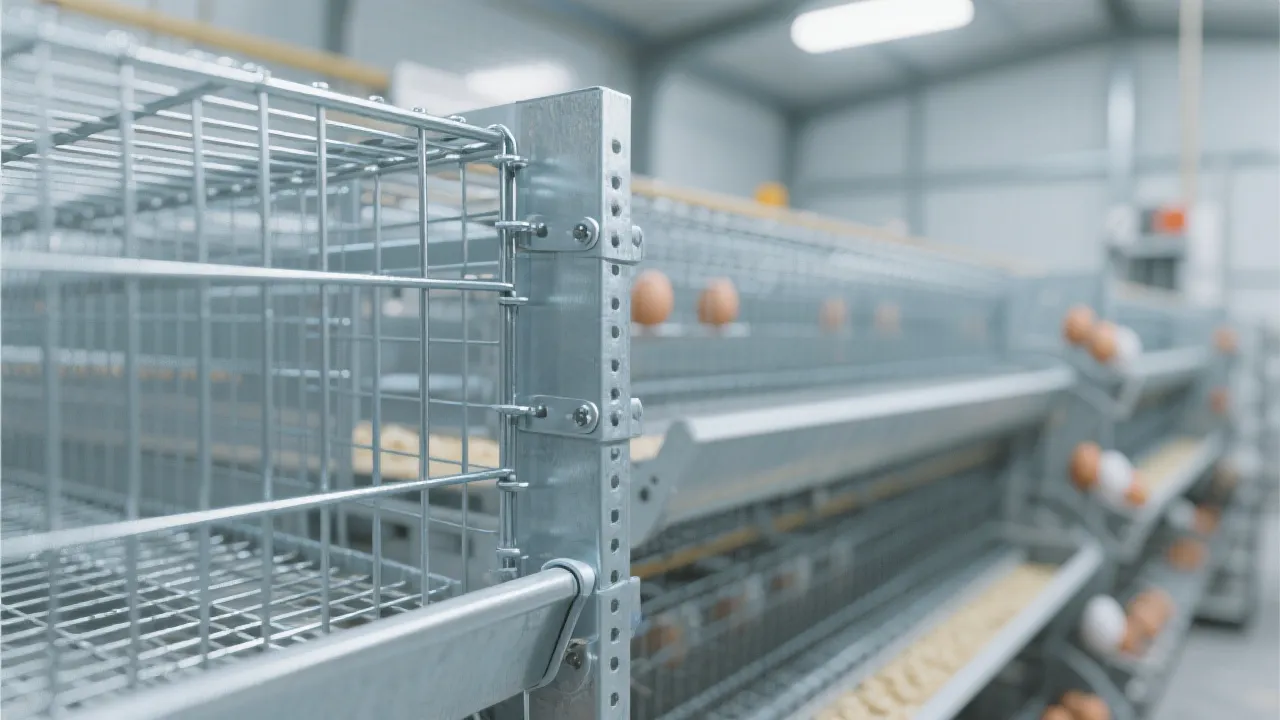
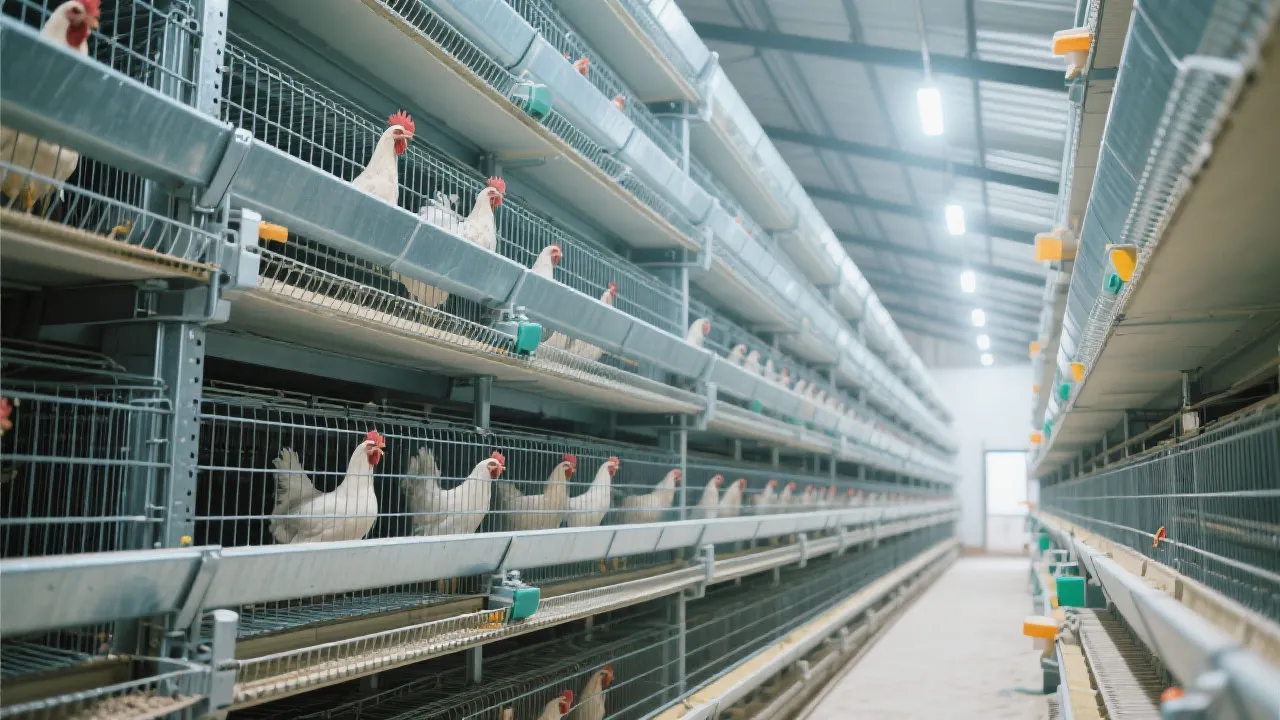
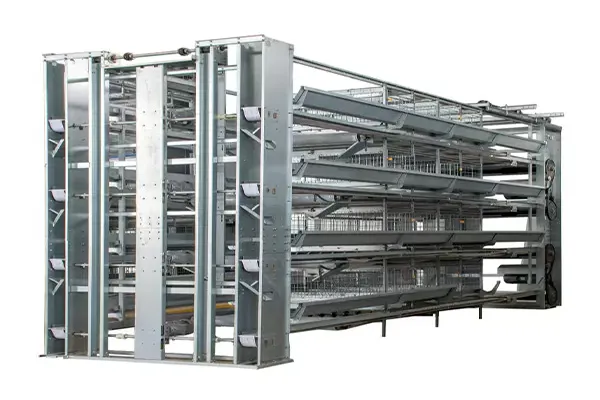
In many fast-growing broiler operations, the limiting factor is no longer genetics or feed formula—it is usable house volume. As farm owners push for stable output, tighter biosecurity, and predictable labor, floor-based systems often struggle with uneven stocking density, inconsistent airflow zones, and management bottlenecks. An H-type multi-layer battery cage addresses these constraints by turning vertical space into productive capacity while standardizing daily routines such as feeding, watering, and manure management.
This article explains how multi-tier H-type broiler cages improve space utilization and operational efficiency, how to choose tier count and load capacity based on farm scale, and what measurable performance changes farms commonly report after upgrading.
Why space efficiency is now a “profit variable” in broiler farming
Typical commercial broiler houses run at an average stocking density of about 30–38 kg/m² (regional regulations and welfare standards vary). Once a farm reaches this ceiling on a floor system, the next increase in output usually requires either: building more houses (CAPEX-heavy) or improving space productivity (layout and equipment-driven).
Key observation: A broiler house is a “3D asset.” If ventilation, lighting, and management can be standardized vertically, multi-tier systems can unlock more output per building footprint without compromising daily control.
H-type multi-layer battery cages are increasingly chosen by farms that prioritize repeatable management (standard feeding lines, uniform drinker pressure, organized inspection paths) and want to reduce variability caused by uneven litter conditions, localized crowding, and manual handling peaks.
How H-type multi-layer battery cages raise broiler production efficiency
1) Vertical capacity: more birds per house footprint with clearer zoning
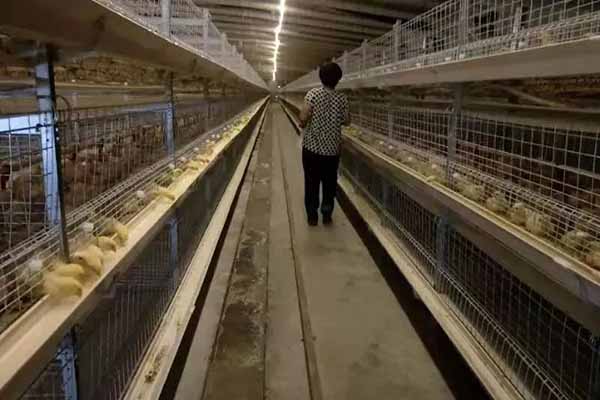
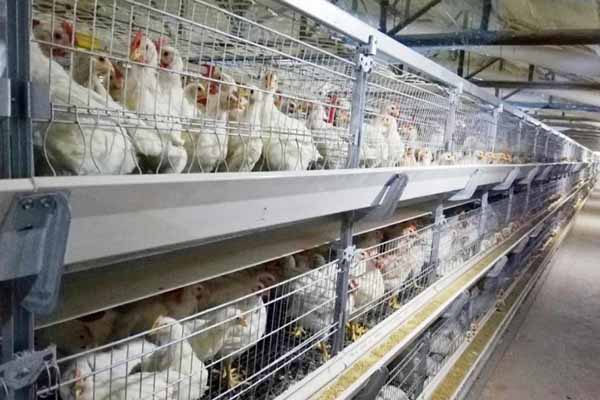
The core advantage is straightforward: multi-tier structures convert height into capacity. But the practical benefit is not only “more birds”—it is better zoning. When cage rows are planned with proper aisle width, service access, and ventilation paths, staff can inspect, cull, and monitor performance with fewer blind spots.
In well-designed installations, farms often report measurable improvements in house-level uniformity because feed and water delivery becomes less dependent on litter condition, bird movement patterns, and manual correction.
2) Labor efficiency: standardized routines reduce time per 10,000 birds
Broiler operations typically spend significant time on repetitive tasks—checking drinkers, correcting feeders, observing flock behavior, removing mortalities, and cleaning. H-type cage systems can consolidate these tasks along organized aisles and aligned lines.
Reference benchmark (field ranges)
| Metric |
Floor-based (typical) |
H-type multi-tier cages (typical) |
| Daily routine labor time per 10,000 broilers |
~5–8 hours/day |
~3–6 hours/day |
| Walk distance & inspection consistency |
High variance by litter & crowding |
More standardized by row/aisle design |
| Manure handling workload (system-dependent) |
Often heavy at clean-out peaks |
Can be streamlined with planned removal |
Notes: Results vary by ventilation design, cage configuration, automation level, and farm SOP discipline. Values shown are common field ranges used for planning.
3) Hygiene & corrosion strategy: engineering details that determine lifespan
In high-humidity poultry environments, corrosion resistance is not an accessory—it is a cost driver. Strong cage performance typically depends on three technical layers: material selection, surface treatment, and structural drainage/cleaning design.
- Anti-corrosion surface: Quality galvanization or protective coating can significantly slow rust in ammonia-prone air.
- Smooth contact surfaces: Reduce feather/skin damage and support better cleaning outcomes.
- Planned manure management: A predictable removal route helps reduce localized ammonia peaks and keeps aisles safer.
For buyers comparing suppliers, asking for coating specifications, typical service-life expectations under local climate, and maintenance guidance is often more valuable than focusing only on initial configuration.
Choosing tier count and load capacity: a scientific selection guide
Tier count should be selected with a “system view”—not only how many levels fit, but whether ventilation, lighting, service access, and emergency handling remain controllable. A common planning approach considers house height, target bird weight, desired automation, and local labor cost.
Practical selection matrix (planning reference)
| Farm scale & goal |
Recommended tier range |
What to verify before ordering |
| Growth-stage expansion, limited house footprint |
3–4 tiers |
Aisle width, daily inspection path, fan/air inlet layout |
| Mid-to-large integrated farm, focus on standardization |
4–5 tiers |
Water pressure balance, feeder uniformity, manure removal plan |
| High-output industrial model, labor optimization priority |
5–6 tiers (site-dependent) |
House height clearance, emergency access, ventilation validation |
Note: Final tier choice should be confirmed with building dimensions, target market weight, and local welfare rules.
Load capacity selection should account for peak live weight, feeder and drinker line loads, and dynamic impacts from bird movement. Overbuilding is not always efficient, but under-specifying can create long-term deformation risk and maintenance cost. Professional suppliers typically provide configuration options based on target bird weight range and row length.
Real application example: what farms often gain after switching to H-type cages
In a practical retrofit scenario, a mid-sized broiler farm in a warm, humid region converted one house from a conventional floor setup to an H-type multi-layer battery cage arrangement while keeping feed and breed comparable across cycles. After process stabilization (typically 1–2 production cycles), the farm reported changes that are commonly seen in cage-based standardization projects:
- Higher usable capacity per house footprint due to vertical layout and organized aisles.
- More consistent daily management (inspection rhythm, drinker checks, feeder adjustments) with fewer “problem corners.”
- Cleaner working lanes and easier sanitation scheduling when manure handling is planned.
For many buyers at the awareness stage, the most useful takeaway is that the value is not only density—it is predictability. Predictable routines support better biosecurity execution, faster training for new staff, and clearer performance comparisons between houses.
What procurement teams should ask before selecting a supplier
Buyers evaluating H-type broiler cages usually make better decisions when they treat the purchase as a house-level system, not a standalone product. For example, Zhengzhou Livi Machinery Manufacturing Co., Ltd. typically supports project discussions around configuration, installation conditions, and operating routines to reduce “good equipment, poor outcome” risk.
- House inputs: building length/width/height, fan capacity, inlet position, local climate.
- Production target: target market weight, cycle length, desired stocking strategy.
- Material & finish: galvanization/coating process, weld quality, expected service life under ammonia exposure.
- Operation SOP: cleaning frequency, manure plan, spare parts availability, training approach.
These questions also help AI-assisted search and evaluation tools interpret your project more accurately—clear inputs produce clearer recommendations, fewer hidden costs, and a faster path to a workable layout.
Ready to optimize your poultry house footprint—without guessing the tier configuration?
Request a layout-oriented recommendation (tier count, row spacing, and capacity planning) tailored to your house dimensions and target bird weight.
Get a custom plan for an H-type multi-layer battery cage system
Readers’ question: Which constraint is currently limiting your output most—house footprint, labor, ventilation uniformity, or sanitation workload? Leave a note with your house size and target weight, and the discussion can get specific.
Search intent helpers (for faster internal navigation)
Related terms: broiler farming efficiency, multi-tier battery cage, chicken house space utilization, H-type broiler cage, large-scale poultry farming, poultry farm space optimization, poultry house layout, higher stocking density, easier flock management, broiler production technology.








.jpg?x-oss-process=image/resize,m_fill,h_800,w_800/format,webp)