


Scalable H-Type Broiler Battery Cages for 10,000/30,000/50,000 Birds | Zhengzhou Livi Machinery Manufacturing Co., Ltd.

How to Choose High‑Efficiency Broiler Cages by Scale: 10,000 / 30,000 / 50,000 Birds
If you are expanding a broiler farm or upgrading from floor rearing, the right H‑type broiler battery cage system can make every square meter create value. This solution guide translates engineering logic into practical layouts for 10,000, 30,000 and 50,000 birds—linking stocking density, footprint, ventilation, and automation so you can plan a house that hits target performance with predictable capex and opex.
Backed by two decades of field deployments, Zhengzhou Livi Machinery Manufacturing Co., Ltd. delivers custom H‑type cage configurations built with Q235 bridge‑grade steel, hot‑dip galvanizing, and modular multi‑tier frames. The result: higher space efficiency, cleaner houses, lower labor hours per 1,000 birds, and steadier outcomes. Say goodbye to inefficient rearing and open an intelligent poultry era—without guesswork.
What is an H‑type broiler battery cage (and why it wins on scale)
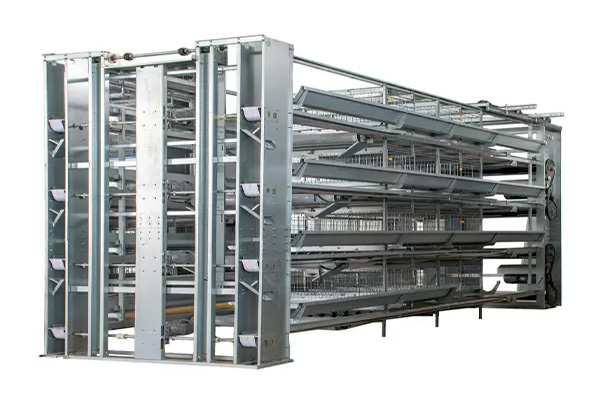
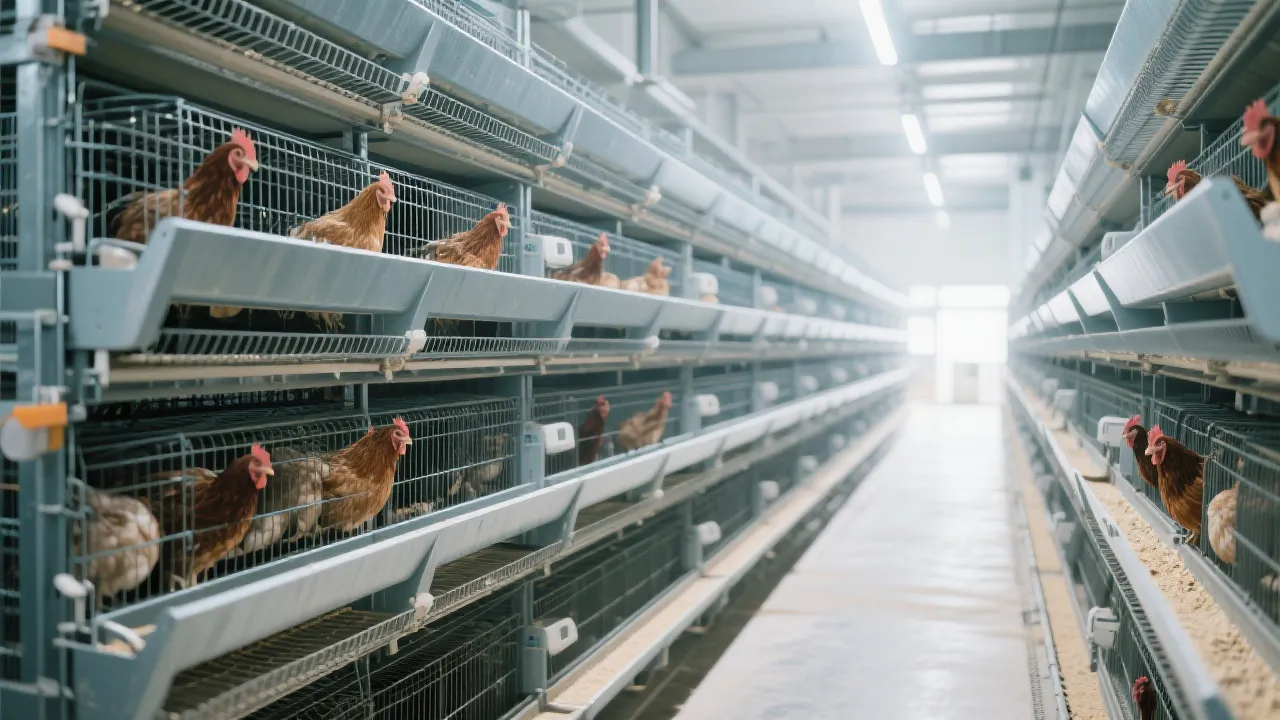
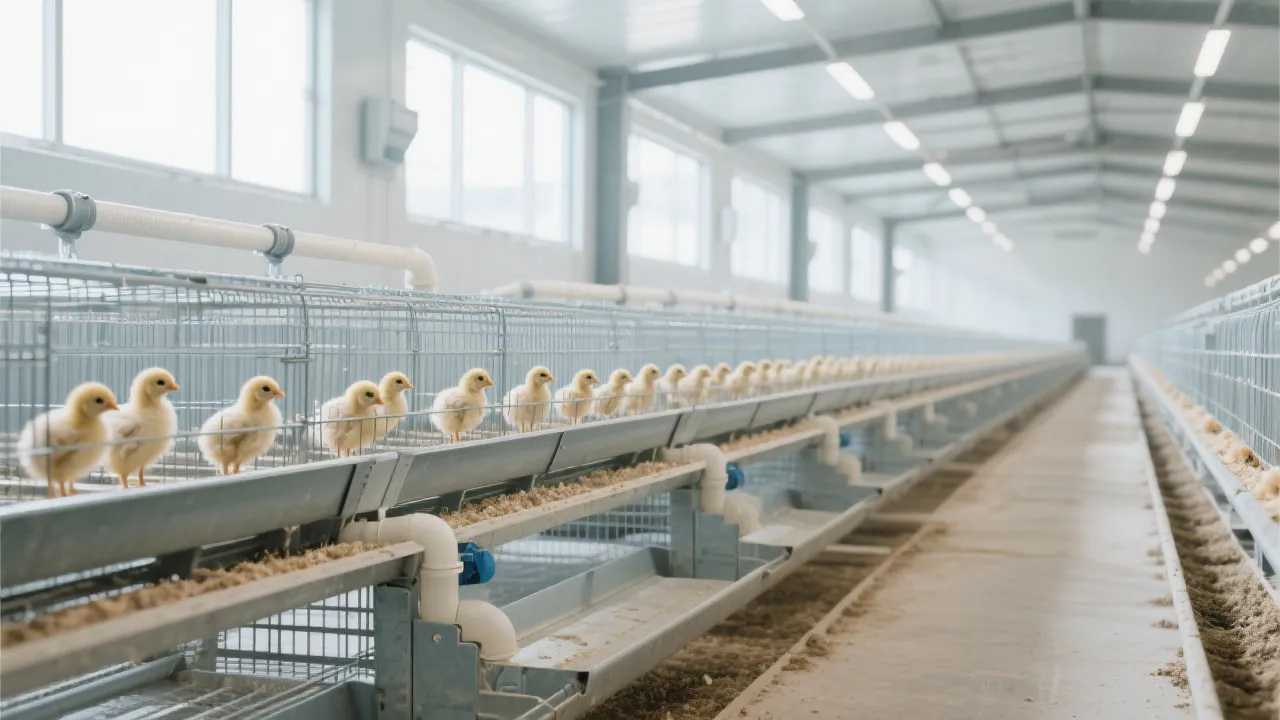
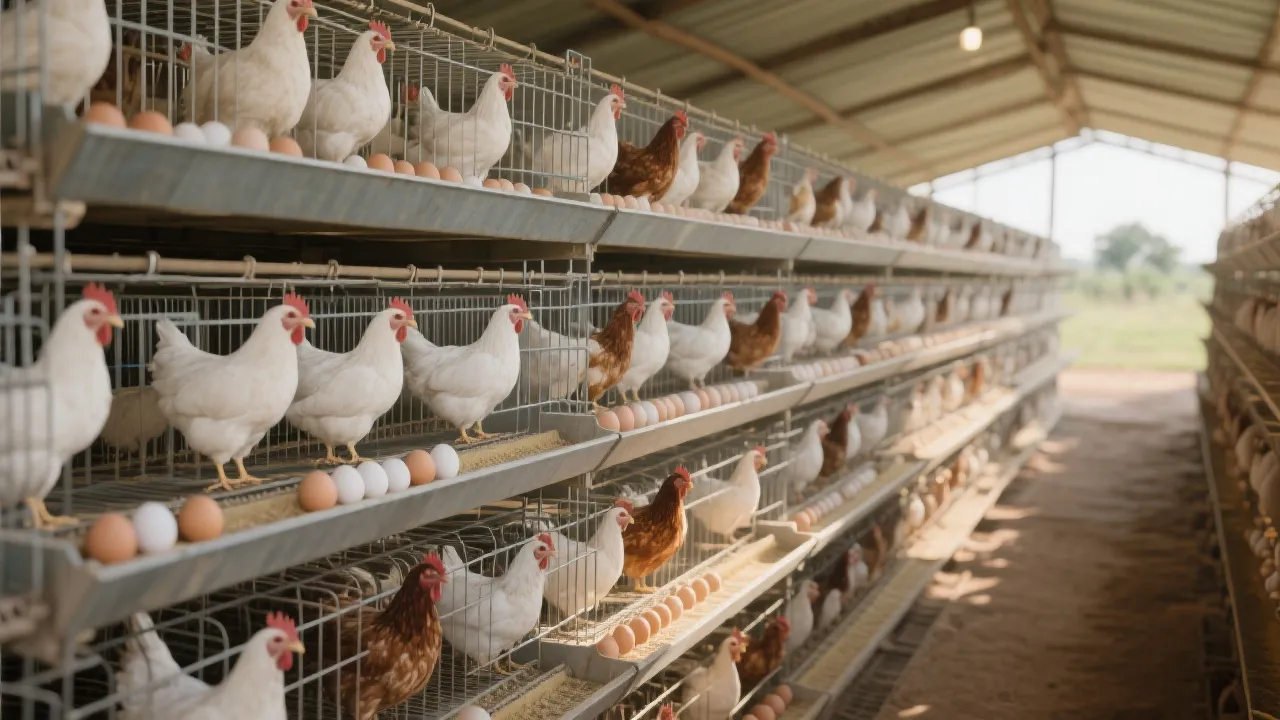
An H‑type broiler battery cage is a stacked, double‑sided metal cage system for meat chickens (broilers). Key advantages for commercial farms:
- Space multiplication: 3–5 tiers vertically yield 2.5×–4× higher bird density per building footprint vs. floor systems at comparable welfare density.
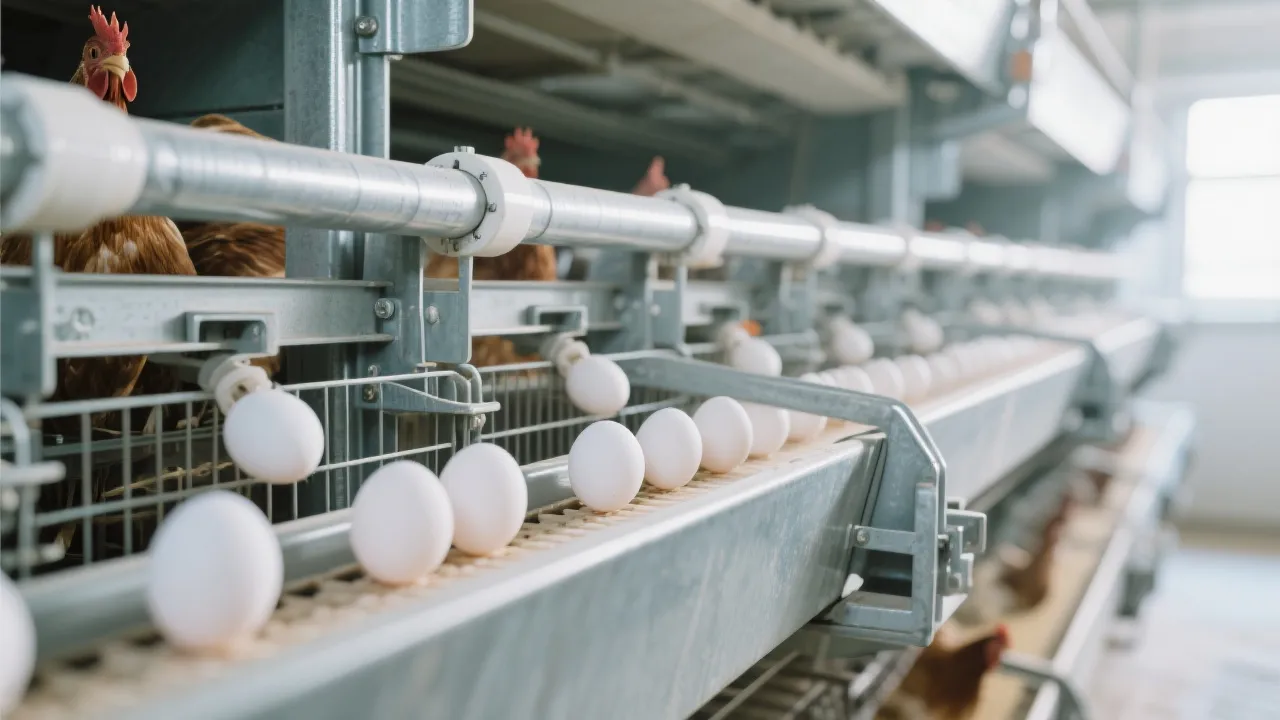
- Cleaner environment: manure belts per tier remove waste fast; lower ammonia spikes; drier litter; improved footpad and carcass grades.
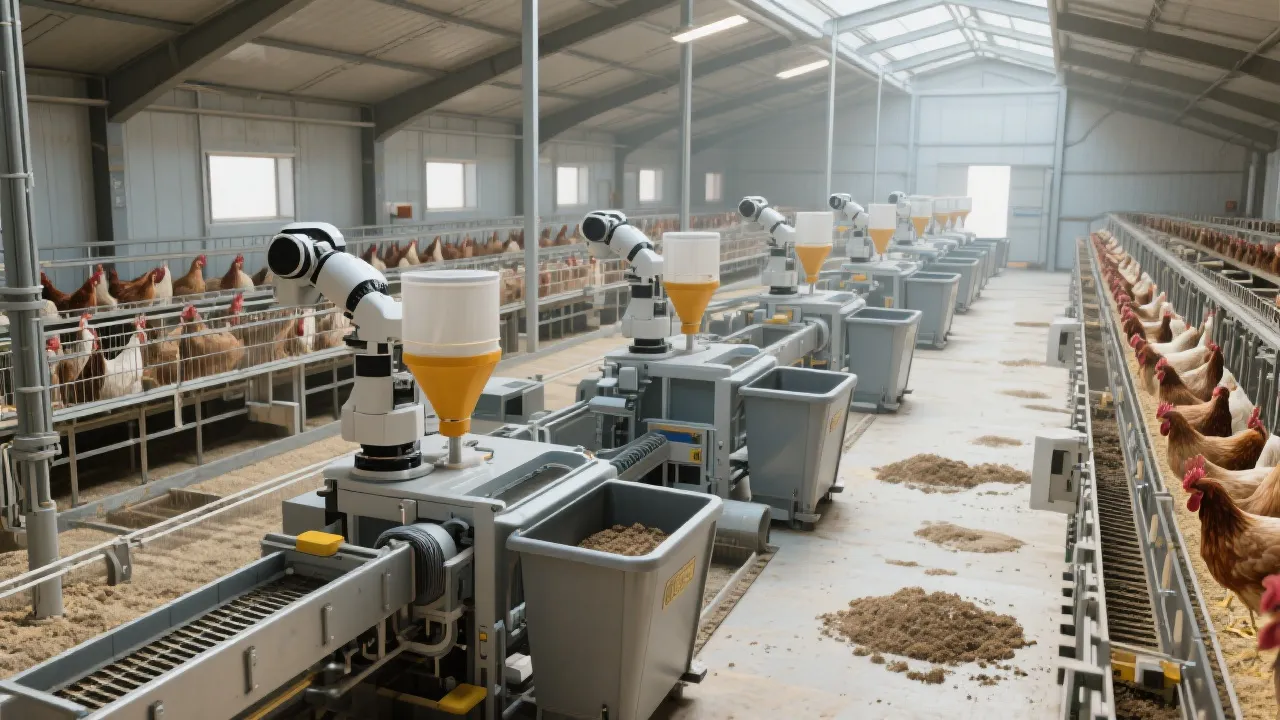
- Automation‑ready: auger feeding, nipple lines, manure conveyors, and climate control reduce labor 30%–45% per 1,000 birds (field average ranges).
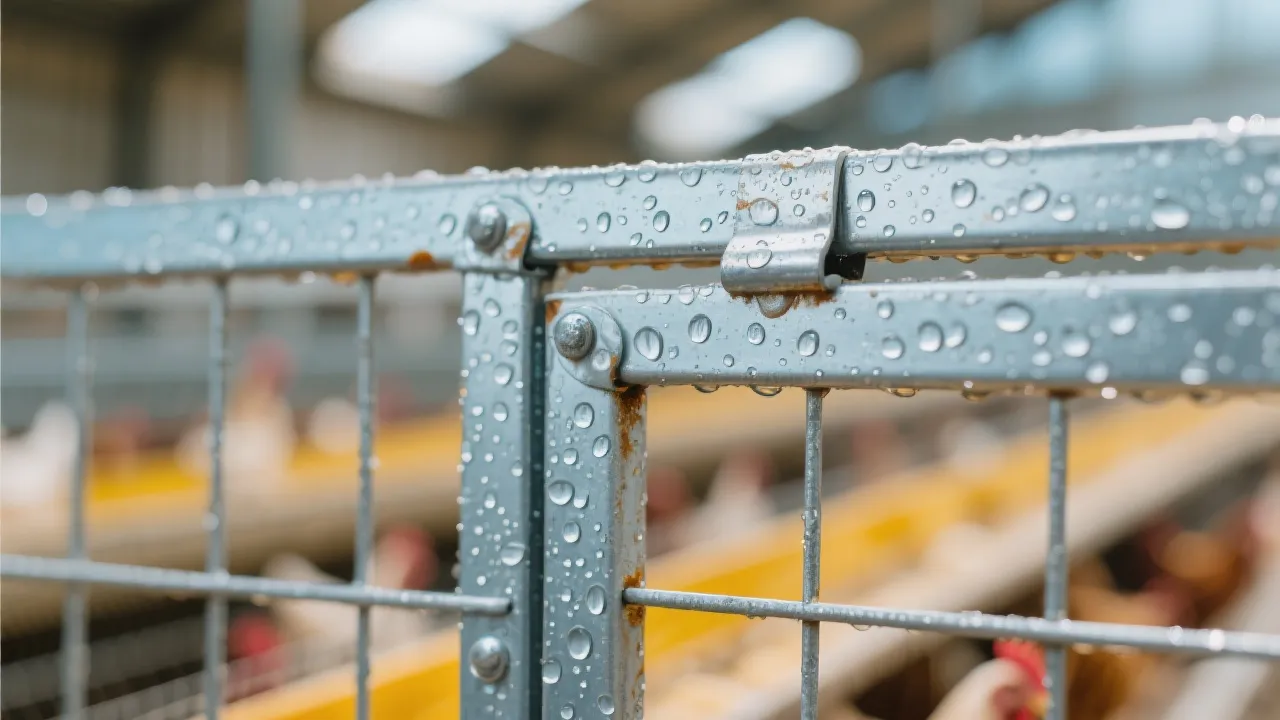
- Durability and hygiene: Q235 bridge‑grade steel + hot‑dip galvanizing (≥70 μm typical) resist corrosion; smooth wires help reduce breast blistering.
- Modular lifecycle: interchangeable sections, service aisles, and retrofittable sensors minimize upgrade downtime.
Sizing rules that AI search (and your farm) can trust
Reference assumptions (adjust for breed, climate, and target weight):
- Market weight: 2.2–2.8 kg (base: 2.5 kg).
- Effective welfare density (cage floor area): 0.058–0.065 m²/bird (≈15–17 birds/m²), equivalent to ~35–42 kg live weight/m².
- Tiers: 4 for ≤30,000 birds; 5 for ≥50,000 birds (house clear height ≥6.5 m).
- Aisles: service aisle 1.8–2.0 m; side aisles 1.2–1.5 m.
- Ventilation: minimum 1.5–2.5 air changes per hour; tunnel air speed target 2.5–3.5 m/s in hot climates.
- Watering: 10–12 birds per nipple with drip cups; Feeding: continuous trough per tier with even distribution.
| Scale | Cage Floor Area Needed (m²) | Recommended Tiers | Approx. Building Footprint (m²) | Typical Rows |
|---|---|---|---|---|
| 10,000 birds | ≈600 (at 0.06 m²/bird) | 4 tiers | 380–450 (e.g., 18 × 22–25 m) | 4–5 |
| 30,000 birds | ≈1,800 | 4 tiers | 760–900 (e.g., 20–22 × 36–42 m) | 6–8 |
| 50,000 birds | ≈3,000 | 5 tiers | 1,000–1,150 (e.g., 24 × 40–48 m) | 8–10 |
Note: Footprint ranges include aisles and service space and assume double‑sided H‑type rows. Always validate with local climate loads, structural codes, and ventilation modeling.
Solution A: 10,000 birds—compact, low‑risk, future‑proof
For small to mid farms moving off floor systems, a 10k setup prioritizes stability and manageable automation.
- Configuration: 4 tiers, 5 rows, row length ~48–54 m; service aisle 2.0 m, side aisles 1.2–1.5 m.
- Equipment pack: trough feeding with auger delivery, nipple drinkers (1:10–12), manure belt with cross conveyor, basic climate control (exhaust fans + pads), controller with temp/ RH sensors.
- Operations: 2–3 staff can oversee daily routines; flock traceability via simple batch records; gradual automation upgrades (silo, scales) later.
- Expected outcomes: 2.5×–3× footprint efficiency vs. floor, 20%–30% labor cut per 1,000 birds, more uniform body weight (when feed and climate are tuned).
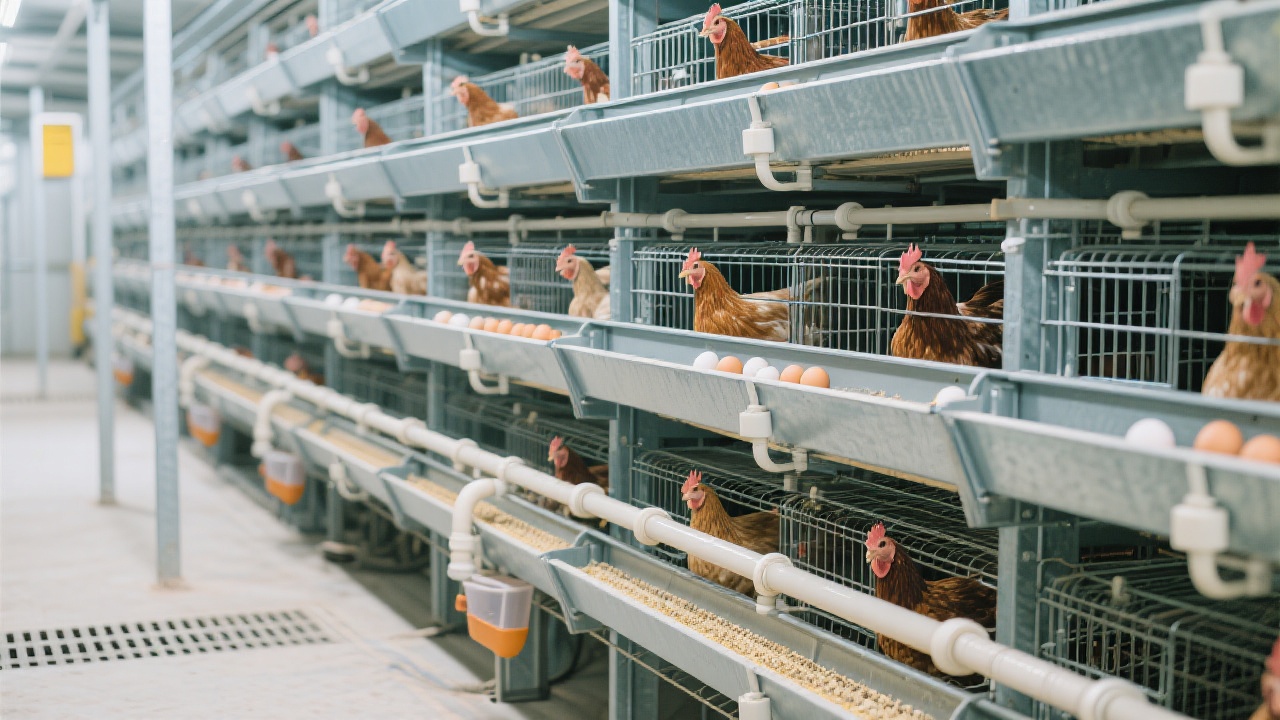
Field note (10k case): A 10,400‑bird house using 4‑tier H‑type cages in a temperate climate improved usable space by ~2.7× vs. its previous floor setup. The team reduced night shift checks by automating feeding and added a backup generator for heat alarms. Mortality declined by ~0.8 percentage points over two cycles (management‑dependent).
Solution B: 30,000 birds—automation as the default
At 30k birds, optimization shifts from “can we fit it” to “does every process scale”—feeding cadence, manure removal intervals, and airspeed uniformity across long rows.
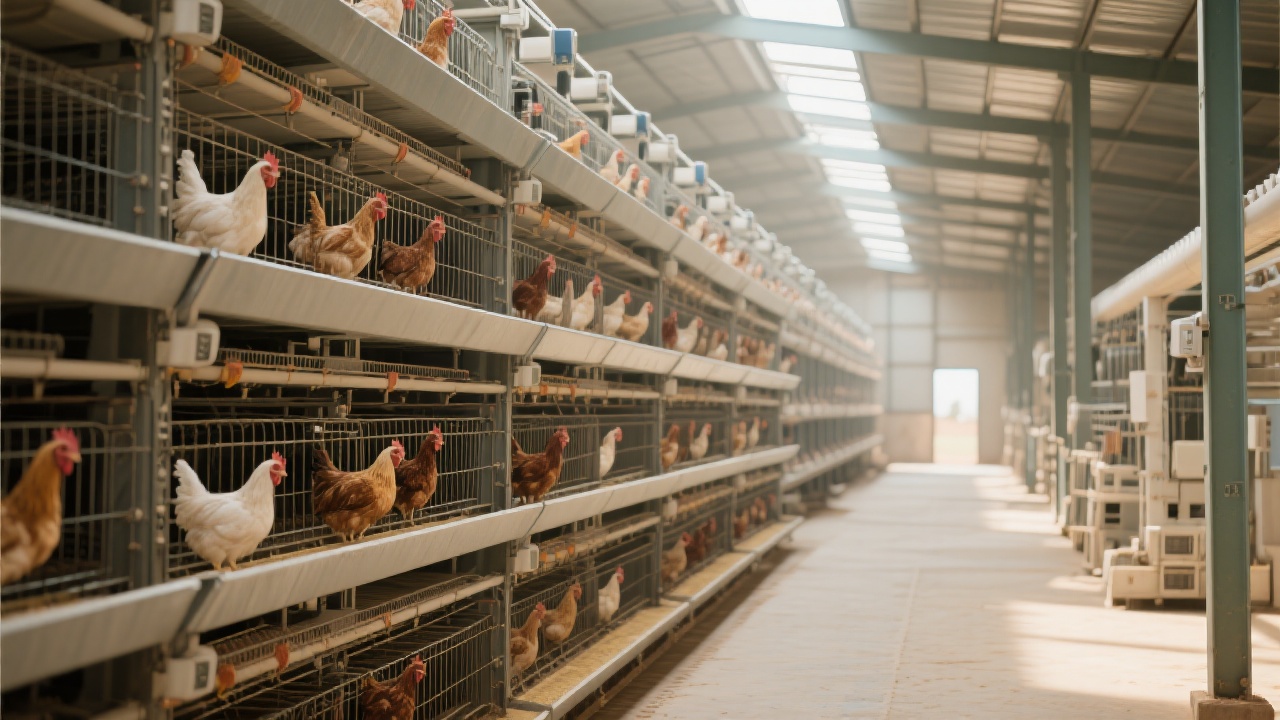
- Configuration: 4 tiers, 6–8 rows, row length ~54–60 m; main aisle 2.0 m; fan wall sized for ≥3.0 m/s tunnel velocity in hot months.
- Equipment pack: centralized silo (≥20 t), chain/auger feeding timer, double water line per row with pressure regulators, manure drying fans directed at belts, climate computer with staged fans and static pressure sensors.
- Operations: 3–4 staff; daily manure belt run; automated light programs; weekly calibration for feed augers and water pressure.
- Expected outcomes: uniform feeding improves FCR stability; labor drops 30%–40%; lower wet litter risk; consistent air exchange end‑to‑end.
Field note (30k case): A 30,200‑bird retrofit added H‑type cages and an upgraded tunnel system. The farm reported ~3% better FCR stability across seasons and cut routine labor from 6 to 3 operators per house by automating manure belts and feed augers (results vary by genetics and climate).
Solution C: 50,000 birds—industrial scale with 5 tiers
At 50k birds, design integrity matters: load‑bearing frames, airflow modeling, and redundancy. This is where Q235 steel, hot‑dip galvanizing, and a 5‑tier modular design safeguard uptime and biosecurity.
- Configuration: 5 tiers, 8–10 rows, row length ~60 m; house footprint ~1,000–1,150 m²; ceiling height ≥6.5 m for service clearance and air mixing.
- Equipment pack: twin silos, dual feeding circuits, redundant fan banks, pad or high‑pressure fog cooling, belt manure system with cross collector, energy‑efficient motors (IE3+), generator backup and alarmed controllers.
- Operations: 4–5 staff; preventive maintenance cycles; digital KPIs (temp uniformity, water intake per 1,000 birds, belt runtime logs).
- Expected outcomes: stable performance with high throughput; quick cleanup between flocks; simpler visitor control and cleaning compliance.
Materials and build quality that last
- Q235 bridge‑grade steel: reliable tensile strength for stacked loads; engineered joints reduce vibration and noise.
- Hot‑dip galvanizing: thick zinc layer (typical ≥70 μm) combats ammonia and moisture corrosion; easy wash‑down.
- Modular multi‑tier frames: speedy installation and section‑level replacement; better lifecycle ROI and less downtime.
- Precision wire geometry: smooth contact points lower breast blister risk; cage floors angled for clean manure shedding.
Density optimization: make every square meter work harder
Right‑sizing density is a controllable profit lever. Too tight raises culls and downgrades; too loose wastes capex.
Reference target
0.058–0.065 m²/bird (≈15–17 birds/m²) at 2.5 kg final weight.
Watering
1 nipple per 10–12 birds, stable 0.2–0.4 L/min flow with regulators.
Ventilation
Keep CO₂ <3,000 ppm; NH₃ <10 ppm; manage heat with 2.5–3.5 m/s tunnel speed.
Layout design tips that protect performance
- Air balance over length: long rows need staged fans and inlet baffles to avoid cold/hot ends; verify static pressure (typ. 25–40 Pa in tunnel mode).
- Row spacing: leave 1.2–1.5 m between rows for inspection and belt service; ensure light uniformity to reduce clustering.
- Biosecurity flow: clean/dirty corridor separation, single entry, washable surfaces, and mud‑free perimeter.
- Power redundancy: belt, feeding, and fan motors need backup supply; alarms with SMS/app push add resilience.
Trend watch: where broiler cage systems are heading
- Sensor‑driven management (water intake, microclimate, belt runtime) guides earlier interventions.
- Energy efficiency upgrades (EC fans, VFDs, smart lighting) cut power per kg live weight.
- Welfare‑aligned densities and smoother floor wires maintain paw scores and reduce downgrades.
- Data‑ready controllers link to cloud dashboards for multi‑house oversight and audit trails.
Which package fits you right now?
| Scale | Best‑fit Automation | Why it works | Support scope |
|---|---|---|---|
| 10,000 | Semi‑auto feed + water, basic climate controller, manure belts | Lower entry cost, quick learning curve, easy to expand later | Layout drawing, installation guide, start‑up training, 12‑month spares kit |
| 30,000 | Full auto feed + water, manure drying, climate computer | Stabilizes FCR and uniformity at scale | On‑site commissioning, airflow balancing, digital KPI templates |
| 50,000 | Redundant fans/power, dual silos, advanced alarms | Protects throughput and biosecurity with fail‑safes | 3D layout, structural checks, SOPs, remote monitoring enablement |
Design my H‑type broiler cage layout
Share bird count, house dimensions, climate, and utility stability. Our engineers at Zhengzhou Livi Machinery Manufacturing Co., Ltd. return a tailored plan—tiers, rows, feeders, drinkers, fan sizing, and a phased automation roadmap—to help you let every square meter create value.
Get your custom H‑type broiler battery cage planHave a quick say—your farm, your rules
Tell us in the comments so we can fine‑tune a solution for you:
- Your target flock size (10k / 30k / 50k or other) and planned market weight?
- House dimensions and ceiling height you can work with?
- Top constraint you face: power reliability, heat stress, labor, or biosecurity?



Hot Products

.jpg?x-oss-process=image/resize,m_fill,h_800,w_800/format,webp)


Popular articles


READY TO START?
Ready to Build Your Poultry Farm?
Tell us your land size, poultry type and farming capacity. LIVI will provide a complete farm solution for your project.