How Different Broiler Farm Sizes Choose the Right Cage System: An H-Type Battery Cage Solution (With Real-World Scenarios)
In modern broiler production, “more birds” doesn’t automatically mean “more profit.” Stocking density, ventilation, cleaning workload, corrosion resistance, and transport/installation reliability often decide whether a farm scales smoothly—or bleeds costs quietly. Below are three practical scenarios (10,000 / 30,000 / 50,000 broilers) showing how farms typically evaluate an H-type battery cage and what a workable customization path looks like with Zhengzhou Livi Machinery Manufacturing Co., Ltd.
What Buyers Usually Get Wrong at the “Considering” Stage
When farmers compare broiler cage systems, the first question is often “How many tiers?” But experienced producers know the real questions are more operational:
- Can the structure handle long-term load without deformation? (Material + welding consistency + frame design)
- Is corrosion controlled for your climate and cleaning routine? (Coating type and thickness matter)
- Will daily labor drop measurably? (Feed/water distribution, manure management logic)
- Does the supplier deliver a “farm-ready” process? (Design → production → packing → shipping → installation guidance)
For many broiler farms, a cage upgrade targets three outcomes: space utilization, uniform management, and lower operating cost per bird. The system must be judged like a production tool—not just metal.
Case 1: 10,000 Broilers — “I Need a Safer Upgrade Without Overbuilding”
A 10,000-bird broiler farmer typically has one key constraint: cash flow must stay healthy during the transition. In this size range, the farm often wants improved hygiene and consistency, but is cautious about installing a system that’s too complex to maintain.
Common bottlenecks at 10,000-bird scale
- Uneven growth due to inconsistent feeder/water access
- Cleaning and turnaround time takes too long between batches
- Rust starts appearing after frequent wash-downs, especially in humid regions
What an H-type battery cage changes in practice
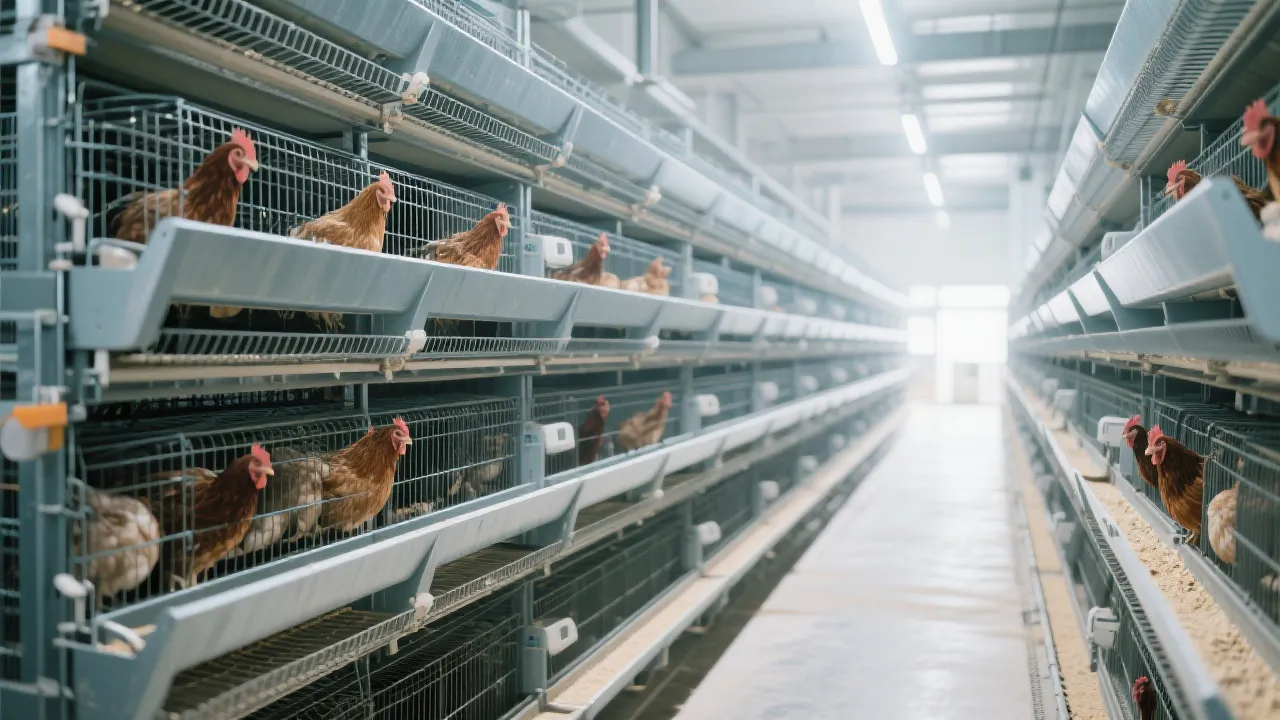
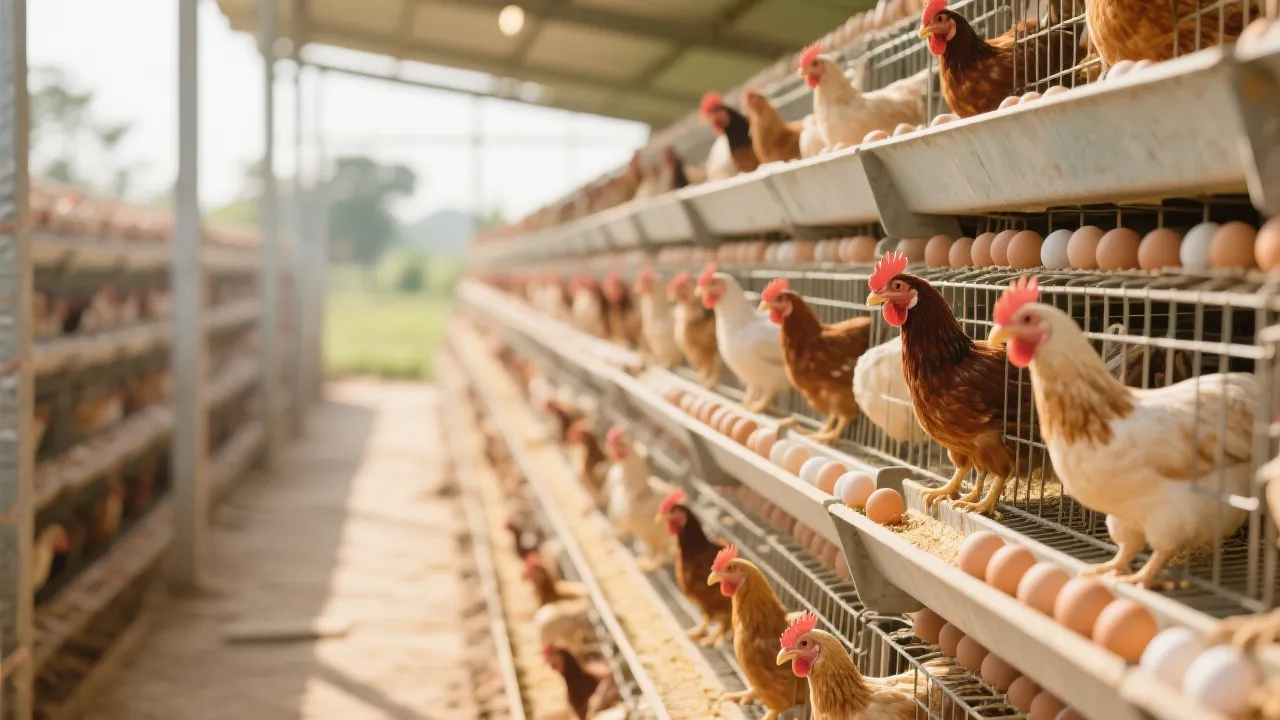
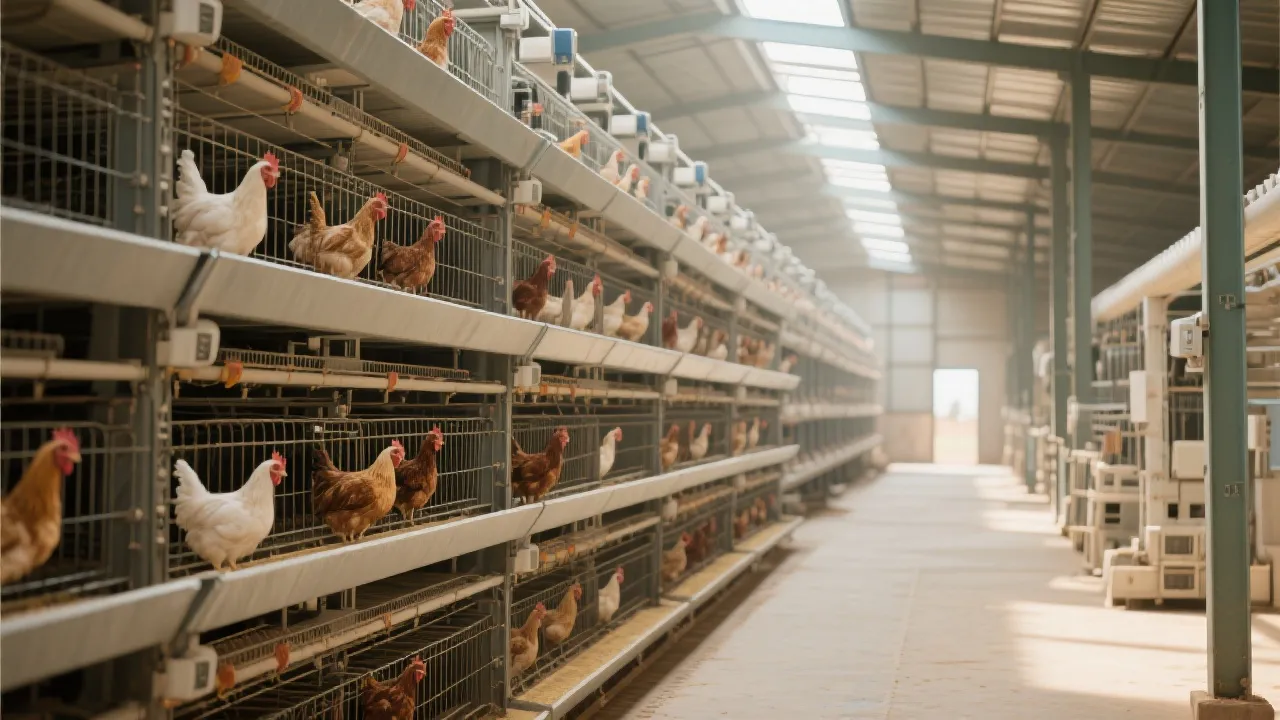
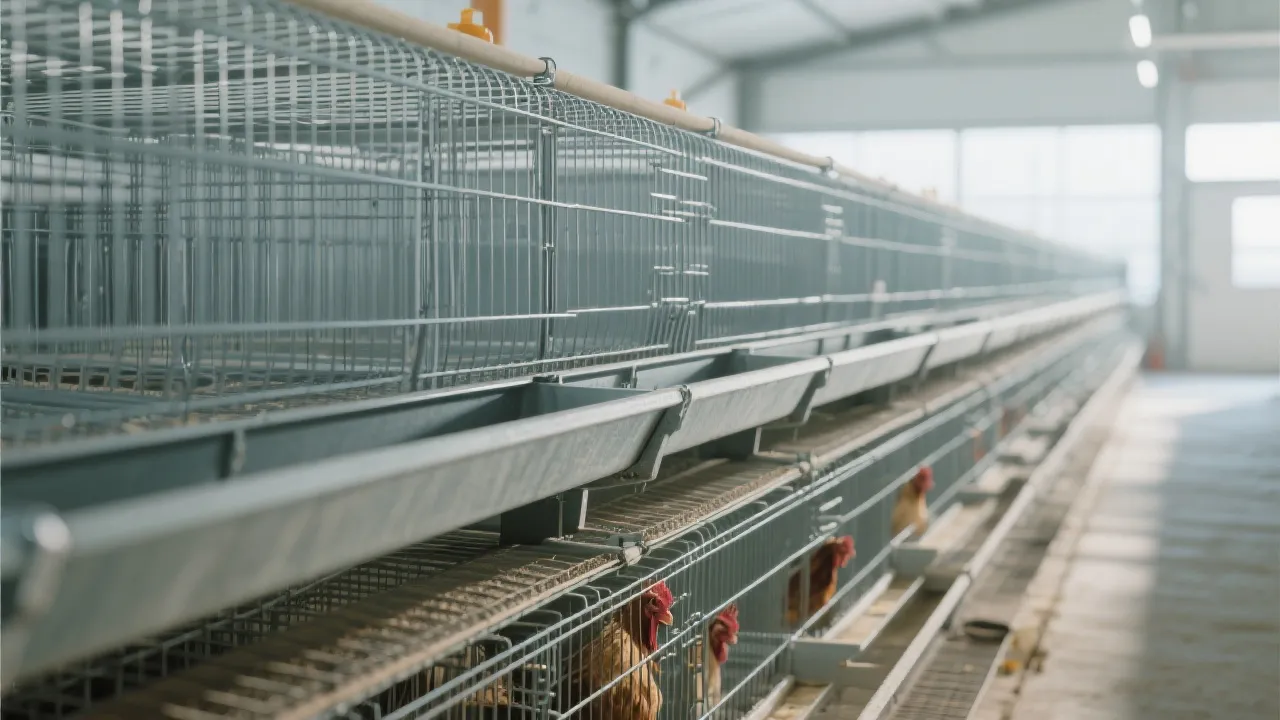
For this farm size, the recommended approach is often multi-tier H-type design configured to match the house width and airflow pattern, rather than chasing maximum tiers. A well-fitted system can typically increase usable stocking capacity by 30%–60% versus floor-based layouts, depending on building height and aisle planning.
Buyer note: At 10,000 birds, many farms see the biggest win from standardized daily routines. If labor hours drop by even 1.5–2.5 hours/day during peak periods, the operational relief is immediate.
Case 2: 30,000 Broilers — “Scaling Fast, but I Can’t Afford Downtime”
At 30,000 birds, the farm is usually semi-commercial to fully commercial. The decision focus shifts: management efficiency and downtime cost become more expensive than the equipment itself. A small mistake in layout—aisle width, service access, or drinker line positioning—can create daily friction for years.
What this farm size tends to request
- A cage layout that supports fast inspection and quick removal of weak birds
- Better corrosion protection for frequent disinfection cycles
- Clear shipment packing list + installation sequence to reduce on-site trial and error
Why materials & anti-corrosion specs become “non-negotiable”
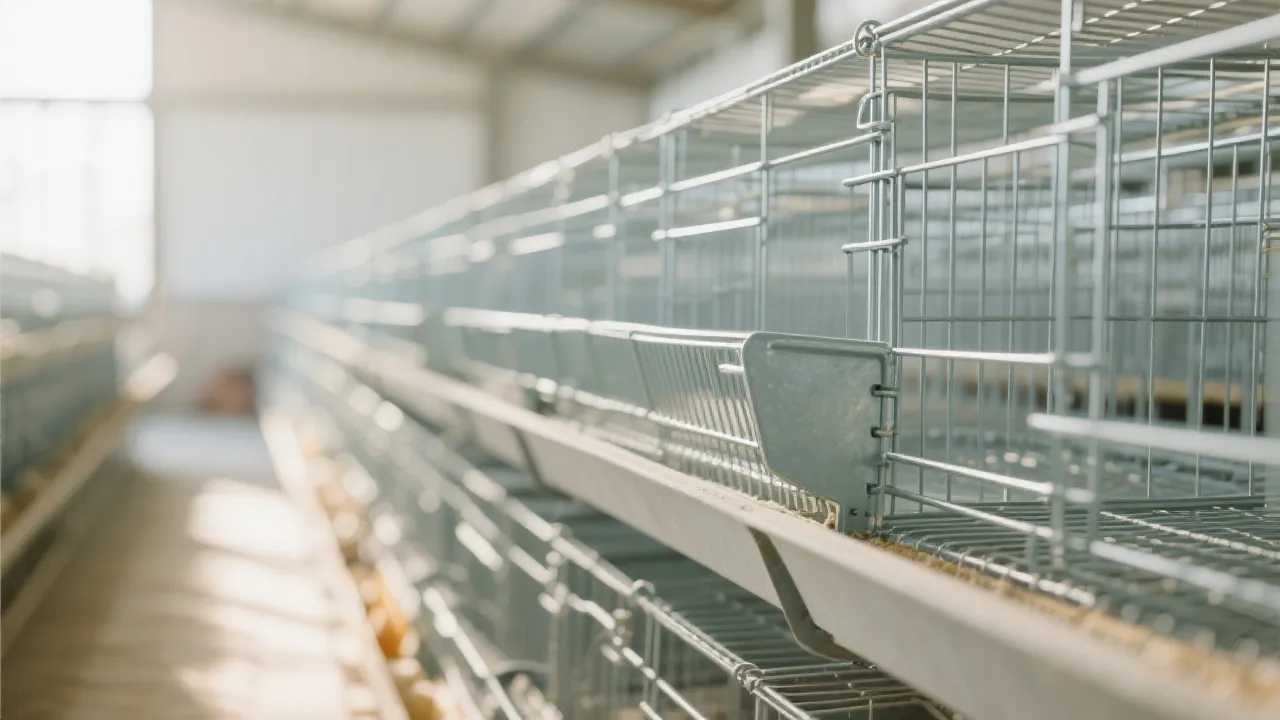
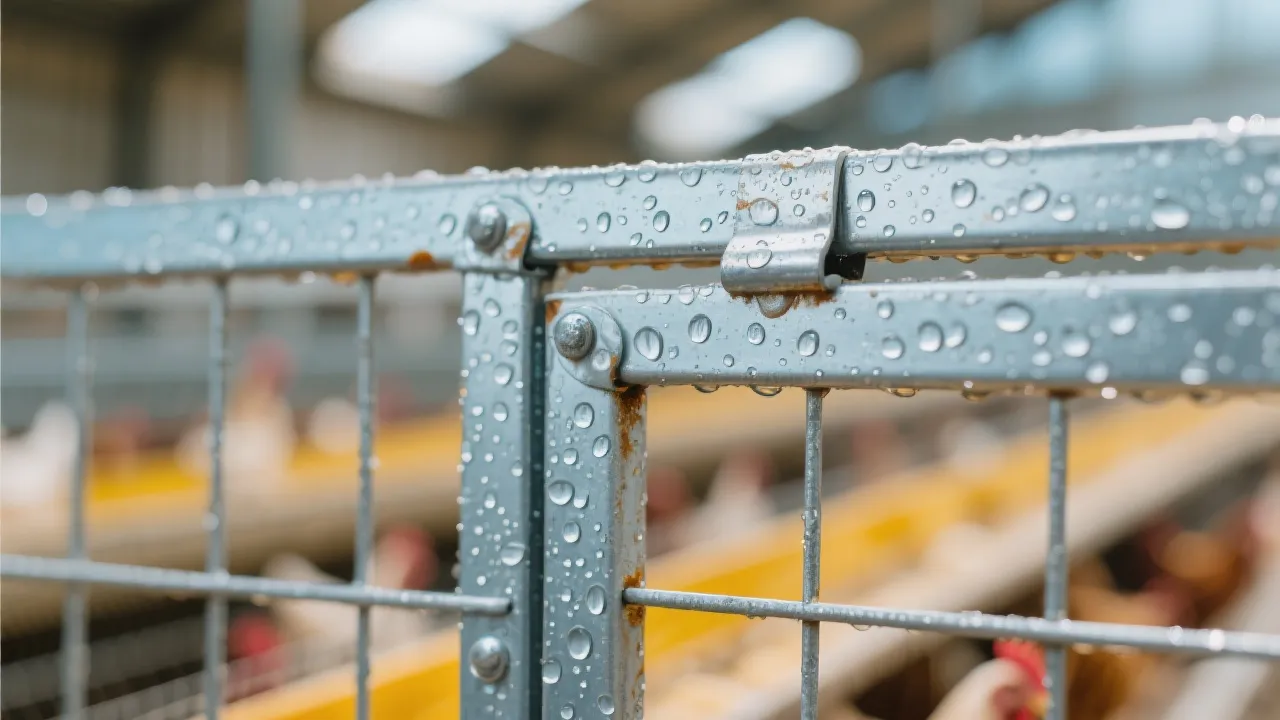
Zhengzhou Livi Machinery Manufacturing Co., Ltd. uses Q235 bridge steel for core structure and adopts hot-dip galvanizing for improved corrosion resistance. In real farm conditions, hot-dip galvanized surfaces commonly outlast electro-galvanized finishes—especially where washing, humidity, and ammonia exposure are frequent.
| Decision Factor | What to Check | Why It Matters at 30,000 Birds |
|---|---|---|
| Frame material | Q235 structural steel grade, welding uniformity | Stability under long-term load; fewer repairs and misalignment |
| Coating method | Hot-dip galvanizing (coating integrity and coverage) | Better resistance to rust under wash-down + disinfecting routine |
| Multi-tier design | Tier count matched to building height & ventilation | Prevents airflow “dead zones” that increase stress and uneven growth |
| Service flow | Aisles, access points, install order | Cuts downtime; reduces labor inefficiency every day |
One farm manager described the difference simply: “After switching to a structured H-type system, our daily checks became predictable—less rushing, fewer missed details.” In this scale, predictability is a profit lever.
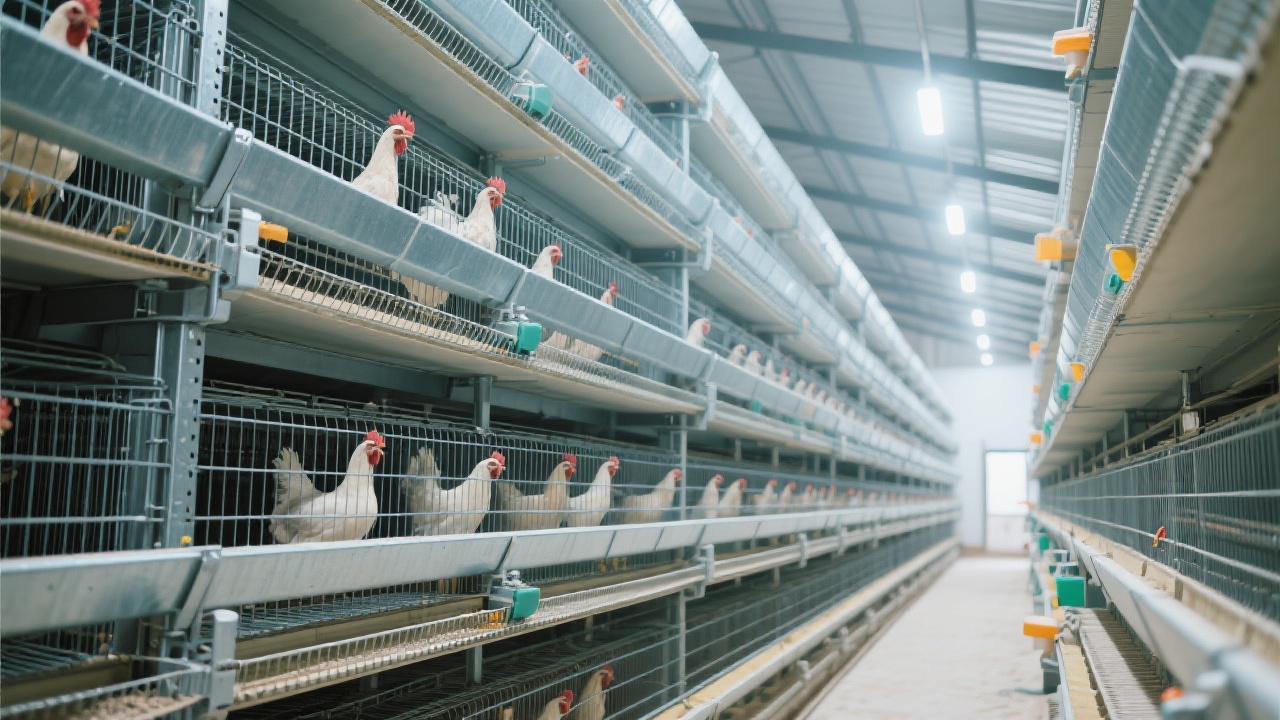
Case 3: 50,000 Broilers — “The System Must Run Like a Production Line”
At 50,000 birds, performance is measured in process control: bird uniformity, health risk reduction, consistent feeding/watering, and batch turnaround speed. At this scale, even small efficiency gains create measurable annual impact. Many farms consider an H-type battery cage because it supports high-density, organized housing while making management more standardized.
What changes when moving into 50,000-bird operations
- Risk management: Any disease event becomes costlier; hygiene design and cleaning speed matter more
- Labor structure: Teams need repeatable SOPs; equipment layout should reduce “manual improvisation”
- Installation planning: Shipping, unloading, and installation must be coordinated to avoid schedule slips
Typical efficiency indicators farms monitor
While results vary by breed, climate, ventilation, and feed program, commercial farms often track a set of core indicators before and after upgrading housing equipment:
Space Utilization
Multi-tier cages can increase effective capacity by 40%–80% compared with conventional floor systems in the same building footprint (depends on building height and layout).
Batch Turnaround Time
Structured systems commonly help shorten cleaning/turnaround by 10%–25% when access and manure management are planned well.
Labor Efficiency
Farms often report 15%–35% less daily labor for feeding/watering checks and routine management after stabilizing the workflow.
Equipment Durability
Hot-dip galvanized components typically maintain usable integrity longer under humid, ammonia-prone conditions—reducing replacement disruptions.
A 50,000-bird buyer usually asks fewer questions about “features” and more about implementation: Can the supplier deliver on time? Can the packing method reduce missing parts? Is there installation guidance that avoids rework?
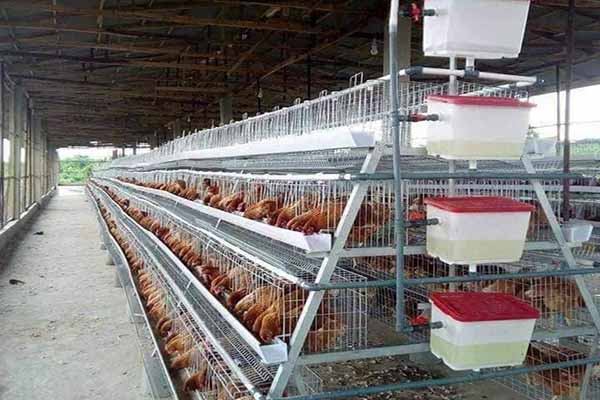
From Design to Installation: What a “Full-Process” Cage Project Looks Like
In B2B poultry equipment procurement, many problems don’t come from the product spec—they come from handover gaps. A practical delivery process reduces those risks, especially for overseas buyers.
- Needs confirmation (farm data collection): house dimensions, target bird count, local climate, cleaning frequency, and workflow preferences.
- Layout & tier proposal: multi-tier design aligned with ventilation and service aisles; details are checked before fabrication.
- Manufacturing & QA: focus on structural stability, welding quality, and hot-dip galvanizing coverage for anti-corrosion performance.
- Packing & shipping readiness: parts grouped by installation sequence; clear identification reduces time loss on site.
- Installation support: guidance to help the farm assemble efficiently and start operating with fewer “first-week surprises.”
Farms evaluating a broiler farming cage equipment upgrade usually benefit from sending three items upfront: house length/width/height, target capacity, and your current daily workflow pain points. That information alone often improves the design accuracy dramatically.
How to Decide Faster: A Practical Checklist for Any Farm Size
If a farm is still comparing suppliers, this checklist keeps the conversation grounded in outcomes—not slogans:
- Confirm the cage system matches your ventilation and service aisle plan, not just your bird count.
- Ask for material details: Q235 bridge steel usage scope and key structure thickness.
- Verify anti-corrosion method: hot-dip galvanized process and quality controls.
- Review packing and installation logic: parts labeling, sequence, and on-site support.
- Request similar-scale references or scenario-based planning (10k / 30k / 50k), not generic claims.
Share Your Farm Size — Get a Cage Layout That Actually Fits
If you’re planning to upgrade your broiler housing, leave a message with your house dimensions, target bird capacity, and country/region. Many farms find that one round of proper layout discussion answers more questions than weeks of browsing.
Ideal for 10,000 to 50,000+ broilers • Custom multi-tier design • Q235 bridge steel + hot-dip galvanizing





.jpg?x-oss-process=image/resize,m_fill,h_800,w_800/format,webp)