


How to Get a Free Quote for 50,000 Layers Fully Automatic Poultry Equipment Solution

How to Get a Free Quote for 50,000 Layers Fully Automatic Poultry Equipment?
To get a free quote for 50,000 layers fully automatic poultry equipment, you need to provide your country, target capacity, chicken house size, land size, cage preference, automation requirements, power condition, water condition and project timeline.
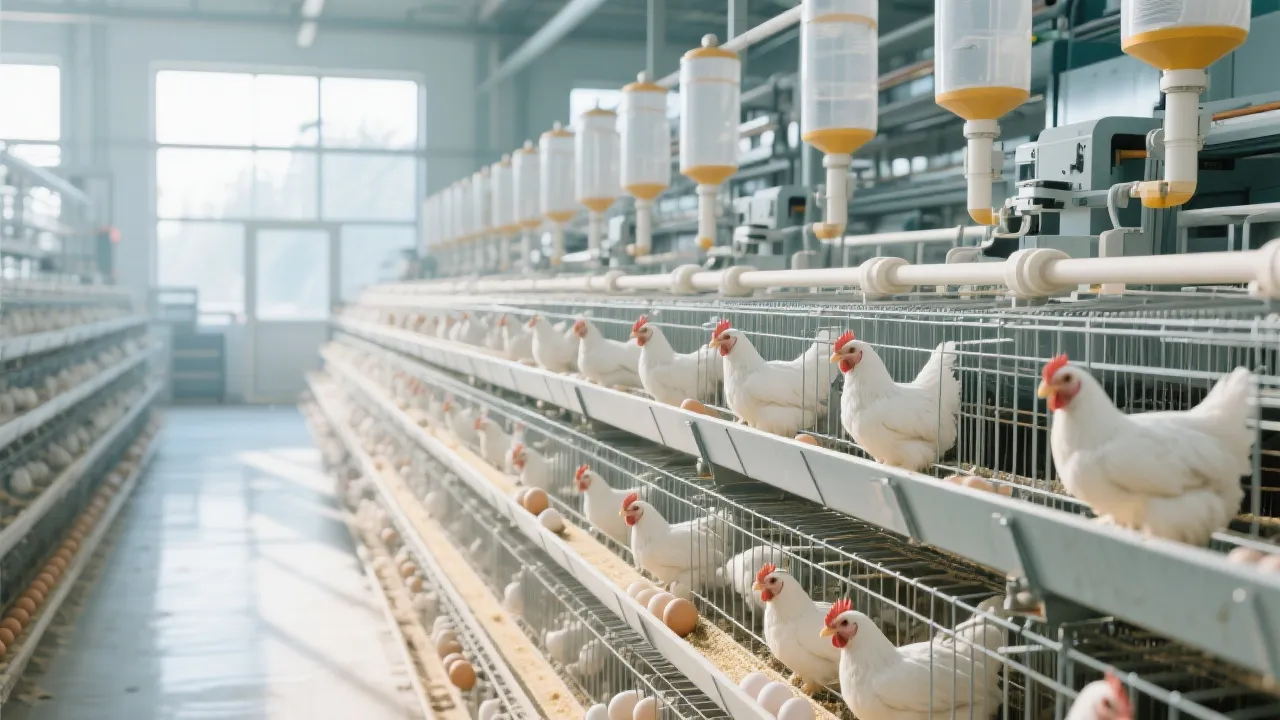
For a 50,000 laying hen farm, the recommended solution is usually a fully automatic H-type layer cage system with automatic feeding, drinking, manure removal, egg collection, ventilation, cooling pad and environmental control.
Livi Machinery can prepare a practical quotation, cage layout and equipment configuration after checking your farm conditions. This avoids inaccurate cage quantity, wrong house layout and missing automatic systems.
What Should You Prepare Before Requesting a Free Quotation?
A correct quotation for a 50,000 layers poultry farm depends on real project data. Cage price alone is not enough because the automatic equipment, house design, ventilation system, egg collection route and manure removal direction must work together.
Before asking for a free quote for 50,000 layers poultry equipment, prepare the following basic information.
| Information Needed | What You Should Provide | Why It Affects the Quote |
|---|---|---|
| Target country | Country, city or nearest port | Used for climate design, voltage reference, shipping route and installation planning |
| Farm capacity | 50,000 layers or future expansion capacity | Determines cage quantity, house layout and automatic equipment scale |
| Chicken house size | Length, width, sidewall height and roof height | Helps confirm cage rows, tiers, walkway width and ventilation layout |
| Land size | Total land area and available building area | Used for house position, egg room, feed storage, manure area and expansion plan |
| Automation level | Feeding, drinking, manure removal, egg collection, ventilation and cooling | Directly affects equipment list and final investment |
| Power and water | Voltage, electricity stability, generator plan and water source | Important for automatic system operation and farm safety |
Which Cage System Is Suitable for 50,000 Layers?
For 50,000 layers, Livi Machinery usually recommends the Livi H-Type Cage System because it saves land, supports higher stocking density and works well with automatic feeding, manure removal and egg collection systems.
The Livi A-Type Layer Cage is more suitable for small and medium layer farms, while the H-type cage is more suitable for commercial farms from 30,000 to 300,000+ layers.
| Cage Type | Model | Specification | Capacity | Recommended Use |
|---|---|---|---|---|
| Livi A-Type Layer Cage | 4-tier 5-door A-type cage | 1950mm × 450mm × 410mm | 160 birds/set | Suitable for 5,000–30,000 layers |
| Livi H-Type Cage System | 4-tier 2-door H-type cage | 1200mm × 625mm × 480mm | 144 birds/set | Suitable for commercial layer farms with limited house height |
| Livi H-Type Cage System | 4-tier 4-door H-type cage | 1800mm × 600mm × 430mm | 192 birds/set | Recommended for many 50,000 layers projects |
If your goal is labor saving and large-scale egg production, the H type layer cage quotation for 50000 chickens should include cages, automatic systems, ventilation equipment and layout drawings.
How Many Cage Sets Are Needed for 50,000 Layers?
The cage quantity is calculated by the formula: total birds ÷ birds per set = required cage sets. The final number may be adjusted according to row quantity, house length, egg collection line and future expansion space.
| Cage Model | Birds Per Set | Calculation | Estimated Cage Sets | Layout Comment |
|---|---|---|---|---|
| 4-tier 2-door H-type cage | 144 birds/set | 50,000 ÷ 144 | About 348 sets | Suitable when house height or local operation preference limits higher density |
| 4-tier 4-door H-type cage | 192 birds/set | 50,000 ÷ 192 | About 261 sets | Common option for a 50,000 layers commercial farm |
| 5-tier 4-door H-type cage | 240 birds/set | 50,000 ÷ 240 | About 209 sets | Suitable for taller houses and land-saving farm design |
For example, if the project uses a 4-tier 4-door H-type cage, 50,000 ÷ 192 ≈ 261 sets. In real farm design, Livi Machinery will adjust the final cage arrangement based on chicken house size and equipment installation space.
What Automatic Equipment Should Be Included in the Quote?
A 50,000 layers fully automatic poultry farm should include more than cages. The automatic systems determine labor cost, egg collection efficiency, manure handling, house environment and long-term farm management.
| Automatic System | Recommended Configuration | Main Function | Why It Matters |
|---|---|---|---|
| Automatic feeding system | Silo, feed conveyor and H-type laminated feeding equipment | Delivers feed evenly to each cage row | Reduces labor and supports uniform laying hen growth |
| Automatic drinking system | Nipple drinkers, pressure regulator, waterline and dosing device | Provides stable water supply | Prevents water shortage and reduces wet litter or manure problems |
| Automatic manure removal system | Belt manure removal inside cage and outside manure conveyor | Removes manure regularly | Reduces ammonia, improves hygiene and supports disease control |
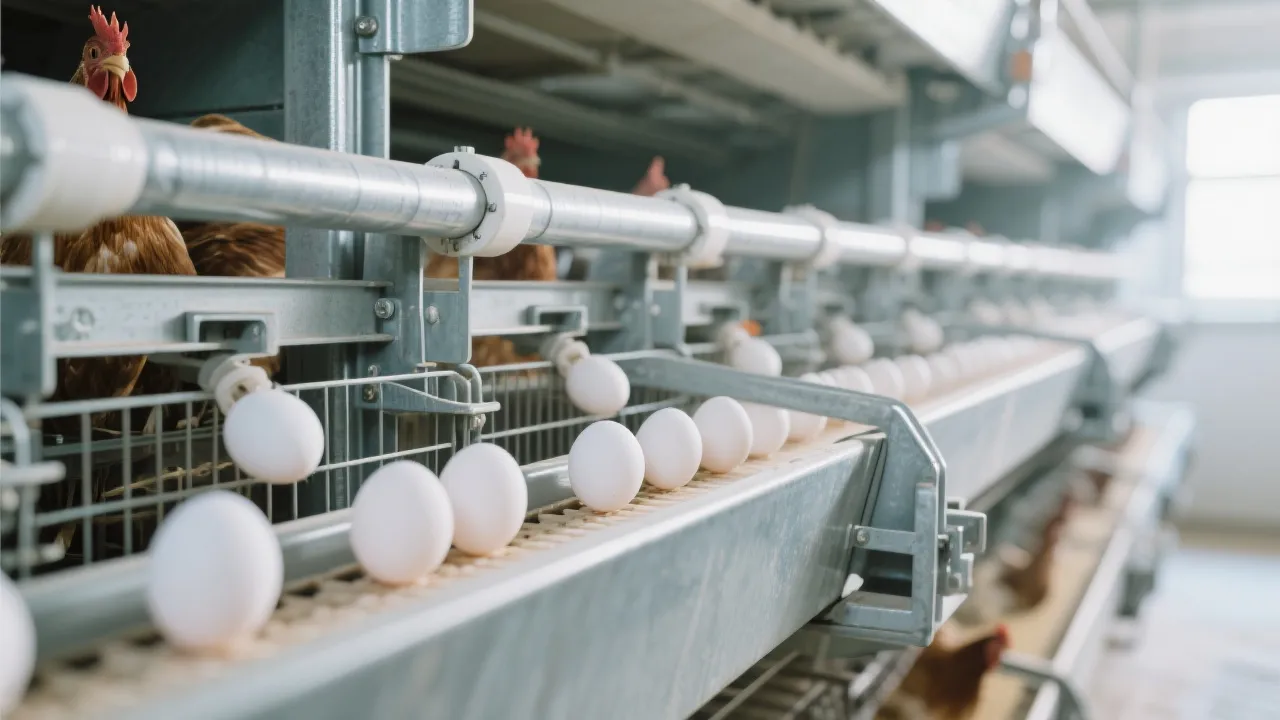
| Livi Automatic Egg Collection System | Egg belt, elevator egg collector and optional central egg conveyor | Collects eggs from cage rows to collection point | Reduces broken eggs and saves egg collection labor |
| Ventilation and cooling system | Fans, cooling pads, air inlets and controller | Controls temperature, humidity and air exchange | Important for hot climate and stable egg production |
| Environmental control system | Controller, sensors, lighting control and optional remote control | Manages fans, cooling pads, lighting and alarms | Improves management accuracy for large-scale farms |
When requesting an automatic poultry farm equipment configuration, clearly state which automatic functions you need. This helps the supplier prepare a complete and realistic quotation.
How Should the Chicken House Be Planned for 50,000 Layers?
If the chicken house has not been built, the layout should be planned before buying equipment. Cage rows, aisle width, manure belt direction, egg room position, fan location and cooling pad position should be coordinated from the beginning.
| Layout Option | Estimated Capacity | Reference House Size | Advantages | Suitable Situation |
|---|---|---|---|---|
| One-house solution | About 50,000 layers | About 100m × 15m × 4m | Centralized management and easier equipment operation | Customer has enough land and wants one main production house |
| Two-house solution | About 25,000 layers per house | About 60m × 12–15m × 4m each | Better production separation and phased investment | Customer wants lower risk and easier batch management |
| Expansion-ready solution | 50,000 now, 100,000 later | Designed according to land size | Reserves road, manure area, egg room and feed storage space | Customer plans to expand after the first laying cycle |
The Livi Poultry Farm Layout Solution can help match cage quantity, house width, ventilation design and automatic equipment installation. If your house already exists, send photos, dimensions and column positions before requesting the quote.
How Is the Final Equipment Cost Calculated?
The final quotation is affected by cage model, cage quantity, automatic system level, ventilation design, material requirement, shipping cost and installation support. A cheaper quotation may exclude key systems, so farmers should compare the equipment list carefully.
| Cost Component | What It Includes | Low Configuration | Commercial Automatic Configuration |
|---|---|---|---|
| Cage system | Cage frame, mesh, trough, egg belt support and accessories | Basic cage only | H-type cage matched with automatic systems |
| Feeding system | Silo, conveyor, feeding trolley or laminated feeding machine | Manual or semi-automatic feeding | Full automatic feeding system |
| Egg collection | Egg belt, egg elevator and central egg line if needed | Manual egg collection | Livi Automatic Egg Collection System |
| Manure removal | Manure belt, motor, conveyor and scraper components | Manual cleaning | Automatic belt manure removal |
| Ventilation | Fans, cooling pads, air inlets, controller and sensors | Basic fans only | Livi Ventilation Design Standard with cooling and control |
| Service support | Layout design, packing, installation guidance and after-sales support | Limited support | Project-based guidance and technical communication |
For a 50,000 layers project, the buyer should compare total value instead of only unit price. A complete commercial egg production farm layout can reduce future modification costs and improve farm operation efficiency.
What Is the Step-by-Step Process to Get the Free Quote?
The quotation process should be clear and practical. Livi Machinery usually prepares the solution after understanding the customer’s farm condition, target capacity and automation expectation.
Provide your country, target capacity, chicken house size, land size, automation needs and expected purchasing time.
Livi Machinery checks whether A-type or H-type cages are more suitable and suggests a cage row layout for the chicken house.
Choose automatic feeding, drinking, manure removal, egg collection, ventilation, cooling pad and environmental control according to your budget and management plan.
The technical team prepares cage quantity, automatic equipment configuration, layout reference and project quotation.
After the equipment list is confirmed, shipping route, container loading, installation guidance and spare parts can be discussed.
Before ordering, check cage model, bird capacity, automation scope, house layout, delivery details and after-sales support.
What Should You Check Before Confirming the Quotation?
Before confirming a supplier’s quotation, check whether the proposal is complete. For a 50,000 layers farm, missing automatic systems or incorrect layout details can cause additional costs during installation.
Confirm the cage specification, birds per set, total cage sets and total designed capacity.
Confirm whether feeding, drinking, manure removal, egg collection and ventilation are included.
Confirm cage rows, aisle width, egg collection route, manure discharge direction and equipment space.
Check fan quantity, cooling pad area, air inlet arrangement and environmental control plan.
Confirm voltage, motor power, control cabinet and backup power recommendation.
Check installation guidance, technical drawings, spare parts and after-sales communication.
What Daily Operation SOP Should Be Considered After Buying the Equipment?
A fully automatic poultry farm still needs daily inspection and management. The equipment reduces labor intensity, but workers should follow a regular SOP to keep the farm stable.
| Daily Task | Recommended SOP | Related Equipment | Management Goal |
|---|---|---|---|
| Feeding | Run feeding system according to feed program and bird age | Automatic feeding system | Uniform feed distribution and less feed waste |
| Drinking | Check water pressure, nipple lines and water quality every day | Automatic drinking system | Stable water supply and lower leakage risk |
| Egg collection | Collect eggs 1–3 times per day according to laying rate | Livi Automatic Egg Collection System | Lower egg breakage and cleaner egg handling |
| Manure removal | Run manure belt regularly according to manure volume and humidity | Automatic manure removal system | Lower ammonia and cleaner house environment |
| Ventilation | Monitor temperature, humidity and air quality through controller | Fans, cooling pads, air inlets and controller | Reduce heat stress and support laying performance |
| Equipment inspection | Check motors, belts, controllers, sensors and power supply | Full automatic control system | Reduce downtime and prevent operation failure |
FAQ About Free Quote for 50,000 Layers Fully Automatic Poultry Equipment
How long does it take to receive a quotation?
If the customer provides complete information, including country, house size, capacity and automation requirements, the quotation can be prepared more efficiently. If the chicken house has not been built, extra layout communication may be needed because cage rows, ventilation direction and equipment space should be designed together.
Can I get a quote without a chicken house drawing?
Yes. If you do not have a drawing, you can provide land size, target capacity, preferred cage type and photos of the site. Livi Machinery can suggest a reference house size and farm layout. However, final design should be confirmed before construction to avoid size mismatch.
Is automatic egg collection necessary for 50,000 layers?
For 50,000 layers, automatic egg collection is strongly recommended. Manual egg collection requires more labor and may increase egg breakage. The automatic egg collection system can collect eggs more efficiently, reduce handling time and make daily farm management easier during peak laying periods.
Why do two 50,000-layer projects have different prices?
The price may differ because of cage model, number of tiers, automatic configuration, ventilation design, house structure, shipping distance and installation support. A hot-climate farm may need more cooling equipment, while an expansion-ready farm may need reserved space and stronger supporting systems.
What is the best message to send for a fast quotation?
A clear message should include: country, 50,000 layers capacity, chicken house size, new or existing house, cage type preference, required automatic systems, voltage, water condition and project schedule. Photos, drawings and land information can help Livi Machinery prepare a more accurate quotation.
Get a Free Equipment Quote for Your 50,000 Layers Farm
If you are planning to build a 50,000 layers poultry farm, Livi Machinery can provide customized cage layout, automatic equipment configuration, chicken house planning, ventilation design and installation guidance according to your land size, climate and investment plan.
Send your country, chicken house size, target capacity and automation requirements to receive a practical quotation for your project.
Hot Products

.jpg?x-oss-process=image/resize,m_fill,h_800,w_800/format,webp)


Popular articles





READY TO START?
Ready to Build Your Poultry Farm?
Tell us your land size, poultry type and farming capacity. LIVI will provide a complete farm solution for your project.