


Egg Chicken Cages with International Certifications: Why Do High - end Farms Prefer CE + ISO Dual - Certified Equipment?

Why Do High - end Farms Prefer Laying Hen Cages with CE + ISO Dual Certification?
In the global market of laying hen farming equipment, there is a clear trend among high - end farms: the preference for laying hen cages with CE + ISO dual certification. This article delves into the practical implementation of ISO9001 Quality Management System, ISO14001 Environmental Management Standard, and CE Safety Certification in laying hen farming equipment, and analyzes their impact on equipment selection decisions.
The Core Requirements of Three Certifications and Their Impact
ISO9001 focuses on quality management. A laying hen cage that meets ISO9001 standards means it has a strict quality control process during production. For example, the hot - dip galvanized layer of the cage is required to be at least 85μm thick. This thick galvanized layer can effectively prevent corrosion, greatly extending the service life of the cage. According to industry statistics, cages with ISO9001 certification can have a service life 3 - 5 years longer than non - certified ones.
ISO14001 is about environmental management. In modern farming, environmental protection is not only a social responsibility but also a long - term cost - saving measure. Laying hen cages that comply with ISO14001 standards are designed to minimize environmental impact, such as reducing waste generation and energy consumption. For instance, these cages may use more energy - efficient materials and designs, which can reduce energy consumption by about 20% compared to non - compliant cages.
The CE certification is mainly about safety. It ensures that the equipment meets the safety requirements of the European market. For laying hen cages, this means low noise levels. Cages with CE certification usually have a noise level of no more than 65dB, which is beneficial to the health and well - being of the hens, and also provides a more comfortable working environment for farm workers.
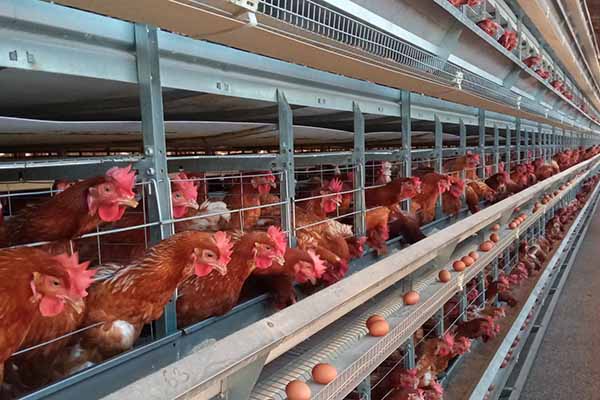
Comparison between Certified and Non - certified Products
When it comes to service life, as mentioned before, certified cages have a significant advantage. This means that farms do not need to replace cages frequently, reducing the long - term investment in equipment. In terms of maintenance costs, non - certified cages may require more frequent repairs due to poor quality, such as broken wires or unstable structures. On the contrary, certified cages are more reliable and can save a large amount of maintenance costs.
In addition, there is a huge difference in compliance risk. For export - oriented farms, non - certified products may face delays in customs clearance. According to relevant data, about 30% of non - certified equipment may be held up at customs, which can cause great losses to farms. Moreover, selling non - certified products may also lead to customer complaints, damaging the farm's reputation.

Typical Cases and Industry Data
Let's take a large - scale export - oriented farm in South America as an example. Before using certified laying hen cages, they often encountered problems such as cage corrosion, high noise, and customs clearance delays. After switching to cages with CE + ISO dual certification, the mortality rate of hens decreased by 15% due to the improved living environment, and the farm's export efficiency increased significantly.
According to a white paper from FAO, farms using certified laying hen cages can achieve a 25% increase in egg production efficiency on average. These data and cases clearly show the benefits of using certified equipment.
The Value of Certifications in Market Access
Beyond the obvious advantages in quality and compliance, these certifications also have great value in market access. In the international market, especially in developed regions such as Europe and North America, these certifications are almost a prerequisite for entering the market. They are like a pass that allows farms to expand their business globally and gain a competitive edge.

In conclusion, for export - oriented farm managers, choosing laying hen cages with CE + ISO dual certification is a wise decision. It can help them avoid the risks of customs clearance delays and customer complaints, and build a sustainable and replicable standardized farming system. If you want to learn more about the compliance of international laying hen equipment, get the "International Laying Hen Equipment Compliance Self - Check List" PDF.



Hot Products

.jpg?x-oss-process=image/resize,m_fill,h_800,w_800/format,webp)


Popular articles





READY TO START?
Ready to Build Your Poultry Farm?
Tell us your land size, poultry type and farming capacity. LIVI will provide a complete farm solution for your project.