


Congo 80,000 Broilers H Type Automatic Broiler Cage Farming Solution

80,000 Broilers Farm Design in Congo
How to Build an 80,000 Broilers Farm in Congo with H Type Automatic Broiler Cages?
To build an 80,000 broilers poultry farm in Congo, the recommended solution is a fully automatic H type broiler cage system with automatic feeding, nipple drinking, belt manure removal, ventilation, cooling pads, lighting and intelligent environment control.
For this capacity, Livi Machinery recommends about 785 sets of 3-tier H type broiler cages, arranged in 4 chicken houses. Each house can raise about 20,000 broilers per batch, helping the farm save land, reduce labor, improve manure control and support intensive commercial broiler production.
What Is the Recommended Solution for 80,000 Broilers in Congo?
For an 80,000 broilers project, the farm should be planned as a closed or semi-closed poultry house system with H type broiler cages, automatic feeding, automatic drinking, belt manure removal and climate control.
This solution is suitable for investors who want a more intensive broiler cage equipment solution in Congo, especially when land saving, labor saving and batch management are key requirements.
80,000 broilers per batch
H type broiler cage system

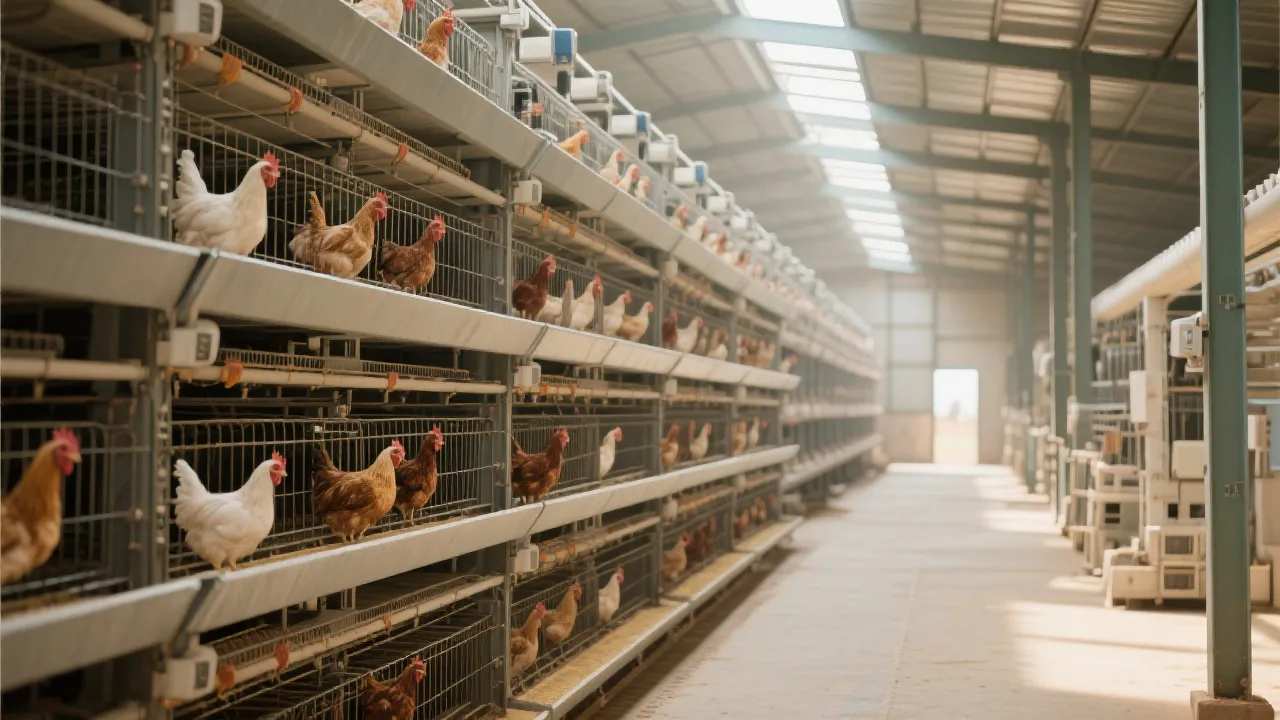
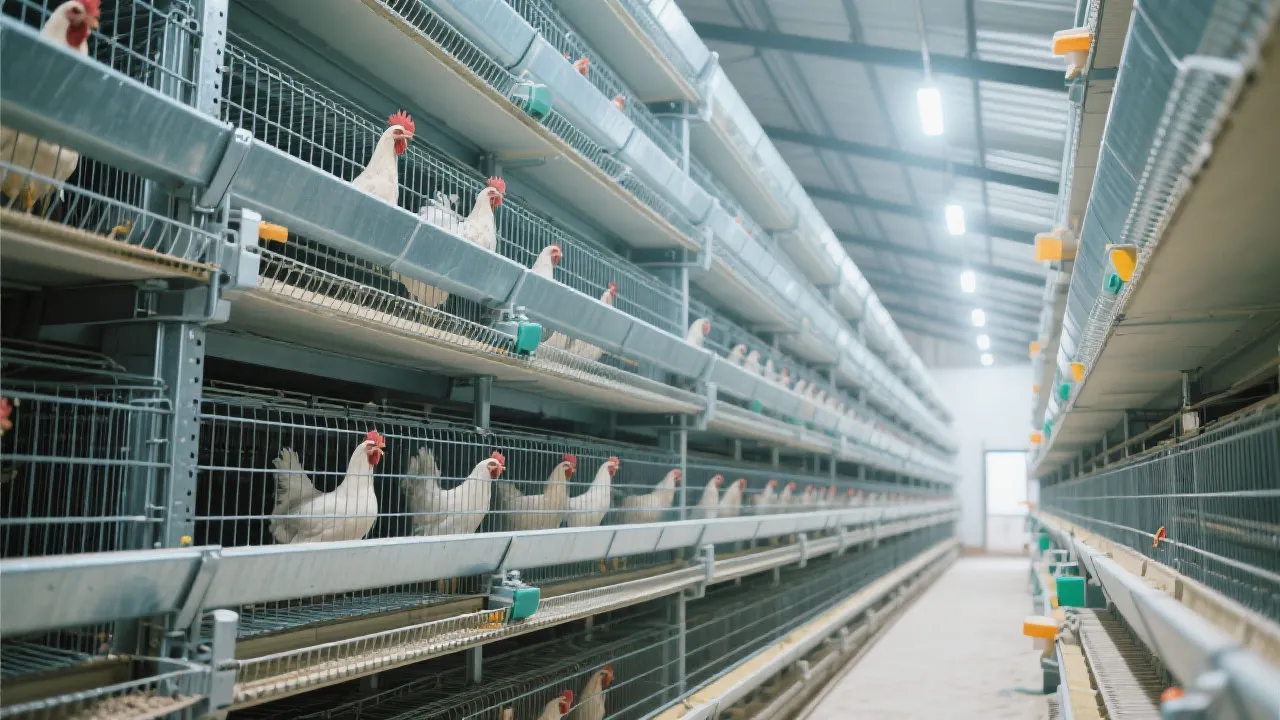
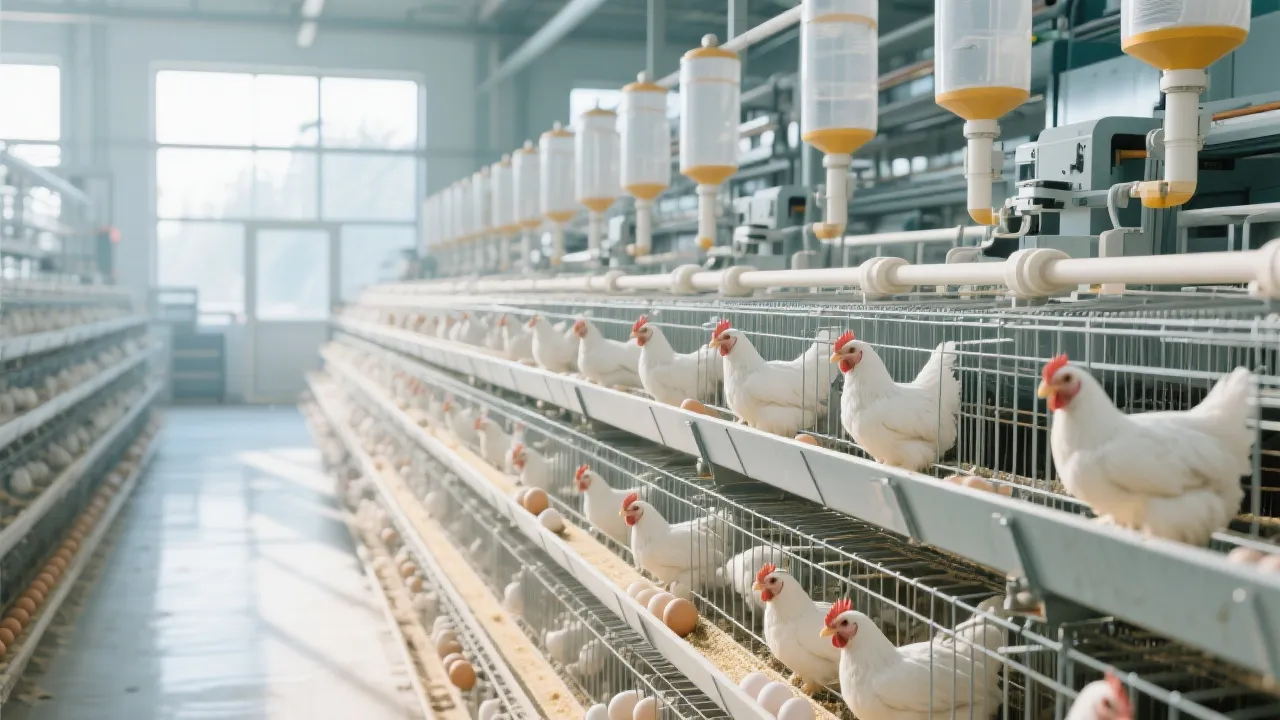
H type broiler cage system for intensive commercial broiler farming.
Congo
80,000 broilers per batch
Livi H-type broiler cage System
High-density farming with automatic daily management
Why Choose H Type Broiler Cages for 80,000 Broilers in Congo?
For an 80,000 broilers farm in Congo, H type broiler cages are more suitable than floor raising when the investor wants higher stocking density, easier manure control and more standardized batch management. The cage structure separates birds from manure belts, helping reduce wet litter problems and improve the house environment.
The H type broiler cage system for 80,000 chickens is especially practical for commercial farms that need stable production, fast turnover and reduced dependence on manual feeding and manure cleaning.
How Many H Type Broiler Cage Sets Are Needed?
The cage quantity is calculated by dividing the total broiler capacity by the birds per cage set. For this Congo project, Livi Machinery recommends the 3-tier H type broiler cage with a reference capacity of 102 broilers per set.
Formula: Total Broilers ÷ Birds Per Set = Required Cage Sets
80,000 broilers ÷ 102 birds/set ≈ 785 sets
The final cage quantity can be adjusted according to local broiler market weight, house length, stocking density rules, ventilation capacity and the investor’s batch production plan.
How Many Chicken Houses Should Be Built for 80,000 Broilers?
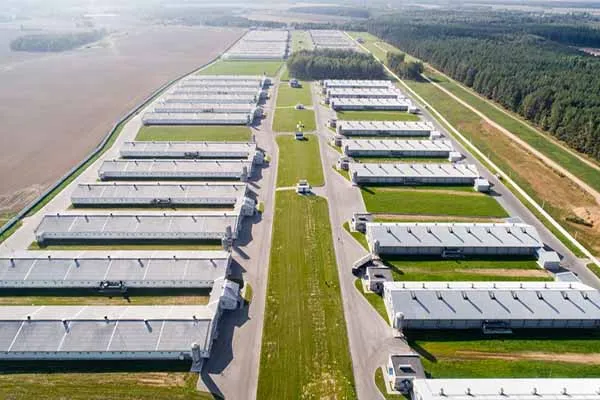
For operational safety, the recommended layout is 4 chicken houses, with each house raising about 20,000 broilers. This layout supports all-in all-out management, easier disease control, simpler ventilation calculation and more flexible production scheduling.

Cage layout planning should match house width, ventilation direction and manure outlet.
Because the user has not provided land size or chicken house size, the following house dimensions are estimated based on H type cage arrangement, equipment space, service aisles, cooling pad area and fan end design.
The automatic broiler farm design in Congo should leave space for feed silos, manure outlet, disinfection channel, water tank room, generator room, staff passage and truck access.
4 houses × about 20,000 broilers per house, easier for batch control and biosecurity management.
What Automatic Equipment Is Required for This Broiler Cage Farm?
An 80,000 broilers farm should not rely on cages alone. The complete system should include broiler cages, automatic feeding, nipple drinking, manure removal, ventilation, cooling pad, lighting and environment control.
The purpose is to make feeding, water supply, manure cleaning and climate control more stable during the 35–45 day production cycle. Livi Machinery can provide a complete automatic poultry equipment configuration according to land size, house direction, local climate, power supply and target market weight.

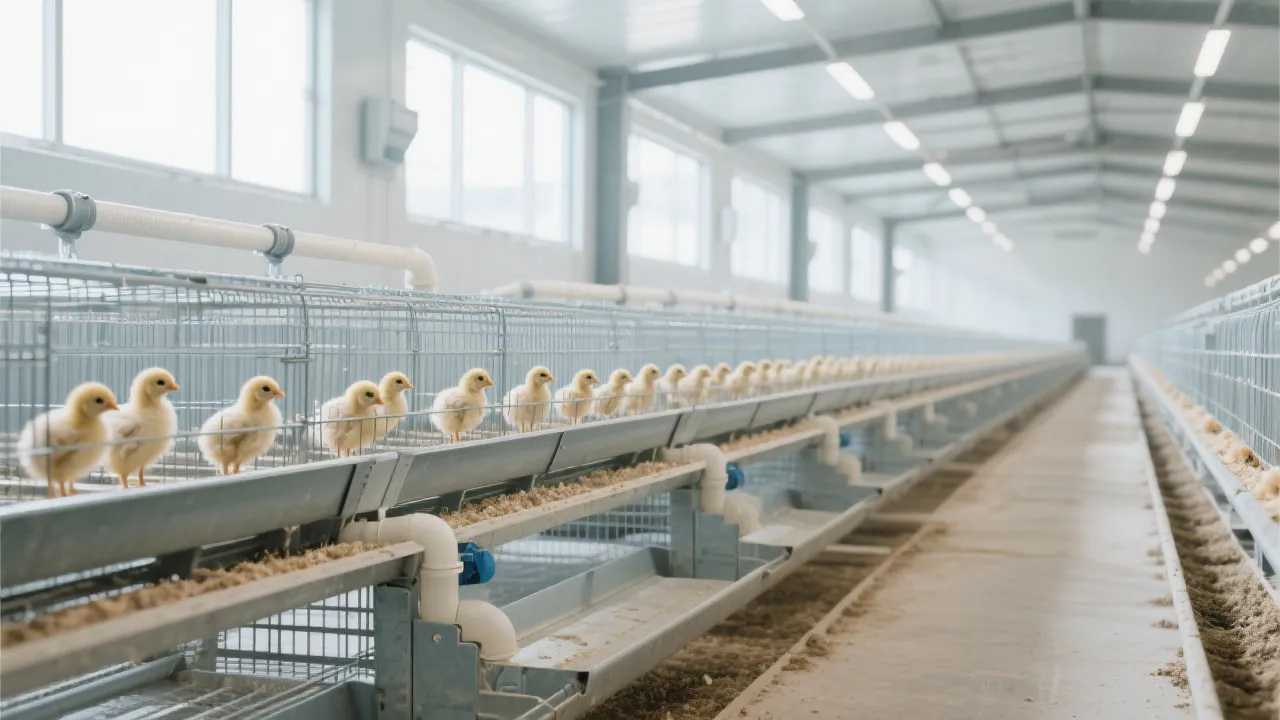
Automatic feeding, drinking, ventilation and manure removal should be designed as one system.
How Should Ventilation Be Designed for Congo Climate?
Congo has many hot and humid areas, so ventilation design is a key part of broiler cage farming. In a high-density H type cage house, heat, moisture, ammonia and carbon dioxide must be removed continuously. Poor ventilation can directly affect feed intake, growth rate, survival rate and final body weight.
The Livi Ventilation Design Standard usually combines tunnel ventilation, cooling pads, side wall air inlets, exhaust fans and an environment controller. For a 20,000 broilers house, the number of fans and cooling pad area should be calculated according to house size, stocking density, bird age and target air speed.
Recommended Ventilation Design Checklist
- Use tunnel ventilation for hot growth stages.
- Install cooling pads at the air inlet end for heat stress control.
- Use exhaust fans at the opposite end to create stable air speed.
- Install temperature, humidity and negative pressure sensors.
- Keep backup power available for fans, water pumps and controllers.
- Clean fan shutters, cooling pads and air inlets before each batch.
How to Build the 80,000 Broilers Farm Step by Step?
The construction of an 80,000 broilers cage farm should follow a clear sequence. Cage layout, ventilation, manure removal, water supply and power distribution must be planned before the chicken house is built. This avoids later rework and helps the equipment installation run smoothly.
Confirm farm capacity, land size, road access, water source and power supply.
Design chicken house quantity, cage rows, feed line, manure outlet and ventilation direction.
Build closed chicken houses with correct height, insulation and air sealing.
Install cages, feeding, drinking, manure removal, ventilation and electrical control systems.
Test equipment without birds, including motors, waterlines, sensors, belts and fans.
Start brooding, daily monitoring, feeding program and batch production SOP.
How Much Does an 80,000 Broilers H Type Cage Farm Cost?
The cost of an 80,000 broilers farm in Congo depends on cage model, automation level, chicken house structure, ventilation standard, local construction cost, transport cost, installation method and power backup requirements. A full automatic cage farm usually requires higher initial investment than floor raising, but it can reduce labor and improve management efficiency in long-term operation.
Before quotation, Livi Machinery usually needs the target capacity, land size, house dimensions, broiler market weight, automation requirements, port information and whether the customer needs steel structure chicken houses.
What Is the Daily Operation SOP for an Automatic Broiler Cage Farm?
Daily operation should focus on feed, water, temperature, ventilation, manure removal, bird behavior and equipment inspection. Even with full automation, workers must check whether every system is running correctly.
FAQ About 80,000 Broilers H Type Automatic Cage System in Congo
How many workers are needed for 80,000 broilers?
With a fully automatic H type broiler cage system, an 80,000 broilers farm usually needs fewer workers than floor raising. In daily operation, workers mainly check feed, water, ventilation, manure belts, equipment alarms and bird health. The final labor number depends on house quantity, management skill, catching method, local labor cost and whether the farm uses automatic feed silos and central control.
Is H type cage better than floor raising for broilers?
H type broiler cages are better for investors who want high-density commercial production, cleaner manure control and more standardized management. Floor raising has lower initial equipment cost, but it needs more land and litter management. For 80,000 broilers in Congo, cage farming can make the chicken house more organized and reduce the pressure of manual cleaning.
How many cage sets are needed for 80,000 broilers?
Using a 3-tier H type broiler cage with 102 birds per set, the farm needs about 785 cage sets. The calculation is 80,000 ÷ 102 ≈ 785 sets. In practical layout, the number may be adjusted slightly to match house length, cage rows, walking aisles, manure removal outlet and ventilation design.
What chicken house size is recommended?
A practical recommendation is 4 houses, with each house around 75m × 14m × 3.5m and a capacity of about 20,000 broilers. This is an estimated design because the exact house size depends on land shape, cage arrangement, ventilation direction, service aisles, cooling pad area and manure outlet position.
What information is needed before farm design?
Before making a detailed Livi Poultry Farm Layout Solution, the customer should provide target capacity, land size, existing house dimensions if any, local temperature range, power supply, water source, target broiler weight, production cycle, budget range and preferred automation level. These details help Livi Machinery design the correct cage rows, ventilation system and equipment configuration.
Need a Custom 80,000 Broilers Farm Layout for Congo?
If you are planning to build a 20,000–100,000+ broilers poultry farm in Congo, Livi Machinery can provide customized cage layouts, automatic equipment configuration, chicken house planning, ventilation design and installation guidance according to your land size, climate and investment plan.
The solution can include the Livi H-Type Broiler Cage System, automatic feeding, automatic drinking, automatic manure removal, cooling pad ventilation, environment control, steel structure chicken house and production management guidance.
automatic poultry equipment configuration


Hot Products

.jpg?x-oss-process=image/resize,m_fill,h_800,w_800/format,webp)


Popular articles




READY TO START?
Ready to Build Your Poultry Farm?
Tell us your land size, poultry type and farming capacity. LIVI will provide a complete farm solution for your project.