


How to Avoid Customs Delays and Compliance Risks in Overseas Poultry Projects with Certified Equipment

How to Avoid Customs Delays and Compliance Risks in Overseas Poultry Projects
In the global poultry industry, equipment compliance isn’t just a checkbox—it’s the foundation of project success. A single missing certification can cause delays, rejections, or even fines that derail your entire export operation. This article breaks down how key international standards—ISO 9001, ISO 14001, and CE—directly impact egg-laying chicken cage systems and why they’re critical for long-term operational efficiency and market access.
The Real Cost of Non-Compliance
According to FAO reports (2023), over 35% of failed livestock equipment imports into EU and Middle Eastern markets stem from unverified certifications. One case study from Saudi Arabia involved a $12,000 customs penalty due to non-compliant electrical components in automated feeding systems—despite the product being technically sound. The delay? 42 days. That’s not just lost time—it’s lost trust.
Why ISO 9001 Matters Beyond Paperwork
ISO 9001 ensures consistent quality across batches—a must when scaling operations internationally. For example, manufacturers with certified processes maintain a defect rate below 0.5%, compared to 3–5% for non-certified ones (based on OIE benchmarking data). When your cages are built under ISO 9001, you're not just meeting specs—you're ensuring uniformity in galvanized coating thickness (≥85μm), weld integrity, and structural load capacity across every unit shipped.
Environmental Standards = Market Access
ISO 14001 is no longer optional—it's a gateway. In Germany, for instance, all agricultural machinery must demonstrate low environmental impact through lifecycle assessments. This includes using lead-free coatings, recyclable materials, and proper waste handling protocols during production. Farms sourcing compliant cages see up to 20% faster regulatory approval in EU countries, per a 2022 EU Commission report.
CE Certification: More Than Just a Label
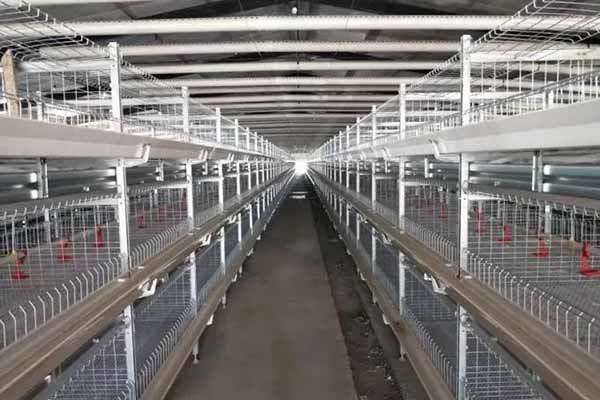
CE marks aren’t decorative—they reflect real safety thresholds. For egg-cage systems, this means:
- Electrical safety: IP54 rating for motors and control units
- Mechanical protection: Guardrails ≥1.2m high, anti-slip surfaces
- Noise levels ≤65 dB(A) at 1 meter distance (critical for animal welfare)
Certified equipment reduces maintenance costs by an average of 18% annually—thanks to fewer mechanical failures and safer worker environments.
Long-Term Value: It’s Not Just About Passing Inspection
A recent survey of 120 international poultry farms found that those using certified cages reported:
- 27% higher productivity over 3 years
- 40% fewer unplanned downtime incidents
- Improved staff satisfaction due to quieter, safer working conditions
These aren’t hypotheticals—they’re outcomes driven by systematic compliance.
For exporters serious about building sustainable international relationships, certification isn't a cost—it's a competitive advantage. Whether you're targeting Europe, the Gulf, or Southeast Asia, aligning with global standards builds credibility before the first inquiry arrives.
Download Your Free International Egg Cage Compliance Checklist
Get our practical, step-by-step guide to verify if your equipment meets global requirements—from material specs to documentation. Perfect for pre-export audits and client presentations.
Access the Checklist Now




Hot Products

.jpg?x-oss-process=image/resize,m_fill,h_800,w_800/format,webp)


Popular articles






READY TO START?
Ready to Build Your Poultry Farm?
Tell us your land size, poultry type and farming capacity. LIVI will provide a complete farm solution for your project.