Health monitoring that scales
Use fixed inspection routes and log exceptions (water line pressure drops, abnormal vocalization zones, uneven distribution, wet manure belt sections). Early detection is often the cheapest “medicine.”


For modern broiler producers, “high efficiency” is no longer just a target feed conversion ratio—it is a complete system that starts with site design, continues through equipment selection, and is proven in day-to-day management. A well-built workflow helps farms scale density responsibly, reduce energy waste, standardize labor, and keep performance stable across cycles.
This article breaks down a replicable, end-to-end broiler farming blueprint, using an H-type broiler battery cage approach from Zhengzhou Livi Machinery Manufacturing Co., Ltd. as a real-world reference. The focus is practical: what to plan, what to measure, and how to maintain long-term durability with Q235 bridge steel and hot-dip galvanizing.
Many broiler projects underperform not because of genetics or feed, but because the facility is designed “from the building outward” rather than “from the production goal backward.” A high-efficiency design starts with three decisions that should be written down before any drawings are finalized:
Define your placed chicks per house and your planned cycles per year. Commercial farms typically aim for 5.5–7.0 cycles/year depending on downtime and biosecurity discipline.
Decide whether you want labor-light operation (more automation) or lower CAPEX (more manual tasks). In multi-tier systems, labor efficiency can improve by 30–50% versus floor systems when feeding, watering, and manure removal are standardized.
Power and climate determine whether you prioritize tunnel ventilation, sidewall ventilation, insulation, and heat recovery. Energy planning is part of performance planning.
Interactive check: If your farm doubles capacity, which becomes the bottleneck first—ventilation, labor, or waste handling? The answer often decides whether multi-layer cages create profit or create pressure.
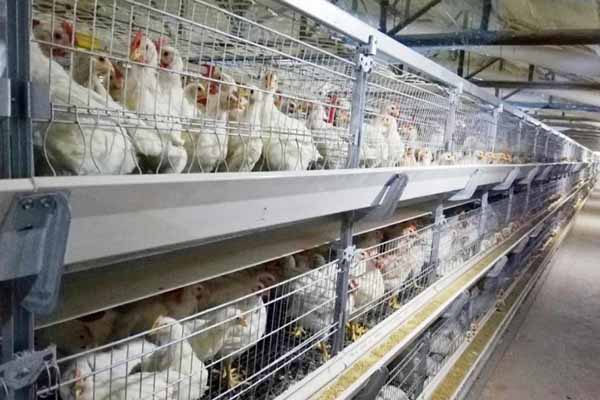
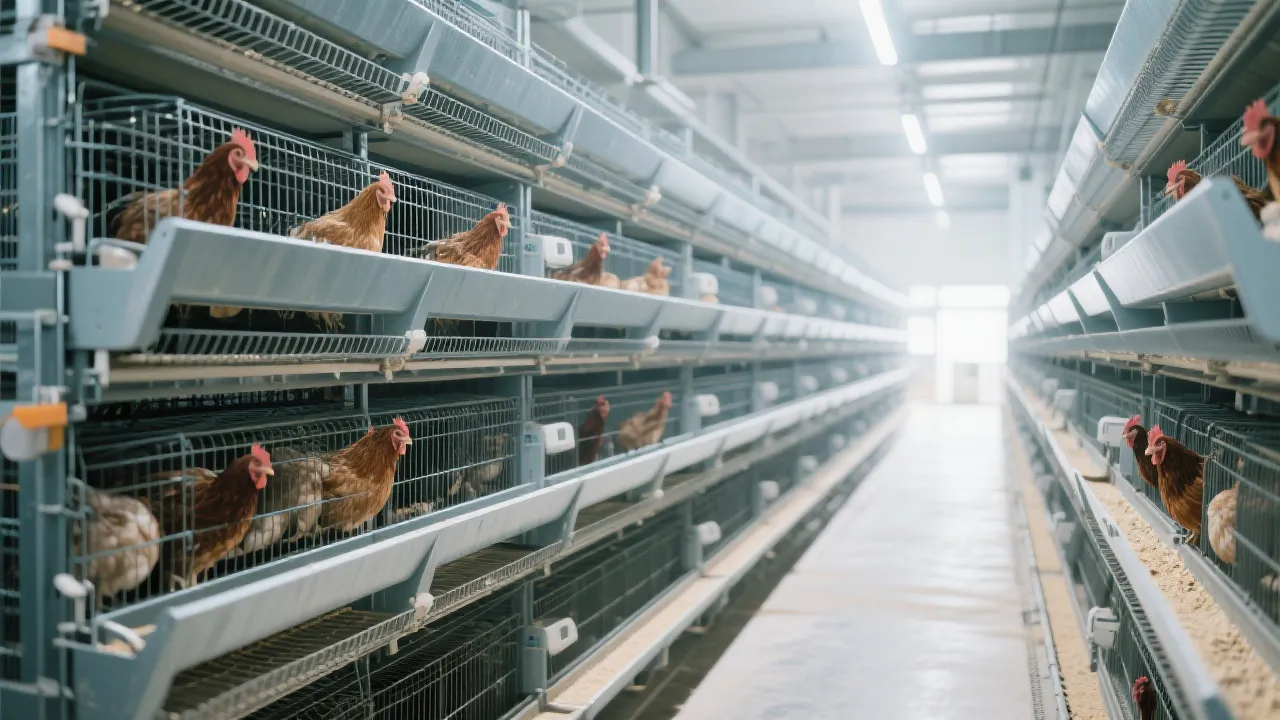
A multi-layer broiler cage system is not just about “more birds per square meter.” Its real advantage is process control—uniform feeding access, consistent drinking lines, predictable manure removal, and cleaner separation between birds and waste. When executed correctly, it supports:
In practical terms, farms adopting a mature cage workflow often report improvements such as lower ammonia peaks, more consistent flock checks, and cleaner working conditions—factors that influence both bird performance and staff retention.
Data ranges are for reference and vary by breed, climate, target weight, and biosecurity discipline.
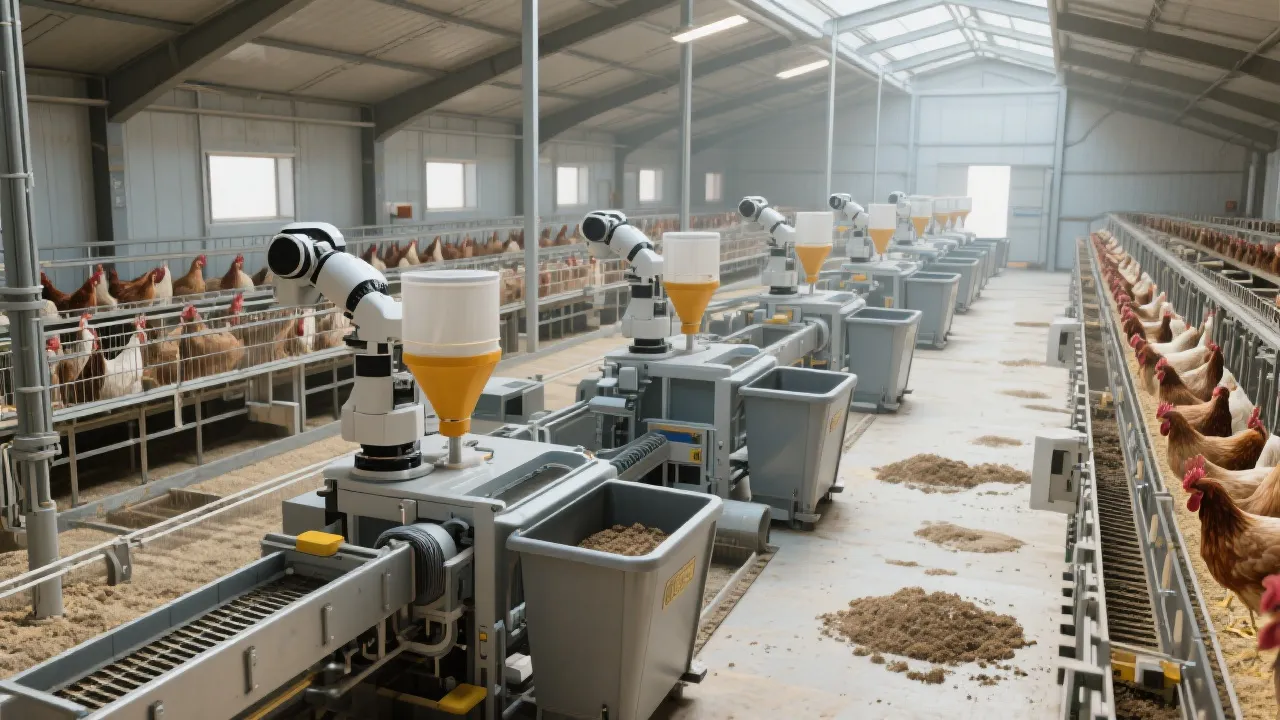
In deployments referencing H-type broiler battery cages from Zhengzhou Livi Machinery Manufacturing Co., Ltd., the operational goal is straightforward: expand usable capacity while keeping routine tasks simple and measurable. A typical configuration focuses on:
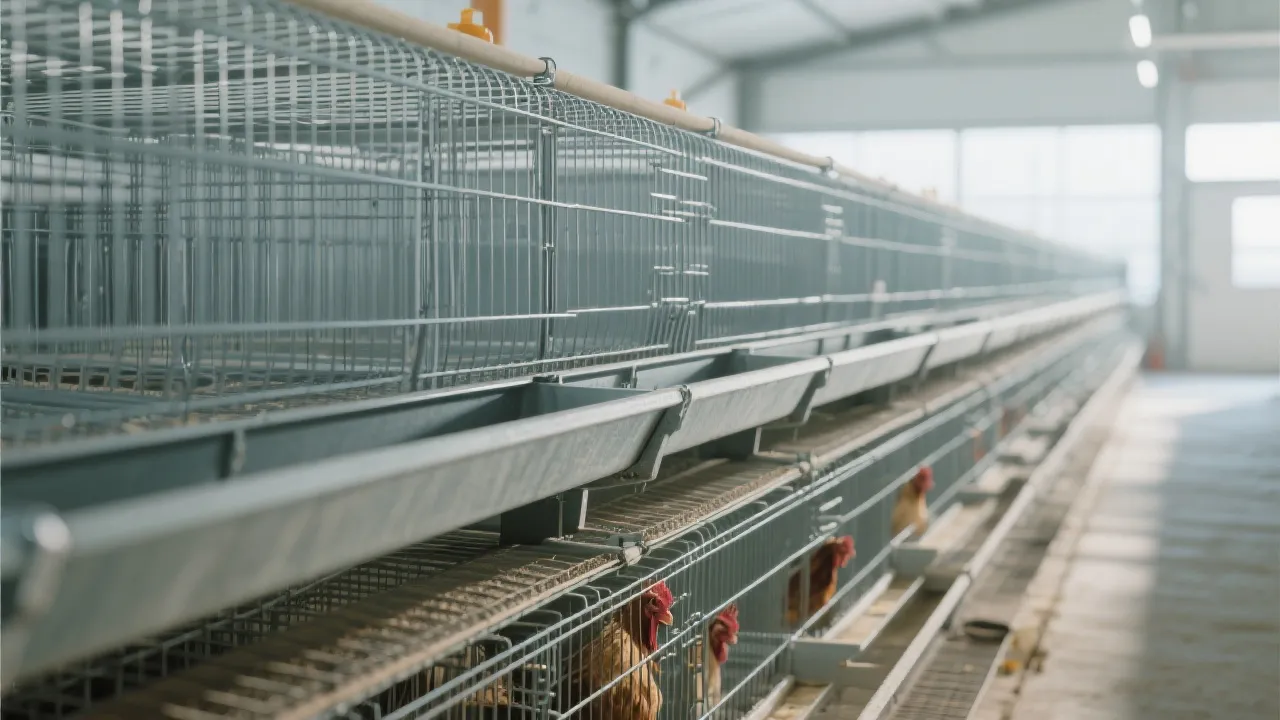
Tier spacing, aisle width, and service corridors are designed so staff can inspect birds quickly and ventilation can “reach” all layers. This is where high density stays manageable instead of becoming a risk multiplier.
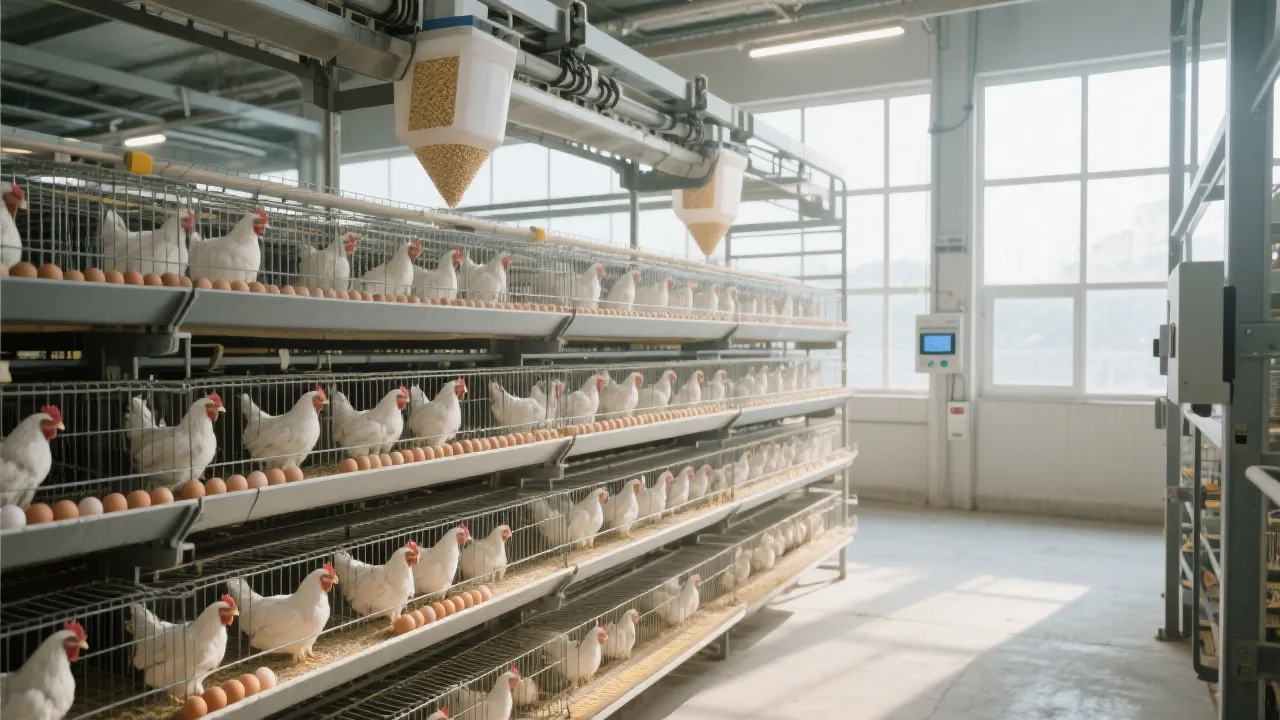
Standard feed distribution and drinking systems reduce overfeeding variation and water leakage events—two quiet drivers of wasted feed, wet spots, and ammonia spikes.
Farms that move from purely manual routines to standardized cage workflows commonly observe clearer daily exception management: instead of “walking and guessing,” staff checks become a repeatable route with defined inspection points (water pressure, feed line status, abnormal sound/behavior zones, and manure belt condition).
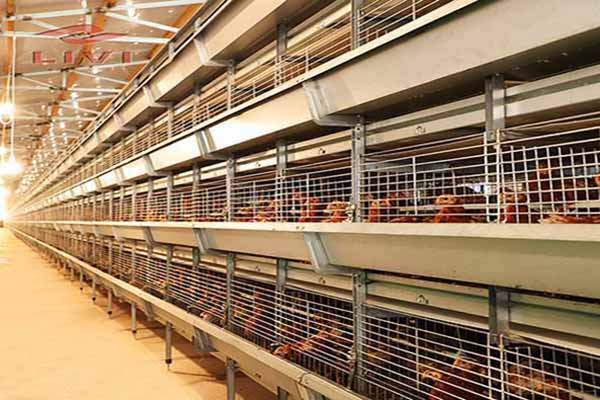
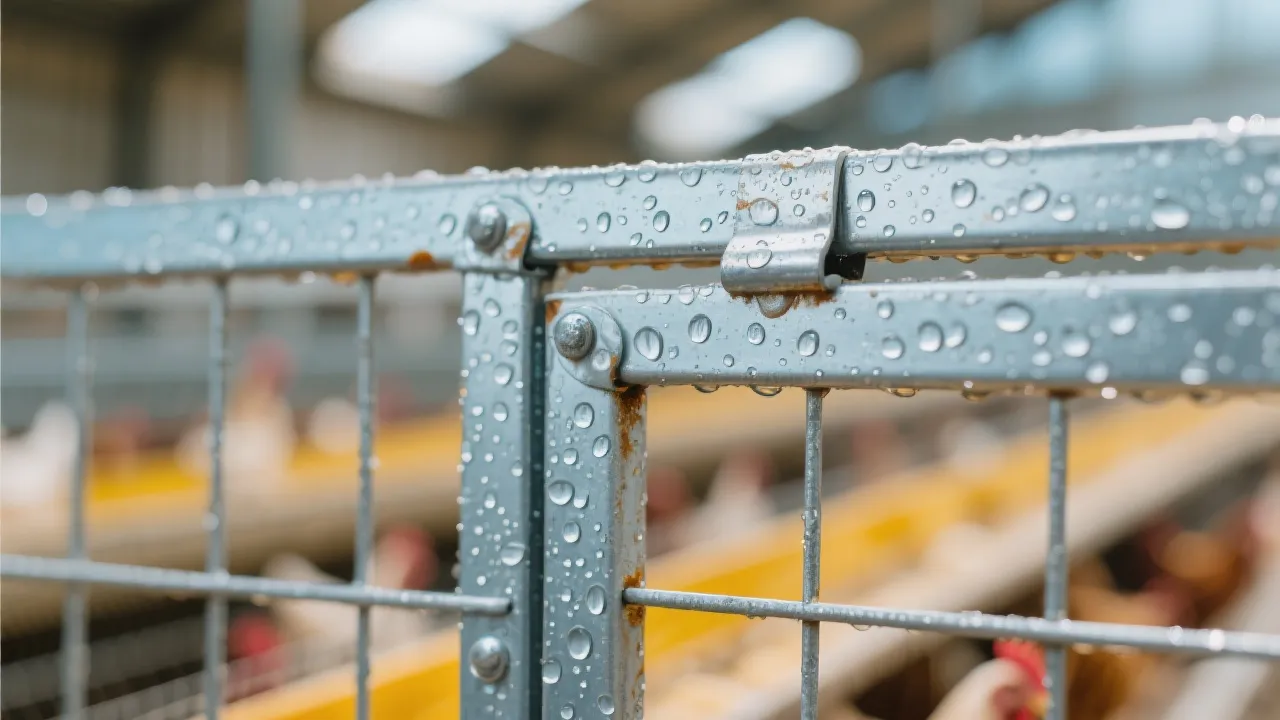
In broiler houses, equipment corrosion is not cosmetic—it’s operational risk. Moisture, cleaning cycles, and manure gases create a harsh environment where weak materials lose structural integrity and increase maintenance frequency. That is why material selection and surface treatment should be evaluated like a financial decision, not a technical detail.
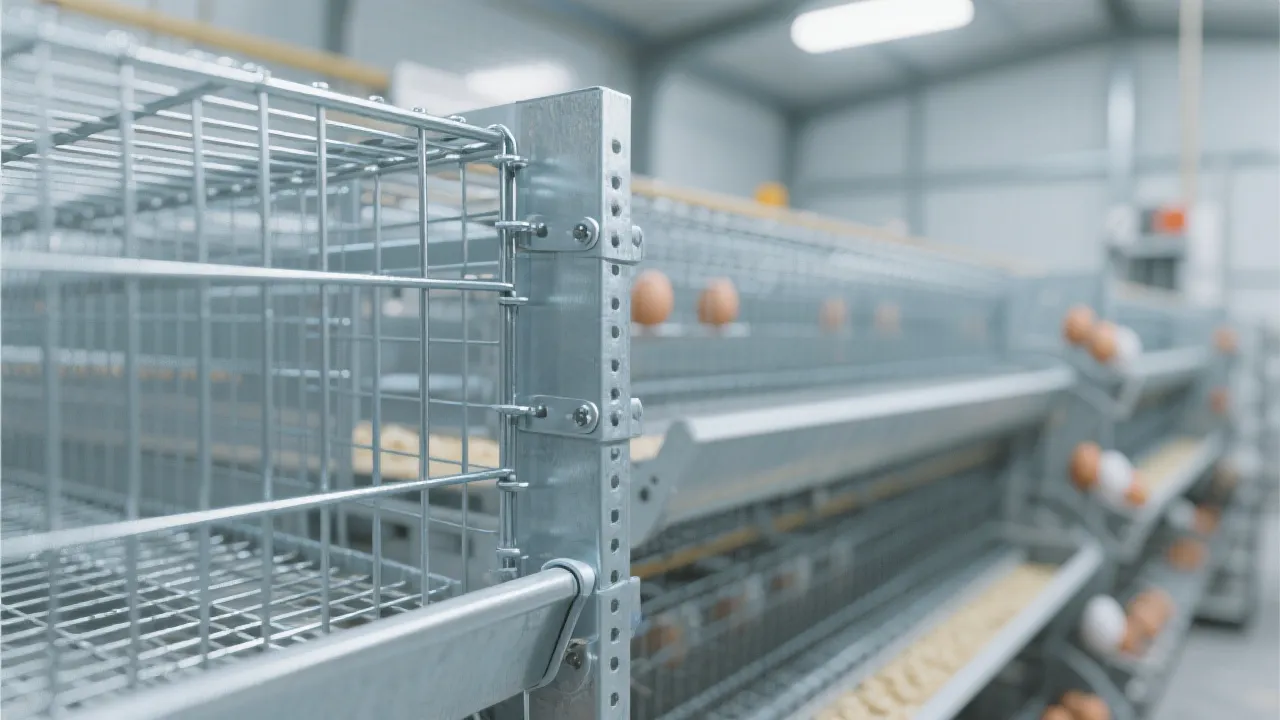
Q235 bridge steel offers stable mechanical properties for load-bearing frames, helping maintain alignment and reducing deformation risks over long cycles.
Hot-dip galvanizing forms a zinc protective layer that resists corrosion from humidity and cleaning processes, supporting longer service life and lower downtime for repairs.
In many agricultural metal applications, hot-dip galvanized structures can reach 10–20 years of service life depending on house environment, chemical exposure, and cleaning frequency—making durability a measurable part of ROI.
Interactive question: When you budget for a new broiler house, do you calculate total cost of ownership (maintenance + downtime risk), or only initial procurement? Durable materials often win when you measure both.
Even the best equipment needs a disciplined operating rhythm. High-efficiency broiler farming is built on repeatable routines that make problems visible early. The most profitable farms tend to treat management as a checklist-driven process, not a “heroic effort” when issues escalate.
Use fixed inspection routes and log exceptions (water line pressure drops, abnormal vocalization zones, uneven distribution, wet manure belt sections). Early detection is often the cheapest “medicine.”
Keep feed delivery uniform and prevent water leakage. Small leaks can quietly increase humidity and ammonia risk, impacting respiratory health and weight uniformity.
Maintain structured cleaning, disinfection, and empty-house downtime. Farms targeting 6+ cycles/year typically standardize turnaround steps to avoid “shortcuts” that cost later.
What makes a solution scalable is not only the equipment—it’s whether new staff can run it correctly within a short learning window. Farms that achieve consistent results often rely on:
For decision-makers, this is where trust is built: a supplier that can support training and documentation makes performance more predictable and reduces operational surprises.
If your goal is a high-density, low-waste, easier-to-manage workflow built for long service life, a properly engineered H-type broiler cage solution is a practical foundation. Evaluate your layout, climate, and labor model—and match them to a cage configuration designed for stability and durability.
Include your target capacity, house dimensions, climate zone, and power availability to receive a more accurate configuration recommendation.
By standardizing feeding, watering, and waste handling, farms reduce variation and time spent on repeated manual tasks. When the house is designed for airflow and inspection routes, management becomes faster and more consistent, which protects flock uniformity.
In intensive poultry environments, corrosion resistance directly affects maintenance frequency and structural stability over time. Hot-dip galvanizing provides a protective zinc layer that improves durability under humidity, washing, and manure gas exposure.
Prepare house dimensions, target birds per cycle, local climate and ventilation approach, power supply stability, preferred labor model, and your biosecurity/turnaround plan. These factors determine tier configuration, aisle planning, and the right level of automation.
READY TO START?
Tell us your land size, poultry type and farming capacity. LIVI will provide a complete farm solution for your project.



.jpg?x-oss-process=image/resize,m_fill,h_800,w_800/format,webp)