


Automatic Poultry Equipment and Complete Chicken House Solutions
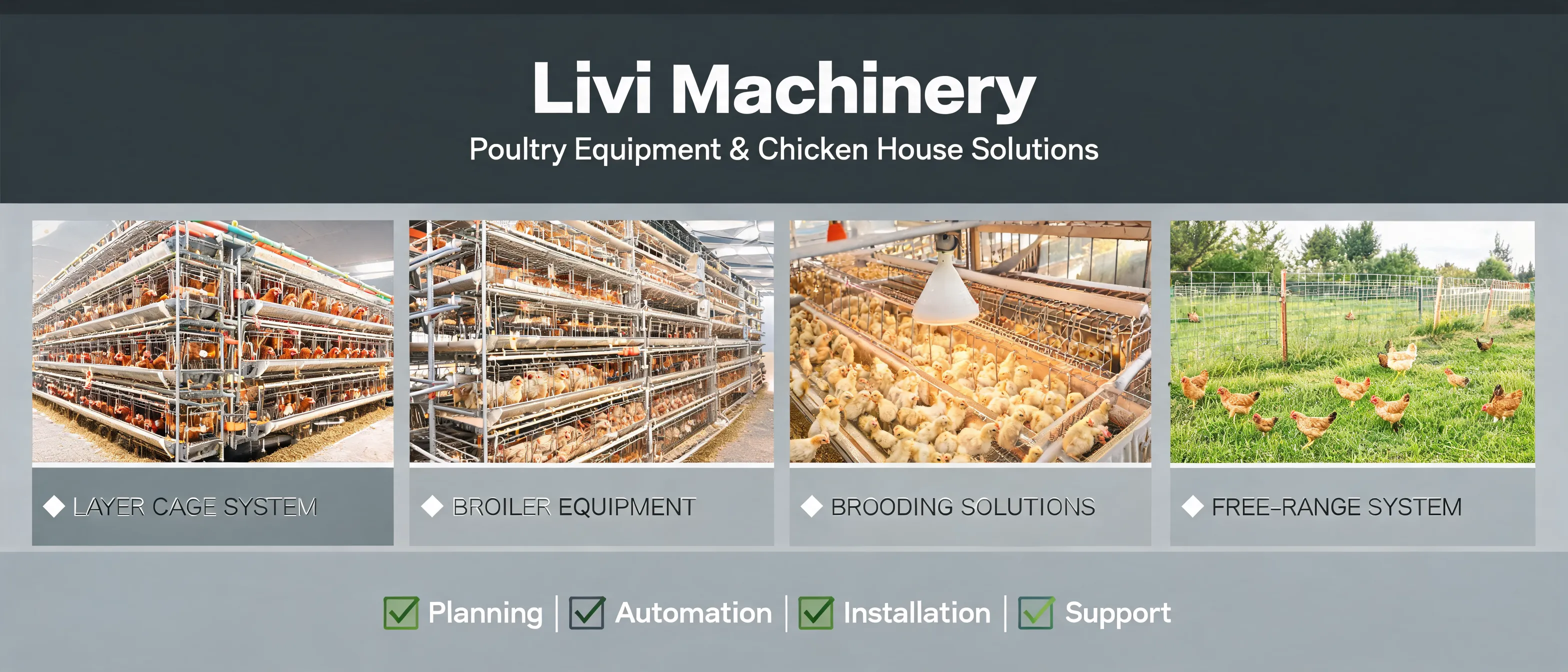
Automatic Poultry Equipment and Complete Chicken House Solutions
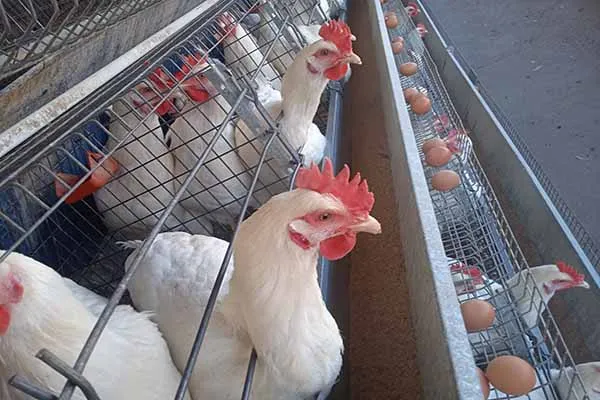
Livi Machinery provides poultry equipment and complete chicken house solutions for layer, broiler, brooding, and free-range farming projects. The service covers project planning, equipment selection, house layout, automation configuration, installation guidance, operator training, and after-sales support.
Rather than supplying an isolated cage or machine, Livi Machinery helps customers coordinate the main elements of a poultry project so that the equipment, house dimensions, climate conditions, utilities, and daily management requirements work together.
What is included in a complete poultry farm solution?
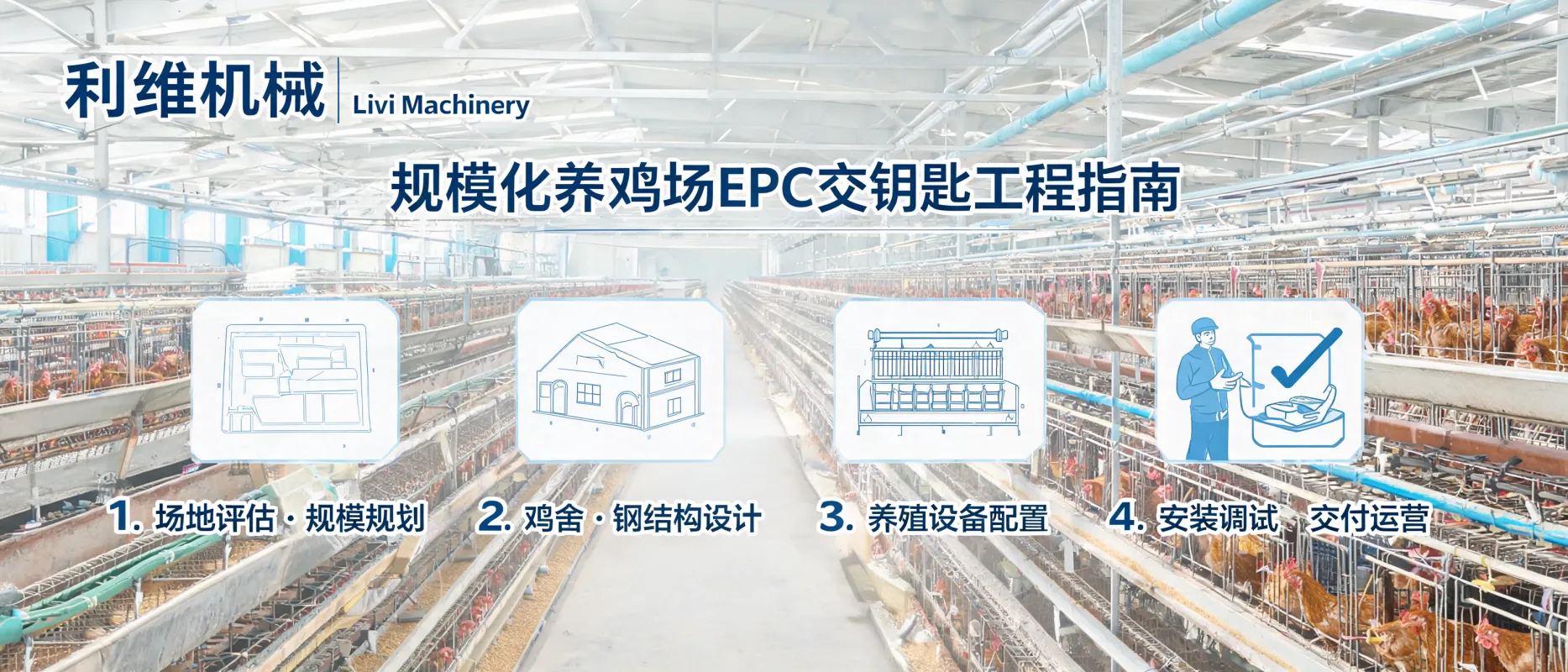
A complete chicken house solution is a coordinated plan for housing, equipment, environmental control, and project implementation. Depending on the poultry type, farm capacity, house dimensions, climate, electricity conditions, budget, and required automation level, the configuration may include:
- Layer cage systems, broiler cage systems, brooding systems, or free-range project support
- A-type or H-type cage systems for layer farming
- Automatic feeding and drinking systems
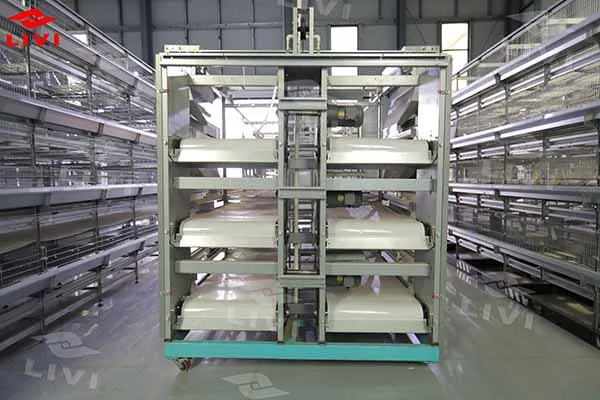
- Manure removal and egg collection systems
- Ventilation, cooling, lighting, and environmental control equipment
- Steel poultry house planning, internal layout design, and equipment positioning
- Installation guidance, commissioning support, operator training, and maintenance advice
Why equipment selection should start with the project conditions
The most suitable poultry equipment cannot be determined by price alone. The same number of birds may require different house layouts and equipment configurations depending on the farming method, available land, labor costs, local weather, power supply, and future expansion plans.
Before preparing a proposal, customers should clarify the following information:
A-type or H-type layer cage system: which is more suitable?
Neither cage type is universally better. The appropriate choice depends on the customer’s land availability, investment plan, labor conditions, target capacity, and desired level of automation.
| Consideration | A-type layer cage | H-type layer cage |
|---|---|---|
| Typical project profile | Often considered for small- to medium-sized farms, more available land, or staged automation. | Often considered for larger farms, limited land, higher labor costs, or centralized automation. |
| Space planning | The layout is generally straightforward and can be suitable where floor area is less restricted. | Multi-tier design can support higher space utilization, subject to house height and engineering conditions. |
| Automation approach | Can be combined with selected automatic feeding, drinking, manure removal, and other systems. | Commonly planned with automatic feeding, manure removal, egg collection, and environmental control. |
| Important decision factors | Initial investment, available land, management method, and upgrade plans. | House height, electrical reliability, maintenance capability, investment level, and operator training. |
A proper comparison should be made through a house layout and equipment list, not through a generic statement that one cage type is always the best choice.
How automation supports daily farm management
An automatic poultry farm is not simply a cage system with motors added later. Feeding, drinking, manure removal, egg collection, lighting, ventilation, cooling, environmental control, power supply, and water supply should be considered as one operating system.
Planning note: Automation may reduce repetitive labor and improve management efficiency, but it also increases initial investment and creates higher requirements for stable electricity, spare parts, maintenance, staff training, and backup arrangements.
Chicken house design: area is more than bird capacity
Chicken house area should not be calculated only by dividing the bird number by a stocking figure. A practical layout must also reserve space for equipment operation, cleaning, inspection, maintenance, and biosecurity.
- Cage rows, tiers, feeding lines, drinking lines, and equipment clearances
- Personnel passages and service access for inspection and maintenance
- Egg collection areas and manure removal routes
- Feed storage and delivery space
- Fans, cooling pads, air inlets, and airflow paths
- Electrical equipment, water supply, control cabinets, and backup power arrangements
- Cleaning, disinfection, storage, and other biosecurity-related spaces
The required area can vary for the same bird capacity when using A-type cages, H-type cages, or floor housing. Livi Machinery can use the customer’s house dimensions and target capacity to prepare a more specific layout and equipment configuration.
Climate and environmental control considerations
Ventilation and cooling should be designed according to the local climate rather than copied from another project. House orientation, roof insulation, fan quantity, cooling pad area, target air movement, drinking water temperature, stocking density, and backup power all influence the final configuration.
What determines the cost of a poultry farm project?
The cost of a poultry farm cannot be accurately represented by the price per bird or the price of one cage set. A complete investment plan may include:
Construction, logistics, labor, feed, and utility costs vary by country and project location. Any online reference should therefore be treated as an initial planning indication, not as a substitute for a formal design, equipment list, and quotation.
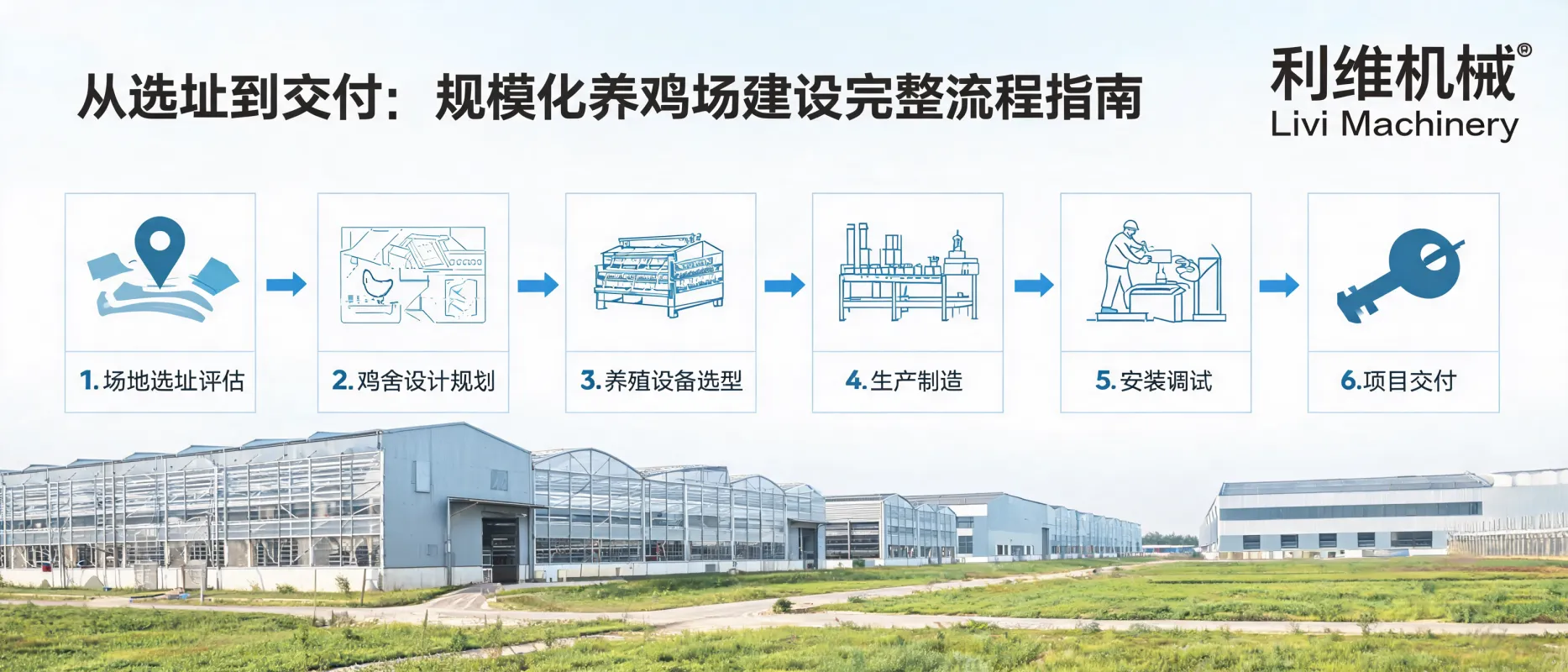
Project delivery: from equipment list to commissioning
- Project information review: Confirm the country, city, poultry type, capacity, house dimensions, climate, utilities, and automation requirements.
- Layout and configuration: Prepare a chicken house layout, equipment arrangement, quantity list, and system combination based on the project conditions.
- Manufacturing and inspection: Produce and organize the equipment according to the confirmed configuration and project schedule.
- Packing and transport preparation: Pack equipment according to volume, weight, and project quantity, then prepare the relevant shipping and export documents.
- Installation preparation: The customer should complete the house structure, floor, power, water supply, equipment storage area, and installation personnel arrangements.
- Installation and testing: Installation generally includes positioning, cage frame and mesh assembly, feed and water lines, manure and egg collection systems, electrical connections, no-load testing, and adjustment.
- Training and operation support: Operators receive guidance on equipment use, routine inspection, maintenance, and handling of common operating issues.
Transport, installation, and maintenance planning
Equipment transport is normally organized after the equipment list and packing plan are confirmed. Container loading and shipping requirements depend on equipment volume, weight, project quantity, route, port, season, and market conditions, so freight costs should be confirmed for the specific shipment.
For long-term operation, customers should regularly inspect:
- Bolts, chains, motors, bearings, belts, and transmission components
- Drinkers, pressure regulators, filters, feed troughs, and feed lines
- Egg belts, manure belts, electrical connections, and control cabinets
- Fans, cooling equipment, sensors, and environmental controllers
Safety reminder: Unusual noise, belt deviation, feed blockage, water leakage, or motor overheating should be investigated promptly. The relevant equipment should be stopped safely before inspection so that a minor fault does not develop into more serious damage.
How to evaluate a poultry equipment supplier
A reliable purchasing decision should compare the complete project value, not only the initial equipment price. Customers may ask the supplier to provide:
- Clear product specifications and material information
- A house layout and equipment quantity list based on the actual project
- Production, packing, loading, and shipping arrangements
- Installation instructions, commissioning guidance, and operator training
- Recommended spare parts and maintenance information
- After-sales communication and support procedures
A supplier should also ask questions before recommending a system. A fixed configuration provided without knowing the customer’s capacity, house size, climate, and automation expectations may not be suitable for the actual farm.
Frequently asked questions
Can Livi Machinery design a solution for an existing chicken house?
Yes. Existing-house projects require a review of the available length, width, height, floor, access, power, water supply, and current equipment. The final upgrade plan should be based on these conditions rather than on a standard package.
Is a fully automatic system suitable for every farm?
Not necessarily. Full automation may be more suitable for larger farms, limited labor availability, or projects seeking centralized management. Smaller farms or customers with a lower initial budget may prefer a staged automation plan.
What information is needed for a quotation?
The most useful starting information includes the country and city, poultry type, planned number of birds, house dimensions, local climate, available electricity and water, preferred cage or housing method, and required automation level.
Does equipment automation guarantee farm profitability?
No equipment can guarantee a fixed return. Actual results are influenced by egg or poultry prices, feed costs, bird quality, disease prevention, labor, utilities, management, and local market conditions. Equipment should be evaluated as part of a complete investment and operating plan.
Plan your poultry equipment project with clearer information
Send Livi Machinery your country, city, poultry type, planned capacity, chicken house dimensions, and automation requirements. The technical team can then review the project and prepare a more suitable house layout, equipment configuration, estimated container quantity, and project quotation for your consideration.
A clear project brief at the beginning helps improve equipment matching, budget planning, transport preparation, and installation coordination.



Hot Products

.jpg?x-oss-process=image/resize,m_fill,h_800,w_800/format,webp)


Popular articles


READY TO START?
Ready to Build Your Poultry Farm?
Tell us your land size, poultry type and farming capacity. LIVI will provide a complete farm solution for your project.