


Automatic Poultry Cage Systems and Complete Poultry Farm Solutions
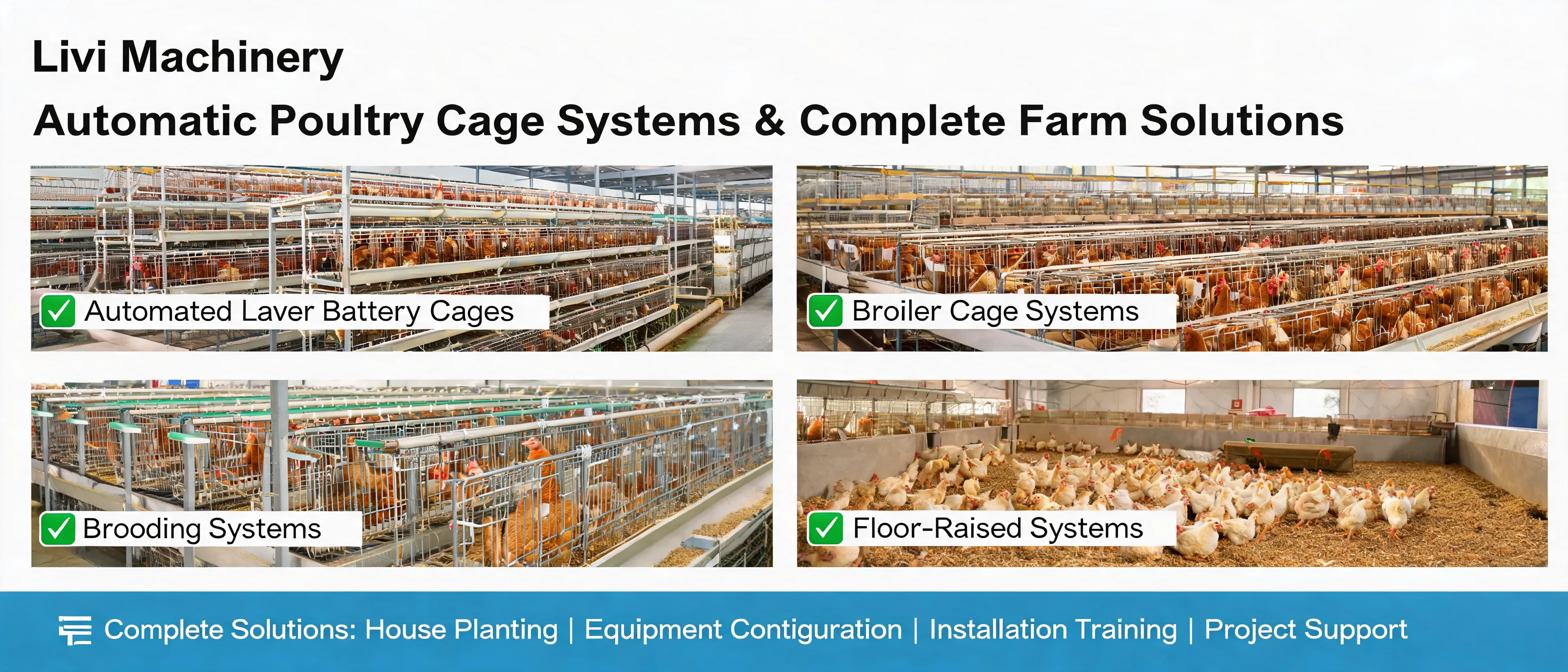
Automatic Poultry Cage Systems and Complete Poultry Farm Solutions
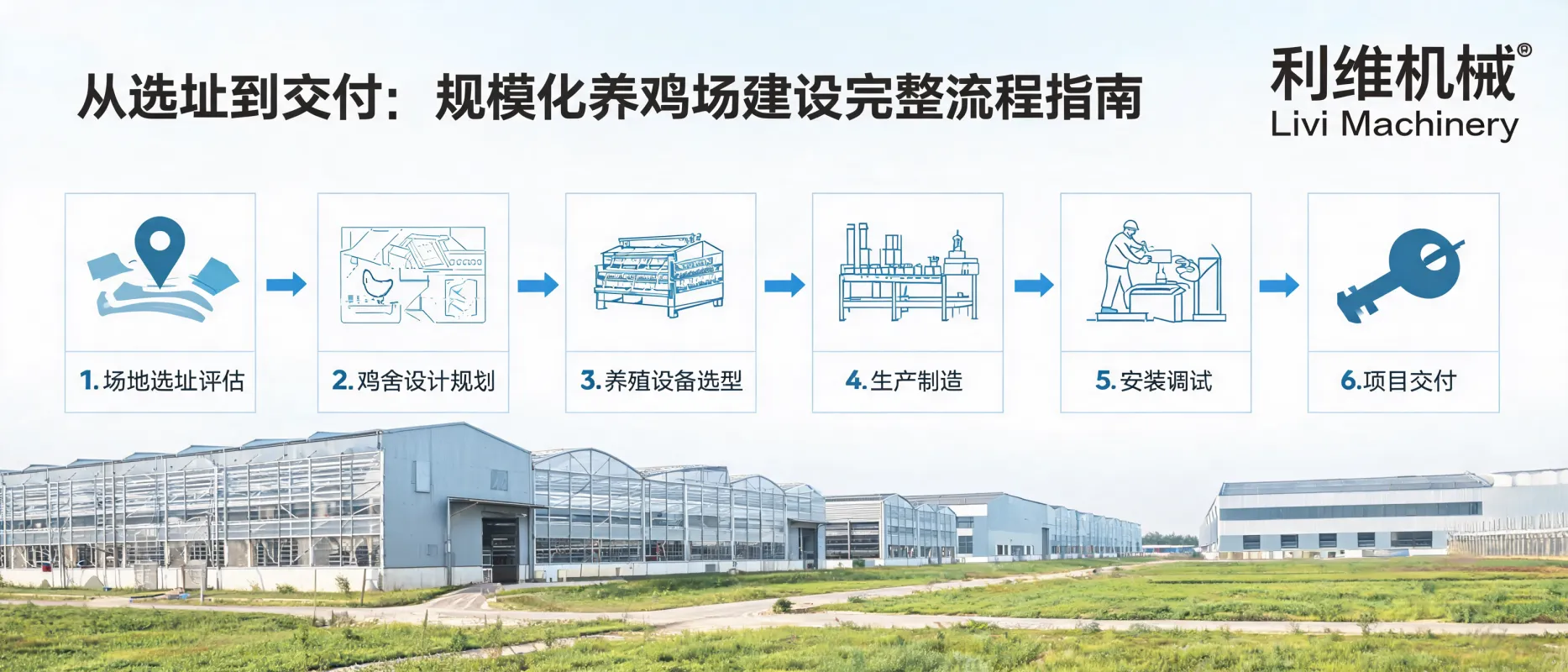
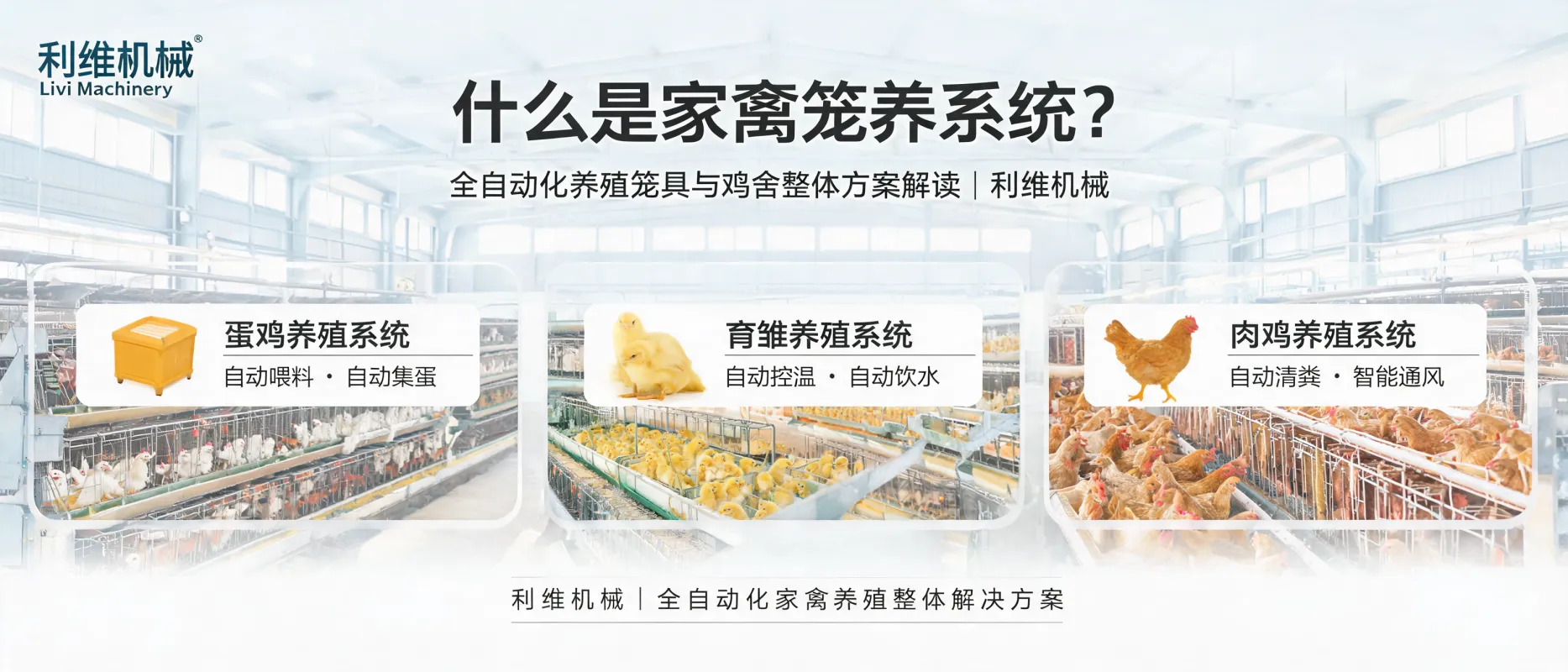
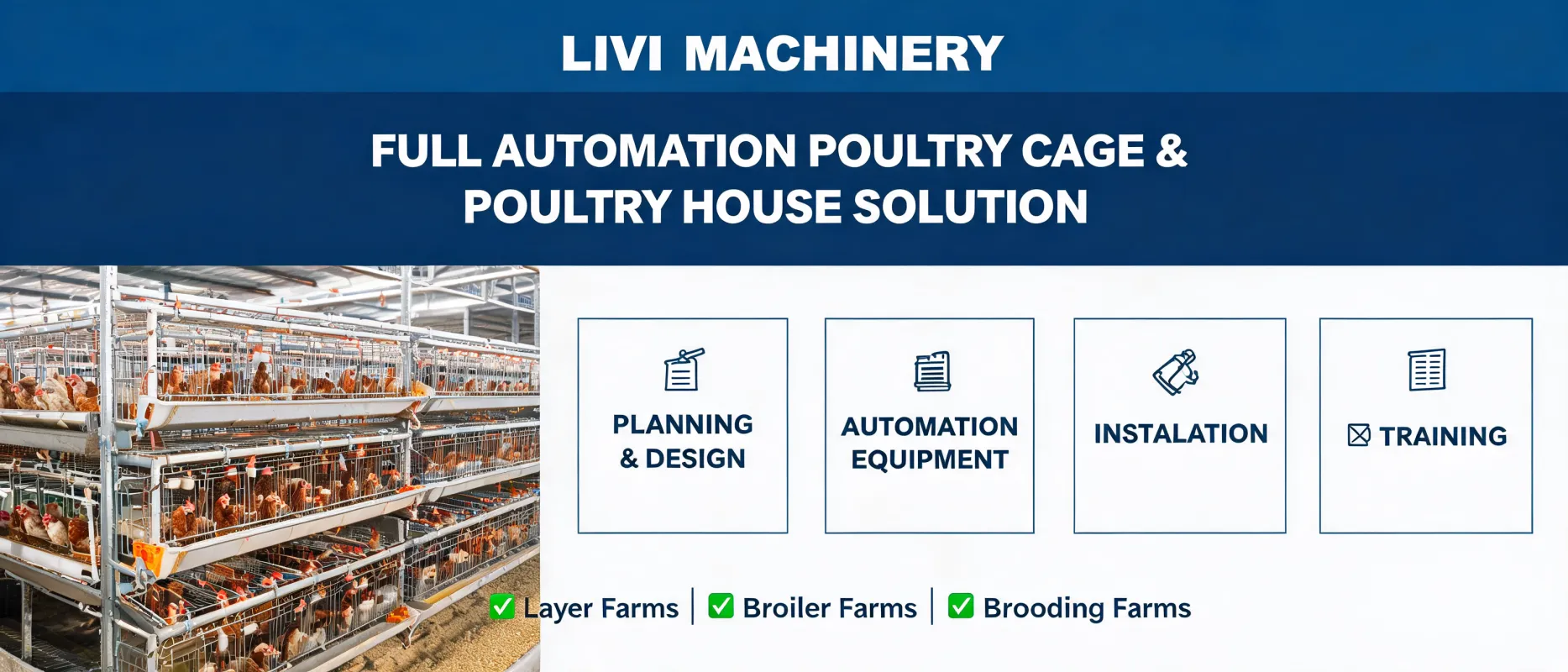
Livi Machinery provides automatic poultry cage systems and complete poultry farm solutions for layer, broiler, brooding and floor-raised projects. The service covers poultry house planning, equipment configuration, production coordination, installation guidance, operator training and project support.
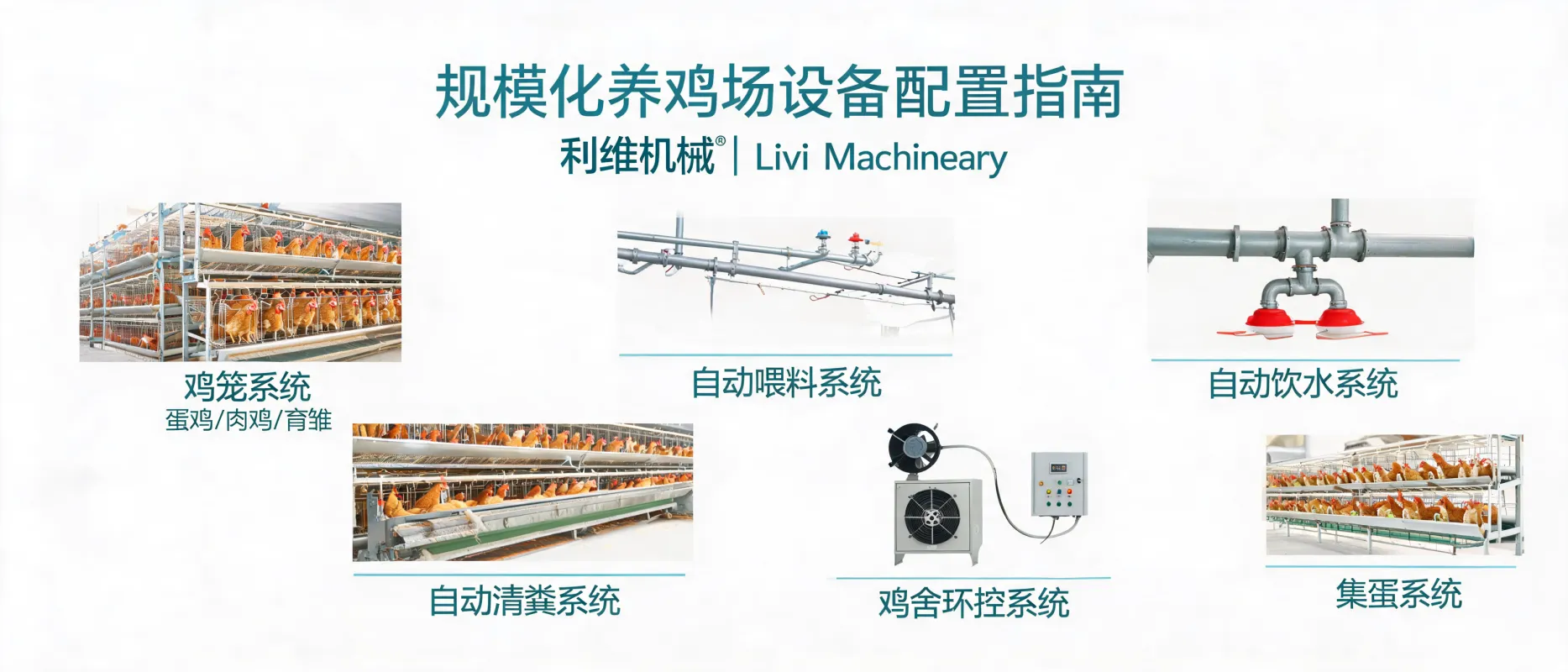
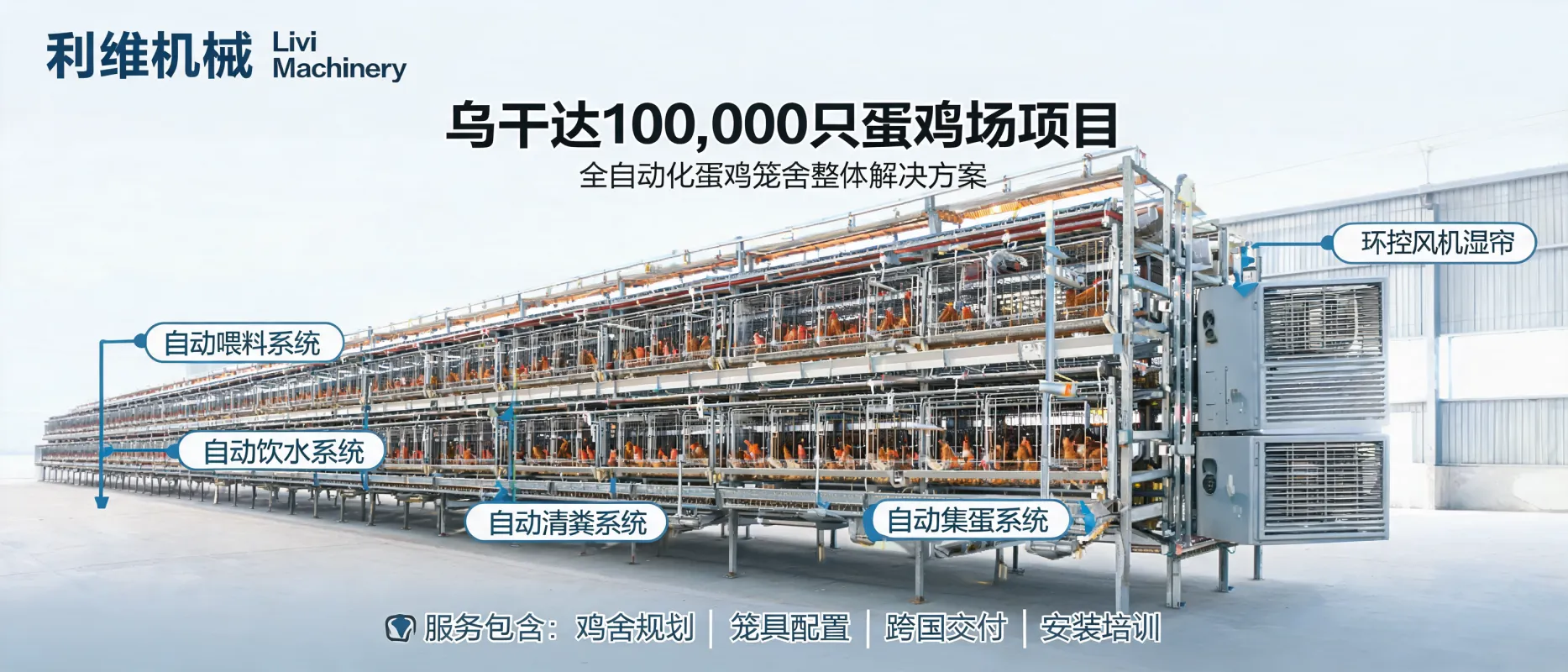
Rather than supplying a single piece of equipment, Livi Machinery helps customers coordinate cages, feeding, drinking, manure removal, egg collection, ventilation, cooling, lighting, environmental control, power and water requirements into a practical farm system.
What does a complete poultry farm solution include?
A complete solution is a coordinated plan for the poultry house, equipment and operating conditions. The final configuration should be based on the poultry type, flock size, house dimensions, local climate, available utilities, budget and required automation level.
- Poultry housing and layout: cage rows, service aisles, working areas and equipment positions.
- Feeding and drinking: feed lines, feed troughs or pans, nipple drinkers, filters and pressure regulators.
- Manure and egg handling: manure removal systems and, where appropriate, automatic egg collection.
- Environmental control: fans, air inlets, cooling pads, lighting and control components.
- Project support: equipment lists, layout information, packing and shipping coordination, installation guidance and training.
Poultry systems for different production models
Livi Machinery can configure equipment for different poultry production requirements. The appropriate system depends on the birds, production stage, building conditions and management plan.
A-type and H-type layer cage systems: which is suitable?
Neither system is universally better. The choice should reflect the available land, flock size, labor conditions, investment plan, building design and expected automation level.
| Consideration | A-type cages | H-type cages |
|---|---|---|
| Typical project fit | Often considered by small and medium-sized farms, projects with more available land or customers planning phased automation. | Often considered by larger farms, projects with limited land or operations seeking a higher level of automation. |
| Automation planning | Can support automatic feeding, drinking and manure handling, subject to the selected configuration. | Can be integrated with automatic feeding, manure removal and egg collection for centralized management. |
| Main planning concern | Land use, access aisles and the desired upgrade path. | Building height, structural conditions, equipment coordination and maintenance access. |
Why automation should be planned as a complete system
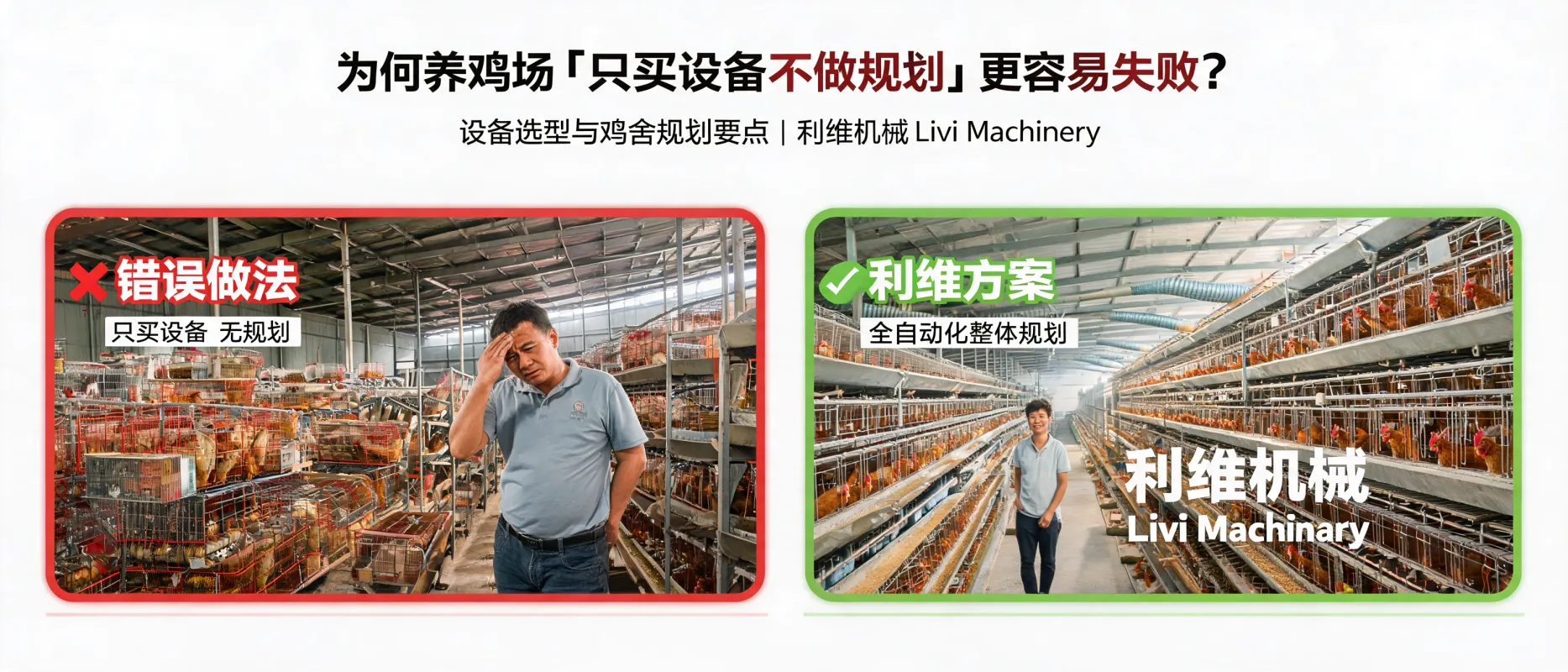
An automated poultry farm is not simply a cage purchase. Feeding, drinking, manure removal, egg collection, ventilation, cooling, lighting, environmental control, power and water supply must work together.
Poultry house design: area, ventilation and climate considerations
Poultry house area should not be calculated from bird quantity alone. The layout must also allow space for equipment, service aisles, egg collection areas, manure handling, feed storage, fans, cooling pads, operation and biosecurity.
- The same flock size may require different building dimensions with A-type cages, H-type cages or floor-raised housing.
- Hot climates require attention to house orientation, roof insulation, fan capacity, cooling pad area, air movement, drinking water temperature and backup power.
- High-humidity regions should avoid excessive cooling-pad use that keeps house humidity continuously elevated.
- Cold regions need both insulation and minimum ventilation; ventilation should not be stopped completely in an attempt to retain heat.
Livi Machinery uses project information such as house dimensions, climate and poultry type to support a more appropriate poultry house design solution and equipment configuration.
What affects the cost of an automated poultry farm?
A reliable budget should cover more than the cage price or a cost-per-bird estimate. The total project cost may include:
Prices vary by country, building standard, equipment quantity, automation level, shipping route, port, season and local labor. Online reference figures cannot replace a formal layout, equipment list and project quotation.
Shipping, installation and commissioning support
For international projects, equipment is packed and loaded according to its volume, weight and project quantity. The usual process includes equipment-list confirmation, packing, container loading, export documentation, sea freight, destination customs clearance and inland delivery. Freight costs change with the route, port, season and market conditions.
- Before installation: complete the poultry house, floor, power, water supply, equipment storage and installation-team preparation.
- Installation: set out positions, install cage frames and wire mesh, connect feed and drinking lines, and assemble manure and egg collection systems.
- Commissioning: complete electrical connections, empty-load testing and system checks before placing birds.
- Training: provide operating and maintenance guidance so staff understand normal running procedures and basic troubleshooting.
Purchasing checks that can reduce project risk
When comparing poultry equipment suppliers, price should be only one part of the evaluation. Customers should also verify:
- Whether the supplier can provide clear product specifications, material information and equipment quantities.
- Whether the proposed layout matches the house dimensions, bird type, climate and automation requirements.
- Whether production, packaging, shipping documents and spare-parts planning are clearly explained.
- Whether installation guidance, operator training and after-sales support are available.
- Whether the supplier asks for project information before preparing a solution instead of offering an unqualified fixed configuration.
Maintenance for long-term system operation
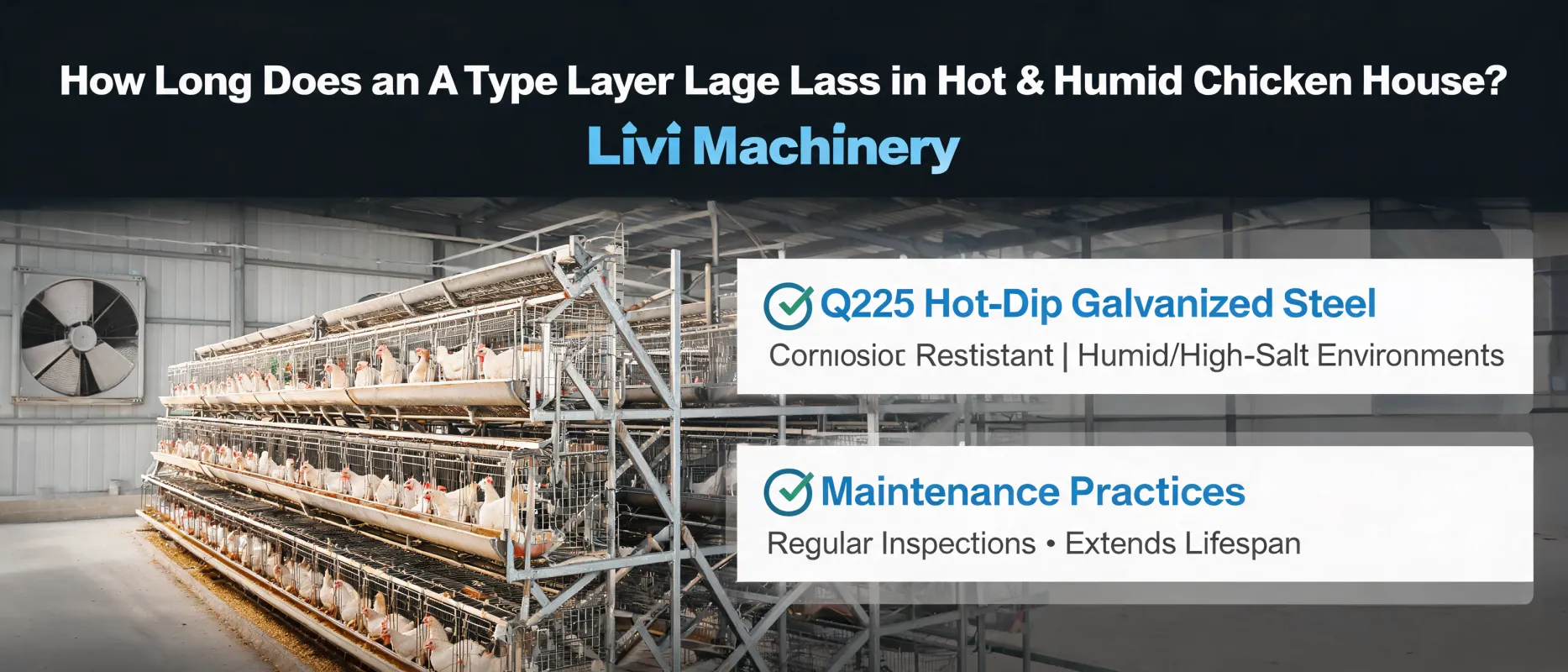
Regular inspection is essential for automatic poultry cage systems and complete farm equipment. Operators should check bolts, chains, motors, bearings, belts, nipple drinkers, pressure regulators, feed troughs, egg belts and electrical components according to the operating schedule.
If unusual noise, belt deviation, feed blockage, water leakage or motor overheating occurs, stop the relevant equipment and inspect it promptly. Early intervention can help prevent a minor issue from developing into more serious damage.
Frequently asked questions
Yes. Existing-house upgrades can be evaluated according to the building dimensions, structural conditions, current equipment and desired automation level. A site layout and equipment review should be completed before a configuration is confirmed.
No. H-type systems may suit larger projects, limited land and higher automation requirements, while A-type systems may suit smaller or medium-sized projects, more available land or phased automation plans. The right choice depends on the complete project conditions.
A dependable quotation requires information about the country, city, poultry type, flock size, house dimensions, utilities and automation requirements. Without these details, only a general reference can be provided.
Prepare your country and city, poultry type, planned bird quantity, existing or proposed house size, local climate, construction status, power and water conditions, and the automation functions you require.
Request a project-based poultry farm solution
Share your country, city, poultry type, planned flock size, poultry house dimensions and automation requirements with Livi Machinery. The technical team can then review the project and prepare a customized layout, equipment configuration, estimated container quantity and quotation scope.
A clear project brief is the first step toward selecting suitable automatic poultry cage systems and reducing avoidable construction and procurement risks.


Hot Products

.jpg?x-oss-process=image/resize,m_fill,h_800,w_800/format,webp)


Popular articles
READY TO START?
Ready to Build Your Poultry Farm?
Tell us your land size, poultry type and farming capacity. LIVI will provide a complete farm solution for your project.