


Maintenance Essentials and Common Fault Troubleshooting of Automatic Egg Collection Systems for Long-Term Stable Operation
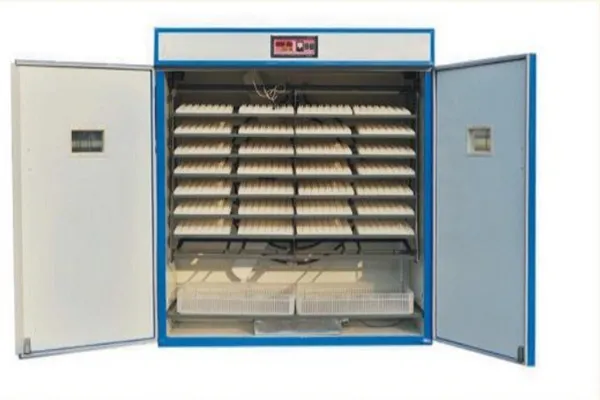
In the poultry farming industry, the traditional method of manual egg collection has long been a pain point for farmers. It's inefficient, with workers able to collect only about 300 - 500 eggs per hour, leading to a significant waste of labor resources. Moreover, the high egg breakage rate, which can reach up to 10% - 15%, not only causes direct economic losses but also affects the overall quality of egg products. In addition, the unhygienic nature of manual collection can easily introduce bacteria and diseases, posing a threat to the health of the chicken flock and the quality of eggs.
The automatic egg collection system emerges as a revolutionary solution to these problems. Let's take a closer look at its core technology and how it integrates with the H - type chicken cages.
Core Technology Composition and Integration
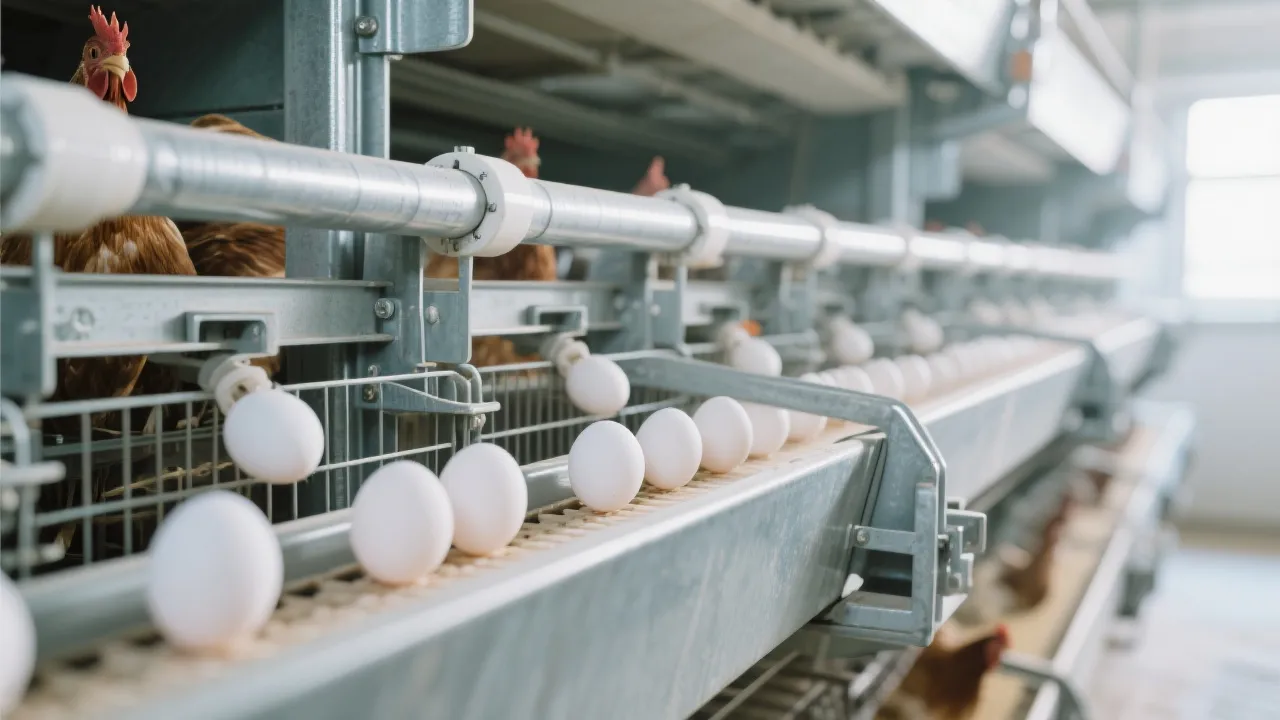
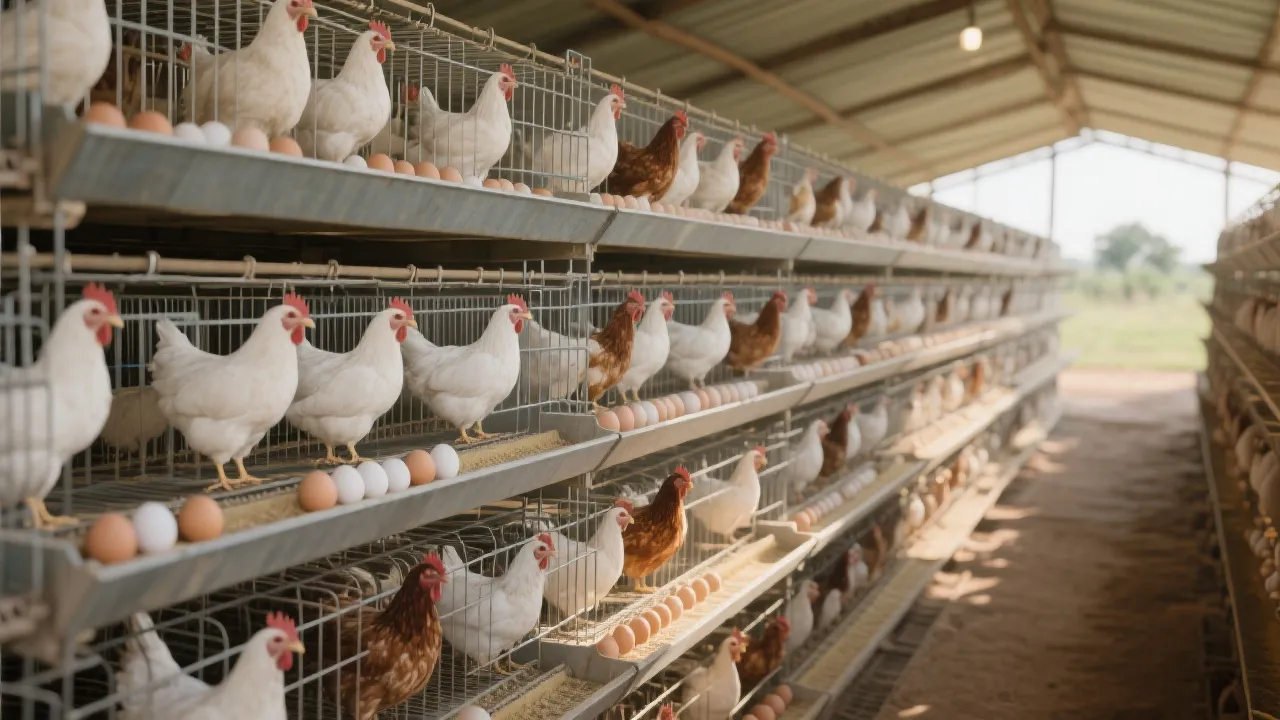
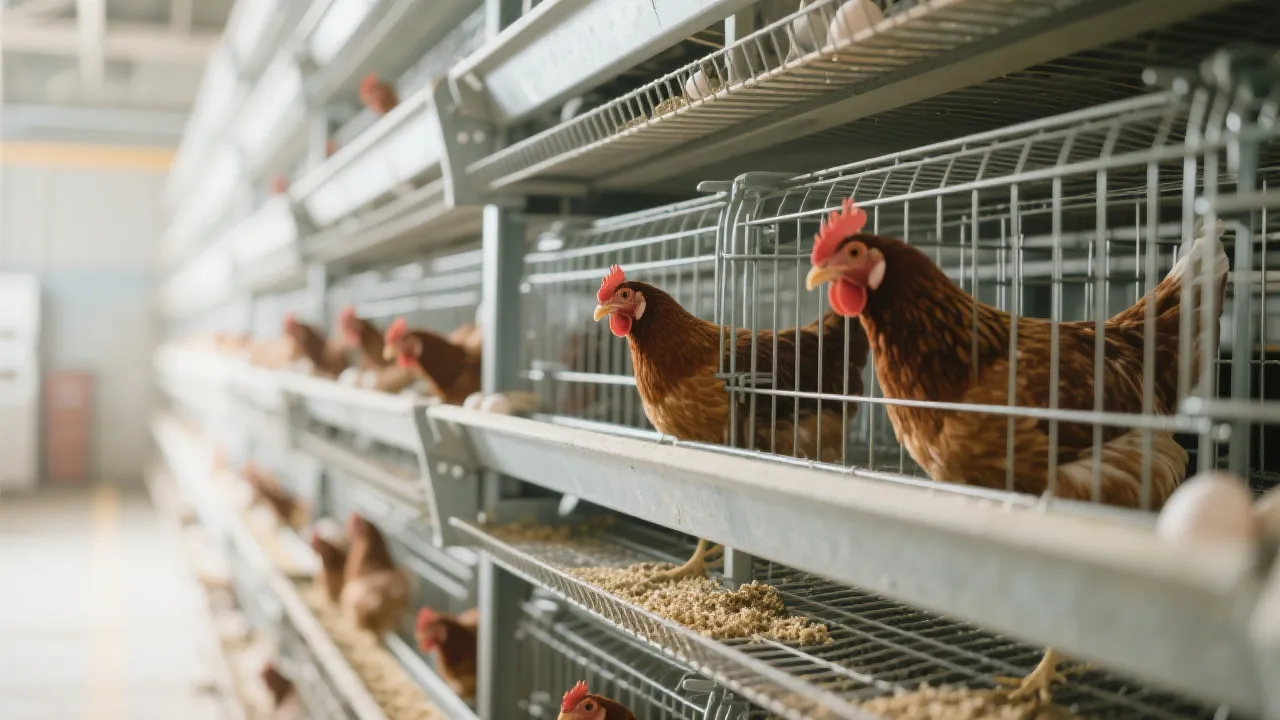
The automatic egg collection system mainly consists of a roller conveyor belt, an induction recognition device, and a sorting module. These components work in harmony to ensure the efficient collection and sorting of eggs. In the H - type chicken cages, the system is integrated in a way that the eggs roll onto the conveyor belt as soon as they are laid. The induction recognition device then identifies the size and quality of the eggs, and the sorting module separates them accordingly.
Performance under Different Feeding Densities
The performance of the automatic egg collection system varies with different feeding densities. When the feeding density is relatively low (about 4 - 5 chickens per cage), the system shows excellent stability. The egg integrity rate can reach over 95%, and the chickens are more comfortable, which is beneficial for their overall health and egg - laying performance. As the feeding density increases to 6 - 7 chickens per cage, although the system can still operate normally, there may be a slight decrease in the egg integrity rate, but it can still maintain above 90%.
Daily Maintenance Essentials
To ensure the long - term stable operation of the automatic egg collection system, daily maintenance is crucial. Here are some key points:
- Cleaning Frequency: The conveyor belt and sorting module should be cleaned at least once a week to prevent the accumulation of dirt and feces. For the induction recognition device, a monthly deep - cleaning is recommended.
- Component Inspection: Regularly check the condition of the conveyor belt for any signs of wear or damage. Inspect the induction recognition device for accurate sensing, and ensure that the sorting module is functioning properly.
- Lubrication Maintenance: Lubricate the moving parts of the system every two months to reduce friction and ensure smooth operation.
Common Faults and Troubleshooting
Here are some common faults and their troubleshooting steps:
| Fault | Troubleshooting Steps |
|---|---|
| Egg Jamming | Check if there are any foreign objects on the conveyor belt. Remove the jammed eggs carefully and adjust the speed of the conveyor belt if necessary. |
| Conveyor Malfunction | Inspect the power supply and motor of the conveyor belt. Check the belt tension and repair or replace any damaged parts. |
| Induction Failure | Clean the sensor of the induction recognition device. Check the wiring connections and replace the sensor if it is damaged. |
The Trend of Automation in Poultry Farming
With the development of smart agriculture policies, automation is becoming the standard for future poultry farms. The automatic egg collection system not only reduces labor costs by more than 70% but also significantly improves egg - laying efficiency and egg quality. It is an essential step for farms to achieve cost - reduction, efficiency - improvement, and intelligent transformation.
Are you ready to embrace the future of poultry farming? If you want to learn more about customized solutions for your farm or get detailed information about our automatic egg collection system, click here to get your exclusive smart farming plan now!
You can also share your egg collection problems in the comments below. Let's discuss and find the best solutions together!



Hot Products

.jpg?x-oss-process=image/resize,m_fill,h_800,w_800/format,webp)


Popular articles







READY TO START?
Ready to Build Your Poultry Farm?
Tell us your land size, poultry type and farming capacity. LIVI will provide a complete farm solution for your project.