


Automated Poultry Equipment and Complete Poultry House Solutions
A Practical Approach to Automated Poultry Farm Development
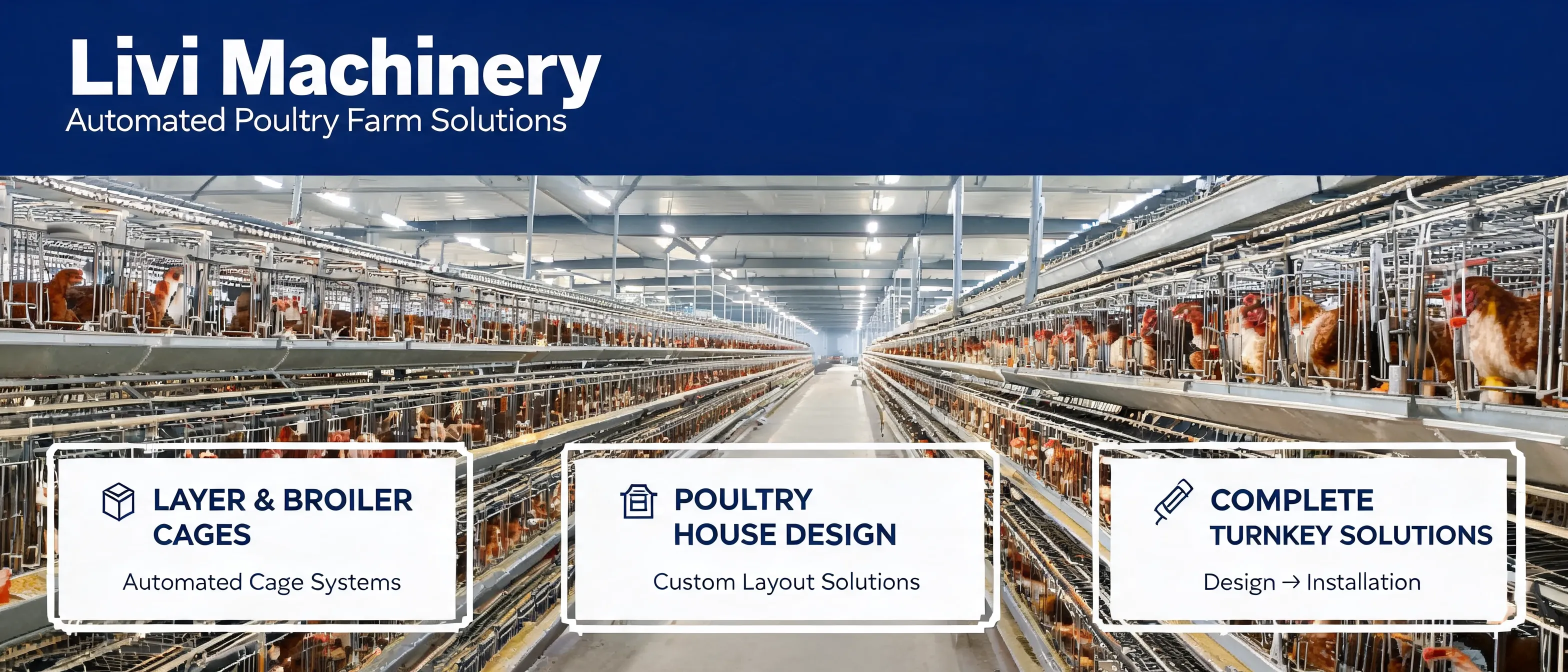
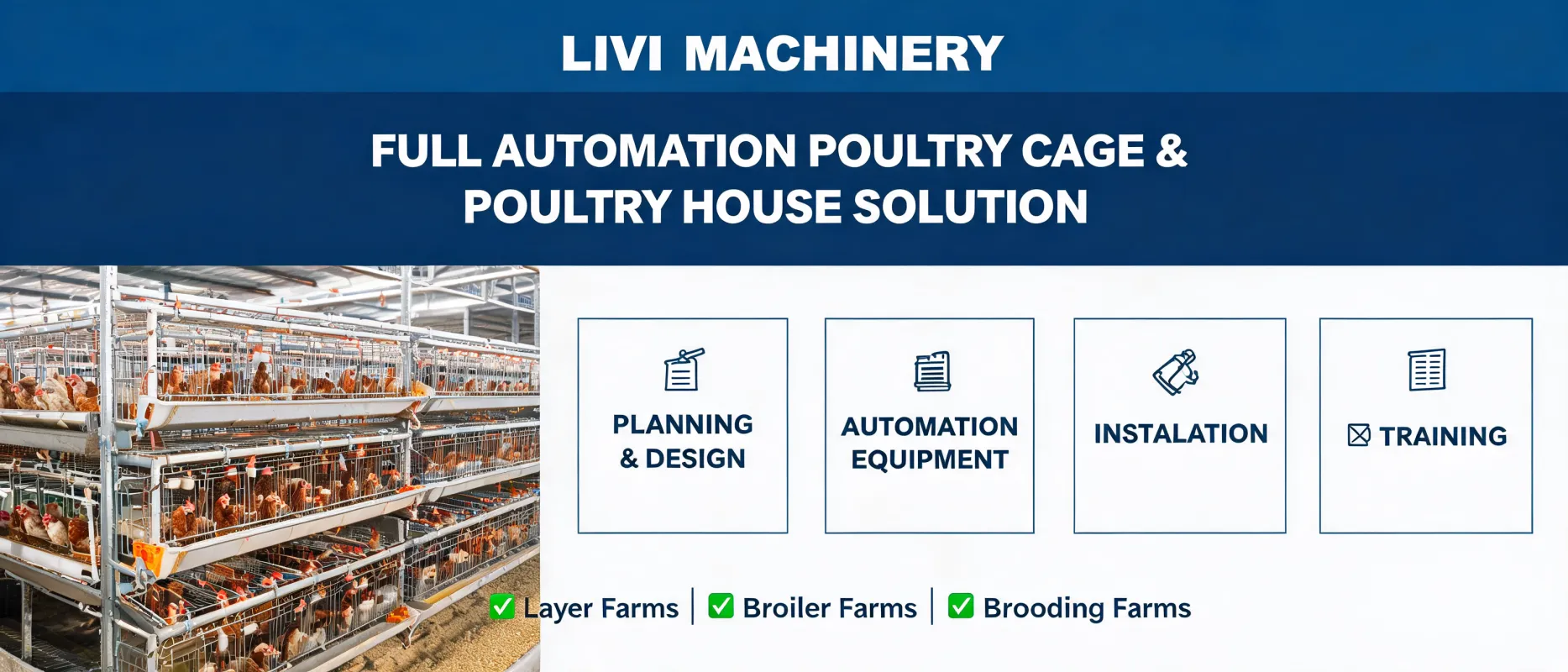
Livi Machinery provides automated poultry equipment and complete poultry house solutions for layer, broiler, brooding and floor farming projects. The service is designed for customers who need more than individual equipment: it connects poultry house planning, cage or floor systems, feeding, drinking, manure removal, egg collection, ventilation and environmental control into a coordinated project plan.
From a new commercial farm to an existing house upgrade, the appropriate solution depends on poultry type, farm capacity, house dimensions, climate, power conditions, budget and the level of automation required. A practical design should be confirmed from these project details rather than selected from a fixed equipment list.
What Is Included in a Complete Poultry Farm Solution?
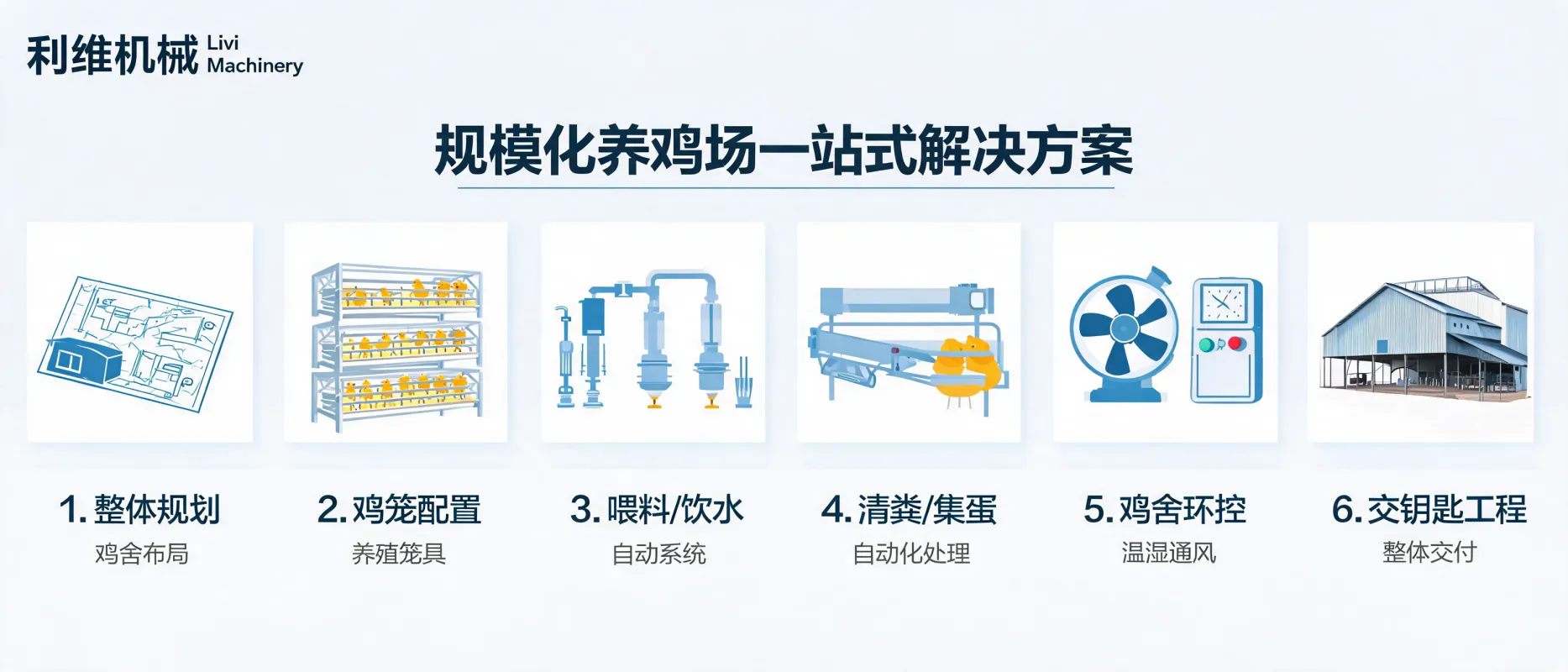
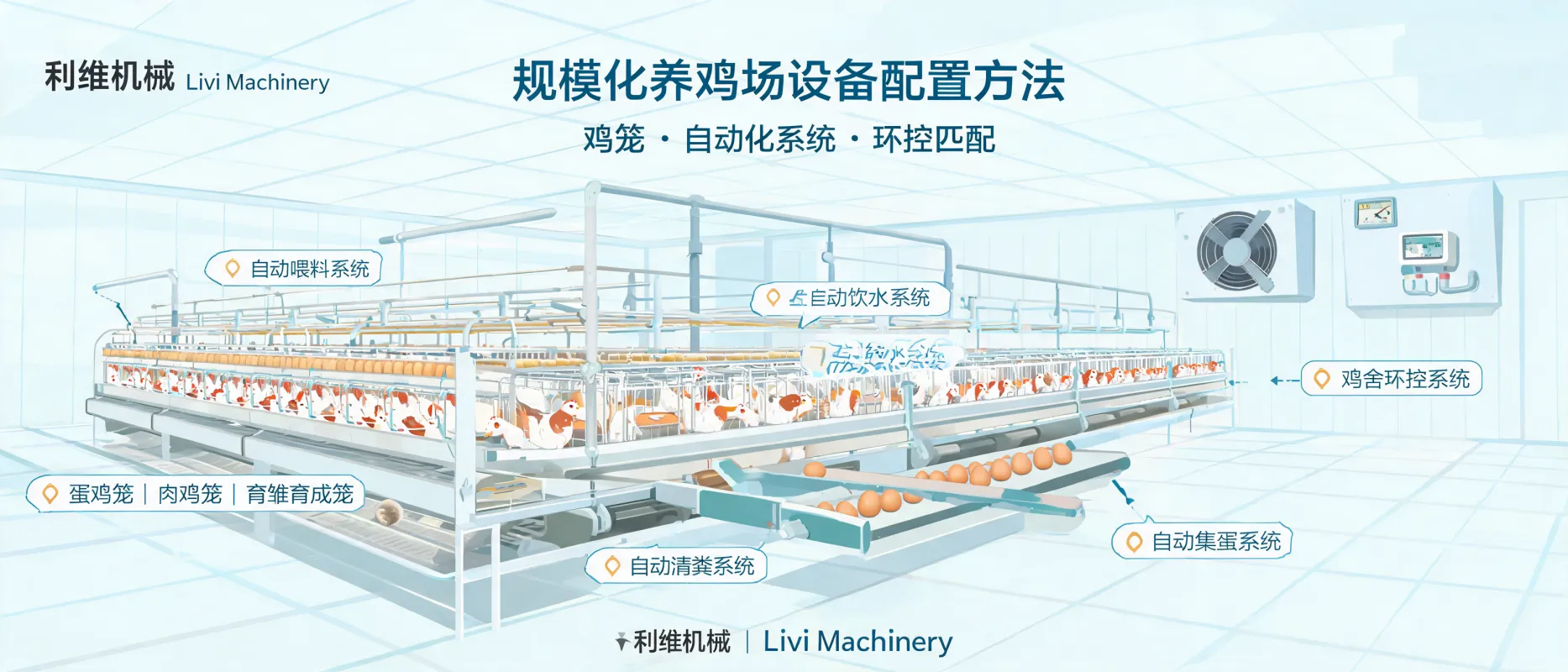
A complete poultry farm solution combines the main production and infrastructure elements required for an operating house. The exact scope is customized according to the farming model and site conditions.
- Poultry housing layout: house dimensions, equipment rows, working aisles, service access and operating space.
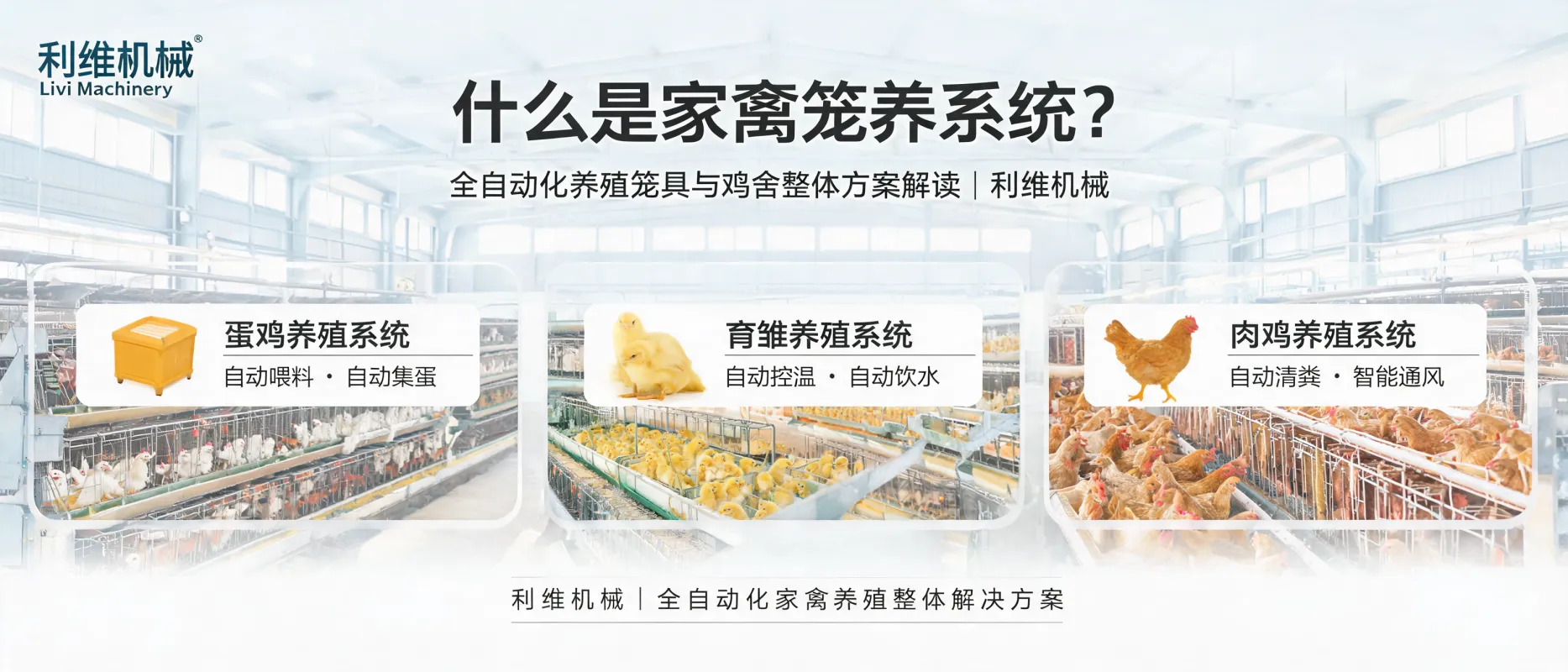
- Poultry cage or floor farming system: A-type or H-type layer cages, broiler cage systems, brooding cages or floor farming equipment.
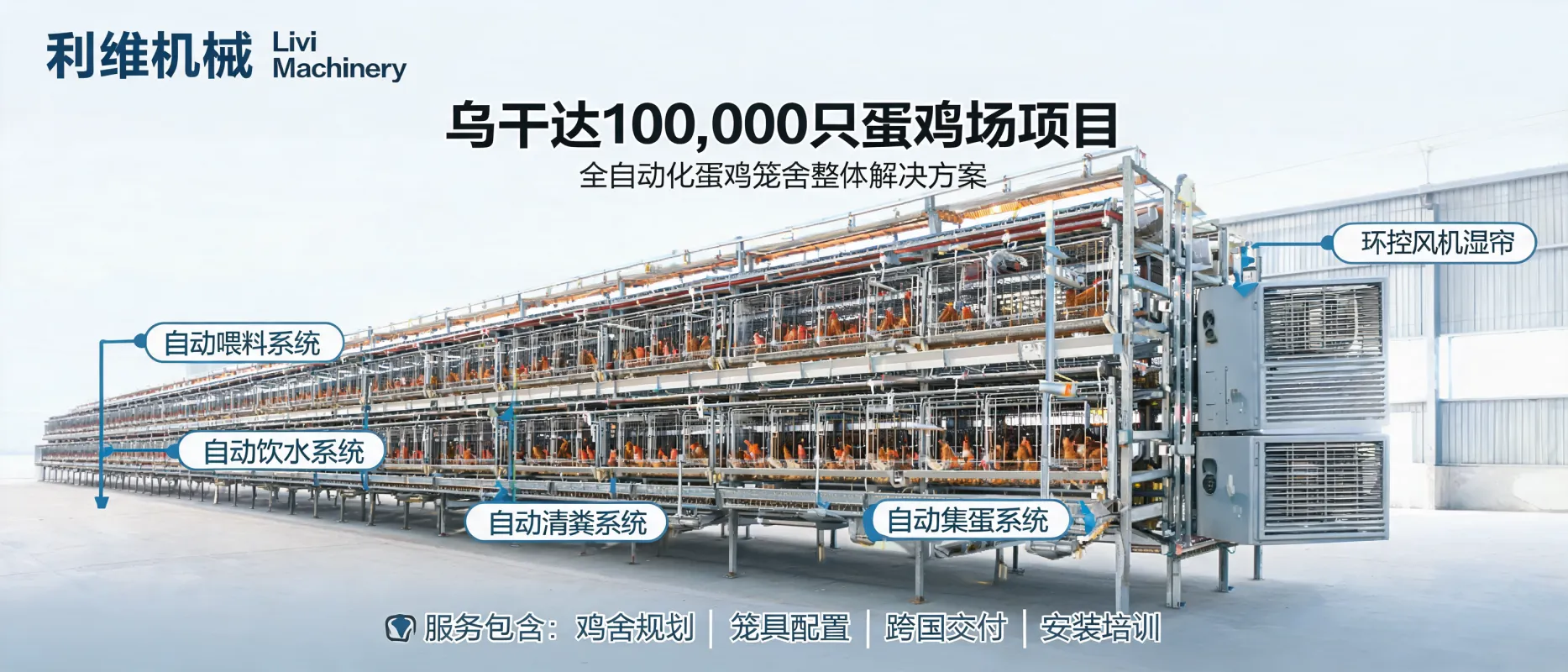
- Automatic feeding and drinking: feed lines, feed troughs or pans, nipple drinkers, filters and pressure-regulating components.
- Manure management: manure belts or other configured removal equipment matched to the house design.
- Egg collection: automatic egg collection equipment for layer projects where the house scale and layout justify the configuration.
- Environmental control: ventilation, cooling, lighting, temperature and humidity monitoring, and related control components.
- Project support: equipment lists, layout guidance, transportation coordination, installation guidance, operator training and after-sales support.
Choosing Between A-Type and H-Type Layer Cage Systems
Neither cage type is universally better. The right choice depends on land availability, planned bird numbers, labor costs, budget, building structure and the customer’s automation objectives.
| Consideration | A-type layer cage | H-Type Layer Cage |
|---|---|---|
| Typical project fit | Often considered for small- to medium-scale farms, relatively available land and projects that may increase automation in stages. | Often considered for larger farms, limited land, higher labor costs and projects requiring a more integrated automatic system. |
| Space planning | The final house area depends on cage rows, service aisles, ventilation space and supporting areas. | Multi-tier planning can improve the use of building volume, but requires careful structural, ventilation and maintenance planning. |
| Automation potential | Can be combined with automatic feeding, drinking and manure removal according to project requirements. | Often selected for integrated feeding, manure removal and egg collection in larger commercial operations. |
| Important planning point | The layout should leave sufficient room for workers, inspection and future upgrades. | The project should confirm house height, equipment access, power supply, maintenance routes and environmental control capacity. |
How to Estimate Poultry House Area
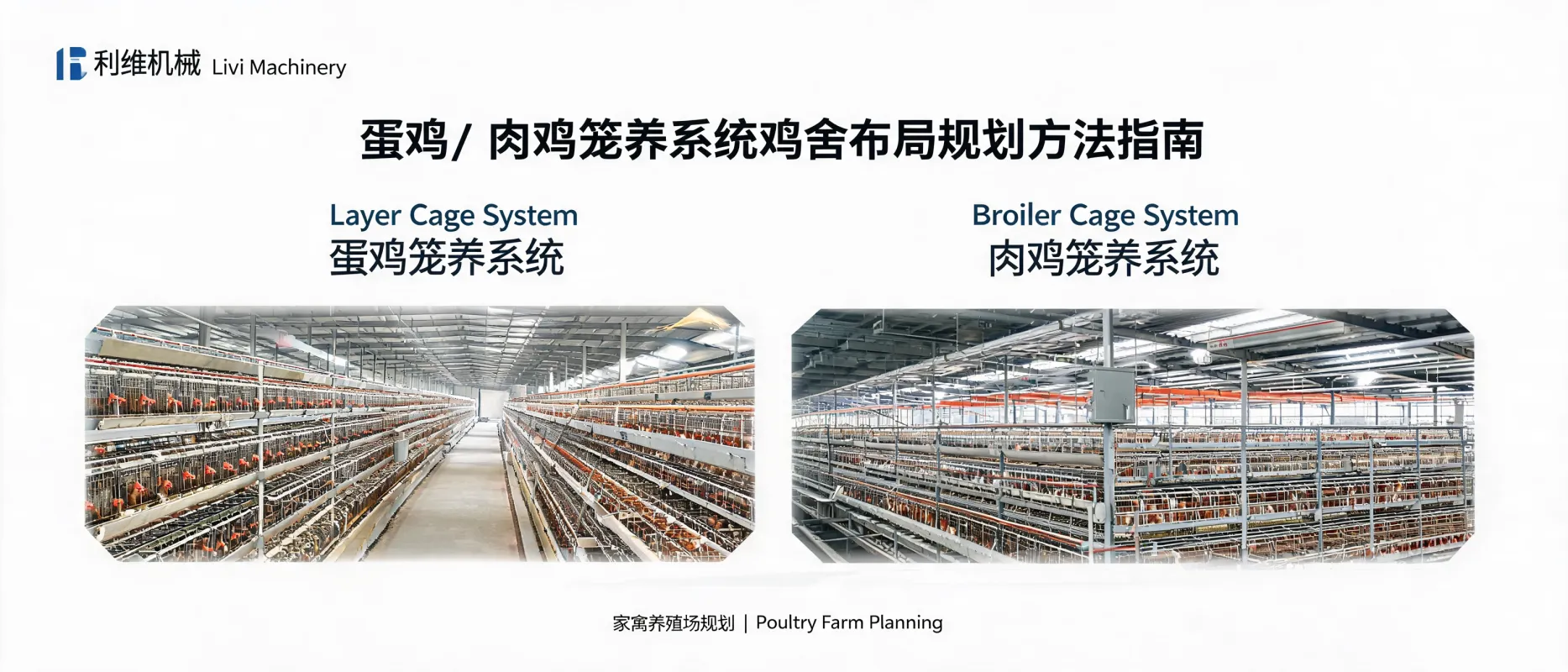
Poultry house area should not be calculated from bird numbers alone. The required space varies according to the cage type, number of tiers, stocking arrangement, farming method, equipment layout and local operating requirements.
Planning note: The same number of birds may require different house dimensions when using A-type cages, H-type cages or floor farming. A layout drawing and equipment list should be prepared before construction or renovation begins.
Automation Should Be Planned as a System
An automated poultry farm is not simply a poultry cage system with motors added later. Feeding, drinking, manure removal, egg collection, lighting, ventilation, cooling, environmental control, water supply and power supply need to work together.
- Define the production model: identify whether the project is for layers, broilers, brooding or floor farming.
- Confirm the house and site conditions: review dimensions, climate, land constraints, water, electricity and access for transportation.
- Match the equipment level to the operation: select the appropriate combination of cage or floor equipment and automatic systems.
- Plan operating continuity: consider backup power, spare parts, maintenance access, staff training and manual fallback procedures where necessary.
- Test the complete system: perform no-load testing, check electrical connections and train operators before stocking birds.
Higher automation can reduce repetitive manual work and support more consistent management in larger farms. It also increases initial investment and places greater demands on stable electricity, maintenance capability, operator training and backup arrangements.
Environmental Control for Different Climates
Ventilation and climate control should be designed around local conditions rather than copied from another project. House orientation, insulation, fan capacity, cooling-pad area, target air speed, stocking density and backup power all affect the operating result.
- Hot climates: review roof insulation, fan quantity, cooling-pad area, airflow direction, drinking-water temperature and emergency power.
- Humid climates: avoid excessive cooling-pad operation that may keep house humidity continuously high; ventilation and moisture management must be balanced.
- Cold climates: combine insulation with minimum ventilation. Closing the house completely can cause moisture and air-quality problems.
- Variable power conditions: evaluate backup generators, control protection and restart procedures before equipment commissioning.
What Determines the Cost of a Poultry Farm Project?
A reliable poultry farm budget should include more than the price per bird or the price of one cage line. Total investment varies by country, project scale, building specification, automation level, logistics and operating plan.
| Cost category | Items to review |
|---|---|
| Site and construction | Land, poultry house construction, foundations, insulation, doors, service rooms and biosecurity facilities. |
| Equipment and utilities | Cages or floor equipment, feeding, drinking, manure removal, egg collection, ventilation, cooling, lighting, water and electrical systems. |
| Project delivery | Packaging, shipping, export documentation, destination clearance, inland transport, installation and commissioning. |
| Production preparation | Chicks or pullets, feed, vaccines, labor, packaging, daily operating costs and working capital. |
Shipping prices and construction costs change with routes, ports, seasons, exchange rates and local market conditions. Any online estimate should be treated as a planning reference, not a substitute for a project-specific quotation.
Transportation, Installation and Commissioning
For international poultry projects, equipment delivery should be coordinated with the house construction schedule. Livi Machinery can organize project information around the equipment list, packaging and installation guidance so that customers can prepare the site and receiving team in advance.
Maintenance Practices That Protect Daily Operation
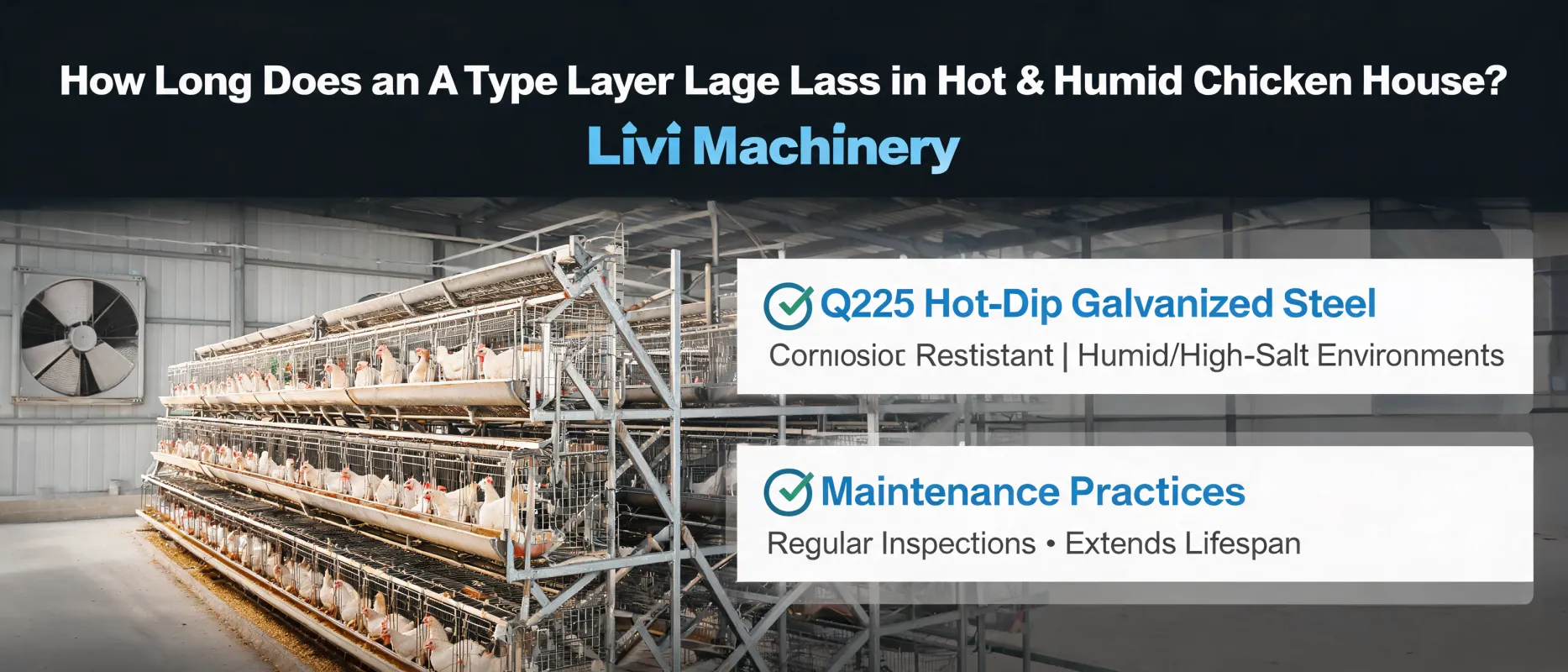
Preventive maintenance helps identify small problems before they interrupt feeding, drinking, manure removal or egg collection. Operators should follow the equipment instructions and establish inspection records appropriate to the farm.
- Check bolts, chains, motors, bearings, belts, egg belts and drive components regularly.
- Inspect nipple drinkers, filters, pressure regulators and water lines for leakage or blockage.
- Keep feed troughs, sensors and transfer points free from buildup and foreign objects.
- Review electrical cabinets, switches, cables, protection devices and emergency power connections.
- Stop the relevant system promptly if there is unusual noise, belt deviation, feed blockage, water leakage or motor overheating.
How to Reduce Project Risk Before Ordering
- Clarify the country, city, poultry type, planned capacity and target production stage.
- Provide the available house length, width and height, or the land and construction limitations.
- Describe local climate, power stability, water source, road access and any import requirements.
- Compare the complete equipment scope rather than comparing only the cage or machine price.
- Request product parameters, material information, equipment quantities, layout drawings and packing details.
- Confirm installation guidance, spare parts, maintenance responsibilities and operator training.
- Reserve a realistic budget for construction, utilities, livestock, feed and working capital.
Frequently Asked Questions
Can Livi Machinery design a solution for an existing poultry house?
Yes. An upgrade or renovation plan can be considered after reviewing the existing house dimensions, floor condition, structural arrangement, utilities, bird type, capacity and desired automation level.
Is an H-type cage always more suitable for a large farm?
Not automatically. H-type systems may suit projects with limited land, larger capacity and higher automation requirements, but the decision must also consider building height, ventilation, maintenance access, investment budget and local operating conditions.
Does a complete poultry farm solution include the poultry house building?
The scope depends on the project agreement. Livi Machinery can support poultry house layout and equipment configuration, while the customer and local construction partners should confirm building work, permits, foundations and local compliance requirements.
What information is needed for a quotation?
The most useful starting information includes the country and city, poultry type, planned bird number, house dimensions or available land, climate, power and water conditions, preferred cage or floor system, automation requirements and project schedule.
Discuss Your Poultry Farm Plan with Livi Machinery
Share your project details with Livi Machinery to receive a more relevant equipment configuration and planning reference. Based on the information provided, the technical team can work toward a customized house layout, equipment list, estimated container quantity and project quotation.
Please provide: country and city, farming type, planned capacity, poultry house dimensions, local climate, power and water conditions, and the level of automation required.


Hot Products

.jpg?x-oss-process=image/resize,m_fill,h_800,w_800/format,webp)


Popular articles
READY TO START?
Ready to Build Your Poultry Farm?
Tell us your land size, poultry type and farming capacity. LIVI will provide a complete farm solution for your project.