


Automated Poultry Cage Systems and Complete Poultry House Solutions for Latin America
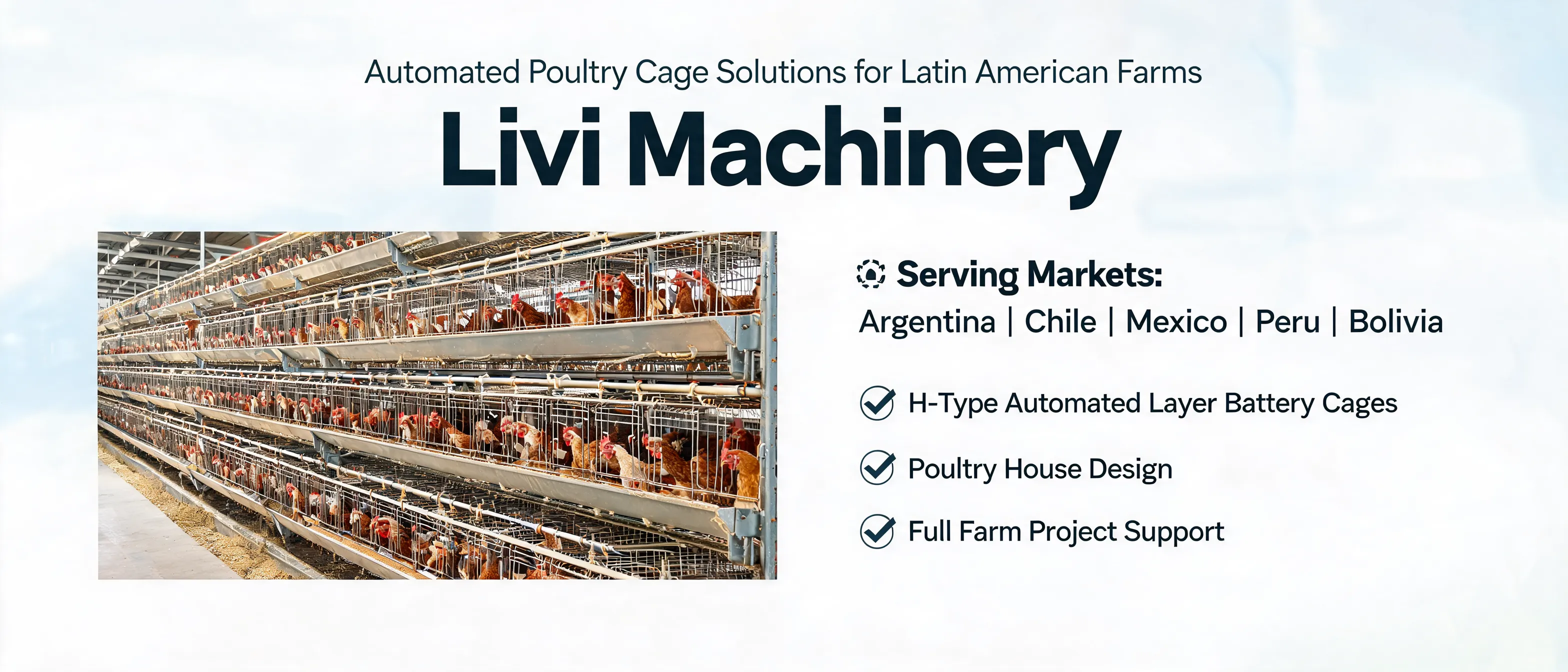
Integrated Equipment Planning for Commercial Poultry Projects
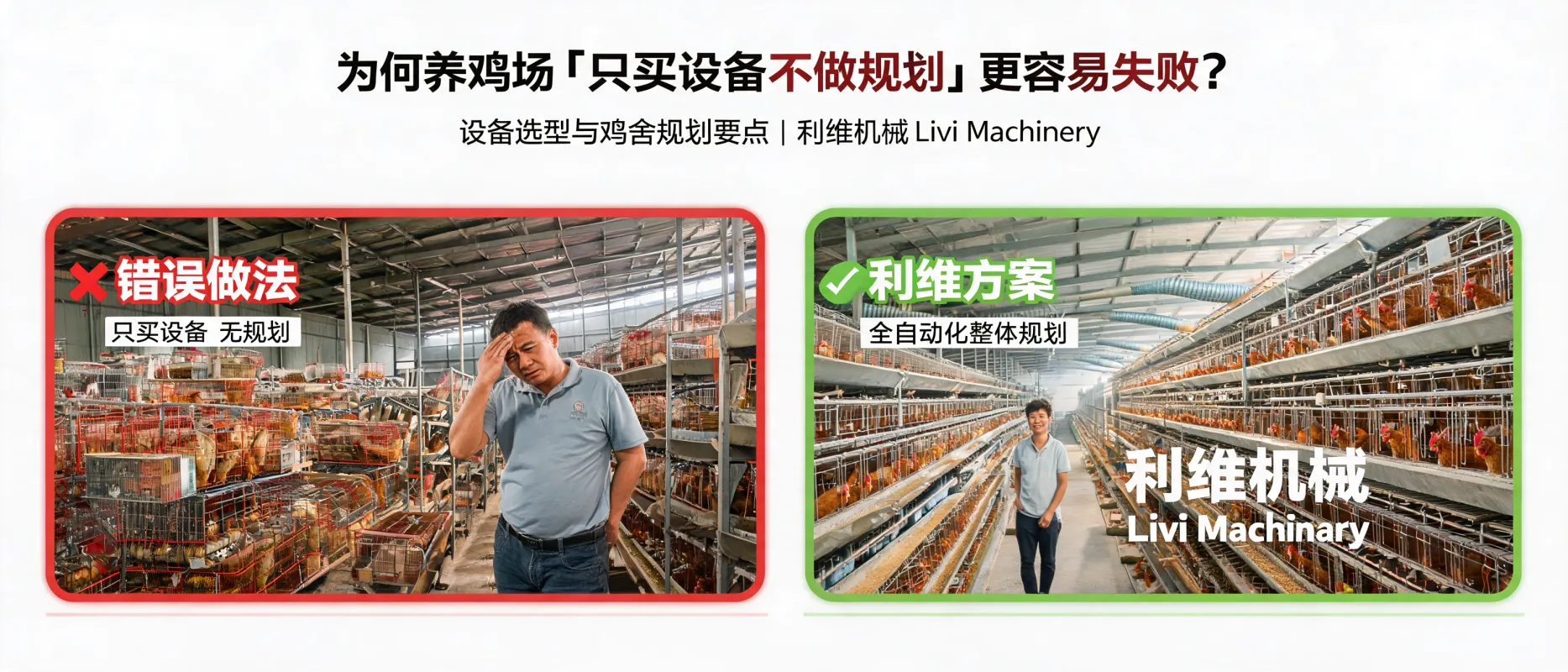
Plan the poultry house and automation system as one connected project
For commercial poultry farms in Argentina, Chile, Mexico, Peru and Bolivia, an automated poultry cage system is more than a set of cages. The practical result depends on how the cage layout, feeding, drinking, manure removal, egg collection, ventilation, power supply and working areas fit the poultry house and local operating conditions. Livi Machinery provides integrated poultry house design solutions for layer, broiler, rearing and floor-rearing projects, helping project owners move from initial planning to equipment configuration, installation guidance and daily-operation preparation.
Each solution is developed around the flock size, poultry type, house dimensions, climate, budget and required automation level. This approach helps customers assess the project as a complete system rather than selecting individual equipment without considering its connection to the building and farm workflow.
What a complete poultry house solution includes
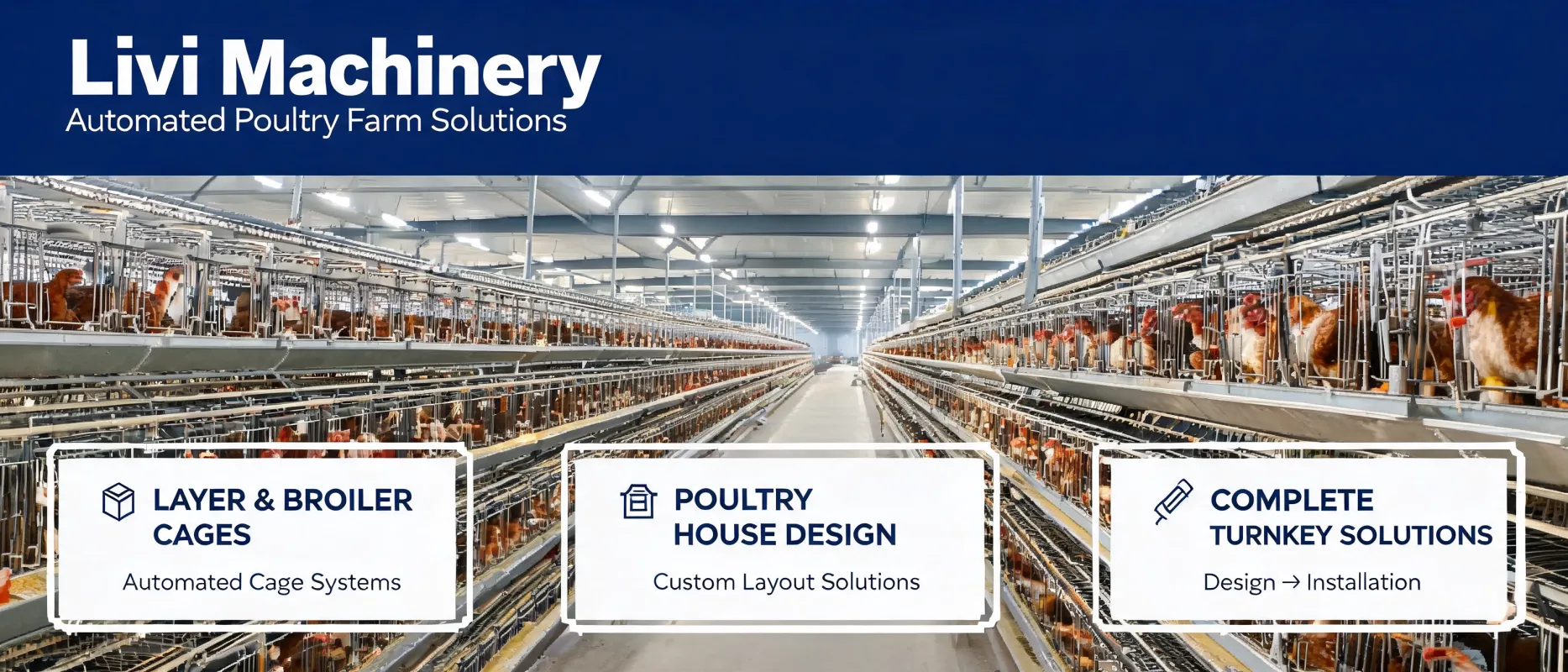
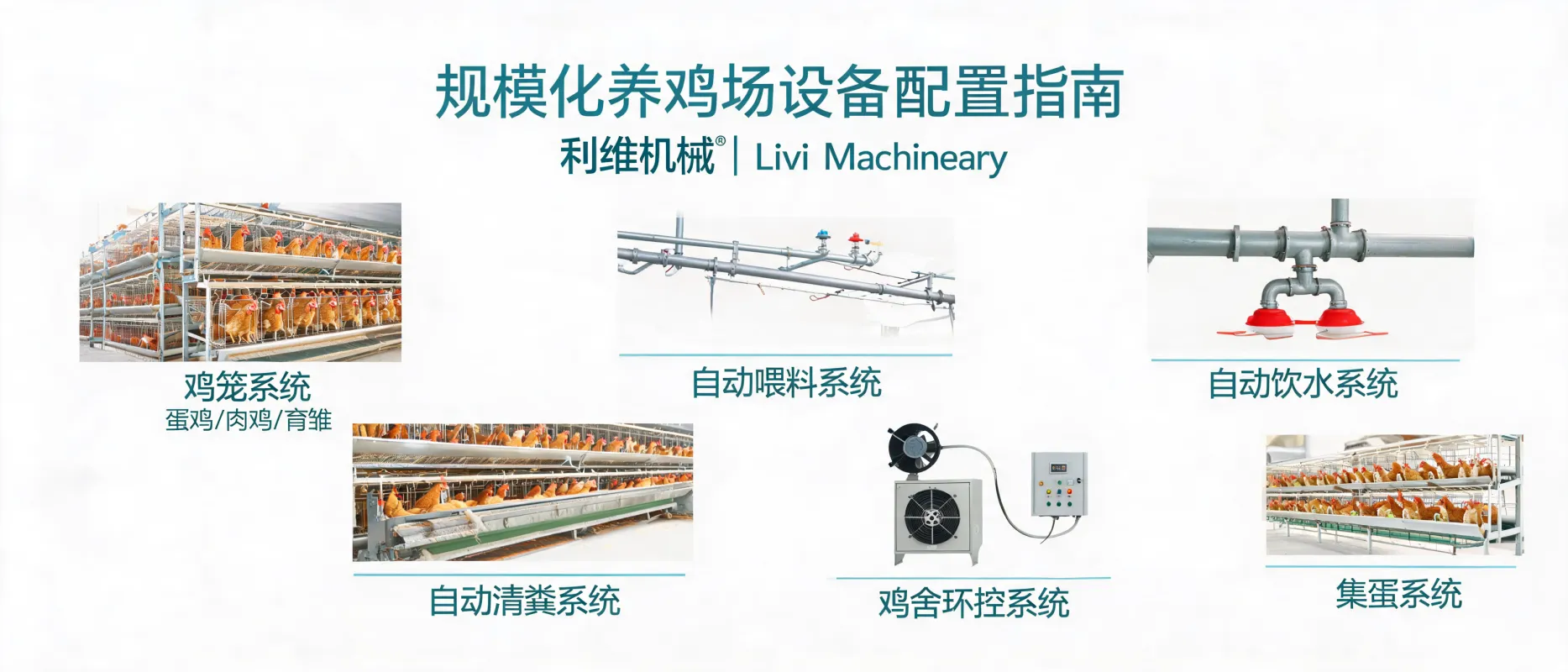
A complete poultry farming solution brings essential production and management systems into a coordinated layout. The final scope depends on the production model and site conditions, but commonly includes the following elements:
Choose the cage system according to project conditions
There is no single cage system that is best for every poultry project. A suitable choice should reflect available land, house height and width, flock size, labor availability, expansion plans, local utility conditions and the level of automation the farm can reliably operate and maintain.
| System | Common project fit | Planning considerations |
|---|---|---|
| A-type layer cage system | Projects with relatively limited budgets, small to medium flock sizes, sufficient land, or a phased path toward automation. | Requires a layout that preserves working aisles and allows future upgrades where applicable. |
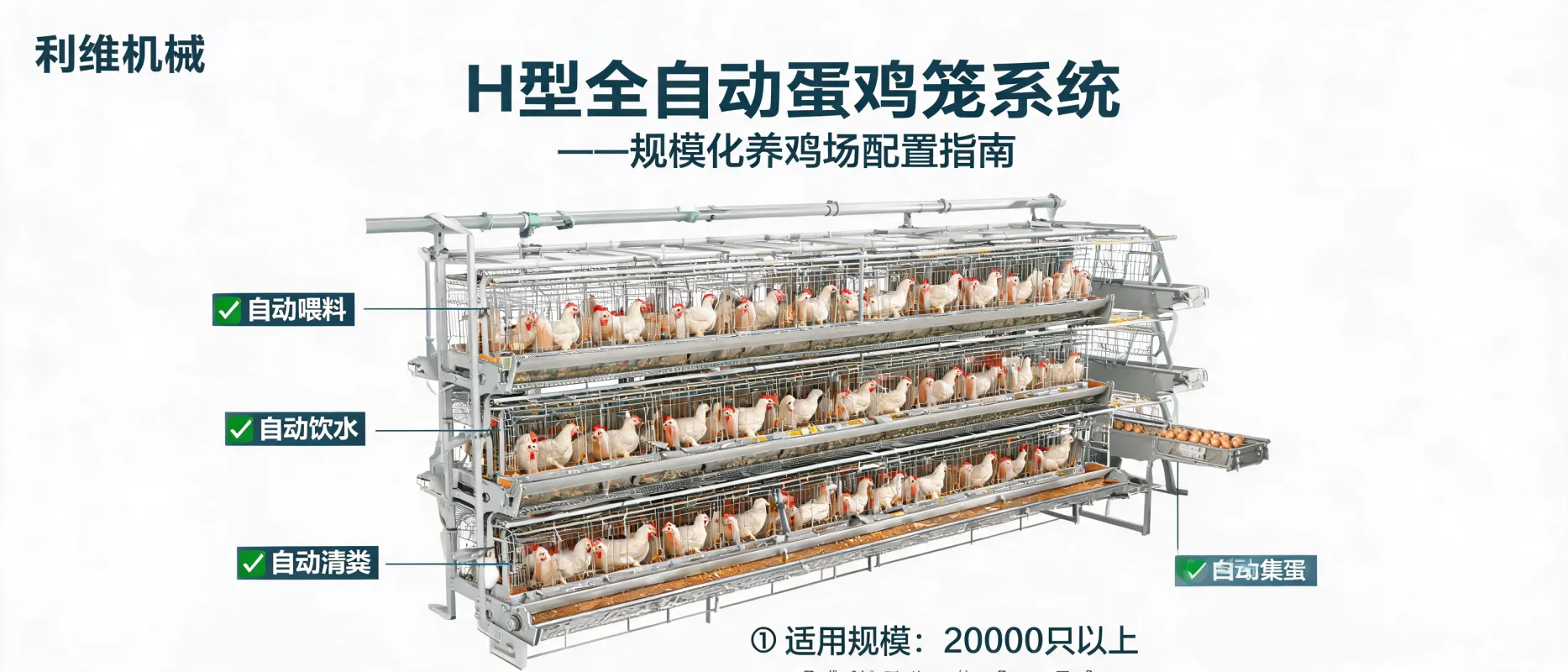
| H-type layer battery cages | Larger commercial layer farms with limited land, higher labor costs or a need for centralized automated management. | Requires careful coordination of house structure, ventilation, electrical capacity, manure handling and maintenance access. |
| Broiler cages, rearing cages or floor-rearing systems | Broiler production, chick and pullet rearing, or farms using floor-based management practices. | Equipment configuration should be aligned with bird age, stocking plan, feed and water access, ventilation and cleaning procedures. |
Important: Cage capacity should not be used alone to determine poultry house size. A complete design also needs room for equipment aisles, staff movement, egg collection, manure removal, feed handling, ventilation equipment, maintenance and biosecurity areas.
Automation improves workflow, but it also requires preparation
Automated poultry cage systems can reduce repetitive manual work and support more consistent routines in larger poultry houses. However, automation is not simply the purchase of cages with motors. It is a connected operating system that needs appropriate infrastructure, trained personnel and a maintenance plan.
- Automated feeding: distributes feed through the planned feeding route and supports a more consistent feeding routine.
- Drinking system: uses water lines, nipple drinkers, filtration and pressure regulation components to support clean water delivery.
- Manure removal: helps remove manure from the poultry house on a planned schedule and supports cleaner operating conditions.
- Egg collection: supports centralized egg handling for layer projects and can reduce manual egg collection workload.
- Environmental control: combines ventilation, cooling, air inlets, lighting and related controls according to the house and climate requirements.
A higher automation level usually means higher initial investment and greater dependence on stable electricity, water supply, routine inspections, spare parts and staff training. These requirements should be evaluated before finalizing the equipment scope.
Poultry house design for varied Latin American climates
Climate conditions differ significantly across Latin America. Poultry house design solutions should therefore be based on the farm location, local temperature and humidity patterns, building orientation, available utilities and production objectives—not on a standard layout alone.
Hot conditions
Projects in hot areas should consider house orientation, roof insulation, fan capacity, cooling-pad arrangement, target air movement, drinking-water temperature, stocking density and backup power planning.
High-humidity conditions
Cooling methods should be coordinated with ventilation performance. Excessive use of cooling pads without suitable air exchange may keep house humidity unnecessarily high.
Cooler conditions
Insulation and heating may be necessary, but minimum ventilation remains important. Keeping a house fully closed to retain heat can negatively affect air quality.
From project information to installation guidance
A reliable poultry equipment proposal begins with clear project information. Livi Machinery uses the available site and production details to discuss a practical system configuration and the associated delivery and installation requirements.
- Confirm the project basis: poultry type, planned flock size, location, house dimensions, site conditions, budget direction and automation expectations.
- Prepare the layout and equipment scope: determine cage type, row and tier arrangement, supporting systems, operating aisles and key equipment positions.
- Review infrastructure requirements: assess poultry house readiness, electrical supply, water source, drainage, ventilation arrangement, equipment storage and backup systems.
- Organize production and shipment: equipment is packed according to volume, weight and project quantity, followed by container loading and export documentation.
- Support installation and commissioning: installation typically includes setting out, cage-frame assembly, mesh installation, feeding and drinking lines, manure and egg systems, electrical connections, no-load testing and operator training.
What to review before purchasing poultry equipment
Price is an important factor, but it should be evaluated together with the complete project scope. A poultry farm budget may include the land, building, cages, automation systems, environmental equipment, power and water infrastructure, backup generation, freight, customs clearance, installation, birds, feed, labor and working capital.
Because building costs, logistics, labor and feed prices vary by country and location, a general estimate cannot replace a project-specific equipment list and quotation. Before selecting a supplier, it is useful to request and compare:
- Clear product specifications, materials and equipment quantities
- A poultry house layout that matches the proposed system
- Packaging, container-loading and export-documentation arrangements
- Installation guidance, operating instructions, maintenance recommendations and spare-parts support
- Questions from the supplier about your actual flock size, building dimensions, climate and automation requirements
Frequently asked questions
Is an H-type system always better than an A-type system?
No. H-type systems are often suitable for larger projects seeking higher space utilization and integrated automation, while A-type systems may suit projects with more land, limited initial budgets or phased development plans. The right option depends on the farm's conditions and operating objectives.
Can an existing poultry house be upgraded with automation?
In many cases, an existing house can be assessed for equipment upgrades. The available width, height, structural condition, electrical capacity, water supply, ventilation arrangement and access routes should be reviewed before deciding on a modification plan.
What information is needed for a poultry house design proposal?
The most useful starting information includes the country and city, poultry type, target flock size, house length, width and height, local climate conditions, available utilities and the desired level of automation.
How should automated equipment be maintained?
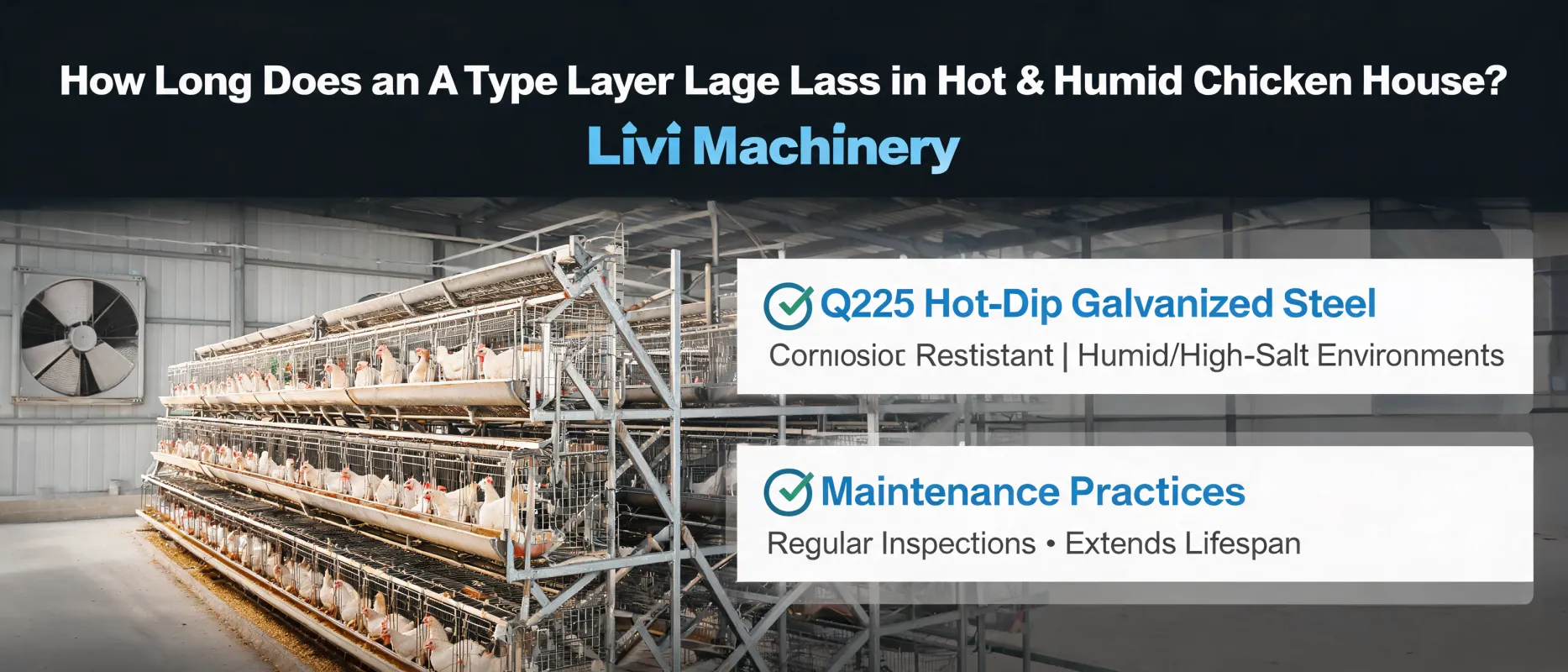
Routine inspections should cover bolts, chains, motors, bearings, belts, drinkers, pressure regulators, feed troughs, egg belts and electrical components. Unusual noise, misalignment, feed blockage, water leakage or motor overheating should be checked promptly to prevent a small issue from becoming a larger repair need.
Start with a project-specific poultry house plan
Whether you are developing a new layer farm, expanding a broiler operation, planning a rearing facility or upgrading an existing poultry house, Livi Machinery can help organize the technical information needed for a more informed equipment decision.
Share your country and city, poultry type, target flock size, poultry house dimensions and automation requirements. Based on these details, the technical team can discuss a suitable poultry house layout, equipment configuration, preliminary container requirement and project quotation scope.


Hot Products

.jpg?x-oss-process=image/resize,m_fill,h_800,w_800/format,webp)


Popular articles


READY TO START?
Ready to Build Your Poultry Farm?
Tell us your land size, poultry type and farming capacity. LIVI will provide a complete farm solution for your project.