


Automated Egg Collection System | Reduce Poultry Farm Labor & Boost Efficiency with H-Type Layer Hen Cage Automation

Revolutionizing Poultry Farming: How Automated Egg Collection Systems Slash Labor Costs
If you're managing a traditional poultry farm, you've likely encountered the chronic challenges of manual egg collection: low efficiency, frequent egg damage, and hygiene risks that compromise product quality. These factors not only inflate your operational costs but can also limit your farm’s scalability. Thankfully, the integration of automated egg collection systems within H-type layer battery cages offers a promising solution, pushing labor intervention rates down by over 70% while enhancing egg integrity and farm hygiene.
Breaking Down the Core Components of Automated Egg Collection
To grasp how this technology elevates your farm's productivity, consider its three main components working seamlessly in synergy:
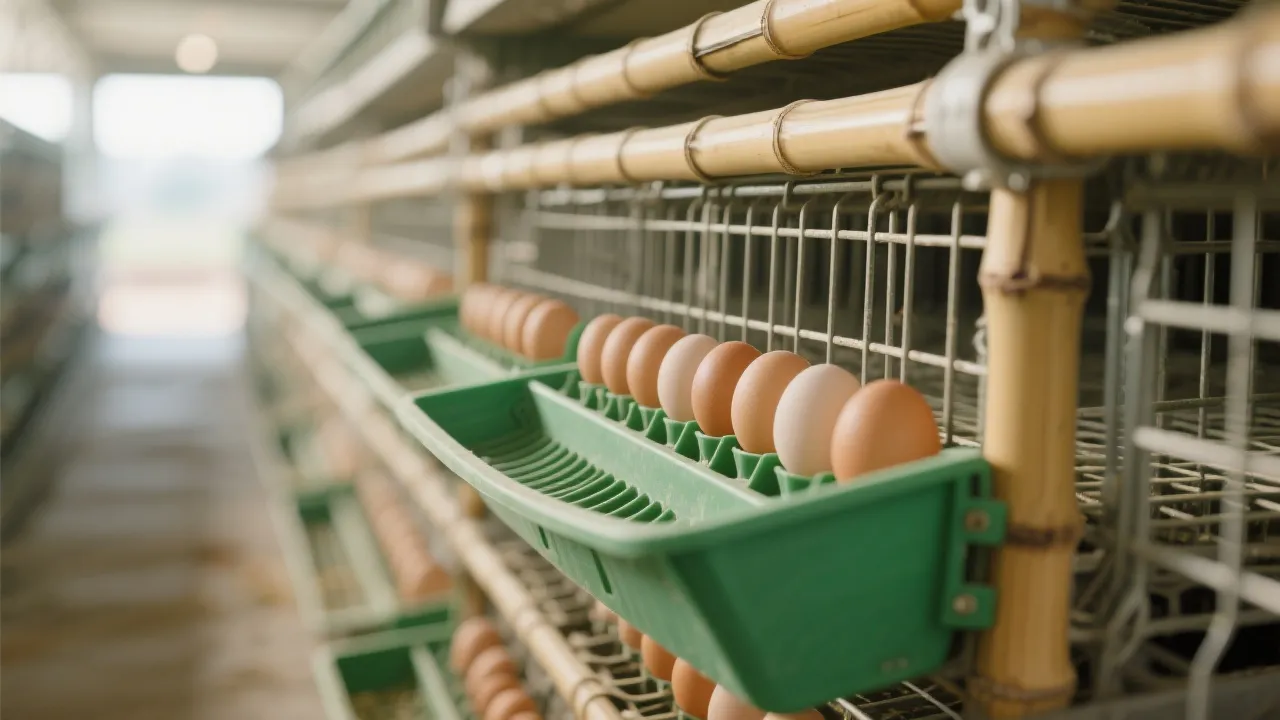
- Roller Conveyor Belt: Designed to gently transport eggs from each cage to the central collection point, the conveyor belt minimizes mechanical shock that typically causes cracking, holding breakage rates to under 2%—half of conventional manual collection averages.
- Sensor Recognition Module: Advanced optical sensors identify eggs in real-time, enabling instant sorting and detection of anomalies such as dirt or shell defects, which significantly reduces contamination risk and enhances overall egg quality.
- Sorting Module: This automated sorting mechanism categorizes eggs by size and quality grade, allowing for targeted packing and optimizing your product consistency for different market segments.
These elements integrate flawlessly with the H-type layer battery cage design, ensuring every tier benefits from automated collection without disrupting the poultry's living space, preserving natural behavior and welfare.
Data-Driven Efficiency Gains Compared to Traditional Manual Collection
| Performance Indicator | Manual Collection | Automated System | Improvement |
|---|---|---|---|
| Labor Time (per 1000 hens/day) | ~8 hours | ~2 hours | 75% reduction |
| Egg Breakage Rate | 4% average | Less than 2% | 50% decrease |
| Sanitary Risk Incidents | Multiple daily | Rare | Significant reduction |
Adaptability to Different Stocking Densities and Impact on Hen Welfare
Different farm sizes and stocking densities can pose unique challenges for automation. Our system’s modular technology permits customization for low to high-density setups, operating consistently without bottlenecks or system failures. Studies indicate that this automated process reduces human disturbances, which alleviates stress in the flock and supports natural laying behaviors—crucial for maximizing production quality.
Additionally, scientific design considerations such as silent roller mechanisms and optimized sensor timing maintain a calm environment, further promoting welfare. This combination of scientific engineering and animal-centric design positions the automated egg collection unit not just as a cost-saving investment but as a tool to sustainably improve poultry health.
Your Path to a Smarter, More Profitable Poultry Farm
Transitioning to an automated egg collection system is not simply a technological upgrade—it’s a strategic shift towards greater operational efficiency and product excellence. As manual labor costs continue to rise globally, harnessing automation can secure your farm’s competitive edge while promoting animal welfare.
Frequently Asked Questions
- Q1: How much can I reduce labor costs by installing an automated egg collection system?
- Typically, farms report at least a 70% reduction in manual labor hours needed for egg collection due to system automation and continuous operation capability.
- Q2: Will the system work efficiently in fully stocked, high-density farms?
- Yes, the modular design ensures stable performance across varied stocking densities, maintaining egg handling speed without compromising hen welfare.
- Q3: How does the system ensure eggs are not damaged during collection?
- The roller conveyor uses gentle, low-impact transport combined with sensor-controlled movement, reducing breakage rates to below 2%, far better than manual collection averages.





Hot Products

.jpg?x-oss-process=image/resize,m_fill,h_800,w_800/format,webp)





READY TO START?
Ready to Build Your Poultry Farm?
Tell us your land size, poultry type and farming capacity. LIVI will provide a complete farm solution for your project.