


How Automated Chicken Cage Systems Collaborate with Environmental Controls to Reduce Energy Consumption in Poultry Farms
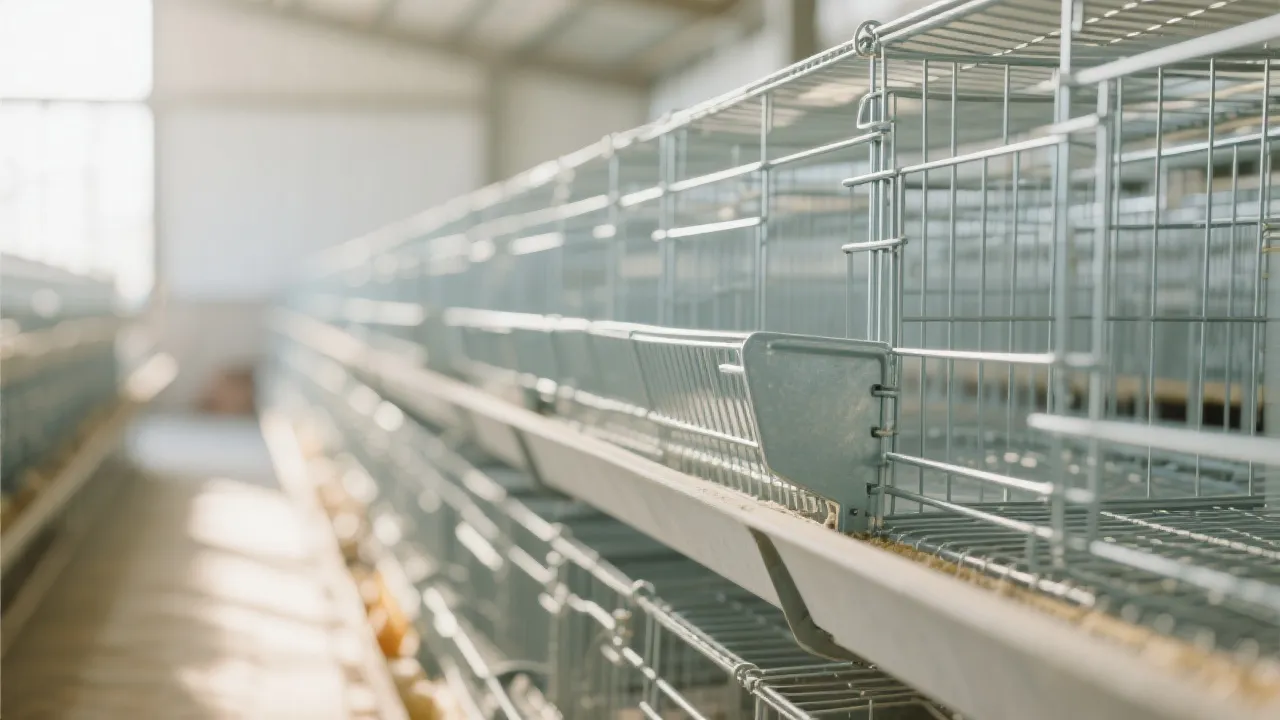
How Automated Chicken Cages Work with Environmental Control Systems to Cut Energy Costs
For poultry farmers in Asia, Europe, and North America, maintaining optimal conditions in layer hen houses isn’t just about animal welfare—it’s a direct driver of profitability. According to the FAO (2023), poor environmental control can reduce egg production by up to 15–20% annually due to heat stress, humidity imbalance, and inadequate ventilation.
Ventilation Design That Actually Works
Effective air exchange is critical—not only for removing ammonia and CO₂ but also for regulating temperature and humidity. A well-designed system ensures an airflow rate of 0.7–1.0 m/s at bird level, which has been shown in studies from Wageningen University (Netherlands) to improve respiratory health and egg quality by over 12%.
Key factors include:
- Correct fan placement and timing based on ambient temperature
- Use of adjustable louvers to prevent cold drafts
- Integration with humidity sensors for real-time adjustments
Thermal Comfort = Consistent Egg Production
Heat stress becomes a major issue when temperatures exceed 27°C. Research from the University of California Davis shows that hens exposed to consistent thermal comfort (20–24°C) lay eggs with higher shell strength and fewer cracks—key metrics for export-grade products.
Modern climate control systems now use AI-driven algorithms to adjust heating, cooling, and misting cycles automatically—reducing energy consumption by up to 25% compared to manual operation.
Why Q235 Steel Makes a Difference
The durability of your cage frame matters more than you think. Unlike cheaper alternatives, Q235 steel offers excellent corrosion resistance—even in high-humidity environments like Southeast Asian farms. In a 2-year field test conducted by Zhengzhou Livy Machinery, cages made from this grade showed no visible rust or structural deformation, while competitors’ models required maintenance every 6 months.
This translates into lower long-term costs and less downtime—critical for commercial operations aiming for 365-day production cycles.
Smart Automation = Smarter Savings
When automated egg collection and manure removal systems are integrated with environmental controls, they create a feedback loop that optimizes resource use. For example:
| System Feature | Energy Impact | Operational Benefit |
|---|---|---|
| Auto-cleaner + Ventilation Sync | -18% power usage | Reduced labor cost, better hygiene |
| Temperature-controlled feeding | -12% feed waste | Improved feed conversion ratio |
These smart integrations aren’t just theoretical—they’re already being deployed across large-scale farms in China, Turkey, and Brazil with measurable ROI within 12 months.
If you're ready to move beyond basic cage setups and start building a truly efficient, data-driven chicken house, we invite you to explore how our H-Type Layer Cage System pairs seamlessly with intelligent environmental controls.
Ready to Optimize Your Farm’s Efficiency?
Download our free technical white paper: “Integrating Smart Cages with Climate Control – Real Results from 50 Farms.”
Get the Free White Paper Now →




Hot Products

.jpg?x-oss-process=image/resize,m_fill,h_800,w_800/format,webp)


Popular articles


READY TO START?
Ready to Build Your Poultry Farm?
Tell us your land size, poultry type and farming capacity. LIVI will provide a complete farm solution for your project.