


How to Build an 80,000 Layers Poultry Farm in Zimbabwe with 4-Tier H-Type Cage Systems and Solar Power

```html
Zimbabwe 80,000 Layers Full Automatic H-Type Cage Project with Solar Power System
As commercial egg demand continues growing in Zimbabwe, more poultry investors are moving from semi-automatic farms to large-scale fully automated layer farming systems. For farms with 80,000 laying hens, manual feeding, manual egg collection, and unstable electricity supply quickly become major operational risks.
This project uses a 4-tier H-type automatic layer cage system, divided into 2 fully automated chicken houses, combined with a solar power generation solution to improve energy stability and reduce long-term electricity costs. The project integrates automatic feeding, automatic egg collection, manure removal, ventilation control, and intelligent environmental monitoring.
Project focus: stable egg production, reduced labor dependence, lower operating cost, and reliable power supply for continuous automated poultry operation in Zimbabwe.
1) Why the Client Chose a 4-Tier H-Type Cage System for 80,000 Layers
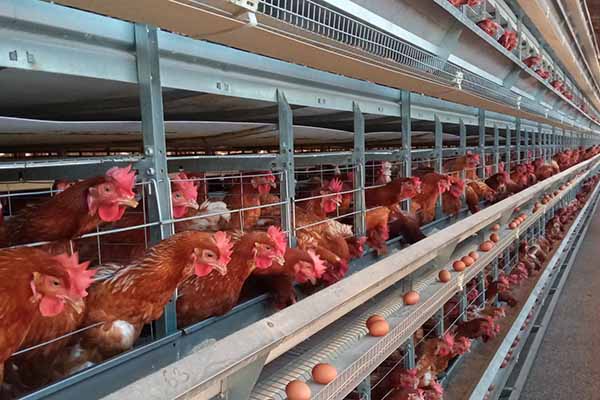
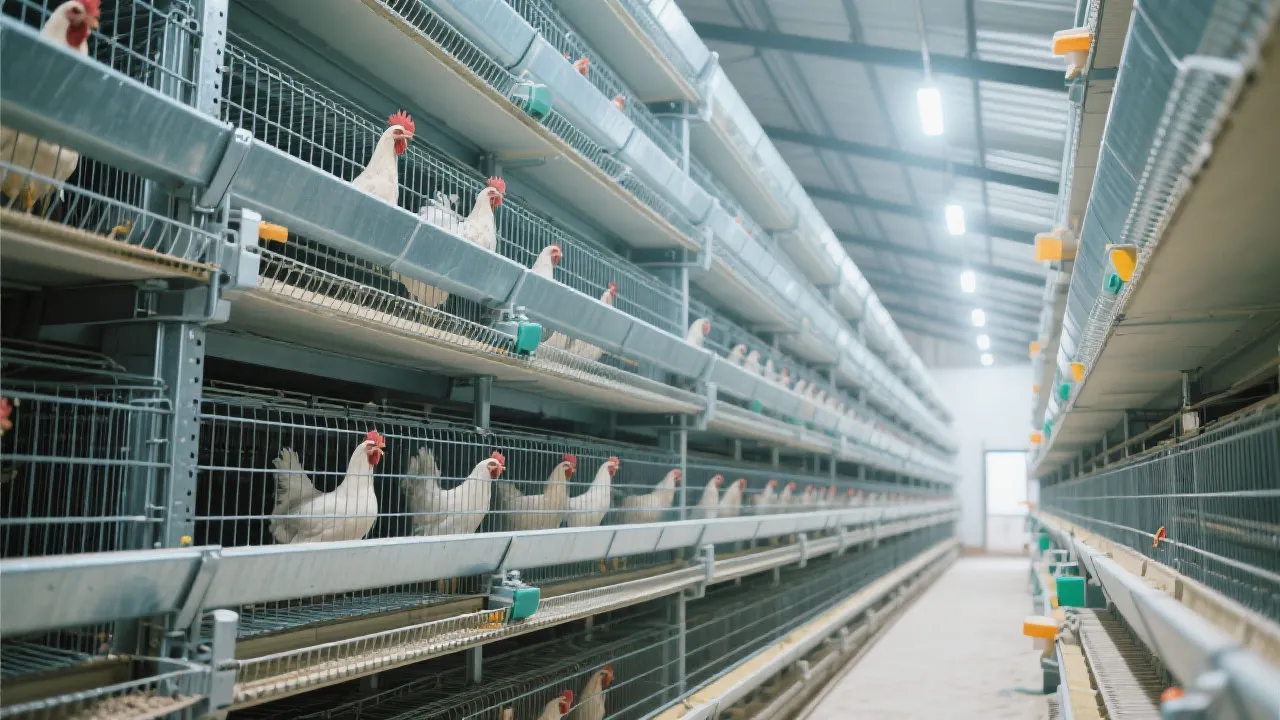
For large poultry farms above 50,000 layers, cage structure directly affects labor efficiency, egg handling capacity, and house management stability. Compared with floor systems and traditional A-type cages, 4-tier H-type layer cages provide significantly higher bird density and better automation integration.
Higher stocking density
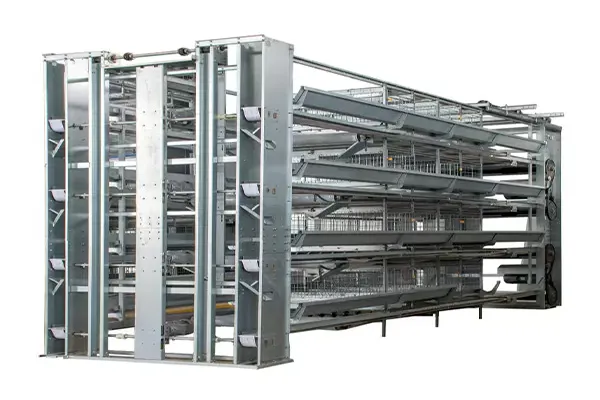
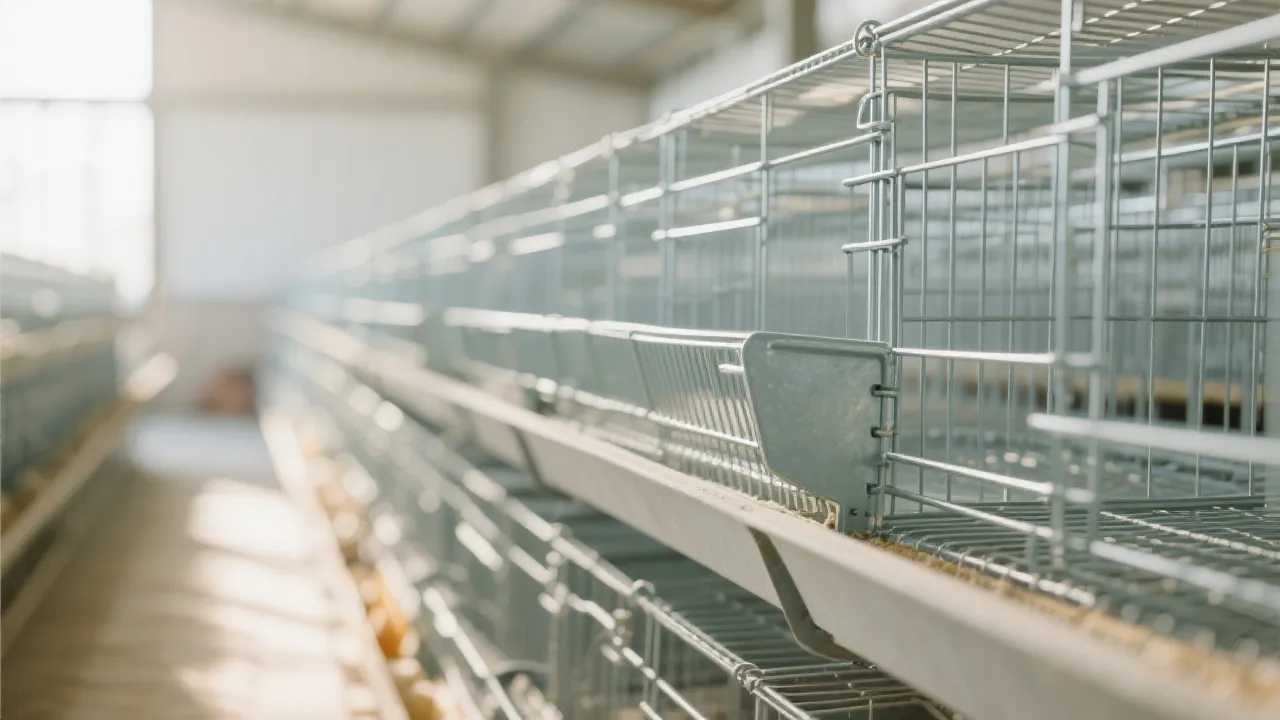
According to LIVI H-type cage parameters, one 4-tier 4-door cage set can hold 192 birds, with cage dimensions of 1800mm × 600mm × 430mm. H-type systems can increase breeding density by more than 2 times compared with A-type layouts. :contentReference[oaicite:0]{index=0}
Lower labor requirement
With automatic feeding, egg collection, manure removal, and drinking systems, the farm can reduce daily labor demand from approximately 18–24 workers to around 8–10 workers.
Better environmental control
The vertical cage structure improves airflow distribution and works efficiently with tunnel ventilation systems, helping reduce heat stress and ammonia accumulation inside the poultry houses.
2) Poultry House Layout for 80,000 Layers and 2 Chicken Houses
The project was designed using 2 separate steel structure layer houses, each holding approximately 40,000 laying hens. Separating the flock into two buildings improves disease management, ventilation balancing, and operational flexibility.
Recommended house structure configuration
| Item | Specification |
|---|---|
| Chicken house quantity | 2 houses |
| Bird capacity per house | 40,000 layers |
| Recommended house size | 120m × 18m × 4.5m |
| Cage type | 4-tier H-type layer cage |
| Building material | Hot-dip galvanized steel structure |
| Ventilation mode | Tunnel ventilation + cooling pads |
Steel structure poultry houses provide higher wind resistance, longer service life, and better compatibility with automated poultry equipment systems. :contentReference[oaicite:1]{index=1}
3) What Automatic Equipment Was Included in This Zimbabwe Poultry Project
The client selected a full automatic poultry farming solution from LIVI Machinery, designed to improve operational consistency and reduce daily manual management.
Automatic feeding system
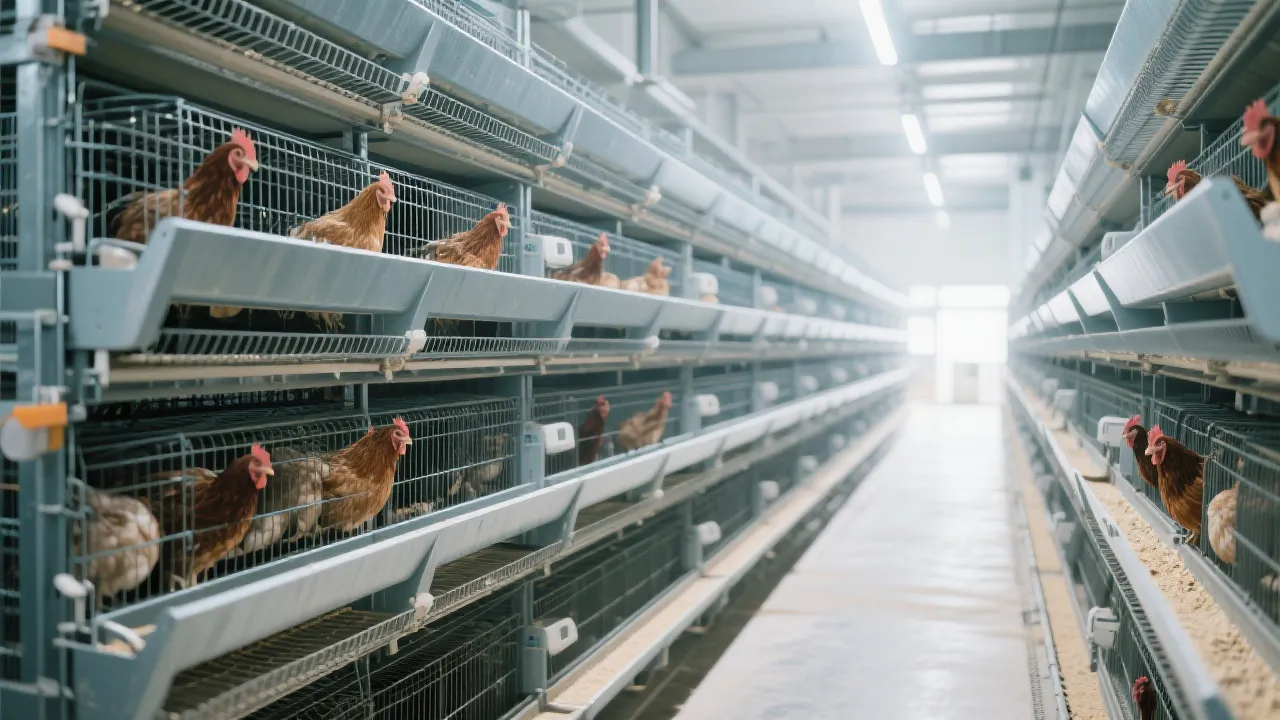
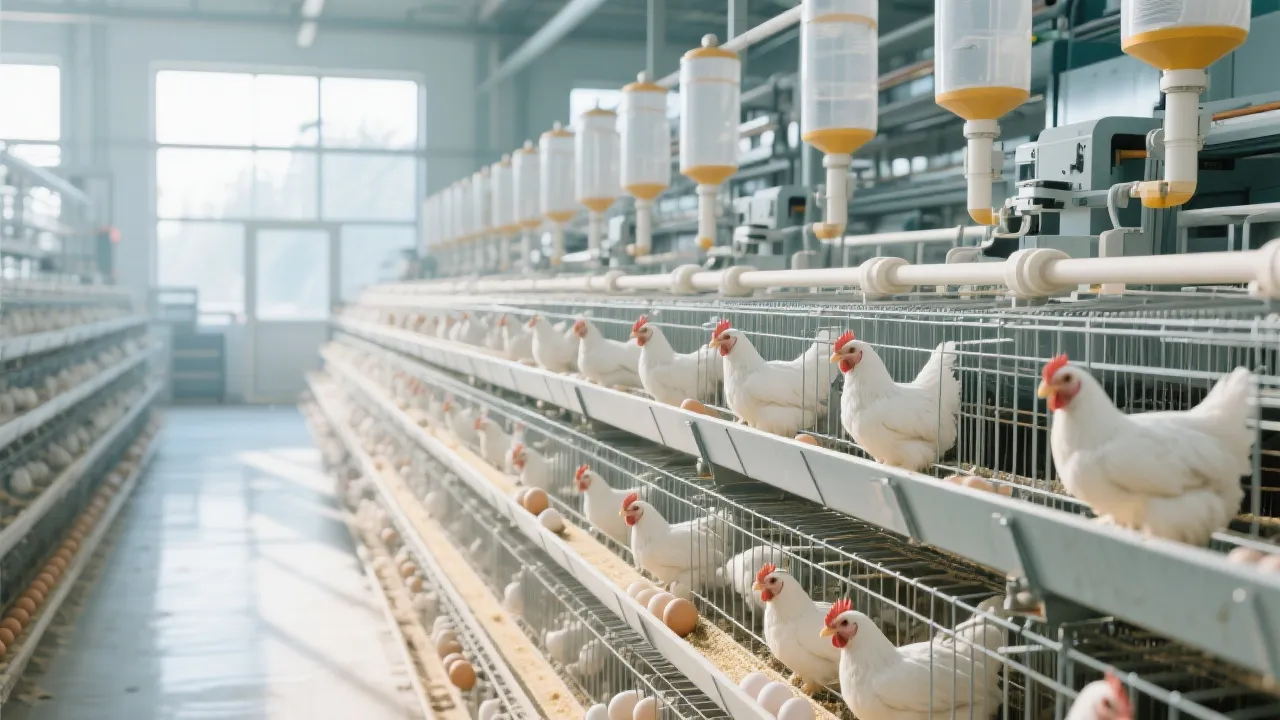
The laminated feeding system distributes feed evenly across all cage tiers. Variable-speed feeding motors help maintain uniform feed supply and improve flock weight consistency. The V-shaped trough design can save approximately 10% feed waste. :contentReference[oaicite:2]{index=2}
Automatic egg collection system
The project uses a centralized egg collection line with PP egg belts and elevator transfer systems. Egg collection capacity can reach 12,000 eggs/hour or more, while maintaining a low egg breakage rate. :contentReference[oaicite:3]{index=3}
Automatic manure removal
Each cage tier is equipped with manure belts using corrosion-resistant PVC/PP material. The manure system reduces ammonia concentration and helps maintain cleaner air quality inside the poultry houses.
System integration advantage: the automatic feeding, egg collection, ventilation, and manure systems are connected through an intelligent control cabinet, allowing centralized poultry farm management.
4) Why Solar Power Was Added to the Poultry Farm
In Zimbabwe, unstable grid electricity can interrupt feeding systems, ventilation fans, and egg collection lines. For a large-scale automated poultry farm, even short power failures can cause production losses and heat stress.
Benefits of solar power integration
- Reduce dependence on unstable public electricity
- Lower long-term operating cost
- Protect ventilation and feeding continuity
- Improve farm biosecurity stability
- Support environmental control systems 24/7
Equipment connected to solar backup
- Ventilation fans
- Automatic feeding motors
- Environmental control cabinet
- Automatic egg collection system
- Lighting systems

5) Ventilation and Temperature Control Strategy for Zimbabwe Climate
High-density layer farming requires stable airflow and temperature management. The poultry houses use tunnel ventilation systems with cooling pads and automated air inlet control to maintain stable environmental conditions.
Environmental control components
Ventilation fans: large airflow axial fans with galvanized frames and corrosion-resistant blades.
Airflow capacity can reach 35,000–48,000 m³/h depending on fan model. :contentReference[oaicite:4]{index=4}
Cooling pads: improve cooling efficiency during hot seasons.
Wet curtain systems help reduce temperature stress and maintain stable egg production during high-temperature afternoons.
6) Corrosion Resistance and Long-Term Service Life
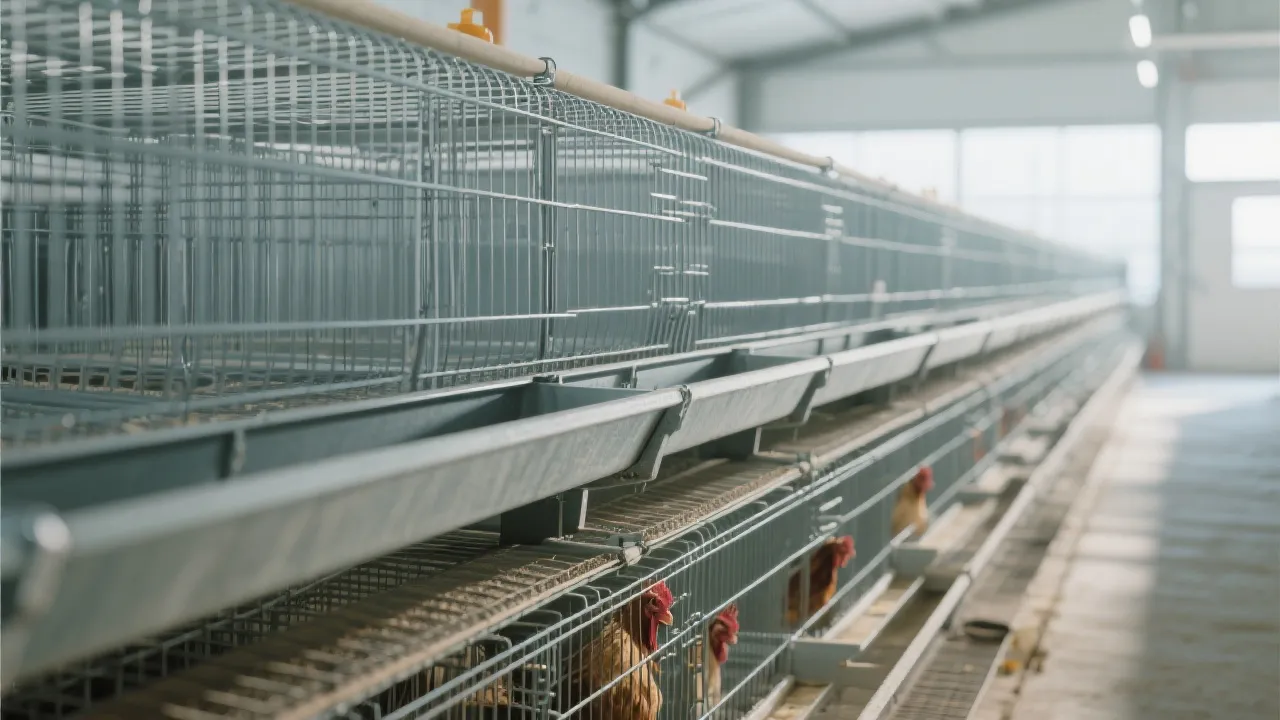
Large poultry farms operate in high-ammonia and humid environments. To improve equipment durability, the client selected hot-dip galvanized H-type cage systems.
Hot-dip galvanized coating
According to LIVI cage specifications, hot-dip galvanized cage nets provide corrosion resistance 3–4 times higher than ordinary cold galvanized cages, with an expected service life of 15–20 years. :contentReference[oaicite:5]{index=5}
Maintenance SOP
- Inspect egg belts daily
- Clean manure belts weekly
- Check motor vibration monthly
- Flush drinking lines regularly
- Monitor fan bearing condition
7) Estimated Operational Advantages After Automation
Expected farm efficiency improvements
| Indicator | Traditional Farm | Full Automatic System |
|---|---|---|
| Daily labor demand | 18–24 workers | 8–10 workers |
| Egg breakage rate | 1.5–3% | Below 0.5% |
| Feed waste | Higher | Reduced by ~10% |
| Power reliability | Grid dependent | Solar + backup support |
Need a Full Automatic 80,000 Layers Poultry Farm Solution in Zimbabwe?
LIVI Machinery can provide customized H-type cage layouts, steel structure poultry house design, automatic equipment configuration, ventilation planning, and solar power integration solutions based on your farm size and local conditions.
Request an 80,000 Layers Poultry Farm DesignPreferred inquiry information: chicken quantity, chicken house dimensions, local temperature conditions, electricity stability, and required automation level.
```



Hot Products

.jpg?x-oss-process=image/resize,m_fill,h_800,w_800/format,webp)


Popular articles



READY TO START?
Ready to Build Your Poultry Farm?
Tell us your land size, poultry type and farming capacity. LIVI will provide a complete farm solution for your project.