


50,000-Layer Commercial Poultry Farm Project in Nigeria

Integrated Solution for a 50,000-Layer Commercial Poultry Farm
Livi Machinery provided an integrated planning and equipment solution for a 50,000-layer commercial poultry farm project in Nigeria. The project scope focused on combining poultry house planning, H-type layer cage systems and automated equipment into one coordinated production setup.
Rather than supplying cages as an isolated product, Zhengzhou Livi Machinery Manufacturing Co., Ltd. supports the project from equipment configuration and transportation to installation guidance, operator training and after-sales technical support.
Project requirements and planning logic
A 50,000-layer operation requires more than a calculation of cage quantity. The poultry house layout, equipment routes, ventilation arrangement, electrical control and future maintenance access all need to work together. Livi Machinery organizes the solution around the farm’s production scale and the practical conditions of the project site.
- Plan the poultry house layout around the required layer capacity and H-type cage arrangement.
- Coordinate feeding, drinking, manure removal and egg collection routes with the cage system.
- Consider local climate conditions, ventilation requirements and environmental control needs in Nigeria.
- Organize equipment transportation and installation according to the confirmed project configuration.
- Provide operating guidance so the farm team can understand daily equipment use and routine maintenance.
H-Type Layer Cage System for Commercial Production
The H-type layer cage system is suited to large commercial layer projects where space utilization, centralized management and automation are important considerations. In this Nigerian project, the cage system forms the main production unit and is coordinated with the farm’s material handling and environmental equipment.
| System area | Project function | Coordination focus |
|---|---|---|
| H-type layer cages | Provide the primary housing structure for commercial layers. | Cage rows, tiers, house dimensions and service access. |
| Automatic feeding | Transport feed through the house with reduced repetitive manual work. | Feed storage, conveying route and control arrangement. |
| Automatic drinking | Supply drinking water through a controlled nipple drinking system. | Water filtration, pressure regulation and leakage control. |
| Manure removal | Move manure out of the cage area and support cleaner house management. | Manure belts, drive units, transfer equipment and discharge route. |
| Automatic egg collection | Transfer eggs from the cage rows to the designated collection area. | Longitudinal and cross-conveying routes and collection equipment. |
Automation Systems Included in the Farm Concept
The automation configuration is designed to connect the main daily operations of the layer house. This helps the farm team manage routine feeding, watering, manure handling and egg collection through a more consistent workflow.
Poultry House Design and Environmental Control
Nigeria includes different regional climate conditions, so poultry house design should be considered together with ventilation, cooling and air movement. Livi Machinery can assess factors such as temperature, humidity, house orientation, building dimensions, power supply and natural ventilation when configuring environmental control equipment.
- Negative-pressure ventilation and exhaust fans for controlled air exchange.
- Cooling pads and suitable air inlets for hot-period temperature management.
- Coordination between fans, cooling pads and environmental controllers.
- Temperature and humidity monitoring to support more informed house management.
- Consideration of power stability and emergency ventilation requirements during project planning.
Project Delivery from Equipment to Farm Operation
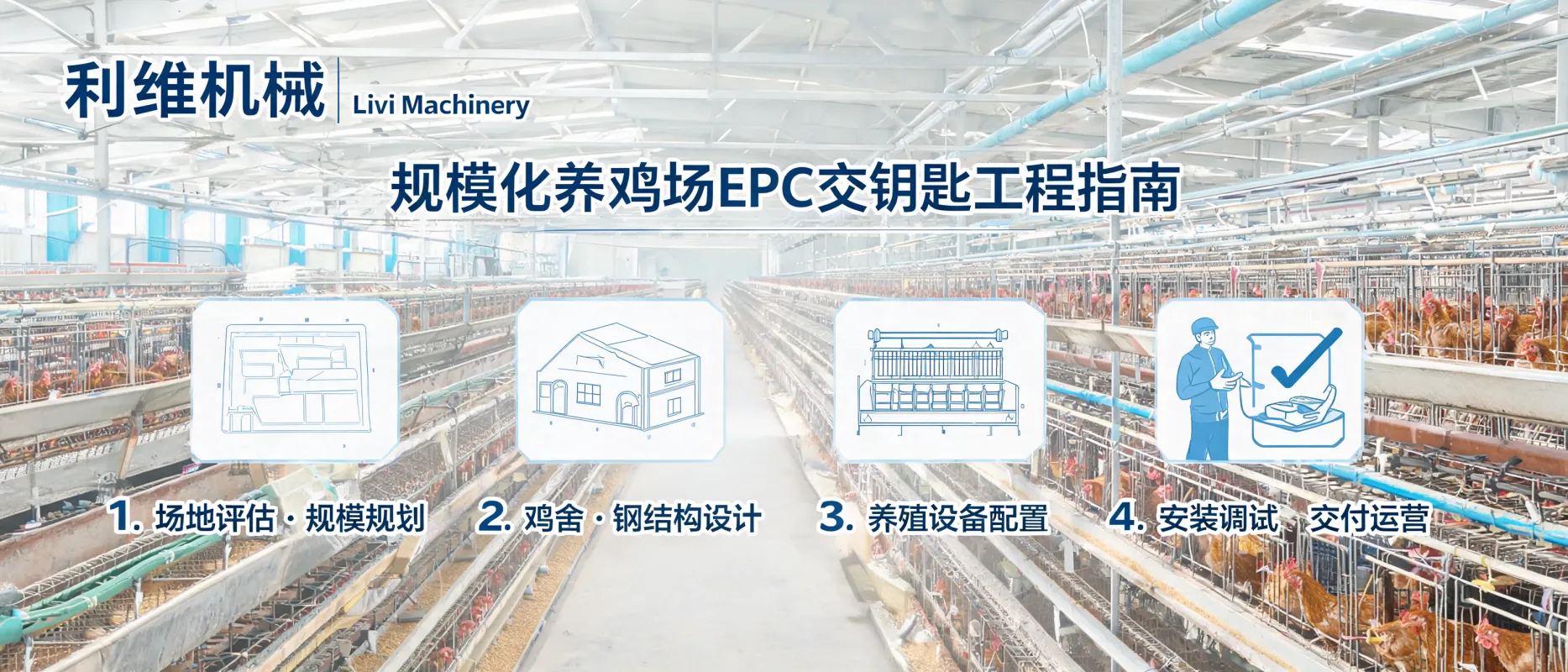
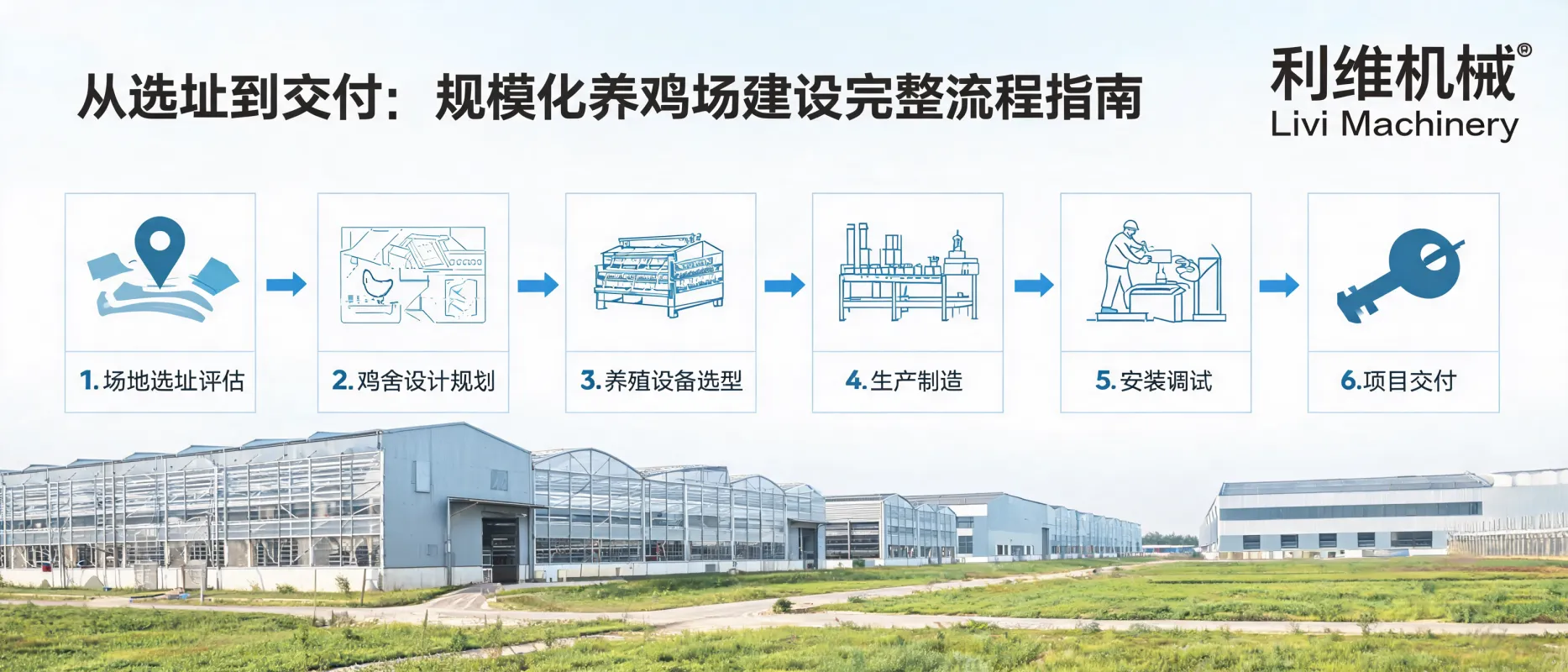
For an international poultry farm project, successful delivery depends on coordination before the equipment arrives on site. Livi Machinery’s project workflow can cover the following stages:
- Requirement confirmation: Review the layer capacity, site conditions, poultry house status, automation requirements, power conditions and planned schedule.
- Layout and equipment configuration: Prepare the cage arrangement, equipment list and related poultry house planning documents according to the confirmed requirements.
- Manufacturing and inspection: Produce the cage system and supporting equipment according to the approved specifications, followed by checks on components, operation and package completeness.
- Packaging and transportation: Classify components, prepare packing lists and organize container loading to support overseas shipment and site inventory.
- Installation and commissioning: Provide remote guidance or on-site technical support as agreed, including equipment assembly, electrical connection, empty-load testing and system coordination.
- Training and after-sales support: Explain equipment operation, routine checks, maintenance procedures, common troubleshooting and spare-parts requirements.
What This Solution Helps the Farm Manage
A coordinated H-type layer cage project gives the farm a clearer foundation for commercial production. Its practical value is reflected in how the main operating tasks are organized, rather than in any single piece of equipment.
Arrange cage rows, service paths and equipment routes around the poultry house structure.
Connect feeding, drinking, manure removal and egg collection into a more systematic routine.
Support standardized operation and reduce dependence on repetitive manual handling.
Leave a clearer basis for maintenance, equipment upgrades and potential farm expansion.
Livi Machinery brings together poultry house planning, H-type layer cages, automated equipment and project support for commercial poultry operations.
For the 50,000-layer project in Nigeria, the focus is to create a coordinated farm system that can be understood, installed and managed as one complete project.
Hot Products

.jpg?x-oss-process=image/resize,m_fill,h_800,w_800/format,webp)


Popular articles




READY TO START?
Ready to Build Your Poultry Farm?
Tell us your land size, poultry type and farming capacity. LIVI will provide a complete farm solution for your project.