


Why a Large-Scale Poultry Farm Project Can’t Succeed with Cage-Only Purchasing
Cages are critical—but cages alone don’t deliver a working layer farm
For investors, EPC/turnkey planners, and commercial layer farms building 5,000–30,000+ birds, “cage-only purchasing” often creates hidden gaps: mismatched feeders, wrong waterline layout, insufficient manure handling, unstable egg collection, or climate control that can’t keep up with stocking density.
Livi Machinery (Zhengzhou LIVI Machinery Manufacturing Co., Ltd.) recommends treating the layer house as a complete production system: the H-type layer cage must be engineered to fit feeding, drinking, manure removal, egg collection, climate control, and poultry house structure—so daily management and project delivery stay predictable.
Featured equipment
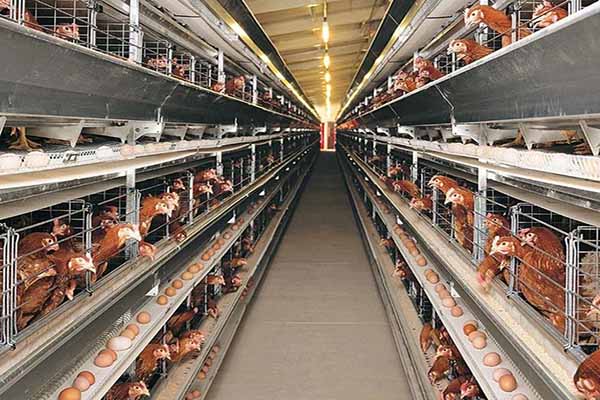
High-Efficiency H-Type Layer Chicken Cage
- Designed for commercial layer operations and scalable farm capacity planning.
- Material: Q235 steel with hot-dip galvanizing and aluminum-zinc alloy coating.
- Target service life: 15–20 years (depending on site conditions and maintenance).
- Supports automation for egg collection and manure cleaning to reduce labor intensity.
- Manufacturing aligns with ISO9001 / ISO14001 / CE requirements.
Project note: H-type structure improves space utilization and helps streamline feeding, cleaning, and egg handling routes—but only when house layout and supporting systems are designed as one set.
What “cage-only purchasing” typically misses in large-scale layer projects
1) System mismatch and layout conflicts
Cages are often ordered first, then feeding lines, water lines, egg belts, and manure belts are “fitted in.” This leads to conflicts in aisle width, headroom, service space, and belt routing—making maintenance and daily operation harder than expected.
2) Underestimated labor and management complexity
Even with good cages, a farm can struggle if egg pickup is inconsistent, manure removal is delayed, or watering pressure fluctuates. The result is more manual intervention and harder standard operating procedures (SOPs).
3) Climate control not designed for stocking density
Ventilation and temperature management must match the number of birds, cage rows/tier count, and manure handling rhythm. If climate control is chosen separately, airflow distribution and heat/moisture removal may be uneven.
4) Delivery risk across multiple suppliers
When cages and supporting equipment come from different vendors, interfaces and responsibilities can be unclear (control wiring, belt speed matching, installation sequence, spares). That can slow installation and commissioning.
The integration checklist: what H-type layer cages must match
In a large-scale layer house, the High-Efficiency H-Type Layer Chicken Cage should be specified together with the following modules to support smoother daily management and project delivery:
| System module | What to align with the cage design | Why it matters |
|---|---|---|
| Feeding system | Feeder line placement, trough height, aisle/service space | Supports consistent feeding and easier inspection/maintenance |
| Drinking system | Waterline routing, pressure/flow consistency, access for cleaning | Stabilizes daily water supply and reduces leakage/maintenance risk |
| Manure removal | Manure belt layout, discharge direction, cleaning schedule compatibility | Improves hygiene management and reduces manual workload |
| Egg collection | Egg belt routing, transfer points, collection area layout | Enables stable collection workflow and easier packing-room planning |
| Climate control equipment | Ventilation path, fan/inlet positioning, temperature control strategy | Supports healthier house environment under high density |
| Poultry house structure | Building dimensions, load considerations, utilities routing, installation sequence | Reduces rework and helps keep delivery/commissioning on schedule |
| Controls & operation | Start/stop logic, routine inspection points, spare parts strategy | Makes SOPs simpler and reduces downtime caused by interface issues |
A large-scale layer project works best when the cage is specified as the core module—and every supporting system is chosen to match the cage layout, capacity plan, and poultry house structure.
How Livi Machinery supports system-based procurement
Engineering-first selection
We align the H-type layer cage specification with farm scale, house layout, and workflow requirements—before confirming interfaces for feeding, drinking, egg collection, manure removal, and climate control.
Quality and durability focus
The cage system uses Q235 steel with hot-dip galvanizing and aluminum-zinc alloy coating, designed for long-term commercial operation (typical target life: 15–20 years).
Project delivery support
As an integrated manufacturer and solution provider, LIVI supports one-stop project coordination—from planning and equipment matching to installation sequencing and after-sales technical support.
Best fit for
- Commercial layer farms planning 5,000–30,000+ birds and needing scalable capacity.
- Investors seeking clearer scope boundaries and fewer interface risks during delivery.
- EPC/turnkey teams that want cage systems and supporting equipment designed as one.
- Projects requiring cage equipment aligned with ISO9001 / ISO14001 / CE compliance expectations.
A practical way to buy: from “product” to “operational system”
- Confirm farm capacity and house constraints: target bird count, building width/length/height, utilities, local climate conditions.
- Select the H-type layer cage configuration: tiers/rows and maintenance access routes, based on workflow and space usage.
- Match supporting equipment as a set: feeding, drinking, manure removal, egg collection, and climate control that fit the cage layout.
- Plan installation and commissioning: define interface responsibilities, testing sequence, and spare parts preparation.
- Standardize daily management: simplify SOPs around stable egg handling, manure removal rhythm, and environmental control.
Work with Livi Machinery
Since 2013, Zhengzhou LIVI Machinery Manufacturing Co., Ltd. has focused on poultry farming equipment for commercial operations, providing layer cage systems and integrated solutions for global markets.
If you are evaluating an H-type layer cage for a large-scale farm, we can help you check system interfaces and define a complete equipment scope—so your project is designed for efficient operation, not just equipment delivery.

Hot Products

.jpg?x-oss-process=image/resize,m_fill,h_800,w_800/format,webp)


Popular articles

READY TO START?
Ready to Build Your Poultry Farm?
Tell us your land size, poultry type and farming capacity. LIVI will provide a complete farm solution for your project.