


Practical Insights: Avoiding Hurdles in Laying Hen Farm Export Projects Due to Non - compliant Equipment

In the global egg production market, the export of egg-laying hen farm projects is a lucrative opportunity for businesses. However, many overseas projects often encounter significant setbacks due to non-compliant equipment. This article delves into the critical role of ISO9001, ISO14001, and CE certifications in the selection of egg-laying hen farming equipment, aiming to help farm managers make informed decisions and avoid potential risks.
Typical Problems Caused by Non-compliant Equipment
Non-compliant equipment can lead to a series of problems in overseas projects. For example, customs clearance failures are a common issue. Products without proper certifications may be held up at customs, causing significant delays and additional costs. In some cases, the entire export project may be jeopardized. Another problem is the high frequency of repairs. Equipment that does not meet international standards is more likely to break down, resulting in increased maintenance costs and production disruptions. Moreover, non-compliant equipment may also pose risks to employee health and safety, leading to potential legal issues.
Core Requirements of ISO9001, ISO14001, and CE Certifications
ISO9001 Quality Management System
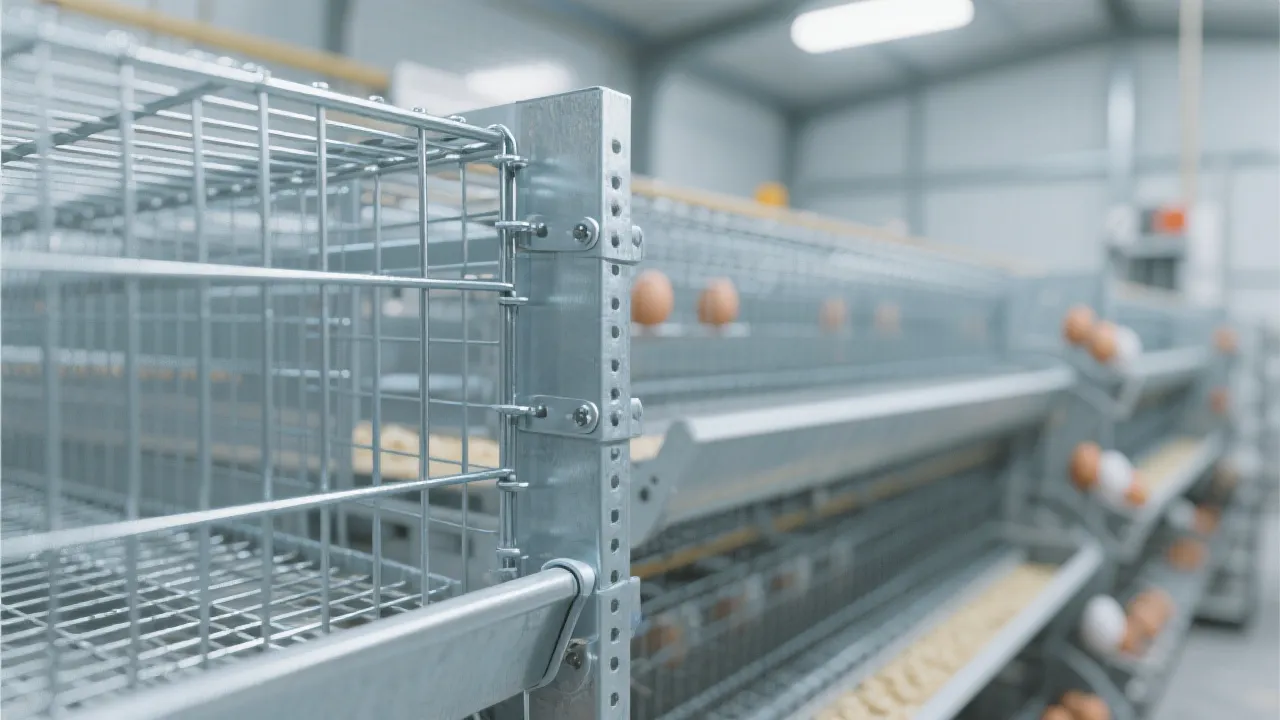
ISO9001 focuses on quality management. It requires that the equipment manufacturing process has strict quality control measures. For egg-laying hen farming equipment, this means ensuring the consistency and reliability of the products. For example, the materials used in the equipment should meet certain standards. The hot-dip galvanized layer thickness of the egg cages should be at least 85μm, which can effectively prevent corrosion and extend the service life of the equipment.
ISO14001 Environmental Management Requirements
ISO14001 emphasizes environmental protection. In the context of egg-laying hen farming equipment, it requires that the equipment has minimal impact on the environment. For instance, the equipment should be designed to reduce energy consumption and waste generation. Additionally, the use of environmentally friendly materials is also encouraged. This not only helps to protect the environment but also meets the growing demand for sustainable products in the international market.
CE Mechanical Safety Certification
CE certification is a mandatory requirement for products sold in the European Economic Area. It ensures that the equipment meets the relevant safety, health, and environmental protection requirements. For egg-laying hen farming equipment, CE certification covers aspects such as mechanical safety, electrical safety, and noise control. The noise level of the equipment should be controlled below 65dB to protect the health of the hens and the workers.

Comparison between Certified and Non-certified Equipment
There are significant differences between certified and non-certified equipment in terms of service life, maintenance frequency, and employee health risks. Certified equipment generally has a longer service life. According to industry statistics, equipment with ISO9001 certification can last up to 10 years, while non-certified equipment may only last 5 - 7 years. In terms of maintenance frequency, non-certified equipment may require maintenance 2 - 3 times more frequently than certified equipment. This not only increases the cost but also affects the normal operation of the farm. Moreover, non-certified equipment may pose higher risks to employee health, such as increased exposure to noise and harmful substances.
| Indicator | Certified Equipment | Non-certified Equipment |
|---|---|---|
| Service Life | Up to 10 years | 5 - 7 years |
| Maintenance Frequency | Low | 2 - 3 times higher |
| Employee Health Risks | Low | High |
Enhancing Export Success and Reducing Risks
By choosing equipment that meets international standards, egg-laying hen farms can significantly enhance their export success rate. Certified equipment is more likely to pass customs clearance smoothly, allowing farms to access high-end markets such as the EU and the Middle East. Moreover, it can also help farms establish a sustainable standardized breeding system, improving the overall competitiveness of the business. At the same time, using certified equipment can effectively reduce long-term operational risks, including maintenance costs, production disruptions, and legal issues.

In conclusion, international standard certifications play a crucial role in the selection of egg-laying hen farming equipment. To help you better evaluate the compliance of your equipment, we offer a free International Egg-laying Hen Equipment Compliance Self-check List PDF. Download it now to ensure your farm's equipment meets international standards and avoid potential risks.




Hot Products

.jpg?x-oss-process=image/resize,m_fill,h_800,w_800/format,webp)


Popular articles



READY TO START?
Ready to Build Your Poultry Farm?
Tell us your land size, poultry type and farming capacity. LIVI will provide a complete farm solution for your project.