


7 Purchasing Pitfalls in Large-Scale Poultry Farm Projects: Look Beyond Unit Price
Large-scale poultry farm projects often fail to hit performance targets not because of one “bad machine,” but because of procurement decisions made too early—especially when buyers only compare unit prices.
This page by Livi Machinery (Zhengzhou LIVI Machinery Manufacturing Co., Ltd.) summarizes 7 frequent purchasing pitfalls and a practical way to evaluate equipment and systems by total project cost, operational efficiency, and long-term maintenance. References include layer-house core equipment such as an H-type layer cage system and its automation.
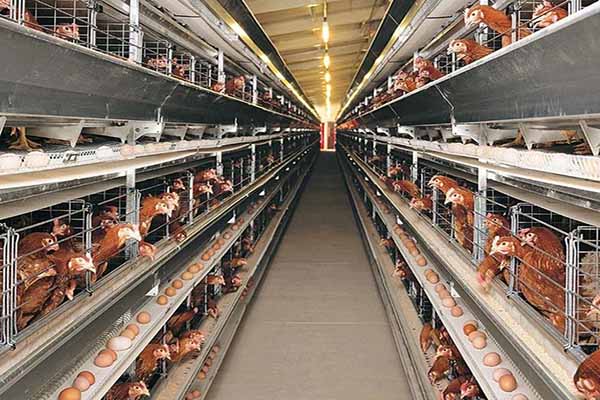
Tip: In high-capacity layer projects, cage system + feeding, drinking, manure removal, egg collection, and environmental control should be evaluated as one integrated system.
Why “Unit Price” Is a Risky Decision Metric
A poultry farm is an operating system. If the procurement process focuses only on the cheapest cage, the lowest-cost motor, or the lowest quoted line item, you may end up paying more through lower throughput, higher labor, more downtime, and ongoing spare-parts friction.
Compare what truly matters
- Total installed cost (equipment + structure + integration)
- Energy, labor, and consumables over time
- System compatibility and upgrade space
- Maintenance access, spare parts, and after-sales support
What “cheap” often hides
- Mismatch between cage layout and house width/length
- Non-standard components that delay replacements
- Inadequate corrosion protection in humid climates
- Automation that looks good on paper but is hard to service
7 Common Purchasing Pitfalls in Large-Scale Poultry Farm Projects
1) Only comparing equipment unit prices
Unit price rarely includes integration, commissioning, training, or the impact on daily labor. Evaluate offers using a consistent scope: what is included, what is optional, and what must be purchased locally to operate at design capacity.
2) Ignoring system compatibility (cage + automation + house design)
In layer projects, the cage system must align with feeding, drinking, manure removal, egg collection, and environmental control. If interfaces are not standardized (dimensions, line speeds, power requirements, control logic), the farm may face bottlenecks or frequent stoppages.
3) Underestimating after-sales support and spare parts planning
Large farms need predictable maintenance. Confirm technical support channels, recommended spare parts, and replacement lead times. A small missing component can stop an entire line—costing far more than the initial savings.
4) Missing capacity planning (today vs. expansion)
Farms expand. If the initial layout leaves no room for future rows, conveyors, service aisles, or control upgrades, expansion becomes expensive or forces redesign. Capacity planning should consider bird numbers, house count, and automation scalability.
5) Overlooking local climate, site conditions, and corrosion risk
Temperature, humidity, dust, and ammonia levels affect metal life and equipment stability. Materials and surface treatment should match local conditions. This is especially critical for cages and structural components exposed to long-term corrosion.
6) Buying “automation” without verifying serviceability
Automation should reduce labor and improve consistency—but only if operators can inspect, clean, and repair it efficiently. Ask how routine tasks are performed (cleaning, belt adjustment, sensor checks) and whether the design supports safe access.
7) Treating suppliers as “equipment sellers,” not project partners
A large poultry farm is a project with engineering, scheduling, logistics, and on-site coordination. Selecting a supplier that can support planning and delivery reduces risk across the full timeline—from site preparation to commissioning.
Reference Equipment: H-Type Layer Cage System (Example Scope to Check)
When evaluating layer-house core equipment, make sure quotes define a complete and comparable scope. For example, Livi Machinery’s High-efficiency H-Type Layer Chicken Cage is positioned for commercial layer farms and is designed to be combined with key automation modules.
Procurement note: For “same bird capacity” quotes, ask suppliers to list what is included for egg collection, manure removal, and environmental control readiness—so you can compare system-level costs instead of individual line items.
A Practical Checklist for EPC Buyers and Farm Owners
Before you request a quotation
- Target bird capacity and growth plan (phase 1 / phase 2)
- Site constraints: land size, utilities, local climate
- Preferred automation level (manual / semi / full)
- Local requirements: voltage, import rules, installation conditions
When comparing suppliers
- Bill of materials clarity and inclusion/exclusion list
- Integration responsibility (who connects what)
- Commissioning plan and operator training
- Spare parts list and service response process
Total cost questions to ask
- Expected labor needs per house at your automation level
- Maintenance access: routine cleaning and adjustment time
- Wear components: belts, rollers, scrapers—replacement cycle planning
- What stops the line, and how quickly can it be recovered?
How Livi Machinery Supports Large-Scale Projects
Livi Machinery is an industry-focused manufacturer and solution provider for poultry farming equipment. Since 2013, we have developed and produced equipment covering the full layer-farm workflow—cage systems, automatic feeding, drinking, manure cleaning, egg collection, and chicken house environmental control—serving customers across global commercial poultry markets.
One-stop project thinking
From planning logic to delivery coordination, we help buyers align equipment selection with site conditions, capacity goals, and daily operations—reducing integration risks.
Quality control in production
We emphasize material selection and inspection across the manufacturing process to support durability expectations for commercial farms.
Support for long-term operation
Documentation, spare-parts planning, and technical support processes are addressed early—so the farm can maintain stable operation after commissioning.
If you are planning a layer project and evaluating an H-type layer cage system, share your target capacity, house dimensions, and desired automation level. We can help you structure a comparable procurement scope—so decisions are made on system performance rather than unit prices.
Compliance note: Final equipment configuration should be confirmed based on local regulations, site conditions, and project design. Statements on standards and service life depend on selected materials, operating environment, and maintenance practices.

Hot Products

.jpg?x-oss-process=image/resize,m_fill,h_800,w_800/format,webp)


Popular articles

READY TO START?
Ready to Build Your Poultry Farm?
Tell us your land size, poultry type and farming capacity. LIVI will provide a complete farm solution for your project.