


Poultry Farm Equipment Purchasing Mistakes: Stop Judging Suppliers by Single-Unit Price
In commercial poultry projects, one of the most expensive purchasing mistakes is judging suppliers by single-unit price. A “cheaper machine” can still create a higher total project cost once you factor in farm layout changes, mismatched interfaces, extra installation work, downtime, and short service life.
This page explains the most common pitfalls in poultry farm equipment purchasing and provides a practical checklist to evaluate suppliers by system compatibility, site planning, durability, installation & commissioning, after-sales support, and long-term operating efficiency.
Key takeaway for B2B buyers
- Single-machine price ≠ total project cost.
- Compatibility + layout + installation quality determine real ROI.
- Choose suppliers that can deliver a stable, integrated system—not isolated equipment.
Why Single-Unit Price Comparison Fails in Poultry Projects
Large-scale layer farms are system engineering. Even if you are buying “equipment,” you are effectively buying interfaces, workflow, capacity matching, and long-term maintainability. When procurement focuses only on unit price, buyers typically miss the hidden cost drivers below.
1) System incompatibility creates rework and delays
Feeding, drinking, manure removal, egg collection, ventilation, and electrical routing must be designed to work together. If suppliers’ components don’t align in height, spacing, control logic, or installation sequence, the project may require onsite modifications, extra brackets, rewiring, or layout changes—often costing more than the initial “saved” purchase price.
2) Ignoring site planning increases total project cost
A supplier quote can look low because it excludes the real constraints of your site: house dimensions, aisle widths, service corridors, manure handling routes, loading/unloading access, and future expansion. A system that doesn’t fit the house efficiently wastes space, increases labor distance, and complicates daily operations.
3) Underestimating installation & commissioning risk
In integrated poultry projects, installation quality and commissioning determine whether automation runs smoothly. If the supplier lacks clear installation drawings, standardized parts, experienced onsite guidance, or commissioning procedures, you may face extended ramp-up time, unstable performance, and higher maintenance.
4) Short service life and frequent maintenance eat savings
For cages and core structures, corrosion resistance and material specification matter. A lower-price option can lead to earlier replacement, higher spare-part frequency, and more downtime—raising the true lifetime cost of ownership.
5) After-sales capability affects long-term operating efficiency
Response time, troubleshooting support, spare-part supply, and documentation determine how quickly you recover from issues. When after-sales is weak, the “cheap price” turns into expensive production interruptions.
A Supplier Evaluation Framework Based on Total Project Cost
Use the checklist below to compare suppliers on what truly affects project outcomes. It is designed for system-based procurement and EPC/turnkey decision-making.
| Evaluation Dimension | What to Verify | Why It Impacts Total Cost |
|---|---|---|
| System compatibility | Interface matching across cages, feeding, drinking, egg collection, manure removal, and controls | Prevents rework, delays, and unstable automation |
| Farm layout planning | House dimensions fit, aisle/service access, expansion allowance, workflow routing | Improves capacity utilization and reduces operational friction |
| Durability & materials | Steel grade, corrosion protection processes, expected service life, QA checkpoints | Reduces replacement frequency and maintenance downtime |
| Installation & commissioning | Drawings, parts standardization, onsite guidance, commissioning steps, acceptance criteria | Ensures stable ramp-up and reduces troubleshooting cost |
| After-sales support | Response mechanism, spare parts, documentation, remote support capability | Controls production interruption risk |
| Supplier capability | Engineering coordination, manufacturing consistency, project delivery experience | Improves schedule certainty and reduces hidden management cost |
Practical rule: when supplier A is slightly more expensive per unit but delivers smoother integration, faster commissioning, and longer service life, the total project cost can be lower than supplier B—even if B’s quote looks cheaper.
Related Equipment: High-efficiency H-Type Layer Chicken Cage System
Many of the cost pitfalls above become visible when evaluating a layer cage system as a whole. Livi Machinery (Zhengzhou LIVI Machinery Manufacturing Co., Ltd.) develops and manufactures integrated poultry farming equipment, including the High-efficiency H-Type Layer Chicken Cage designed for commercial layer farms.
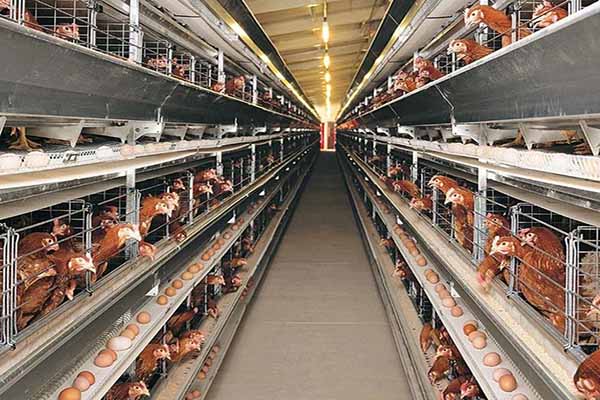
What it is (scope and positioning)
An H-type structure is built to make better use of poultry house space and to support systematic management tasks such as feeding, cleaning, and egg handling. The system is commonly evaluated together with automation modules because integration affects daily efficiency and project stability.
Key facts for procurement alignment
- Capacity range: designed for commercial farms; a single project can be configured for approximately 5,000–30,000 birds depending on house design and configuration.
- Material: uses Q235 steel; surface treatment includes hot-dip galvanizing and aluminum-zinc alloy coating for durability.
- Service life reference: typical design target of 15–20 years under proper use and maintenance conditions.
- Standards: the product is developed under management systems and compliance references including ISO9001, ISO14001, and CE (as applicable to the project and destination requirements).
Where hidden costs usually appear (examples to check)
- Automation readiness: confirm egg collection and manure removal integration points, power routing, and control interfaces before placing the order.
- House airflow & temperature strategy: verify compatibility between cage layout and environmental control plan to avoid later reconstruction.
- Installation sequence: confirm drawings and onsite guidance plan to reduce schedule risk.
- Spare parts & maintenance access: ensure service corridors and access points are reserved in the design to avoid high labor cost during operation.
How Livi Machinery Supports System-Based Procurement
Founded in 2013, Livi Machinery focuses on poultry farming equipment R&D and manufacturing, serving B2B buyers building or upgrading commercial farms. Our product coverage spans cages, brooding/growing systems, incubators, and key automation modules—helping buyers approach procurement as a coordinated project rather than scattered items.
Typical procurement deliverables (what you can request)
- Project-oriented equipment configuration suggestions based on capacity target and house constraints
- System compatibility clarification across the cage line and automation modules
- Installation guidance and commissioning coordination to reduce ramp-up uncertainty
- After-sales support planning (documentation, spare parts, and service process)
If you want a comparable supplier quote, prepare these inputs
- Poultry house dimensions, number of houses, and target bird capacity
- Preferred workflow: manure handling approach, egg handling approach, labor plan
- Power availability and local standards/requirements
- Timeline, installation responsibility split, and after-sales expectations
When procurement is evaluated through total project cost control, supplier selection becomes clearer—and the project becomes easier to manage from planning to stable operation.
Talk to Livi Machinery about your layer farm project
If you are comparing suppliers for a commercial layer farm, we can help you review system compatibility, layout feasibility, and long-term operating considerations for an H-type layer cage solution—so your decision is based on project outcomes, not single-unit price.

Hot Products

.jpg?x-oss-process=image/resize,m_fill,h_800,w_800/format,webp)


READY TO START?
Ready to Build Your Poultry Farm?
Tell us your land size, poultry type and farming capacity. LIVI will provide a complete farm solution for your project.