


What to Check Before and After Poultry Farm Equipment Delivery: Installation & Acceptance Checklist
Equipment delivery is not the finish line—it’s the point where installation quality, wiring/piping correctness, and automation linkage determine whether your poultry house can start up smoothly. As an integrated manufacturer and project solution provider, Livi Machinery (Zhengzhou LIVI Machinery Manufacturing Co., Ltd.) shares a practical installation & acceptance checklist you can use before and after poultry farm equipment delivery to reduce start-up risks.
This page focuses on quantity verification, installation positions, operating status, piping/cable connections, automation linkage tests (feeding, drinking, manure removal, egg collection, and environment control), trial run results, and operator training & handover records.
1) Pre-Acceptance Preparation (Before On-Site Inspection)
- Documents ready: packing list, equipment BOM, layout drawing, wiring diagram, pipeline diagram, and commissioning plan.
- Tools ready: tape measure, level, multimeter, clamp meter, insulation tester (as applicable), and torque tools for fasteners.
- Site conditions: confirm house is clean, access paths clear, power/water availability, and safety protection in place for test runs.
- Acceptance roles: owner/manager + electrician + mechanical installer + automation/controls technician + operator representative.
2) Delivery Check: Quantity, Model, and Condition
Start with a structured inventory check. Catching mismatches early prevents delays during installation and commissioning.
| Checkpoint | What to Verify | Evidence / Record |
|---|---|---|
| Quantity & model | Match packing list vs. actual count; confirm model/spec and optional modules. | Signed inventory sheet; photos of nameplates/labels. |
| Appearance & transport damage | Check deformation, scratches, missing parts, exposed wires, broken sensors. | Damage report with photos and packing condition. |
| Spare parts & consumables | Belts, fasteners, sensors, fuses, lubrication items (per project scope). | Spare list confirmation; storage location noted. |
| Manuals & handover docs | Operation, maintenance, and wiring/pipeline references; training plan. | Document checklist signed by owner & supplier rep. |
3) Installation Position & Layout Verification
Check against drawings (not “by feel”)
- Confirm equipment location aligns with the approved house layout (rows/aisles, service corridors, control room placement).
- Verify levels, anchoring, and alignment for frames/rails/conveyors to prevent long-term wear and unexpected noise.
- Ensure accessibility for maintenance (motor replacement, sensor access, belt tensioning, cleaning points).
If your project includes layer cage systems
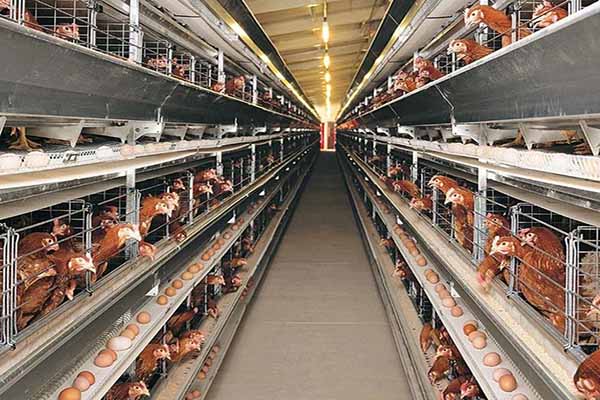
For high-capacity layer operations, installation accuracy is critical for stable egg collection and manure removal. Livi Machinery’s layer cage offerings include solutions such as efficient H-type layer chicken cages, commonly paired with automation modules (egg collection, manure cleaning, feeding/drinking) depending on project scope and configuration.
4) Electrical, Water, and (If Applicable) Air Line Connections
Electrical & control
- Cable routing is protected, labeled, and separated from wet areas; no exposed conductors.
- Motors rotate in correct direction; overload protection and emergency stop are functional.
- Sensors/switches (limit, photoelectric, proximity) are installed firmly and respond correctly.
- Control cabinet ventilation, grounding/earthing, and enclosure sealing meet site conditions.
Water / pipelines
- All joints are leak-checked; valves are accessible and clearly identified.
- Filters/regulators (where applicable) are installed and easy to service.
- Drainage points and flushing paths are available for cleaning and winterization needs.
- No sagging pipes that cause air locks or uneven flow.
Record actual “as-installed” routing changes on the drawings and attach photos—this speeds up troubleshooting during production.
5) Automation Linkage Test (System-by-System)
Don’t test each machine in isolation only—verify the linkage logic and interlocks across your poultry farming equipment chain.
Feeding system
- Start/stop works locally and from the control panel; emergency stop cuts power reliably.
- Feeding line runs smoothly without abnormal vibration/noise; guards/covers are installed.
- Sensors and timing logic prevent overfeeding or empty running (as configured).
Drinking system
- Pressure/flow is stable across lines; no leaks at nipples or connectors.
- End flushing is functional; filters are installed and serviceable.
Manure removal system
- Belt/chain tension is correct; tracking is centered; scrapers are aligned (if applicable).
- Discharge point is clear; interlocks prevent operation when guards are open (where designed).
Egg collection system (for layer projects)
- Conveyors run smoothly; transfer points don’t pinch or crush eggs.
- Speed coordination between sections is correct; sensors stop the line on jam (as configured).
- Collection table or packing station workflow is safe and accessible.
Environment control (fans, inlets, cooling/heating, controllers)
- Check sensor readings (temperature/humidity) respond plausibly; calibrate if needed.
- Fans run in correct direction; shutters/inlets open/close fully without sticking.
- Alarms and setpoints are configured according to the farm’s management plan.
6) Trial Run & Performance Recording
- Dry run first: test without load to confirm direction, stability, and interlocks.
- Then simulated/actual load: verify no jams at transfer points and no abnormal heating at motors/gearboxes.
- Record: trial run duration, alarm logs, noise/vibration observations, adjustments made, and final parameter settings.
- Acceptance criterion: “runs continuously as intended under the agreed operating mode” (per contract/project scope).
Note: Avoid overpromising performance targets during acceptance. Focus on verifiable items—functionality, safety, stable operation, and documented configuration.
7) Operator Training & Handover Records
A successful project delivery includes people and process—not only hardware. Ensure your team can operate and maintain the system correctly from day one.
Training topics (recommended)
- Start/stop sequences, daily checks, and safe shutdown procedures.
- Cleaning routines and inspection points for feeding/egg/manure lines.
- Alarm handling: common faults, quick isolation steps, and when to call support.
- Basic preventive maintenance schedule and spare parts usage.
Handover package
- Signed acceptance checklist + trial run records.
- As-built drawings (updates noted) + wiring/pipeline references.
- Spare parts list + storage location + contact for after-sales support.
- Operator roster with training completion signatures.
How Livi Machinery Supports Project Delivery
Founded in 2013, Zhengzhou LIVI Machinery Manufacturing Co., Ltd. focuses on poultry farming equipment and provides one-stop project services—from planning to delivery—covering cage systems and automation modules such as feeding, drinking, manure removal, egg collection, and poultry house environment control (depending on your project design).
Global delivery modes
Direct shipment, local production, overseas warehouse, and local distribution (per region and project needs).
Quality and compliance focus
Process-based inspection from materials to shipment, aligned with applicable international standards per product/project scope.
Practical commissioning mindset
Checklist-driven acceptance to help reduce downtime and simplify the transition to production.
Ready to Use This Checklist on Your Site?
If you are commissioning a layer farm project (including high-capacity cage systems and automation linkage), share your layout and equipment scope with Livi Machinery. We can align the acceptance items to your configuration and help your team prepare the right records for a smooth handover and start-up.

Hot Products

.jpg?x-oss-process=image/resize,m_fill,h_800,w_800/format,webp)


Popular articles
READY TO START?
Ready to Build Your Poultry Farm?
Tell us your land size, poultry type and farming capacity. LIVI will provide a complete farm solution for your project.