


Common Mistakes When Purchasing Poultry Farming Equipment: Look Beyond Unit Price
Overseas poultry projects often fail at the purchasing stage—not because the equipment is “too expensive”, but because buyers compare unit price and ignore what drives total farm performance.
As Livi Machinery (Zhengzhou LIVI Machinery Manufacturing Co., Ltd.), we work with commercial layer and broiler investors and EPC owners worldwide. This page summarizes the most common mistakes when purchasing poultry farming equipment and provides a practical checklist to evaluate suppliers by system compatibility, house layout planning, installation & commissioning, after-sales support, and local climate/power conditions.
Mistake #1: Comparing Unit Price Instead of Total Project Cost
A “cheaper” cage line can become more expensive when you add missing components, extra steel work, rework, higher labor, or production losses caused by poor operation stability. For overseas projects, you should compare offers by total cost of ownership—not only the price per cage cell or per meter of equipment.
What to verify in the quotation (examples):
- Scope: cage system, feeding, drinking, manure removal, egg collection, environmental control, electrical parts, spares
- Material and surface treatment: steel grade, galvanizing/coating process, corrosion protection
- Installation & commissioning: who does it, timeline, tools, training
- After-sales: response process, warranty scope, consumables plan
Mistake #2: Ignoring System Compatibility (Cages + Automation Must Match)
Poultry farming equipment is a system. Even if each item looks acceptable separately, mismatched interfaces (heights, drive power, control logic, conveyor alignment, trough and nipple positioning) can create daily bottlenecks.
Typical compatibility risks
- Egg collection line speed and layout not matched to cage row length and slope
- Manure belt/cleaning frequency not aligned with stocking density and house ventilation
- Feeding line capacity and motor selection not matched to daily feeding schedule and farm rhythm
- Control cabinet and sensors incompatible with local voltage/frequency or unstable power supply
Procurement tip: ask suppliers to provide a system diagram (from silo/feed bin to trough, from cage to egg room, from manure belt to disposal point) and confirm interface dimensions and operating logic before ordering.
Mistake #3: Buying Equipment Before Finalizing Poultry House Layout
Many overseas buyers lock in cage quantities too early, then discover the building dimensions, ventilation path, service corridors, or egg/manure logistics do not support the intended capacity. A practical approach is to complete house layout planning first, then freeze equipment configuration.
| Layout item | Why it changes the equipment list | What to confirm |
|---|---|---|
| House length/width & column grid | Determines row count, row length, and conveyor routing | Clear internal dimensions, structural constraints |
| Service corridors & end rooms | Affects maintenance access and daily workflow | Minimum walking space, turning radius for carts |
| Egg room / packing flow | Defines egg conveyor termination and sorting space | Route to storage, biosecurity separation |
| Manure discharge route | Impacts belt discharge points and collection method | Distance to composting/drying, local rules |
| Ventilation & cooling/heating plan | Directly affects stocking density feasibility and comfort | Fan/cooling pad placement, airflow direction |
Mistake #4: Underestimating Installation, Commissioning, and Training
Even strong equipment can underperform if not installed and tuned correctly. Overseas sites often face different building tolerances, workforce experience levels, and supply constraints. Your procurement decision should include a clear plan for installation, commissioning, and operator training.
Questions to ask before purchase
- Who provides on-site guidance, and what is the typical commissioning scope (feeding line, egg line, manure line, environment control)?
- What site conditions are required (power supply, tools, lifting equipment, floor levelness, anchoring points)?
- What training materials are provided (operation SOPs, maintenance schedule, troubleshooting steps)?
Mistake #5: Overlooking Local Climate and Power Conditions
Climate (heat, humidity, dust, corrosion) and infrastructure (voltage, frequency, generator use) directly influence equipment selection and long-term reliability. For example, hot climates require careful planning of ventilation and cooling; dusty regions increase maintenance needs; coastal areas need stronger corrosion resistance.
Local-condition checklist (minimum):
- Grid voltage/frequency and stability; generator backup strategy
- Temperature range and humidity; heat-stress risk periods
- Water quality and pressure for drinking systems
- Corrosion exposure (coastal air, ammonia concentration) and cleaning routine
If local conditions are unclear, request a supplier review based on your site location, utility specs, and target capacity before you finalize the BOM (bill of materials).
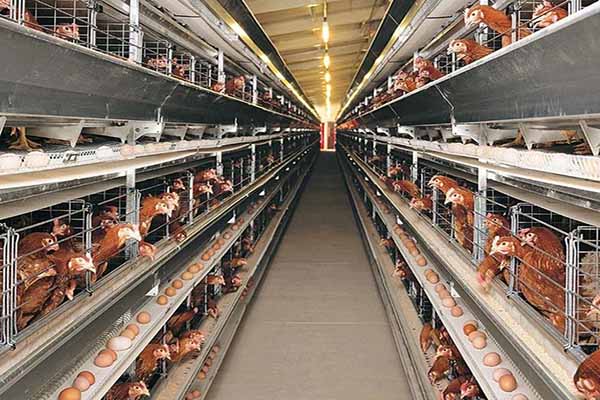
A Practical Reference: H-Type High-Efficiency Layer Cage System (Commercial Scale)
One of the most frequently sourced systems in overseas layer projects is the H-type layer cage system. As an example of “look beyond unit price,” buyers should check not only cage pricing, but also how the cage structure integrates with automation lines and the poultry house plan.
How Livi Machinery Supports Overseas Procurement Decisions
Founded in 2013, Livi Machinery is an integrated manufacturing and trading company focused on poultry farming equipment. We provide one-stop support from planning to delivery for commercial farms—helping buyers reduce coordination risk across cages, automation, and house systems.
What you can request from our team
- Equipment system matching for your target capacity and poultry house dimensions
- A project-oriented BOM and interface confirmation (cages + feeding + drinking + manure + egg collection + environmental control)
- Installation and commissioning preparation guidance, plus operation & maintenance training materials
- After-sales process clarification for overseas sites (spares planning and service coordination)
To evaluate your project faster, prepare
- Farm location, climate notes, and local power specs (voltage/frequency)
- Target bird capacity and production goals
- Poultry house drawings (or available land size if still planning)
- Preferred delivery mode (direct shipment, local production, overseas warehouse, local distribution)
If your team is currently comparing multiple poultry equipment offers, use the sections above as a procurement checklist. The goal is simple: optimize long-term performance and total lifecycle cost—and avoid unit-price-only decisions that create downstream risk.

Hot Products

.jpg?x-oss-process=image/resize,m_fill,h_800,w_800/format,webp)


Popular articles
2.png?x-oss-process=image/resize,h_800,m_lfit/format,webp)
READY TO START?
Ready to Build Your Poultry Farm?
Tell us your land size, poultry type and farming capacity. LIVI will provide a complete farm solution for your project.