


What Core Systems Does a Modern Layer Chicken Farm Need?
Building or upgrading a modern layer chicken farm is not about buying a single machine—it’s about selecting compatible systems that work together: housing, feeding, drinking, manure removal, egg collection, and poultry house environmental control.
Livi Machinery (LIVI) designs and manufactures poultry farming equipment and provides one-stop EPC/turnkey farm solutions—helping investors, integrators, and farm owners form a practical equipment checklist and avoid mismatched configuration.
- layer cages (incl. structure & accessories)
- Automatic feeding system
- Automatic drinking system
- Automatic manure removal system
- Automatic egg collection system
- Environmental control (ventilation/cooling/heating/monitoring)
Why “system thinking” matters in layer farm equipment selection
Layer chicken farm equipment is a chain. If one link is undersized or incompatible (for example, feeding capacity does not match cage rows, or manure removal timing conflicts with ventilation), performance and management efficiency can suffer. A complete plan helps you:
- Create a clear equipment list for procurement and budgeting
- Ensure mechanical and electrical compatibility across systems
- Reduce rework during installation and commissioning
- Support standardized farm management and daily operation
Core systems for a modern layer chicken farm
1) Layer cage system
The cage system is the “framework” that sets the layout for feeding, drinking, egg collection, and manure handling. A practical selection should consider the house dimensions, aisle arrangement, row spacing, and how each accessory integrates.
- Compatibility points: cage row count vs. feeder line length, drinker line routing, egg belt direction, manure belt/cleaning mechanism placement
- Operational points: access for inspection, maintenance clearance, safe movement paths for staff
2) Automatic feeding system
An automatic feeding system is designed to deliver feed consistently across rows according to your cage layout. For new builds and upgrades, the key is matching feeding capacity and distribution method to the farm’s scale and daily operation rhythm.
- Configuration points: line routing, drive unit placement, feed delivery uniformity across row ends
- Integration: coordination with feeding schedule, lighting routine, and staff workflow
Tip: When upgrading, confirm whether the existing house structure and aisle width can support new feeder line paths and maintenance access.
3) Automatic drinking system
The automatic drinking system supports stable water delivery and reduces manual workload. Selection typically focuses on line arrangement, reliable supply, and ease of daily checks.
- Compatibility points: drinker line height/position relative to cage tiers, routing that avoids interference with egg belts
- Operation points: inspection access, cleaning and routine maintenance convenience
4) Automatic manure removal system
An automatic manure removal system helps maintain hygiene and supports stable house conditions by enabling planned manure handling. It should be designed as part of the house’s daily operation and ventilation plan.
- Compatibility points: manure belt/collection route, discharge area, coordination with cage tiers
- Planning points: scheduling, safety considerations, maintenance and cleaning access
5) Automatic egg collection system
The automatic egg collection system reduces manual handling and supports standardized collection. Its design depends heavily on the cage arrangement, egg belt direction, and where eggs are received and sorted.
- Compatibility points: belt alignment, transfer points, receiving location planning
- Operation points: smooth collection flow, staff safety and access for inspection
6) Poultry house environmental control (ventilation/cooling/heating/monitoring)
Environmental control is the system layer that ties house comfort and management together. A modern layer house commonly needs coordinated ventilation, cooling, heating (when applicable), and monitoring—planned around the building structure and operating routine.
- Compatibility points: fan/inlet arrangement, airflow path vs. cage layout, cooling/heating capacity planning
- Management points: monitoring and control strategy aligned with daily operation and local climate
A well-aligned environmental control plan helps avoid situations where equipment operates but airflow, temperature, or humidity distribution is uneven due to layout conflicts.
Practical equipment checklist: what to confirm before purchasing
| System | Key configuration points | Typical interfaces to verify |
|---|---|---|
| Layer cages | House size, aisle layout, tier/row planning, maintenance access | Feeding/drinking line routing; egg belt direction; manure discharge path |
| Automatic feeding | Line length, drive placement, distribution method matched to layout | Cage row count; electrical layout; operation schedule coordination |
| Automatic drinking | Water line arrangement, accessibility for checks and cleaning | Interference-free routing with egg belts; house water supply planning |
| Manure removal | Collection route, discharge location, maintenance space | Cage tier arrangement; environmental control plan; site logistics |
| Egg collection | Belt alignment, transfer points, receiving/sorting location planning | Cage layout; aisle access; staff workflow and safety |
| Environmental control | Ventilation/cooling/heating/monitoring design based on structure & climate | Airflow path vs. cage layout; control strategy vs. operation routine |
Who this guidance is for
Investors & project owners
Need an end-to-end equipment list and clear configuration logic before budgeting and procurement.
Integrators & contractors
Need system interfaces defined to reduce installation conflicts and commissioning delays.
Farm owners upgrading houses
Need compatibility checks to integrate new automation without disrupting existing layout.
How Livi Machinery supports your layer farm plan
As a manufacturing-focused poultry equipment supplier and solution provider, Livi Machinery covers the full layer farming workflow with products such as layer cages, automatic feeding and drinking systems, manure removal, egg collection, and poultry house environmental control equipment. We support global projects with a one-stop approach—from planning and system selection to delivery and project execution.
We help align cage layout, automation lines, discharge paths, and environmental control planning to reduce mismatched purchases.
From raw material selection to shipment inspection, we follow a quality-first approach across production and delivery.
Serving customers across multiple regions, we adapt system planning to different climates, building conditions, and operating habits.
If you are planning a new layer farm or upgrading an existing poultry house, prepare your target capacity, house dimensions, site layout, and local climate information—so the equipment checklist and configuration can be built around real conditions.
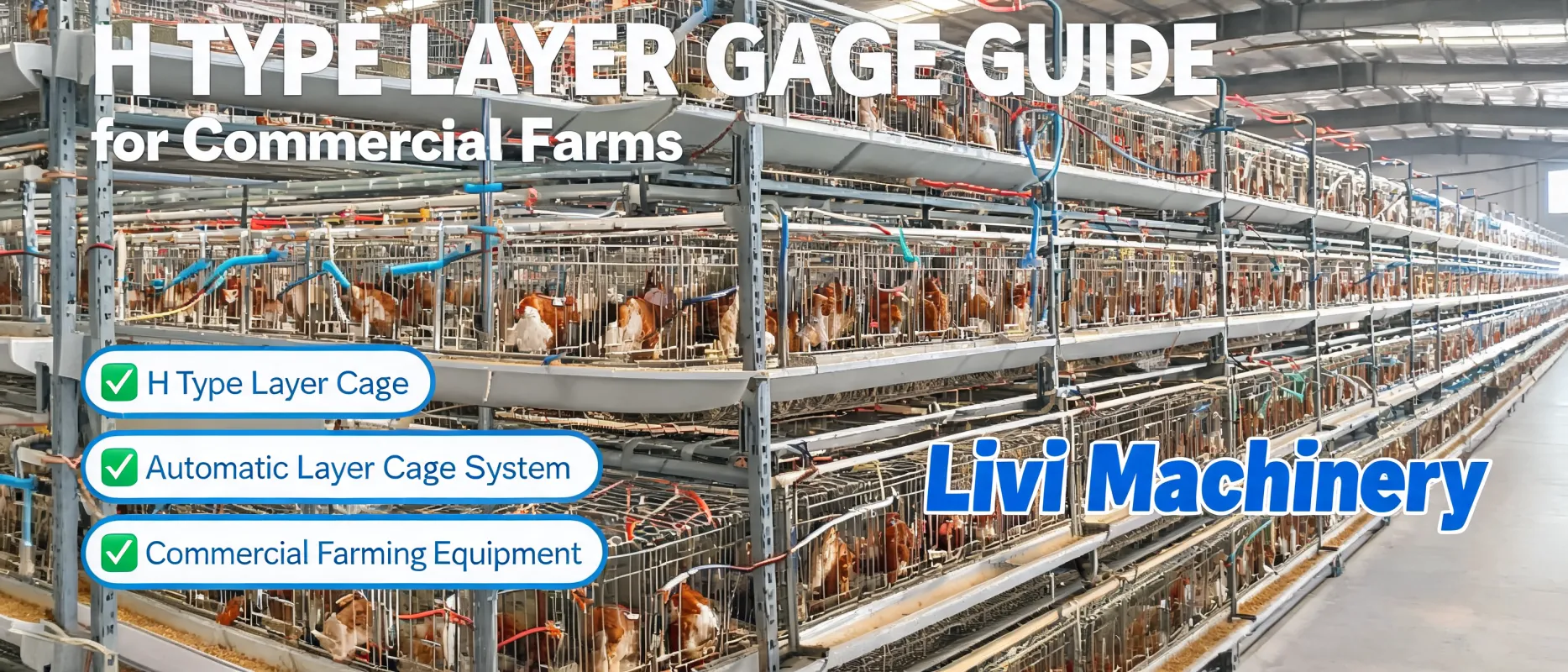

郑州利维机械高效H型层蛋鸡笼系统
Hot Products

.jpg?x-oss-process=image/resize,m_fill,h_800,w_800/format,webp)


Popular articles


READY TO START?
Ready to Build Your Poultry Farm?
Tell us your land size, poultry type and farming capacity. LIVI will provide a complete farm solution for your project.