


Choosing Layer Chicken Cages and Poultry Farm Equipment: Scale, Automation, and ROI Evaluation
Selecting layer chicken cages and the right poultry farm equipment configuration is a project-level decision. Capacity, automation, site conditions, and maintenance access all affect long-term operating cost and expected ROI—often more than the unit price of a cage set.
Perspective from Livi Machinery: We support layer farm investors and operators in evaluating cage systems together with feeding, drinking, manure handling, egg collection, and ventilation & climate control—so decisions are based on total project performance and expansion readiness.
1) Start with farm scale: capacity, layout, and stocking density
Define your target bird capacity and the house layout first. Cage row spacing, aisle width, and equipment routes (feed line, water line, manure belt, egg conveyor) need to match your building dimensions and daily workflow. If you plan phased construction, the equipment should be compatible with future house expansion and centralized management.
- Capacity planning: confirm target birds per house and number of houses, then determine row count, tier count, and service aisles.
- Site constraints: consider power stability, water quality, local climate, and logistics access for delivery and maintenance.
- Operational rhythm: align equipment sizing with feeding frequency, egg pickup schedule, manure removal intervals, and labor availability.
2) Choose cage type based on production goals and management style
For layer production, the “right” cage system is the one that fits your building, management capability, automation plan, and long-term maintenance strategy. Avoid mixing incompatible designs across houses if you want standardized spare parts and training.
What to verify before locking the cage design
- Structure & durability: material selection, corrosion resistance expectations, and consistency of manufacturing/inspection.
- Bird comfort & practicality: feeder and drinker placement, accessibility for inspection, and ease of cleaning.
- Serviceability: how quickly motors, belts, drinker lines, and cage components can be accessed and replaced.
- Compatibility: whether your cage choice supports the automation modules you want (egg collection, manure removal, etc.).
3) Evaluate automation level as a system (not as separate add-ons)
Automation is most effective when feeding, drinking, manure handling, egg collection, and environmental control are designed as a coordinated workflow. In ROI evaluation, include power consumption, maintenance workload, spare parts strategy, and downtime risk—not only purchase cost.
Practical tip: When comparing suppliers, ask for a clear equipment boundary list (what is included/excluded), wiring/control scope, and recommended spare parts list—this reduces “hidden cost” during installation and ramp-up.
4) Site conditions that influence equipment choice
The same cage model can perform very differently depending on environment and infrastructure. Before finalizing a configuration, confirm the on-site realities that directly affect performance and operating stability.
Checklist: conditions to confirm early
- Climate: heat, humidity, dust level—drives ventilation and cooling/heating design.
- Utilities: power stability, generator plan, water source and filtration.
- Building form: house length/width, roof height, insulation approach, placement of inlets and exhaust.
- Operations: staffing level and technical skill—sets a realistic automation and maintenance strategy.
- Biosecurity flow: movement paths for people, eggs, manure, and feed to reduce cross-contamination risk.
5) Maintenance accessibility and reliability: the often-missed ROI drivers
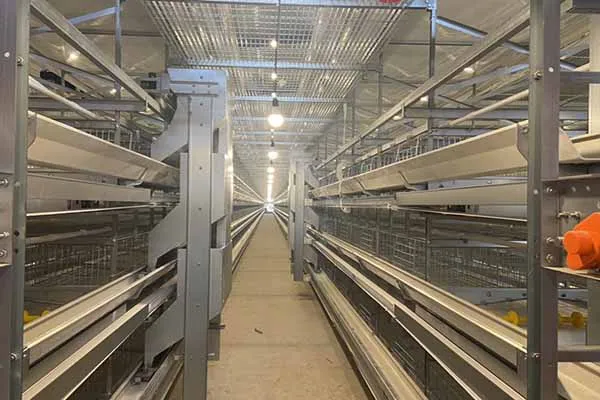
Total cost of ownership is heavily affected by downtime and daily maintenance time. A practical evaluation method is to “walk the aisles” on the design drawing: can a technician safely reach motors, belts, drinker lines, and control components without dismantling major sections?
- Accessibility: dedicated service aisles, safe working height, and clear maintenance points.
- Standardization: consistent parts and modules across houses to simplify training and spares.
- Inspection discipline: material and process inspection from raw materials to shipment helps reduce early failures.
6) How to compare options with an ROI mindset
For an ROI-based selection, compare complete solutions under the same assumptions: target capacity, automation scope, climate control design, installation boundary, and expansion plan. The goal is a balanced system that supports stable production and efficient management.
A simple comparison framework (ask each supplier to respond)
- Proposed house layout with cage rows/tiers and equipment routing
- Automation modules included (feeding, drinking, manure removal, egg collection) and control scope
- Ventilation & climate control concept suitable for the local climate
- Maintenance plan and recommended spare parts list
- Expansion readiness: what can be scaled later without replacing the core system
Working with Livi Machinery: one-stop poultry farm solution support
Livi Machinery (Zhengzhou Livi Machinery Manufacturing Co., Ltd., established in 2013) focuses on R&D and manufacturing of poultry farming equipment, covering layer cages and supporting systems across the full breeding process—such as automatic feeding, drinking, manure removal, egg collection, house climate equipment, and steel-structure poultry houses. We serve B2B customers worldwide, with project experience across multiple regions and delivery models (direct shipment, local production, overseas warehouse, and local distribution).
What you can expect in a selection discussion
- Configuration recommendations aligned with your scale, site conditions, and automation target
- Project-oriented thinking: layout, equipment matching, and future expansion considerations
- Quality-first production and inspection approach from materials to shipment
Selecting a layer cage system is easiest when it’s evaluated as a complete poultry farm system—capacity, automation, ventilation, maintenance, and expansion—so investment decisions are made on long-term operating performance.
Next step: prepare your inputs for faster, clearer equipment selection
To recommend a suitable layer chicken cage and poultry farm equipment package, it helps to prepare:
- Target capacity (birds/house) and planned number of houses
- Available land/building dimensions and local climate conditions
- Desired automation scope (feeding/drinking/manure/egg collection)
- Power and water conditions, plus any expansion plan
With these basics, Livi Machinery can align configuration, layout logic, and maintenance practicality—helping you compare options using a consistent, ROI-oriented approach.
Hot Products

.jpg?x-oss-process=image/resize,m_fill,h_800,w_800/format,webp)


Popular articles



READY TO START?
Ready to Build Your Poultry Farm?
Tell us your land size, poultry type and farming capacity. LIVI will provide a complete farm solution for your project.