


How to Start a 50,000-Layer Poultry Farm in Ghana

To start a 50,000-layer poultry farm in Ghana, confirm your egg buyers and operating budget before purchasing equipment. Then coordinate the site, poultry-house design, cage layout, feed supply, water, backup power, flock sourcing and veterinary support. Commission the complete system before birds arrive. Treat 50,000 birds as a design target, not a guarantee of daily egg output.
A commercial egg farm needs more than enough cages for the planned flock. It also needs reliable daily inputs and a route to market for the eggs. This guide is a planning framework for a proposed 50,000-layer operation in Ghana—not a report of a completed customer project or a fixed-price quotation.
1. Define the flock plan and egg market
Decide whether 50,000 means birds in laying accommodation at one time or the total birds across rearing and laying. If pullets will be reared on the farm, include separate rearing facilities and their feed, labor and biosecurity requirements. Buying ready-to-lay pullets changes the startup schedule and initial bird cost; it does not remove the need to verify age, uniformity and health records.
Before committing to equipment, discuss egg sizes, tray specifications, delivery frequency, rejection policies and payment terms with potential wholesalers, retailers and institutional buyers. Map realistic delivery routes to your chosen market, whether that is Accra, Kumasi or another commercial center. A production plan without collection and payment arrangements can create a working-capital problem.
2. Choose the site before fixing the building design
Assess all-weather vehicle access, drainage, dependable water, electricity, feed deliveries and space for future expansion. Keep bird accommodation, feed storage, egg handling, manure storage and visitor access coordinated but appropriately separated. Consider neighbors and waste movements when comparing sites.
Confirm the land-use, construction, environmental and animal-health requirements that apply to the proposed site with the relevant local authorities and veterinary professionals before construction. Requirements and approvals must be checked for the actual project; this article is not a permitting checklist.
3. Design the poultry house and H-type cage system together
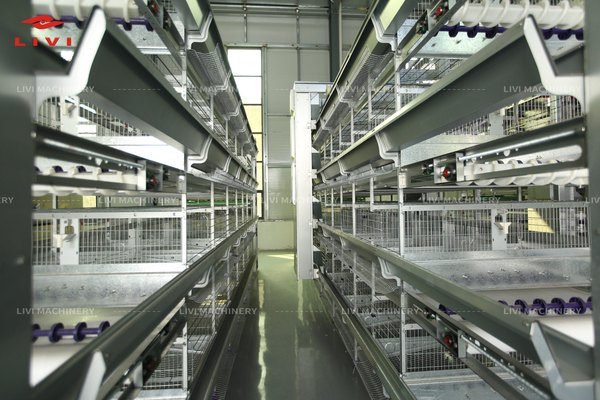
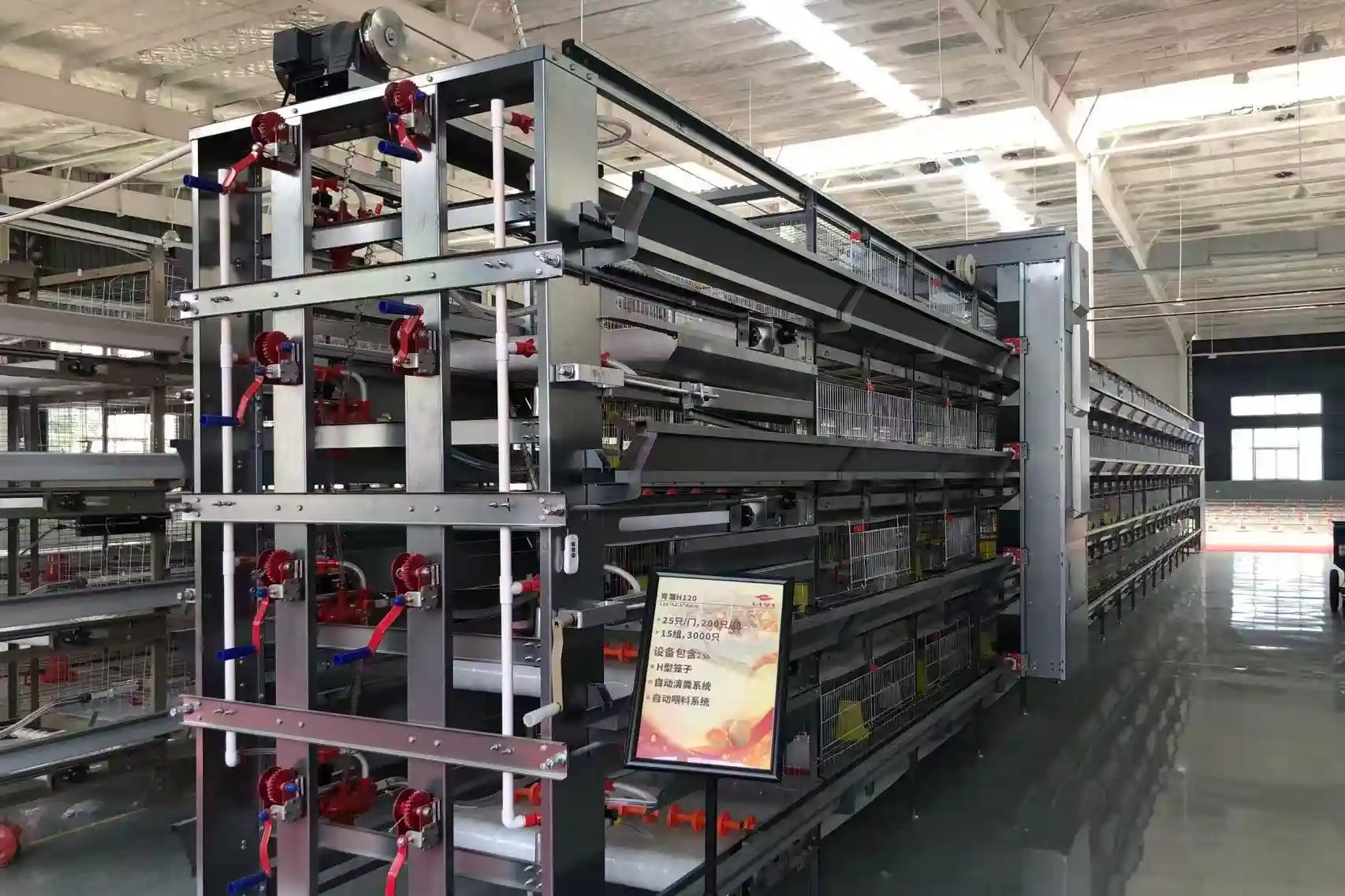
For a 50,000-layer proposal, an H-type cage system is one option to evaluate where multi-tier housing and integrated automation suit the site. The cage layout and building design should be developed together. Do not construct the house around an unverified standard length or choose a tier count only to maximize nominal capacity.
Compare the selected cage model, usable capacity per unit, rows, units per row, service aisles, columns, egg-transfer points and manure outlets. Have the supplier confirm the final layout and a qualified engineer verify structural requirements. Ventilation and cooling must be designed for the local site conditions and flock, rather than copied from a different farm.
Review the Livi H-type layer battery cage system as the starting point for an equipment discussion. Ask for a model-specific configuration and written supply scope, including which feeding, drinking, egg-collection, manure-removal and environmental-control components are included.
4. Calculate feed demand and plan dependable utilities
Ghana’s Ministry of Food and Agriculture identifies feed cost and animal-health management as important poultry-sector challenges in its Feed Ghana Programme. For a large layer project, obtain current delivered feed quotations and discuss formulation, consistency, storage and contingency supply with a qualified nutritionist and feed supplier.
Use the breed supplier’s guidance and actual flock stage to calculate feed needs. For illustration only, if 50,000 birds consumed an assumed 110 grams per bird per day, the calculation would be 50,000 × 0.110 kg = 5,500 kg, or 5.5 tonnes daily. At that same assumed intake, seven days would require 38.5 tonnes before losses or a reserve. This is arithmetic for planning, not a feeding recommendation or a silo specification.
Size water supply and storage for birds, cleaning and any cooling system, using the project’s peak demand. Confirm electrical requirements, connection capacity and backup arrangements for critical services. Have qualified technicians design and test the electrical installation; a generator purchase alone does not prove emergency readiness.
5. Build a complete startup budget
Separate capital expenditure from operating cash. The equipment price alone does not represent the cost of opening the farm. Collect itemized quotations and record their currency, validity, delivery terms and exclusions.
| Budget group | Items to confirm |
|---|---|
| Site and buildings | Land arrangements, site work, poultry houses, feed storage, egg room and waste facilities |
| Equipment and utilities | Cages, automation, ventilation, water systems, electrical work and backup provision |
| Delivery and installation | Freight, insurance, locally verified import charges, unloading, assembly and commissioning |
| Flock and operating cash | Birds, feed, staff, veterinary support, packaging, transport, maintenance and contingency |
Test the operating plan against lower egg sales, higher feed costs and delayed customer payments. Avoid promises of a fixed payback period: results depend on the flock, management, input prices and local sales conditions.
6. Establish flock sourcing, biosecurity and staffing
Agree on flock delivery timing only after the facilities are ready. Select a documented bird source and work with a local poultry veterinarian on a farm-specific health and biosecurity plan. Define visitor controls, cleaning responsibilities, pest management, handling of sick birds and manure arrangements. Do not substitute a generic online vaccination schedule for local veterinary advice.
Automation changes staff tasks rather than eliminating supervision. Assign responsibility for bird observations, feed and water checks, egg handling, alarms, equipment maintenance and records. Train staff in normal operation, emergency response and when to call qualified service personnel.
.jpg "Automatic Egg Collection System")
7. Commission the farm before stocking
Coordinate delivery, installation and testing with the builder and equipment supplier. Reconcile equipment against the packing list, close installation defects and test each subsystem and its interfaces under the manufacturer’s procedures. Verify drinker performance, feed delivery, egg transfers, manure removal, ventilation, alarms and backup arrangements before accepting the handover.
Keep signed test records, manuals, service contacts and an agreed spare-parts list. If developing the site in stages, confirm that each stage has sufficient services and biosecurity separation; do not assume an unfinished shared system can safely serve an occupied house.
How many eggs could 50,000 layers produce?
Use the number of live laying hens, not just installed cage capacity. In a hypothetical scenario with 50,000 live hens and an assumed 85% hen-day production rate, gross output would be 42,500 eggs per day. At 30 eggs per tray, that is about 1,417 tray-equivalents before cracked, dirty or otherwise rejected eggs. Neither 85% production nor this sales volume is guaranteed.
Use flock-age projections and actual saleable output to plan packing, storage and delivery. Revenue estimates should use verified local selling prices and actual customer payment terms.
Frequently asked questions
How much land is needed?
There is no reliable universal acreage. Land demand depends on the number of houses, cage configuration, rearing facilities, service buildings, waste handling, access and site-specific requirements. Request a complete site plan, not just a cage footprint.
Should all 50,000 birds arrive together?
That depends on the production and biosecurity strategy, housing separation and available working capital. Decide the flock-placement plan with the farm manager, bird supplier and veterinarian before ordering.
What should I send to an equipment supplier?
Provide the Ghana project location, target laying capacity, rearing plan, available land or house drawings, utility information, desired automation level and installation timetable.
Plan your Ghana layer farm with Livi
Start with a coordinated layout and a clearly defined equipment scope. Share your project details with Livi to discuss the H-type layer cage configuration and the site preparations needed before installation. Final capacity, dimensions, equipment specifications and delivery arrangements should be confirmed in the project proposal.
Hot Products

.jpg?x-oss-process=image/resize,m_fill,h_800,w_800/format,webp)


Popular articles


2.png?x-oss-process=image/resize,h_800,m_lfit/format,webp)
READY TO START?
Ready to Build Your Poultry Farm?
Tell us your land size, poultry type and farming capacity. LIVI will provide a complete farm solution for your project.